

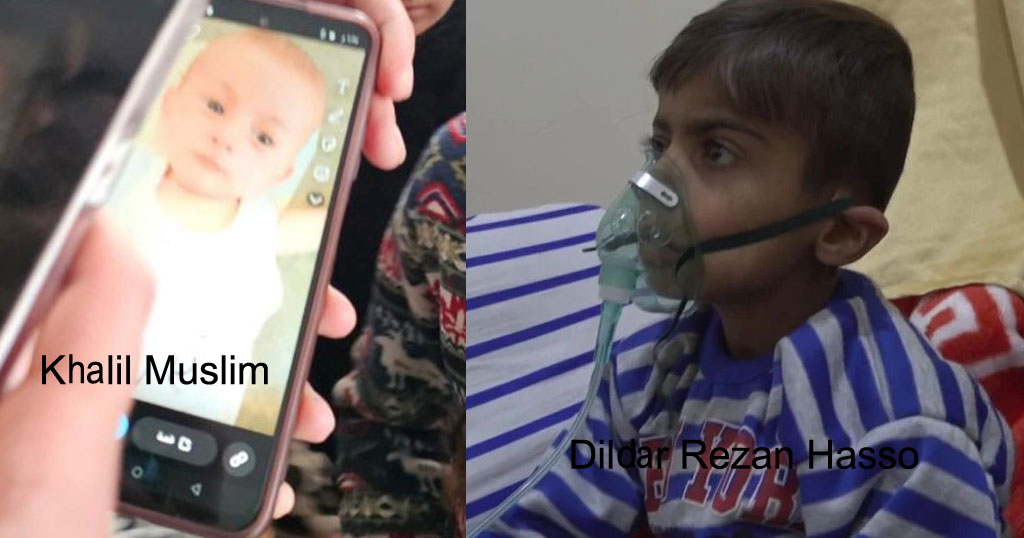
Amid the ongoing siege imposed on the city of Kobani (Ayn al-Arab) in northern Syria, accompanied by the disruption of essential services and severe shortages of medical and food supplies, Rights Monitor has documented the deaths of two Kurdish children in Kobani. These deaths constitute a grave indicator of the acute deterioration of humanitarian and health conditions in the city.
First: Death of the Child Dildar Rezan Hasso
The Kurdish child Dildar Rezan Hasso (12 years old), a resident of the village of “Bogaz” affiliated with the city of Kobani, passed away on Saturday, 14 February 2026, following a deterioration in his health condition due to an immune deficiency disorder.
According to available information, the child was unable to be transferred to his specialist physician at Aleppo University Hospital in the city of Aleppo, due to the siege imposed on Kobani by factions affiliated with what is referred to as the “Syrian Interim Authority.” This obstruction prevented him from accessing the necessary specialized medical care, contributed to the worsening of his condition, and ultimately led to his death.
Second: Death of the Infant Khalil Muslim
In a separate incident, the Kurdish infant Khalil Muslim (eight months old), displaced from the city of Raqqa, died on Wednesday, 11 February 2026, in one of the displacement shelters in Kobani, as a result of intestinal infections.
Available data indicate a rise in diseases associated with water contamination, as residents have been compelled to rely on well water due to severe water shortages and the disruption of regular water supplies. This has led to the spread of intestinal, dermatological, and respiratory illnesses, the majority of cases affecting children, thereby increasing the risk of infectious disease outbreaks among both local residents and internally displaced persons. According to local medical sources, the primary cause of the spread of these diseases is the scarcity of potable water, which has forced residents to consume untreated water.
The city of Kobani (Ayn al-Arab), a predominantly Kurdish city in northern Syria, has for weeks been subjected to a strict siege imposed by factions affiliated with what is referred to as the “Syrian Interim Authority,” represented by Hay’at Tahrir al-Sham, according to documentation from local sources. The siege has been accompanied by widespread looting affecting dozens of Kurdish villages in the city’s countryside, following the forced displacement of their inhabitants as a result of military operations.
The siege has resulted in the prevention of the entry of foodstuffs, medical supplies, and other essential materials, causing a severe deterioration in living and health conditions. A near-total shortage of medicines has been recorded, particularly for chronic illnesses, in addition to the depletion of infant formula and a significant decline in the availability of vegetables and other food items in local markets.
The complete power outage has further disrupted critical hospital departments, while fuel shortages have compounded the suffering of the population. More than 500,000 residents of the city and its surrounding countryside are deprived of heating, lighting, and water pumping services amid harsh weather conditions.
These incidents occur within a broader context of serious violations committed against Kurdish civilians in the framework of the military operation carried out by forces of the “Syrian Interim Authority” against predominantly Kurdish areas.
This operation began on 6 January 2026 with the targeting of the Sheikh Maqsoud and Ashrafieh neighborhoods in the city of Aleppo, before those areas were brought under control on 10 January 2026. Subsequently, operations expanded to areas east of the Euphrates River following the alliance of certain Arab tribes with the Interim Authority forces, particularly in Raqqa and the northern countryside of Deir ez-Zor. Violations escalated as operations reached other Kurdish-majority areas, including Kobani, al-Hasakah, and the countryside of al-Qamishli.
The deaths of the two children, Dildar Rezan Hasso and Khalil Muslim, in the context of the siege and the obstruction of access to medical care and potable water, raise serious concerns regarding violations of the rules of international humanitarian law, particularly those relating to the protection of civilians and the obligation to ensure unimpeded access to humanitarian assistance and medical care. These facts also give rise to legal responsibility on the part of the parties exercising effective control over the territory, as they are obligated to secure the basic needs of the civilian population and to refrain from exposing them to conditions that endanger their lives and health.


