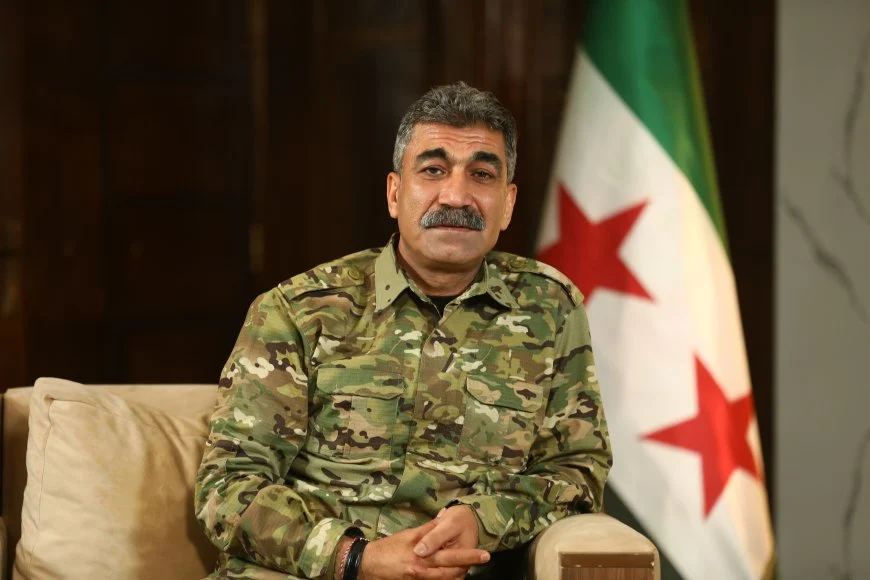
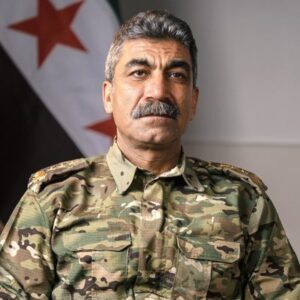
Sipan Hamo, Deputy Minister of Defense for Syria’s Eastern Region, said the integration of the Syrian Democratic Forces (SDF) into the Ministry of Defense has included the formation of four brigades. He added that work is underway to establish internal regulations for a unified army, while the issues of detainees and fallen fighters are being addressed within the framework of the Syrian state.
Hamo denied that the “Kurdish brigade” in Afrin falls outside the initiative to reintegrate fighters into their home areas, stressing that the next phase will focus on completing the army’s structure, unifying deployments, and ending factionalism.
Amid the rapid transformations taking place in Syria, the issue of the “Eastern Region” remains one of the most sensitive and complex files, due to the overlap of military, political, and security factors, as well as its connection to the future of the Syrian Democratic Forces, the rebuilding of Syria’s military institution, border security, detainee issues, and the return of displaced people.
In this context, ANHA Agency publishes an exclusive interview with Siban Hamo (Samir Oso), Deputy Minister of Defense in the Syrian Interim Government for Eastern Region Affairs. The interview covers details of the new military divisions, the process of integrating the Syrian Democratic Forces into the Ministry of Defense, deployment and repositioning plans, the ministry’s stance on U.S. military bases, the files of martyrs and detainees, and the future of areas outside state control such as Afrin, Serekaniye, and Tal Abyad.
Full Interview Text as Conducted:
1. To begin with, what is meant by the term “Eastern Region” under the military structure adopted by the Syrian Ministry of Defense? What are its geographical and military boundaries within the official divisions?
First of all, I thank you, salute the Syrian and Kurdish people, and send my greetings to the mothers of the martyrs and kiss their hands.
After January 29, we began working on the issue of integration. Under this framework, the merger process was carried out in stages and sections. I also assumed my duties as Deputy Minister of Defense for the Eastern Region within the ministry.
The ministry has regional divisions based on five areas: the Northern, Western, Eastern, Southern, and Central regions. The Eastern Region Command includes three provinces: Raqqa, Deir ez-Zor, and Hasakah.
As the leadership of this region, we are currently working to consolidate the organizational structures, in addition to redeployment matters, the deployment of forces across the geography I mentioned, enhancing coordination, and ensuring everyone is unified under one command within the region.
2. How will the military deployment of forces affiliated with the Ministry of Defense take place in this region? Is there a clear timetable and specific implementation phases?
We are currently in the phase of building the Syrian army. The Syrian Democratic Forces have joined the army, along with dozens of other military formations. However, the issue of cohesion still remains, and we have not yet reached a fully integrated military body.
Therefore, we need a comprehensive internal system that guarantees overall discipline, and there are ongoing efforts to reach a formula specific to the country’s military institution.
Redeployment issues are taking up a major part of our work. They are also linked to the internal regulations being drafted to organize overall deployment and define the powers of each division or brigade.
There is a clear direction toward accelerating solutions to all outstanding obstacles in order to reach the desired organizational structure by linking regional commands with the General Command of the Syrian Army’s General Staff within the Ministry of Defense.
So far, divisions, brigades, and other formations have not yet been formally designated, but their missions will certainly complement the army according to operational needs.
3. How far has the military integration process between the Syrian Democratic Forces (SDF) and the Syrian Ministry of Defense progressed since the January 29 agreement? What are the main steps completed on the ground so far?
In fact, under the January 29 agreement, four brigades were formed from the Syrian Democratic Forces and have been officially integrated into the military structure.
We have always said that the total number of forces is larger than that, but for now, four brigades have formally joined under the agreement: one brigade in Kobani, and three others in Hasakah, Qamishli, and Derik.
From an organizational and official standpoint, the merger has taken place, and work is now focused on the practical side. Several operational steps are underway, including training courses within army military academies, field meetings between commanders and specialists in various military sectors, and exchanges of expertise.
There is a clear reality that the total number of Syrian Democratic Forces personnel exceeds the brigades that have been formed, and everyone is aware of that. Discussions and studies are underway on how to absorb these numbers, whether through battalions, attachments to the existing brigades, additional brigades, or regiments so they can be incorporated into the Syrian army.
However, according to the January 29 agreement, the formation and integration of the four brigades has been completed, and that phase has now been surpassed. We are currently moving toward implementation on the ground.
4. How will the process deal with the other forces that make up the Syrian Democratic Forces (SDF), particularly special formations such as the Manbij Military Council and the Northern Democratic Brigade? Will they be integrated as independent units, dismantled and redistributed, or will part of them be demobilized?
The Syrian Democratic Forces are a broader project composed of several military formations from across Syria. In practice, its backbone consisted of the People’s Protection Units (YPG) and the Women’s Protection Units (YPJ).
With the beginning of the campaign against ISIS, more military groups formed during the Syrian revolution joined the ranks of the SDF, especially after the creation of the international coalition against ISIS.
As operations against ISIS began alongside the coalition, the SDF entered a new phase and started coordinated action with the coalition in Syria.
The integration process has begun with these four brigades. The remaining military formations have their own will and authority to choose. The SDF has always recognized the autonomy of the formations within its ranks. Organizationally, decisions were often left to the forces formed in those areas.
These formations had a clear identity within the SDF. They joined voluntarily, and now they are also the decision-makers in the current integration phase. The decision is theirs whether to join, not to join, or to continue struggle through different methods — politically, socially, or otherwise — or to merge with military formations linked to the ministry. That decision, certainly, belongs to those formations.
The ministry is addressing all military issues and all armed factions and formations present in Syria as a whole. Its goal is to establish a unified army based on an integrated structure and internal regulations, far from factionalism.
There will be no formations outside the framework of the army. The door to integration is open to all, provided they commit to the army’s internal regulations.
Any side seeking integration must meet core criteria for acceptance, including readiness, experience, recognized field presence, and other standards. Once these conditions are met, any side may be accepted for integration.
This certainly does not apply only to the various formations that were part of the SDF from other regions, but to all military formations across Syrian territory.
There are many groups that may either continue or abandon military activity and move into a new phase in Syria after the revolution’s gains, possibly through political or social work and participation in rebuilding Syria through different means.
5. There is growing discussion about the formation of a “Kurdish brigade” in the Afrin area. What is the reality of this proposal? Have any practical steps been taken in this direction within the Ministry of Defense or in coordination with relevant parties?
In fact, the agreement signed on January 29 stipulated the formation of four brigades, and their areas are known: Kobani and the Jazira region.
During the struggle of the revolution, Kurdish young men and women from Afrin played a major and central role. In order not to waste the sacrifices of that struggle, and as a gesture of loyalty and recognition of their efforts, I personally worked on an initiative.
Unfortunately, many parties are trying to distort realities and falsify facts by leaking and interpreting information outside its original context, creating unnecessary sensitivities and leading to misunderstandings.
As you know, the people of Afrin are returning to their homes. Many of those returning have sons and daughters who served as fighters in the Syrian Democratic Forces and have a long history of struggle. They also want to return to their homes.
The initiative being discussed is based on the idea that these individuals also have the right to return to their homes. This is their natural right, whether to continue military service within formations present in Afrin and its countryside, or to return to civilian social life.
This proposal was welcomed within the ministry.
However, some parties promoted it as if it were something contrary to the latest agreement or in conflict with it. I want to repeat that the proposal received a positive reception.
Previously, some rumors and misleading information also caused negative repercussions, creating sensitivities and discomfort among many sides.
Today, through your platform, we would like to affirm that the Syrian state is determined to return all displaced people to their homes, including the people of Afrin. You yourselves have observed many return convoys.
At the Ministry of Defense, we say clearly that many people from Afrin fought within the ranks of the Syrian Democratic Forces and struggled against ISIS and others. These people have the right to return to their homes.
They may join military formations affiliated with the Syrian army within Afrin’s geography, work within the military sphere in those areas, or choose not to continue military service. This is the ministry’s current approach.
Unfortunately, this issue is often discussed outside its proper context and in an inaccurate manner, stripping it of its real meaning before it has been fully clarified.
6. Areas such as Afrin, Serekaniye, and Tal Abyad remain under the control of Turkey-backed factions, despite talk of political and military understandings and their integration into the army. Yet some continue to reject military orders and push toward infighting. How do you assess the current reality of these areas and these formations?
Without doubt, there are still ongoing problems in this context. As I mentioned earlier, everyone is within the path of integration, but full cohesion among the different parties inside the Syrian army has not yet been achieved.
With the completion of the army’s internal regulations — which should be finalized quickly — along with its organizational mechanisms, these problems are expected to be addressed, greater harmony will be achieved, and the state of division across Syrian geography will disappear, allowing everyone to operate within the framework of a united Syria.
Nevertheless, some issues still remain, and work is ongoing to resolve them.
In Kurdish areas, whether in Serekaniye, Afrin, or elsewhere, residents were betrayed through displacement. At the same time, other Syrians were also betrayed in broad parts of the country.
Accordingly, addressing the suffering of the Kurdish people and those areas should be part of a comprehensive approach, and the state must deal with this file as one integrated issue.
Syrians in general have suffered betrayal, and the absence of full cohesion stems from weak trust. Therefore, there is a need to build mutual confidence, and work is underway to achieve that through integration into a unified army.
Any party that does not commit to this path or opposes it will face a serious response from the state.
To achieve this goal, unified military regulations will be adopted, and all sides will be required to comply with and implement them.
7. What is the current status of the U.S. bases recently vacated by American forces? Who is filling the vacuum on the ground, and how are these sites being handled?
Personally, during the SDF phase, we were part of an alliance with ongoing communication. After that phase ended, the relationship began to be managed through the government and within the framework of the Ministry of Defense.
In this context, sites and bases are being handed over to the army.
It is worth noting that a number of these bases were built on lands and properties belonging to the people, and these will be returned to their normal status. Meanwhile, locations with military value will be used in the service of military interests.
Some of these sites were established on state-owned land and used as observation points or training centers, due to the absence of prior military infrastructure, especially after the destruction of regular military bases during the years of war.
In the Jazira region, these sites will be utilized by the army according to defined priorities. So far, no detailed plans regarding specific bases have been publicly discussed.
In general, international forces have withdrawn, and these positions are being transferred to the army.
To clarify, brigades assigned to the region within the Syrian army will be stationed at these sites in accordance with approved plans.
8. Where does the file of prisoners and detainees from the region currently held in government prisons stand, particularly those who had fought in the SDF or Internal Security Forces? Are there clear steps or timelines to resolve this issue permanently?
In truth, this issue deeply concerns us, and we have expressed our anger over it. As a Ministry of Defense — including the minister himself — we said that we would work to secure the release of everyone before Eid al-Fitr.
Why did that not happen? This matter has caused us great sadness. Personally, I witnessed the minister’s frustration and dissatisfaction.
Frankly, we do not know why so many complications have emerged or why the matter has been tied to political circles. This has created serious concerns for us.
The reality is that when the integration was announced, everyone should have been released from prison immediately, not in batches.
The current mechanism of releasing detainees in stages is, in our view, the wrong approach. We accept this as criticism. The issue of prisoners has been heavily politicized, and exploiting the emotions of prisoners’ families is something that cannot be accepted under any circumstances.
If the question is asked, “Who is responsible for this file?” it can be said that the Ministry of Interior, alongside the Integration Committee, is handling the matter directly. However, whenever delays are noticed, interventions are made to speed up procedures.
I repeat once again: all prisoners should be released. Linking the matter to political pressure is unethical.
We are also dissatisfied with this method of prisoner exchanges based on phased releases.
We demand that no prisoner remain detained anywhere, especially fighters from the Syrian Democratic Forces.
At first, the process was moving quickly, but obstacles have emerged in this file. There are clear decisions, but they require implementation.
I say frankly that exploiting prisoners’ families, inciting them, or mobilizing them is not right. Whatever can be done at all levels, we will pursue — especially through official talks at the ministry level.
This situation cannot be accepted, especially during a phase of integration and coordination taking place at the highest levels.
The Kurdish people and the families of detainees have every right to hold us accountable for the failure to release their sons so far, despite the agreed integration path and while their sons remain in prison. No logic can justify this.
Honestly, I see the issue as extremely serious. Therefore, this process must move forward rapidly, and we will do everything in our power to resolve it.
9. How will the Ministry of Defense deal with the file of Syrian Democratic Forces fighters who lost their lives in battles against ISIS or during attacks on the region? Will there be official recognition or a legal framework for their families and rights?
We are working on this issue. From our side, meetings have been held with the Council of Martyrs’ Families in the region and with war wounded representatives. Meetings have also taken place in Damascus, and several outcomes were reached.
Based on these discussions, war wounded will be treated as war wounded of Syria, in accordance with standards and laws specific to this file. They will benefit from the country’s social services and receive the necessary support.
As for the families of the fallen, their file will be handled through two tracks. The first concerns the families of married fallen fighters and the families of unmarried fallen fighters, and it will follow an official institutional process.
Work is still ongoing and requires some bureaucratic procedures. It will be organized through specialized directorates.
For example, in Hasakah province this would be managed through a Directorate for Martyrs’ Families, with the process to be expanded across Syria’s provinces.
Accordingly, these fallen fighters would be treated as martyrs of Syria as a whole and granted official Syrian documentation.
As for the wounded, their cases will fall under the supervision of the Ministry of Defense, which will provide services and monitor their conditions.
Meanwhile, the Ministry of Social Affairs will oversee the file of martyrs’ families through the creation of directorates in every province.
This work is still ongoing at present.
10. Regarding the Syrian-Iraqi and Syrian-Turkish borders, what is the mechanism for protecting them today? Are there new arrangements or specific forces that will assume responsibility for border control, preventing smuggling, and stopping infiltration?
If you were asking me personally, my hope is that Syria does not enter into any contradictions or conflicts with neighboring countries — that no side should pose a threat to another, and that Syria remains a safe country.
The Syrian people deserve to live in safety. Difficult years have passed in which hundreds of thousands of Syrians were killed, and hardly a single home in Syria was left untouched by damage or displacement.
This people deserve to live in peace and security. I hope that thinking about Syria will focus on reconstruction, improving economic conditions, education, and scientific development — not on wars and conflicts.
These are hopes, but the reality is that Syria occupies a strategic location and currently exists in a triangle of conflict, making it impossible not to be affected.
So far, officials in Syria, and Syrian President Ahmed al-Sharaa, have pursued a positive policy in this regard and have tried to avoid war. This is a gain for Syria, and the longer this approach continues, the more Syria will benefit.
However, the current regional situation, as is known, includes a U.S.-Israeli confrontation against Iran, in addition to movements by Iran-linked groups that pose a danger directly threatening Syria.
It can be said that within the Ministry of Defense, if we feel our country is under threat, we will not stand idle.
At the same time, we do not want to pose a threat to anyone, nor do we want anyone to pose a threat to us. That is our position.
I hope Syria’s officials will be able to steer the country through these challenges without any harm.
At the end of the interview, is there anything you would like to say to Syrians that we have not discussed?
Thank you once again.
The important matter is that we are passing through a sensitive phase, and the Kurdish issue is being widely discussed within the broader Syrian framework.
My message to the Kurdish community in Syria is that we must be allies of sound policies in Syria. Syrian Kurds can, within the framework of a united Syria, continue their struggle to secure their rights and guarantee their identity.
Kurds contributed to building modern Syria after 1920, and they can once again contribute to building a new Syria through participation in key roles and decision-making positions.
By contrast, policies based on division will create serious risks, and their outcomes will be unhelpful, aimless, and negative.
The protection of Kurds in Syria comes through guaranteeing their constitutional rights. Therefore, efforts must be strengthened on the legal and constitutional levels, and the Kurdish issue should be placed among the top priorities.
During the period of Baath Party rule, Kurds were not allowed to organize themselves or represent themselves fairly under policies that can be described as unjust.
Today, however, we possess the foundations and a genuine opportunity that could allow Kurds to achieve fair and effective representation.
We are in a phase of rebuilding, which places a historic responsibility on us to guide this process toward a correct and balanced path, one that strengthens partnership with our fellow Syrians and closes the door to attempts to impose one color or any new form of authoritarianism.
Syria is multi-colored, and we believe in that. Accordingly, Kurds are also concerned with believing in and reinforcing this idea.
The struggle waged by Syria’s Kurds has been significant and important.
Some ask: Have we lost? Have we returned to zero?
The answer is no.
Today, the world is discussing the Kurdish issue, and it has become possible in Syria to speak openly about the Kurdish presence at any place and any time, including in various events organized inside the country.
This is the result of our struggle, hard work, and resistance over the past years on various fronts, in addition to the sacrifices and blood of our martyrs.
However, these gains still need to be translated into a comprehensive Syrian constitution. Therefore, it is essential to engage and participate in the drafting of this constitution through all possible and available means.
I can say that Syria’s future will move in a better direction on the basis of guaranteeing the rights of all components.
We are confident that the Kurdish people were a source of hope for the other communities, and today the Kurds return to continue this path.
I also have a message to Arab society. Arab and Kurdish communities, from both religious and historical perspectives, are bound by brotherhood alongside the rest of Syria’s components.
There is a historical and social harmony that cannot be separated in any region of Syria.
Today, it is not possible to speak of a purely Kurdish region in Syria, just as it is not possible to speak of a purely Arab region.
For example, in the capital Damascus there is a large Kurdish community, which has long been part of its social fabric and remains so today. There are also Kurds in Homs, Hama, and Aleppo, just as Arabs and Christians live across different regions within Syria’s deeply interconnected diversity.
We and Arab society are rooted in one another and cannot be separated.
If we are able to accept each other’s particularities, we will build a strong Syria that can become a platform for peace and love across the region.
For that reason, our call to all Syrians is for unity and for working to protect Syria from the various dangers being plotted against it.