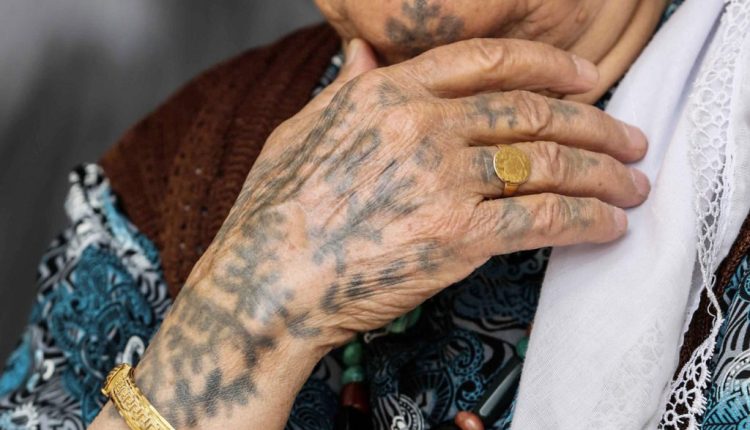
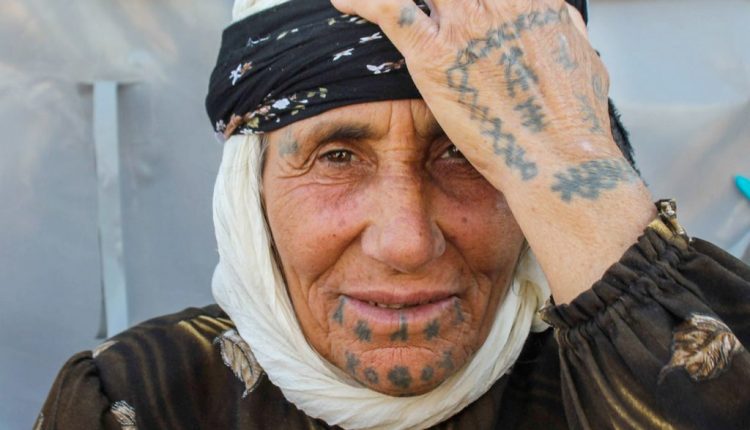
The black dot tattoo is a tradition with historical roots for the women of Kurdistan that dates back thousands of years. It is one of the ancient symbolic rituals that are part of the Kurdish feminist culture, and over time it has turned into a symbol and implication in the lives of women, as it was painted on the faces of women for multiple reasons of a social, spiritual and cultural nature.
Historical Roots
The black dot tattoo is part of the Kurdish feminist culture, and some historical sources indicate that this Kurdish tradition dates back more than 10,000 years, that is, before the emergence of civilizations, and it was considered a sacred ritual, practiced by women to confirm their cultural and identity affiliation.
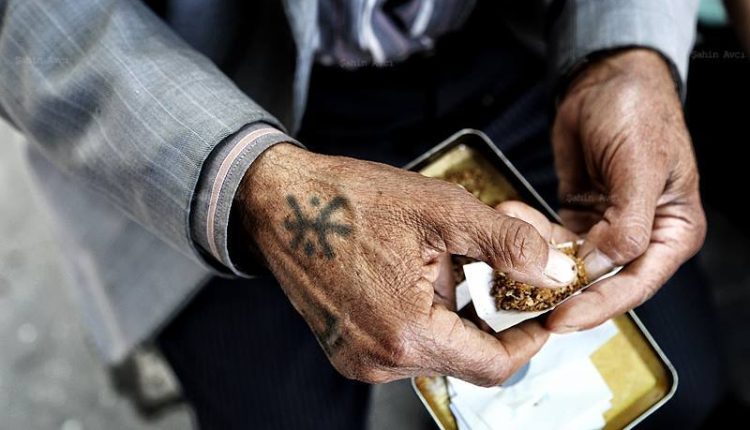
Previously, this tradition was more widely practiced among older women, where dots or symbols were drawn on the shapes of the moon, sun, stars, or other symbols with special meanings and connotations.
How to tattoo a black dot
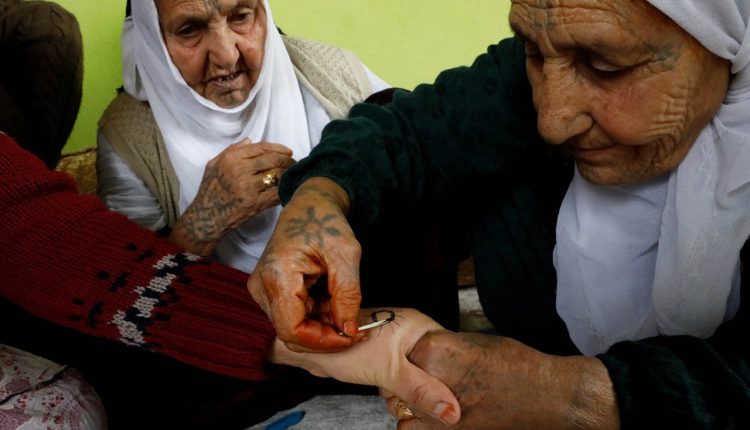
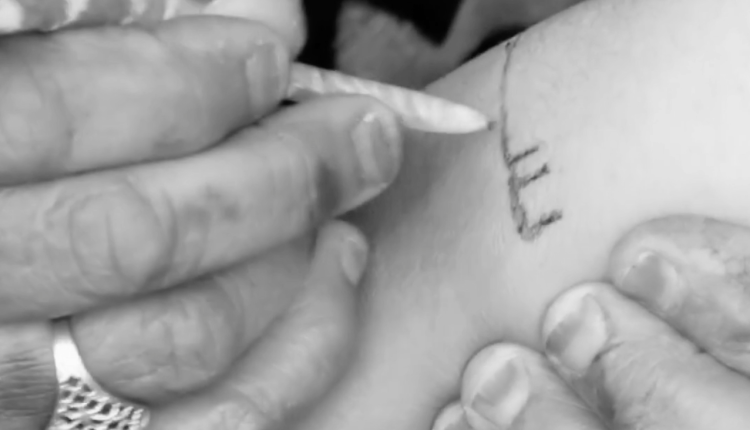
The method of placing the black dot varies from one area to another within Kurdistan. In general, it was drawn using a black powder extracted from the bottom of the cooking pot. The material is placed in the specified place on the face or body, then fixed through a burning process or through needle stitches. In some areas, burned leather or a special powder mixed with a liquid substance is used and then fixed in the skin, leaving a permanent trace.
It was believed that the most deserving women to obtain this black point were breastfeeding mothers, specifically those who had a baby girl, as the mother packed her milk in a small metal container and placed it on the fire until it boiled, then the milk was mixed with a black substance, and the point was drawn with the needle under the skin, leaving a small wound that quickly healed to form a dark spot on the skin.
Sometimes women would dissolve a rubber material on the specified position, then iron with the needle until the color stabilized, and then draw a certain shape as a symbol: sun, moon, star, fish, snake, peacock and others. However, it was essential that the woman to whom the black dot was drawn be free of health problems, and not infertile.
Black Dot Symbolic Positions and Objectives
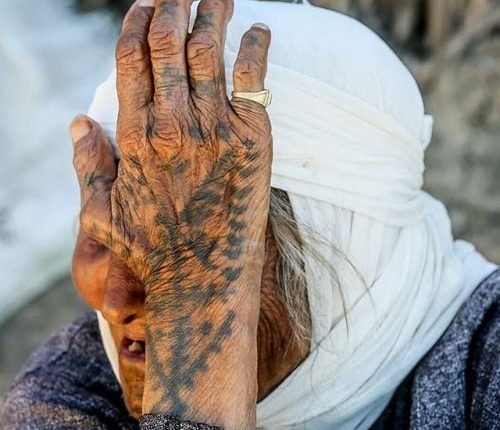
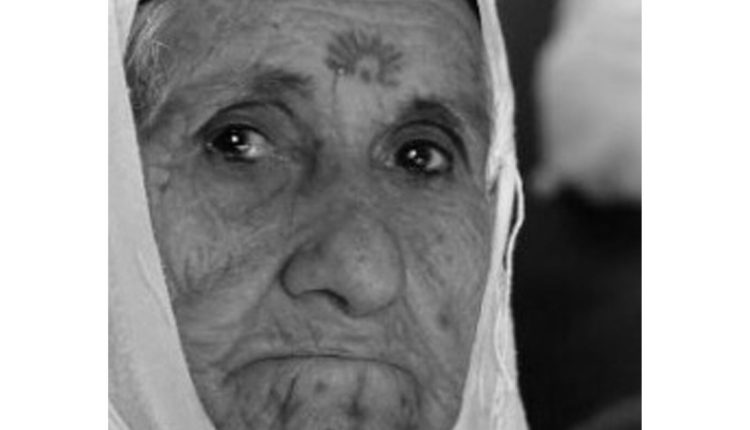
The black dot was usually drawn on various areas of the body: between the eyebrows, on the cheeks, chin, hands, fingers, arms, under the eye, on the chest, shoulder, or leg, and its purpose varied according to time and place: for decoration, as a symbol of national identity, as a religious ritual, or to document occasions and events experienced by women.
It was also used as a means of protection against the “evil eye,” or as a symbol of a woman’s strength, or of healing from disease, or as a symbol of fertility, health, offspring, and even good luck.
Mythological Symbols and Secrets of the Black Dot
Throughout history, the black dot tattoo has turned into a sacred and legendary symbol in the culture of Kurdish women, as generations have preserved it as an ancient cultural heritage, and elderly women, especially those over sixty years old, were showing this sign with pride, and a dot of pale gray appeared on their faces.
Today, the women of the new generation have begun to revive this symbolism, not as a strict social ritual as in the past, but as a cultural and identity manifestation that expresses belonging to the roots of Kurdish women, and it has become used in the contemporary feminist arts, and is considered part of the renewed Kurdish identity.
Source: rojnews
%s posted an update%s posted an update%s posted an update%s posted an update


 %s posted an update
 %s posted an update
 %s posted an update
 %s posted an update