In a region currently classified among the most vulnerable in the world to climate change, desertification, and rising temperatures, Erbil is attempting to present a different model of urban development through the “Green Belt” project. This initiative is considered one of the largest environmental projects in Iraq in recent years.
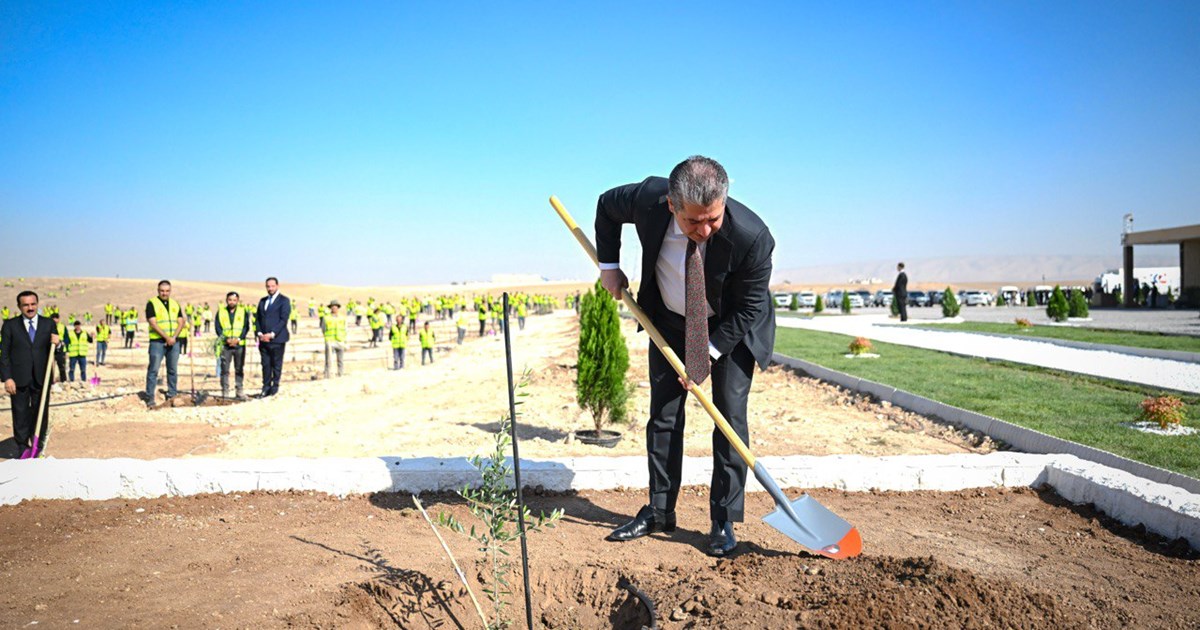
The project, launched under the directives of Masrour Barzani, is not limited to planting trees or enhancing the aesthetic appeal of the capital. Rather, it represents a strategic attempt to reshape the relationship between the city and the environment at a time when Middle Eastern cities face increasing levels of pollution, desertification, and dust storms.
According to official data issued by the Department of Media and Information of the Kurdistan Regional Government (KRG), the project aims to plant approximately 7 million olive and pistachio trees around Erbil. This circular belt extends 78 kilometers in length and reaches a depth of up to 2 kilometers, forming what resembles an “environmental wall” that surrounds the capital and protects it from pollution and desert encroachment.
The cost of the project is estimated at approximately $7 million, with more than 300 employees and workers participating in its implementation, in addition to specialized engineering and technical teams working on land clearing, preparation, and the execution of irrigation and afforestation operations using modern equipment. Local reports indicate that the first phase of the project saw the planting of hundreds of thousands of saplings, with the successful growth of hundreds of fruit-bearing trees so far, paving the way for expansion in the second phase, which will cover the areas extending from Baharka to the Mosul-Erbil road.
However, the importance of the project lies not only in its scale but also in its timing. Iraq is ranked among the five countries most affected by climate change according to United Nations reports, while the northern region of the country has witnessed a noticeable decline in vegetation cover and an increase in dust waves and droughts in recent years.
For this reason, the Kurdistan Regional Government views the Green Belt not as a cosmetic project, but as part of a long-term environmental policy aimed at improving air quality and reducing carbon emissions. Official estimates suggest that the project is capable of absorbing between 140,000 to 210,000 tons of carbon dioxide annually, in addition to lowering levels of toxic gases and fine particulate matter that cause respiratory diseases.
Supervising authorities also expect the project to contribute to lowering temperatures within the city and reducing the impact of dust storms that have begun to threaten daily life across vast parts of Iraq. According to environmental studies within the government plan, the planted trees will also act as natural windbreaks and help stabilize the soil, limiting accelerated desertification.
Economically, the project carries dimensions that go beyond the environment. Planting millions of fruit-bearing olive and pistachio trees signifies a future agricultural output that could transform into a local economic resource, as well as create permanent job opportunities in the fields of agriculture, maintenance, and environmental services. Furthermore, the government is betting that expanding green spaces will increase Erbil’s attractiveness for investment and tourism, especially in light of the rapid urban expansion the city is experiencing.
On the other hand, observers believe that the project’s success will depend on the government’s ability to ensure its sustainability, particularly regarding water security and long-term maintenance in a region already facing increasing water challenges. For this reason, the plan includes the construction of water basins to support irrigation operations and maintain the continuity of the vegetation cover.
Although there is still a long way to go before the project is completed, Erbil’s Green Belt reflects a significant shift in developmental thinking within the Kurdistan Region; moving from a focus solely on traditional infrastructure to investing in the environment as a component of health, economic, and social security.
In a region accustomed to seeing trees uprooted due to wars, neglect, and drought, Erbil is trying today to build a different narrative: a city that grows with concrete, but does not abandon the color green.
Note: This text is translated from the original Arabic version… Read the Arabic version:Click here