Accusations of modifying images and content in textbooks and removing historical and political topics spark a debate on curriculum identity, while the Ministry affirms that changes were limited to a single measure in 2025 and announces the completion of new curriculum standards.
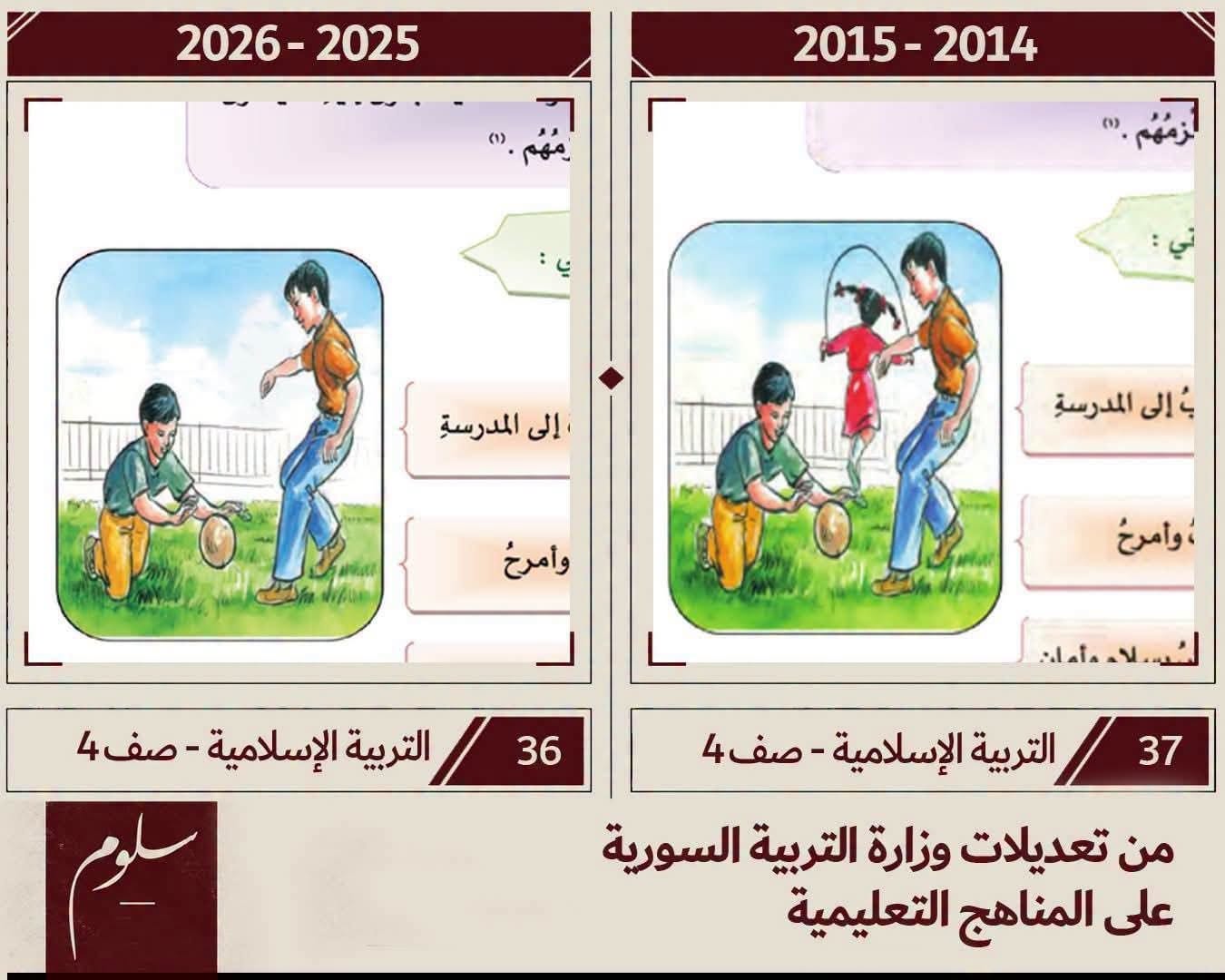
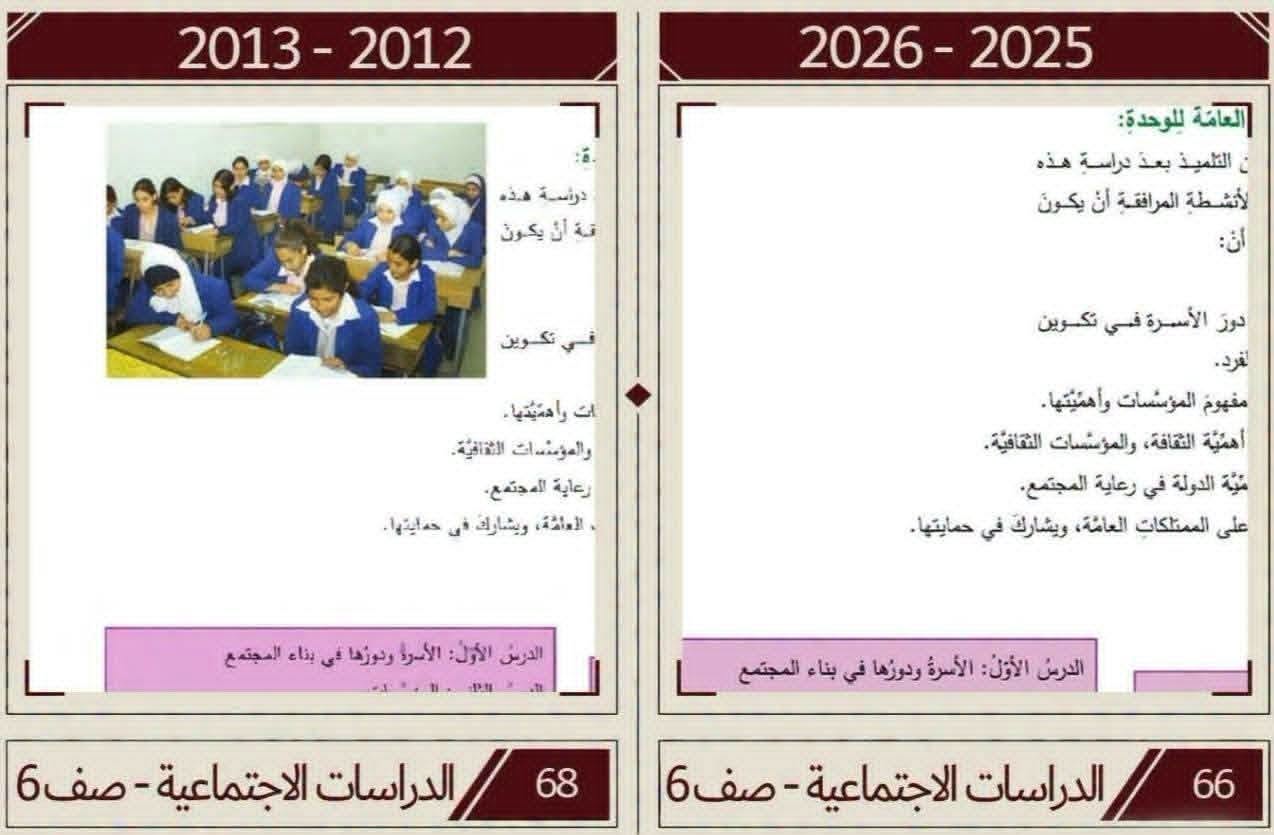
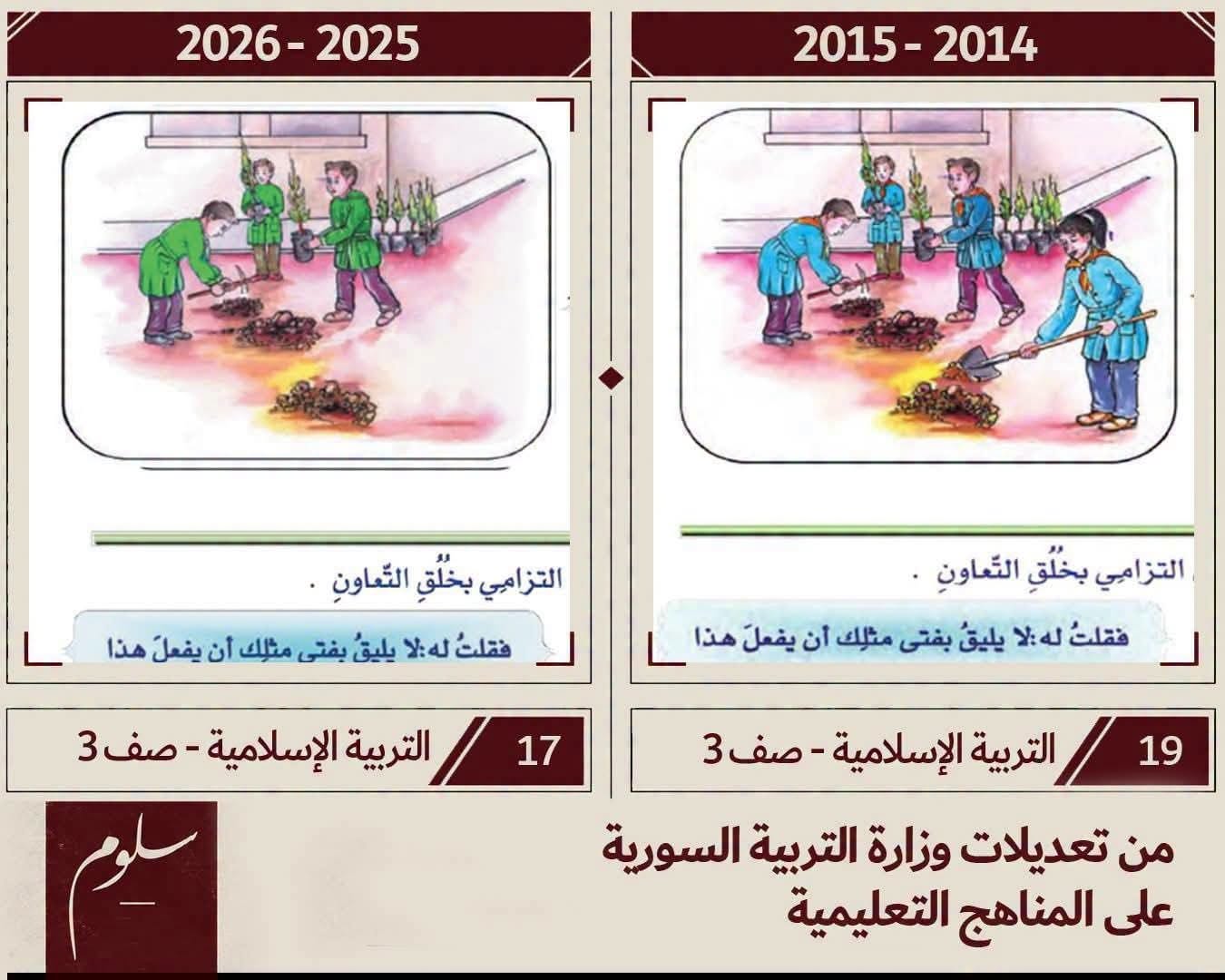
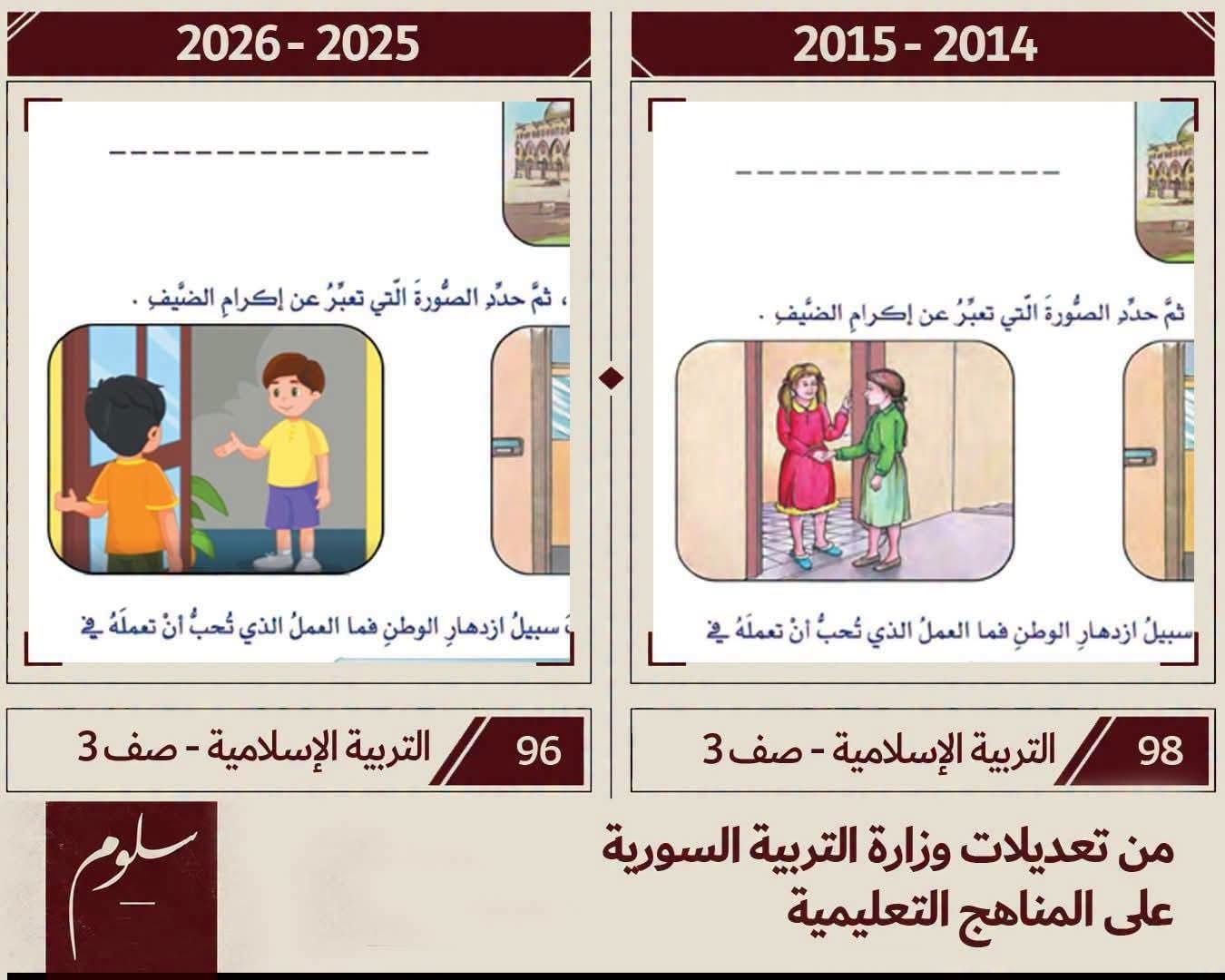
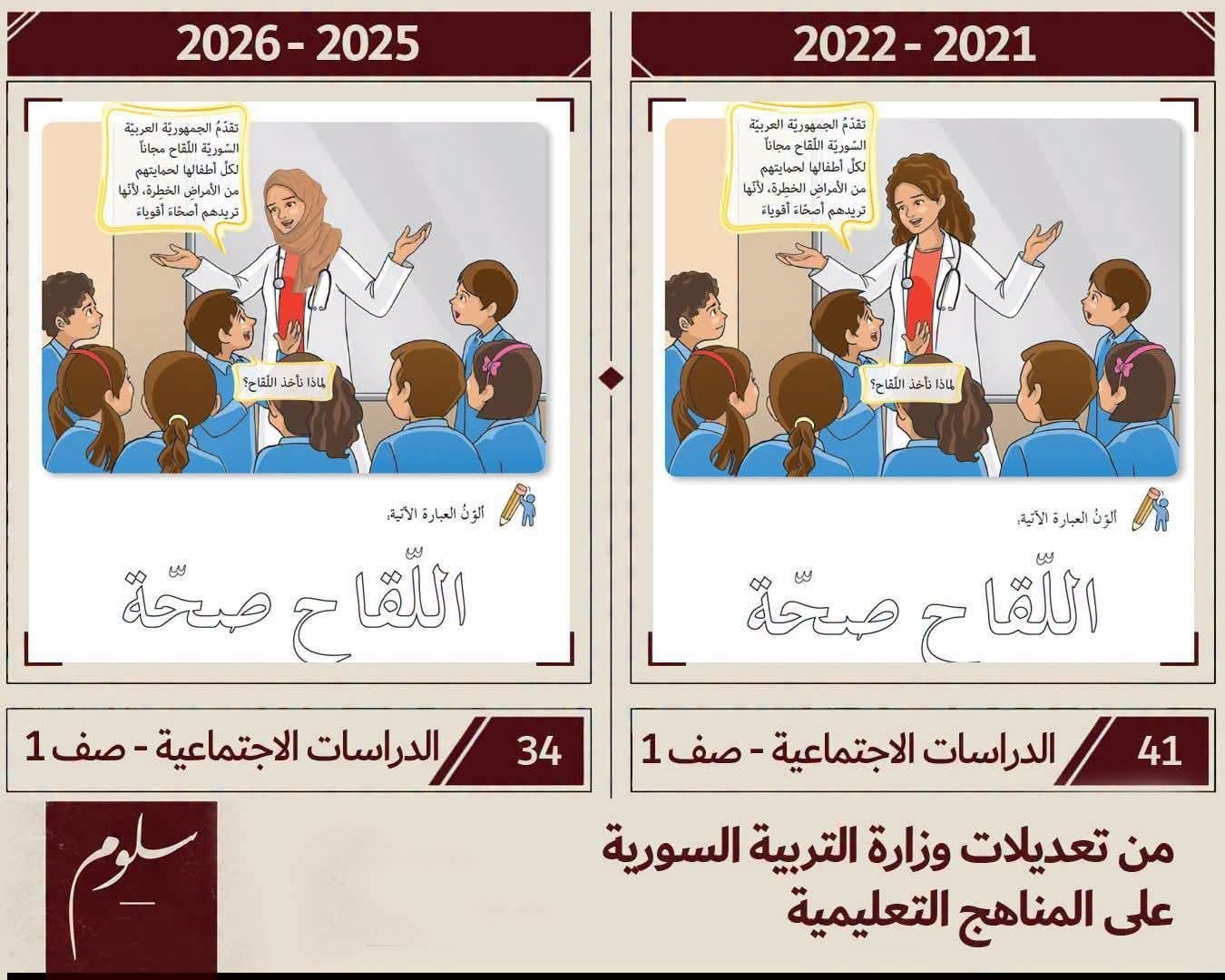
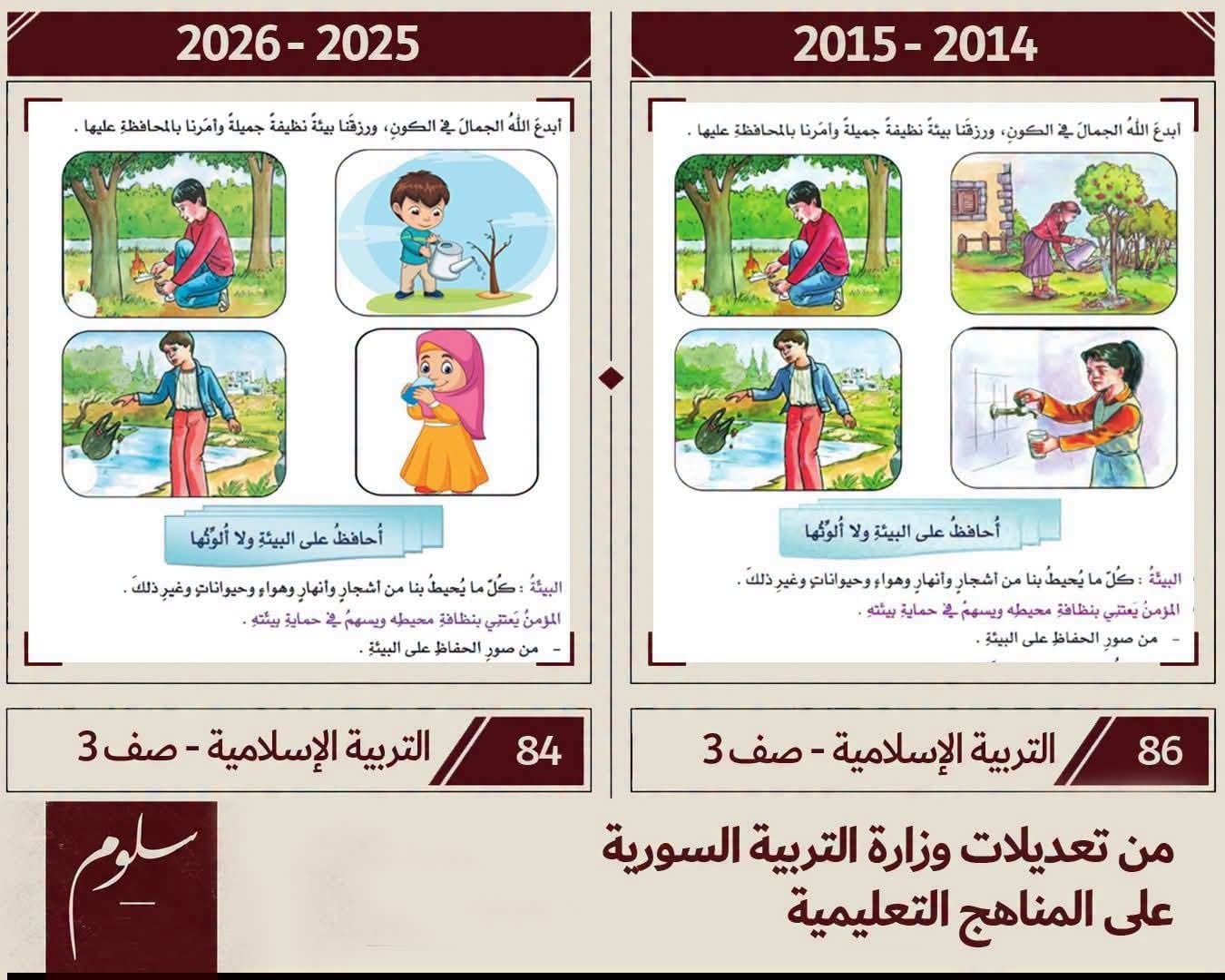
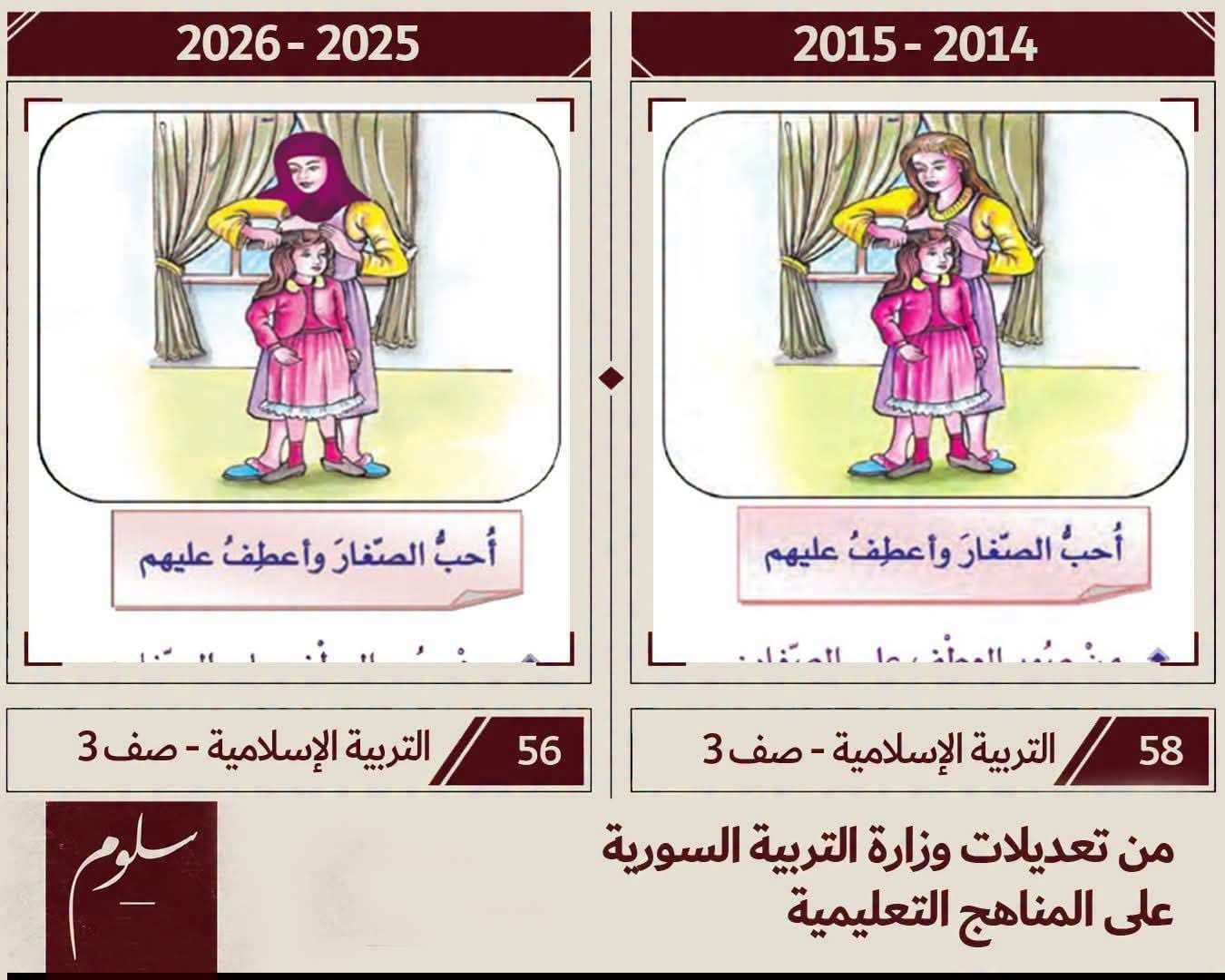
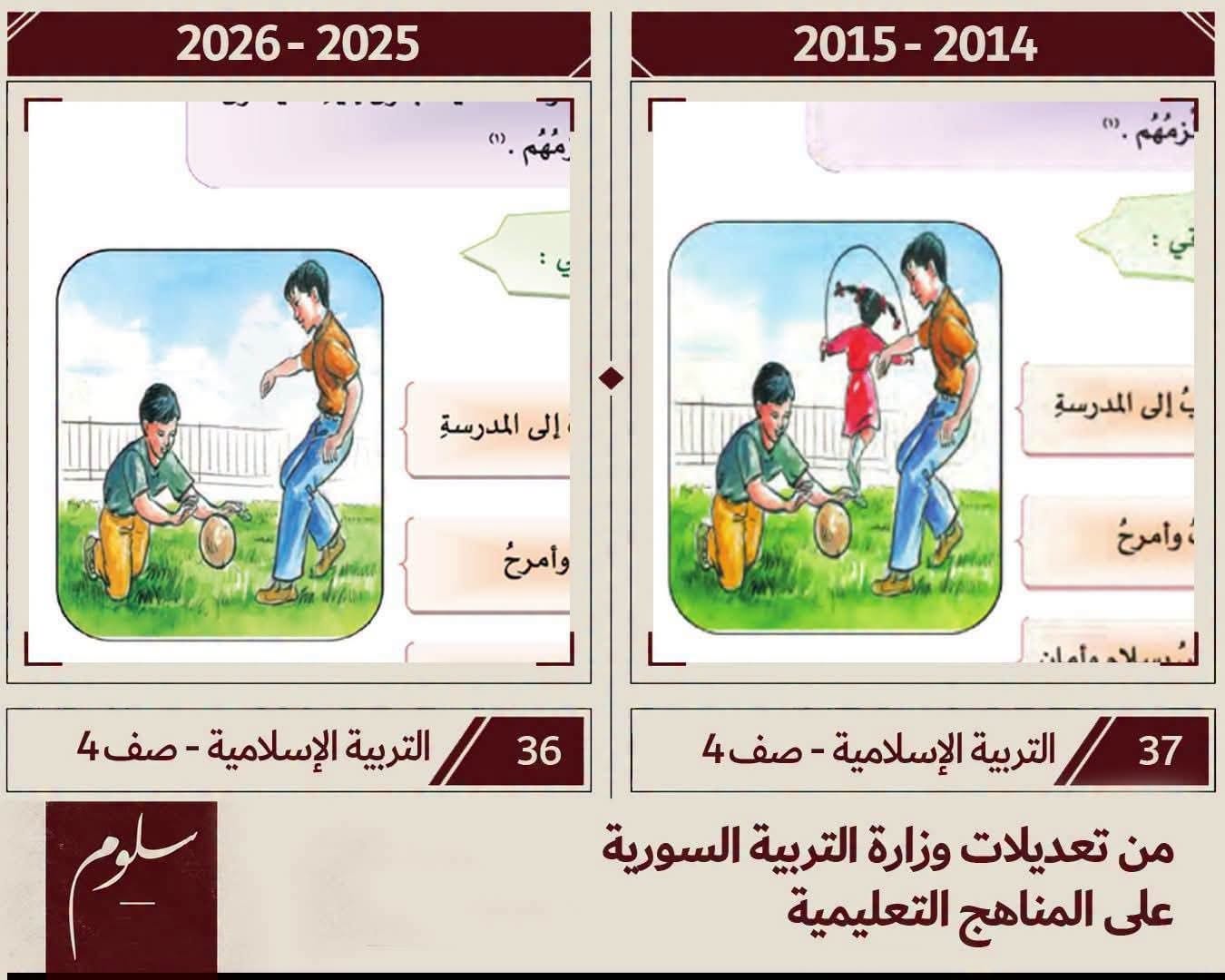
Circulating images from Syrian educational curricula have sparked controversy regarding the nature of amendments made to textbooks, amid criticism addressing the alteration of historical images and the deletion of passages covering political figures and events, alongside concerns over the impact of these changes on the country’s cultural and religious diversity. Meanwhile, the Ministry of Education denied implementing new changes, emphasizing that the work completed since liberation was limited to a single modification announced in January 2025.
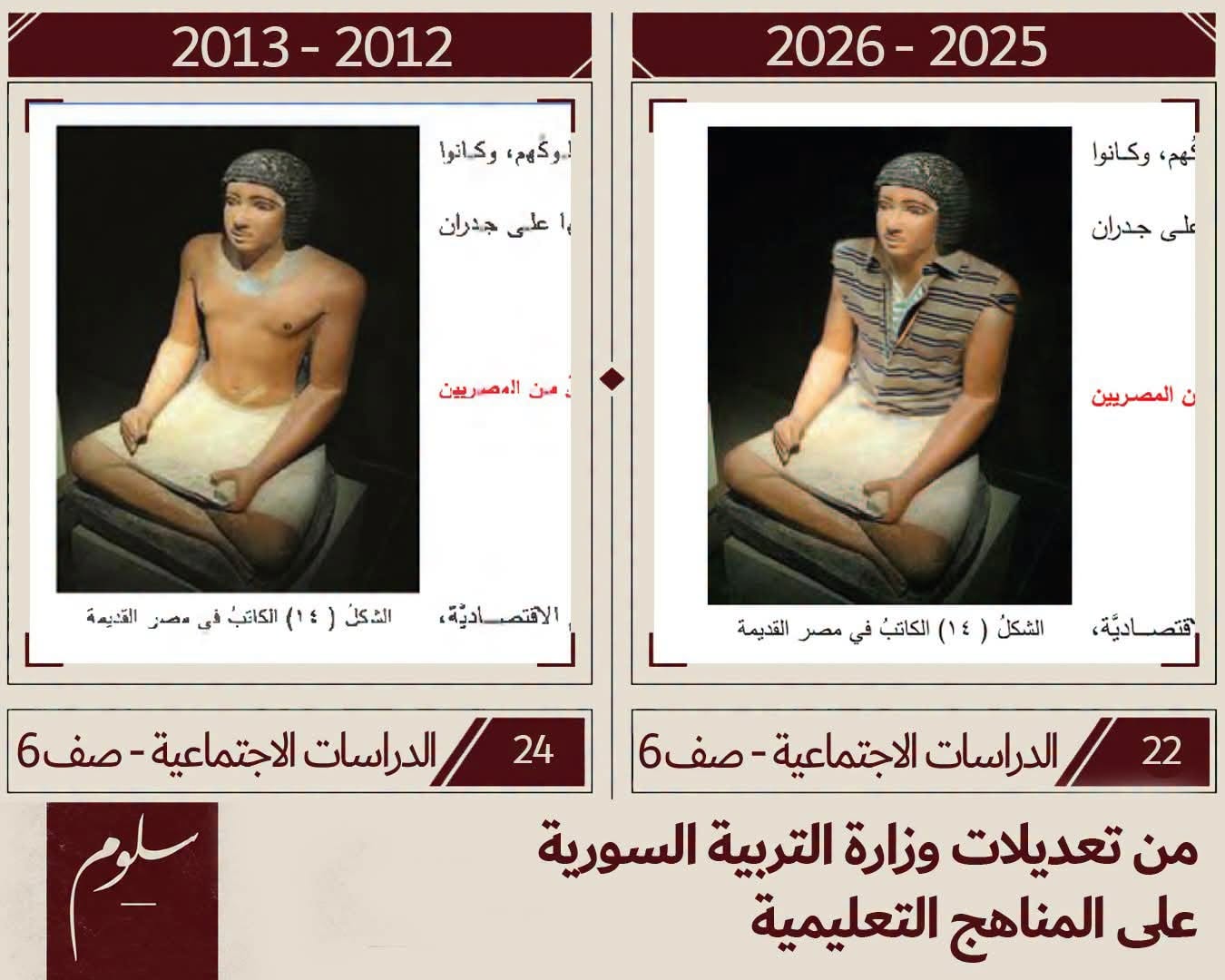
The circulating criticisms included images alleged to have undergone modification, including a photo of an ancient Egyptian Pharaoh scribe who appeared bare-chested in the original version before a shirt was added to his picture using the image-editing software “Photoshop,” according to the posts.
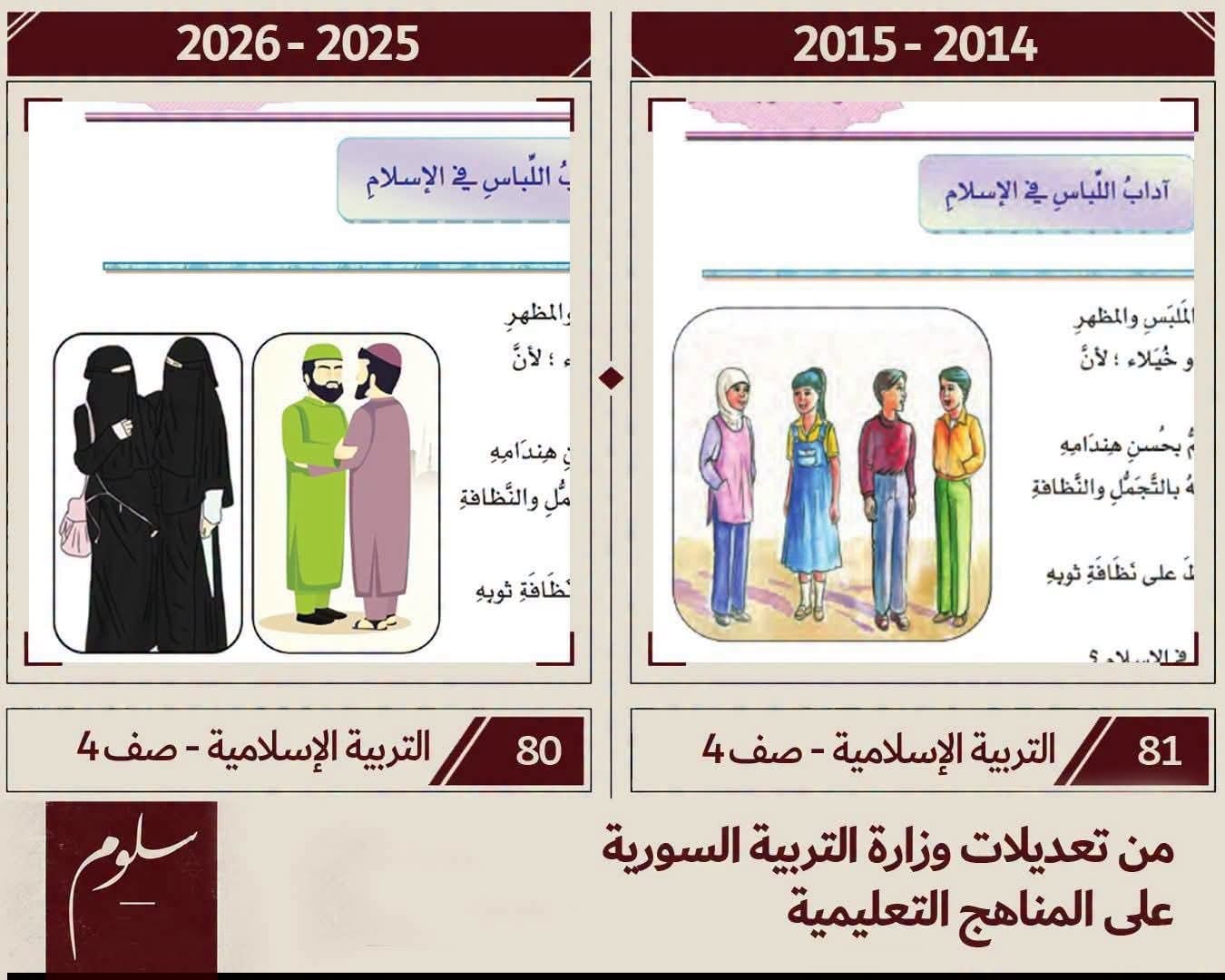
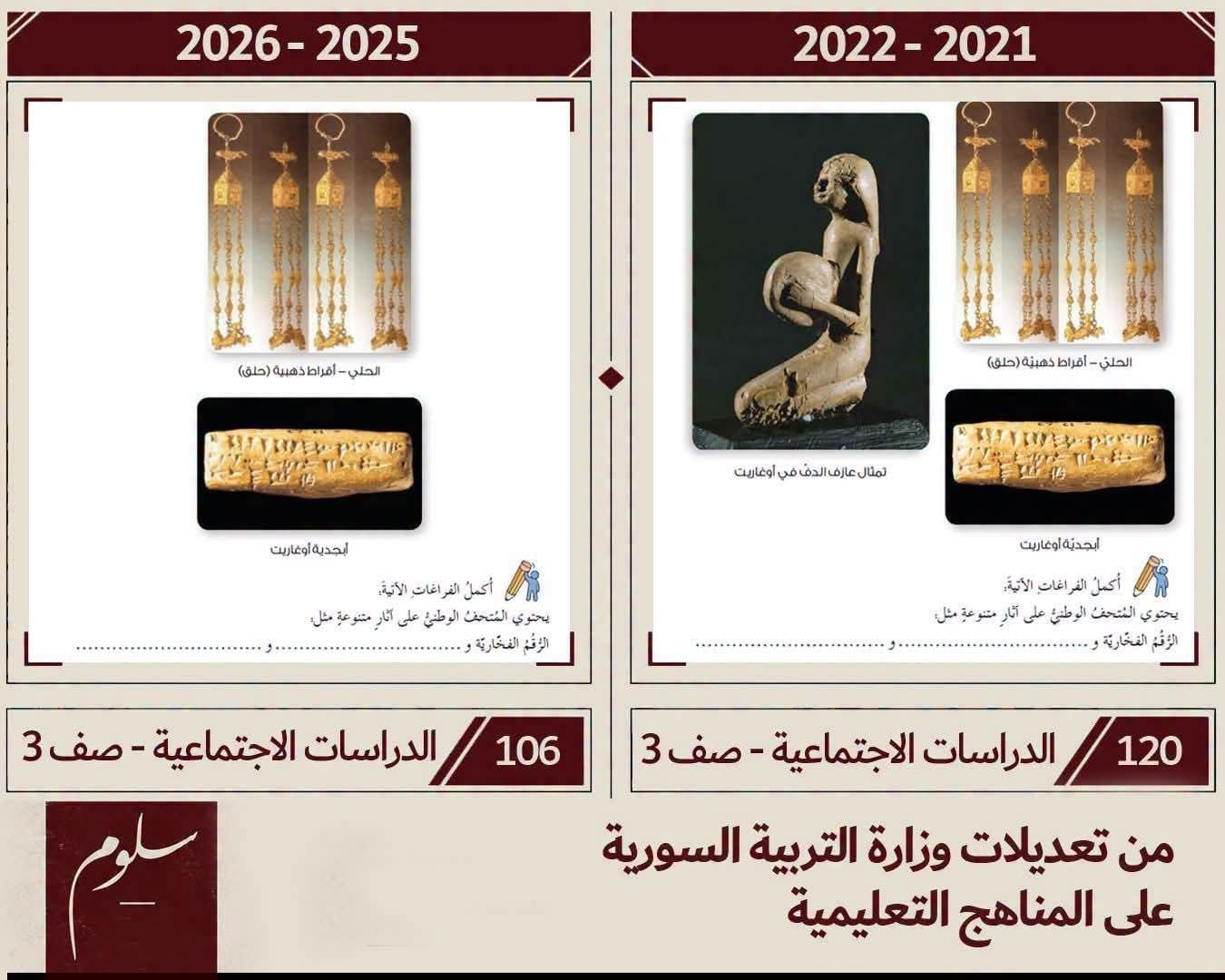
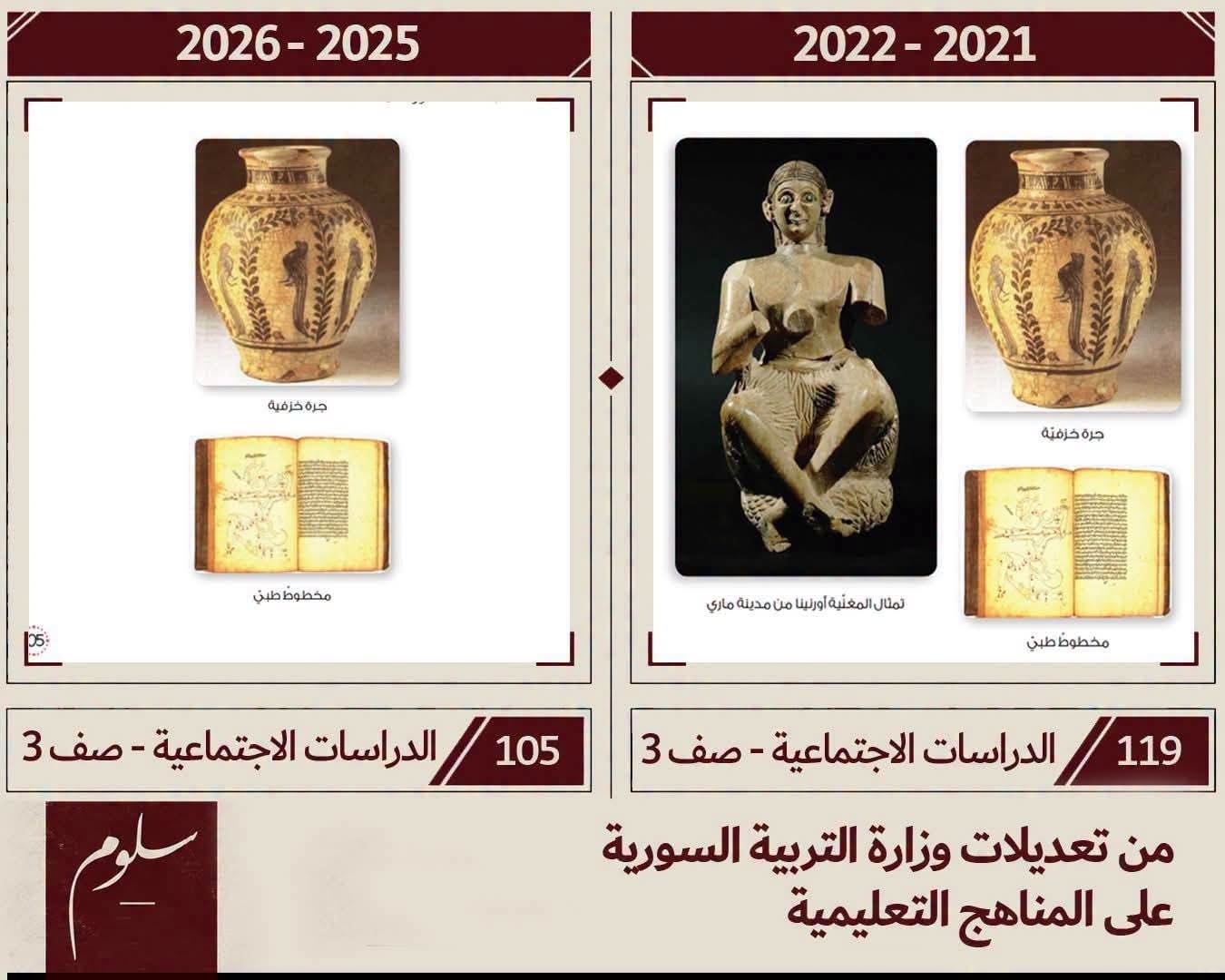
Criticisms also cited changes in textbook content which, according to circulated reports, included deleting lessons related to political life, freedom, democracy, citizenship, partnership, and local administration, alongside what the posts described as an increased presence of religious manifestations in images and educational content.
Accusations of Removing Historical Figures and Passages
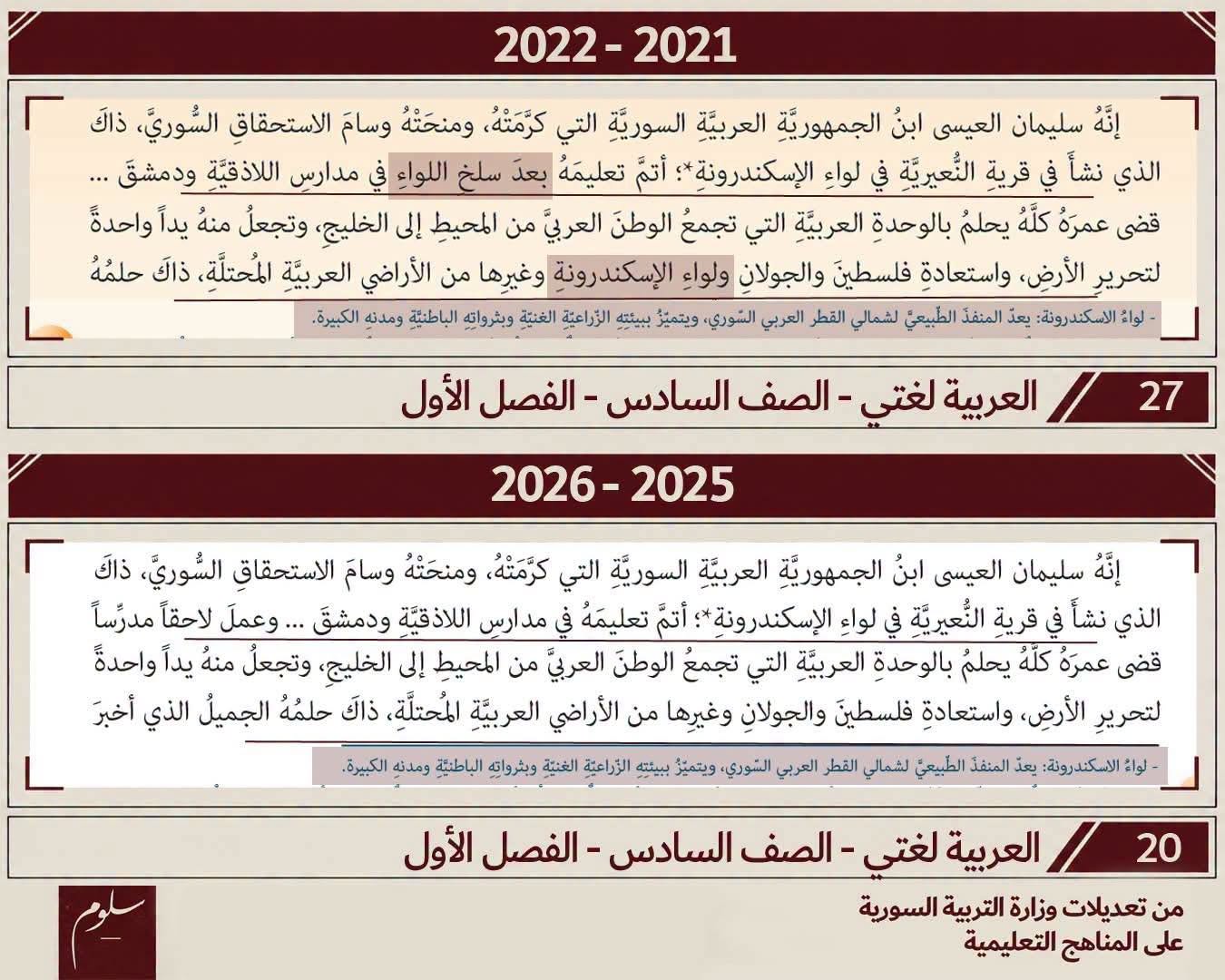
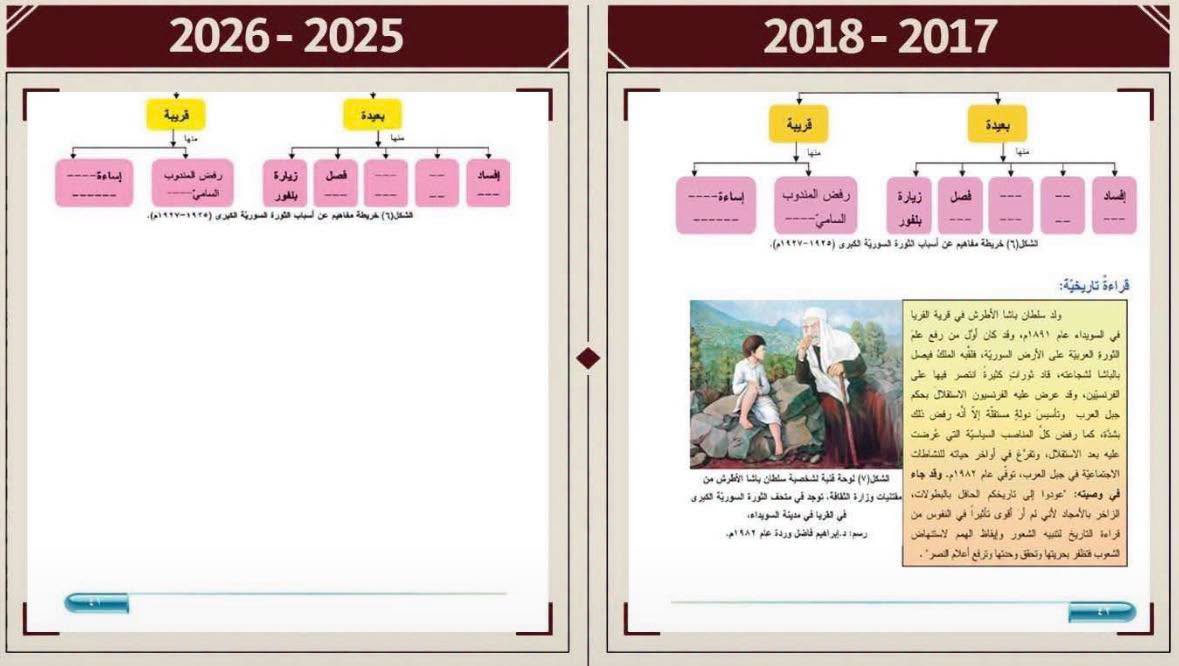
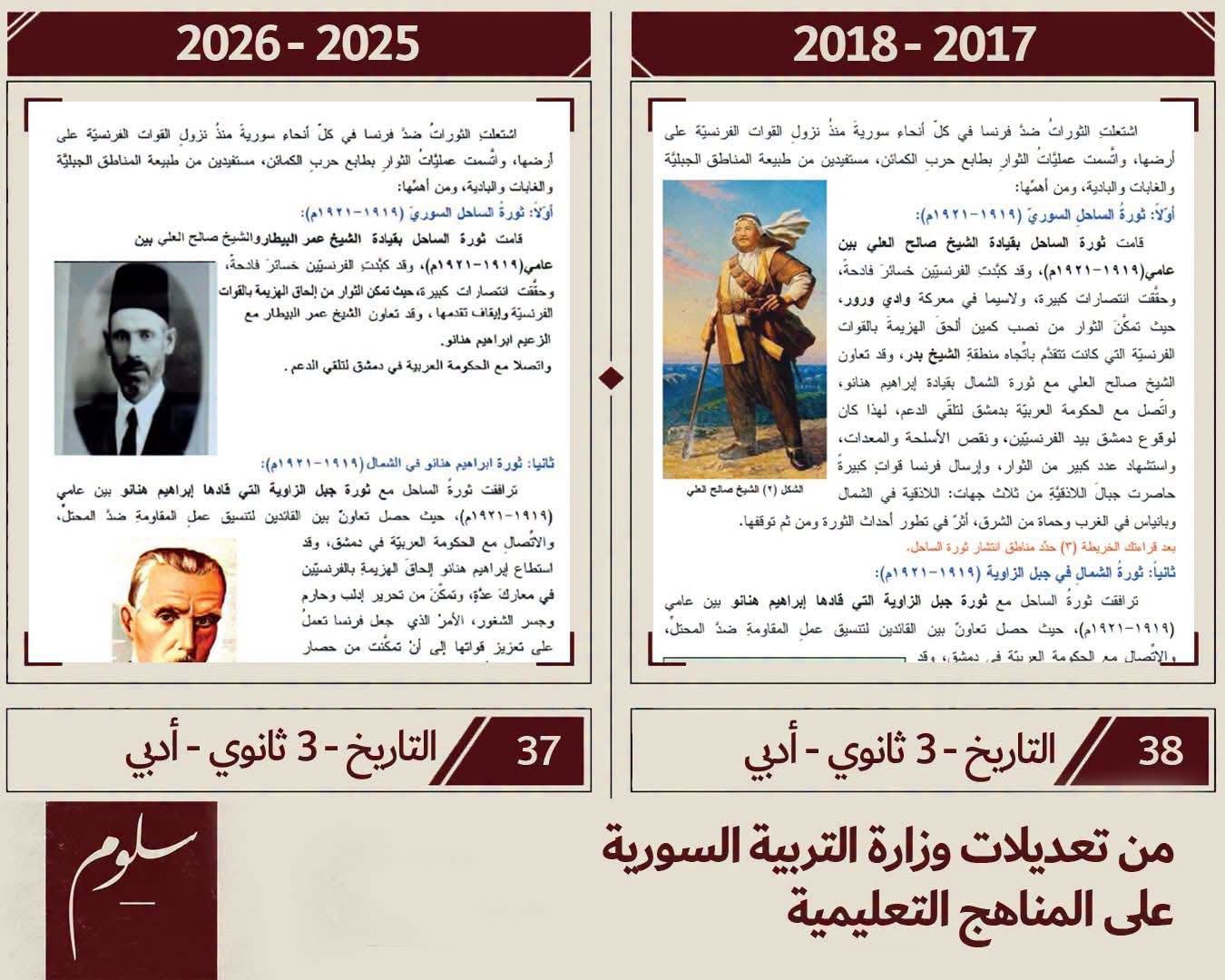
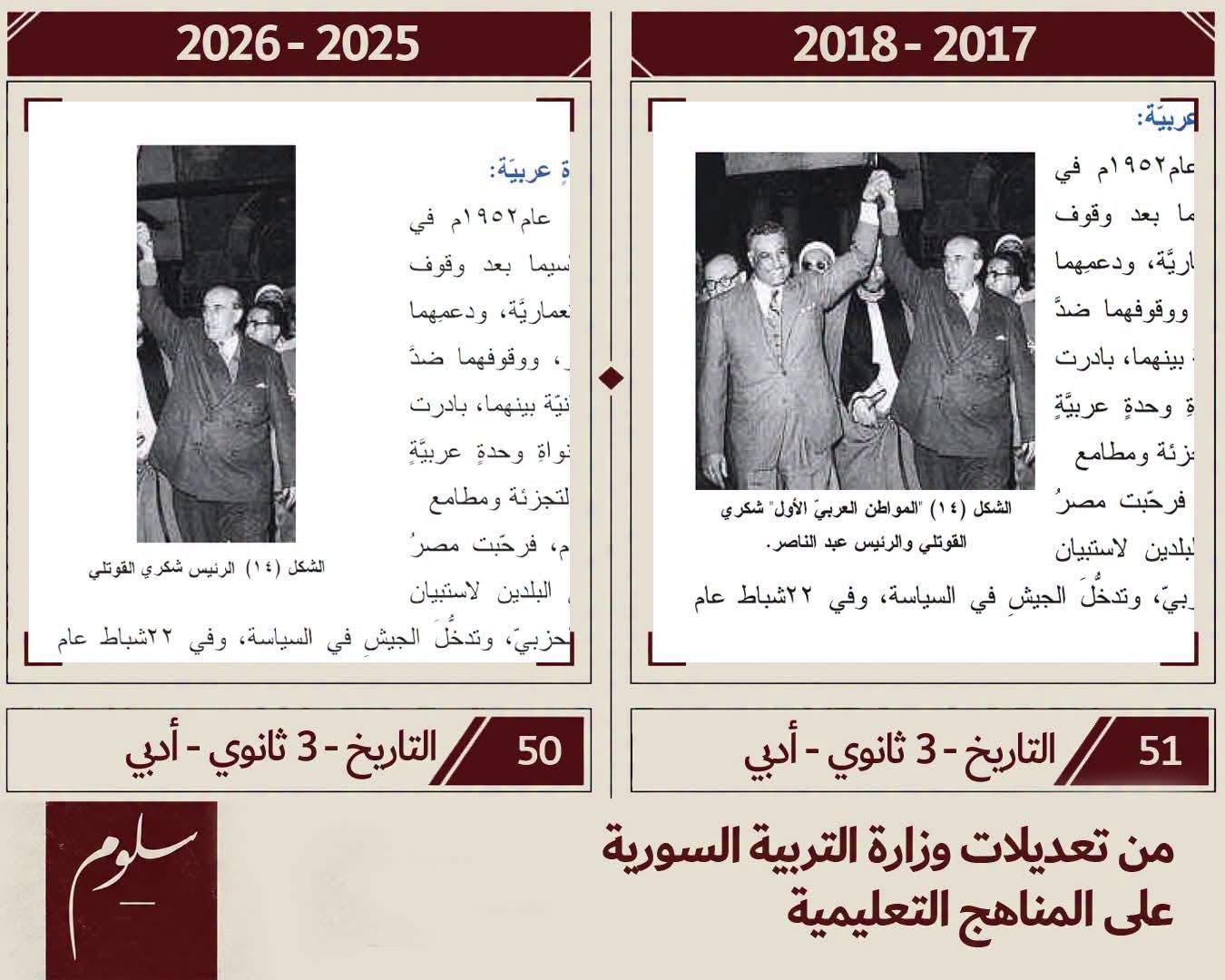
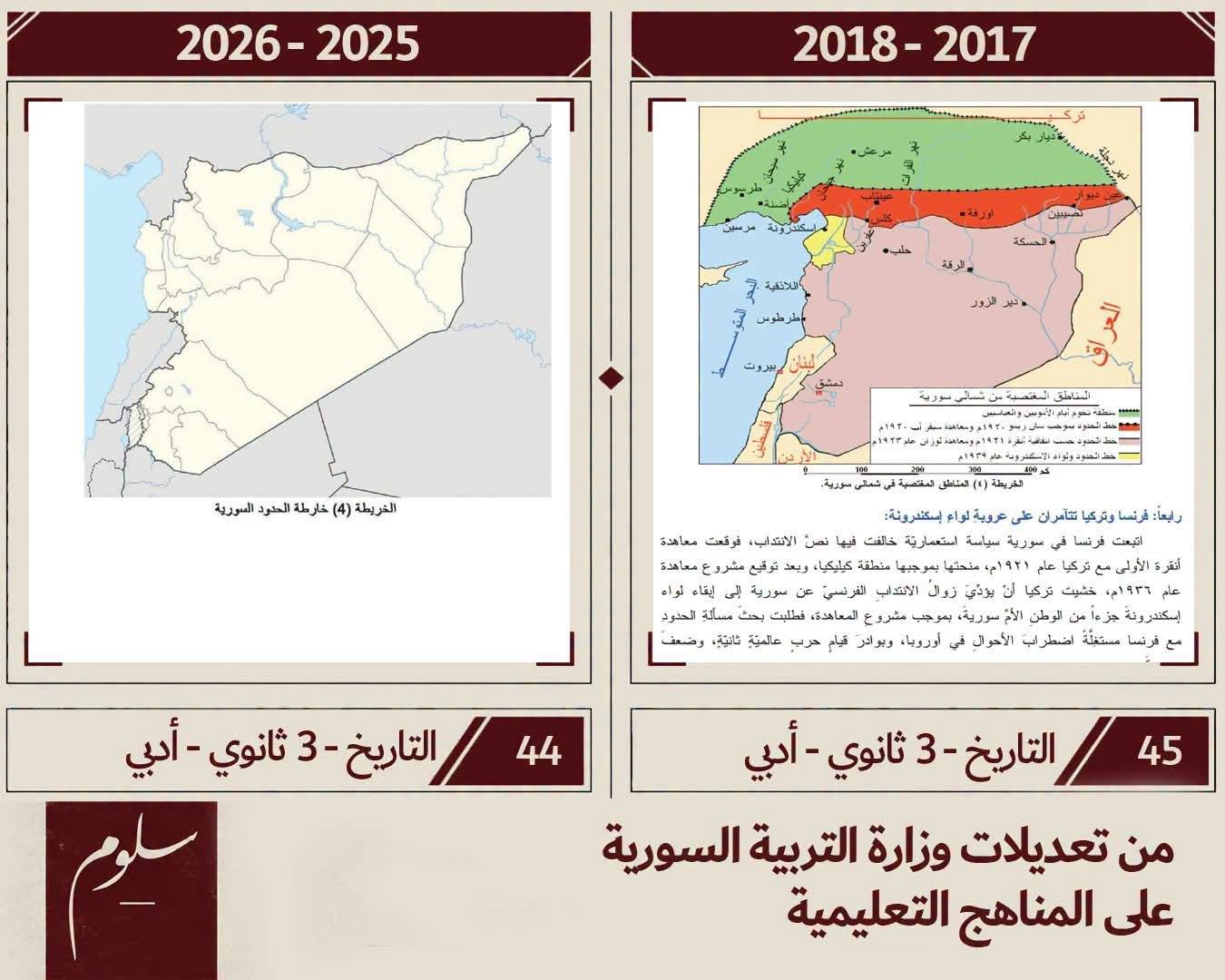
In a related context, criticisms pointed to the removal of Gamal Abdel Nasser and Sultan Pasha al-Atrash from Syrian history, as well as the cancellation of texts discussing the annexation (severance) of the Sanjak of Alexandretta, which critics viewed as an alteration in the presentation of key milestones in Syrian history.
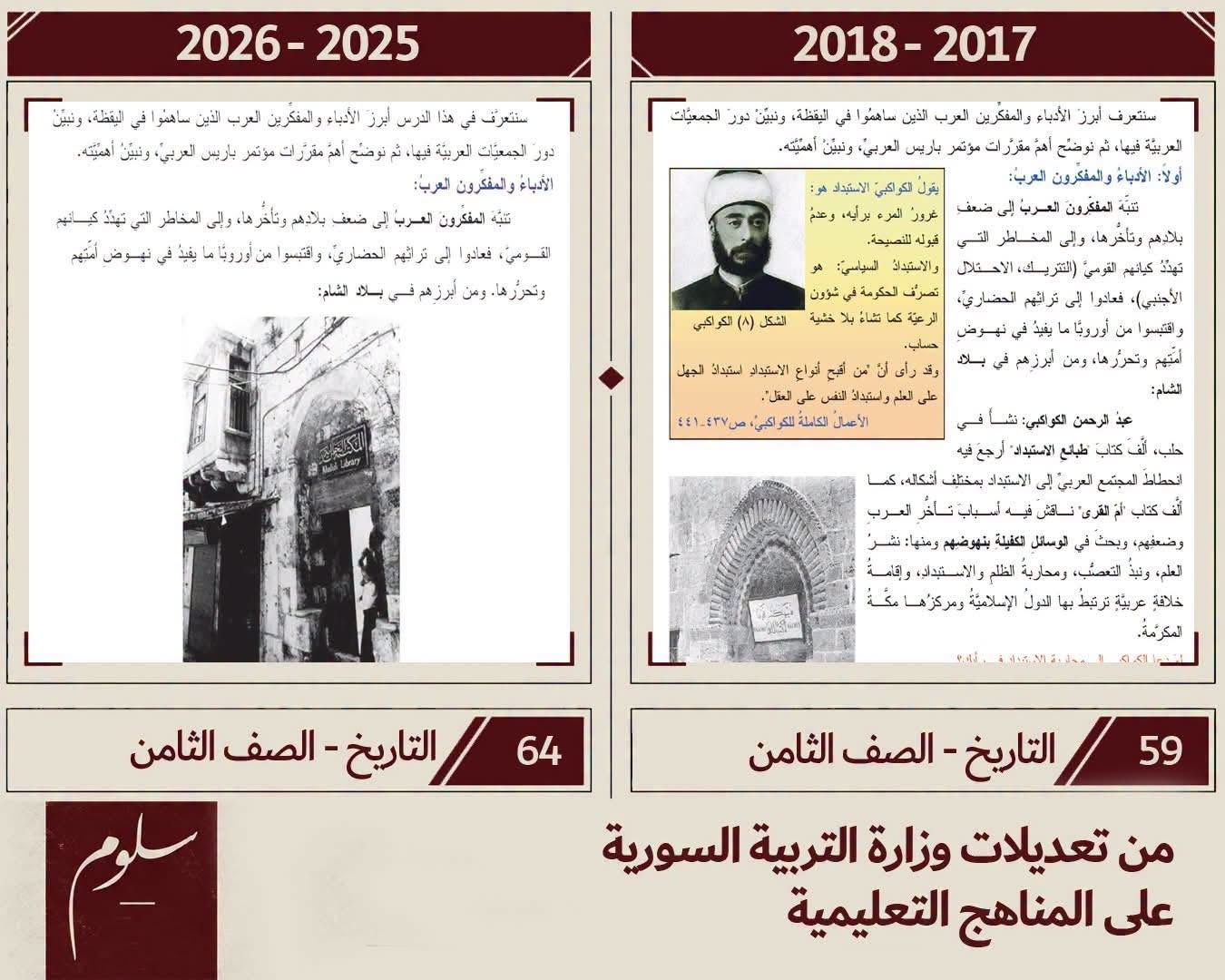
The posts also noted the introduction of the name of a man described as unknown alongside Sheikh Saleh al-Ali in leading the Syrian coastal revolution, in addition to the deletion of passages from textbooks discussing the book The Natures of Despotism by Abd al-Rahman al-Kawakibi.
Among the quotes removed from the book was the following statement: “He observed that among the most hideous forms of despotism is the tyranny of ignorance over knowledge and the tyranny of the self over reason.”
Other opinions linked these amendments to fears that the curricula are heading toward reinforcing a single religious vision for Syrian society, warning that this could reduce the diversity of society and its components, and maintaining that educational curricula should not become a tool for imposing a specific religious or social vision on new generations.
Ministry of Education: Only One Amendment Since Liberation
In response, the Ministry of Education affirmed that the modifications made to the curricula since liberation were restricted to a single amendment during 2025, which was announced and published in January of the same year, denying the accuracy of information circulated on some social media pages regarding further changes.
In a statement, the Ministry stated that the development of educational curricula aims to keep pace with the aspirations of Syrians, safeguard the diversity of Syrian society, and consolidate the values of citizenship, belonging, and respect for others.
It clarified that the implemented amendment involved removing the “symbols of the former regime” and its ideological content, and correcting associated images and content—particularly in the social studies and Islamic education curricula after their unification—to reflect the diversity of Syrian society and promote the presence of its components and cultures, contrary to what it described as inaccurate information being circulated on social media.
The Ministry stressed that Syrian curricula are distinguished by their diversity in line with the cultural and social diversity of society, emphasizing that they do not adopt a single character or a specific orientation.
New Standards for Curriculum Development
Regarding the education development plan, the Ministry announced the completion of the General National Curriculum Framework and the setting of standards to build modern curricula that place the learner at the center of the educational process, foster critical thinking, analytical, and problem-solving skills, enhance life, digital, and creative skills, and instill national and human values alongside the culture of law.
It added that work on authoring the new curricula will begin after the approval of the standards by the Supreme Council of Education, to be implemented sequentially in accordance with approved procedures.
The Ministry reaffirmed its ongoing commitment to developing curricula, teaching methods, and evaluation and assessment techniques to achieve a balance between authenticity and openness, contributing to preparing a generation aware of its rights and duties, proud of its identity, and capable of keeping pace with developments and participating in building the new Syria.
Furthermore, the Ministry attached sample images that it said illustrate the diversity present within the Syrian curricula, alongside original photos of some illustrations contained in educational books, calling for accuracy in conveying information, reliance on official sources, and avoiding getting drawn behind rumors.