Martyrdom of 8 Detainees, Around 20 Injured, and Release of All Prisoners Amid Efforts to Contain Tension
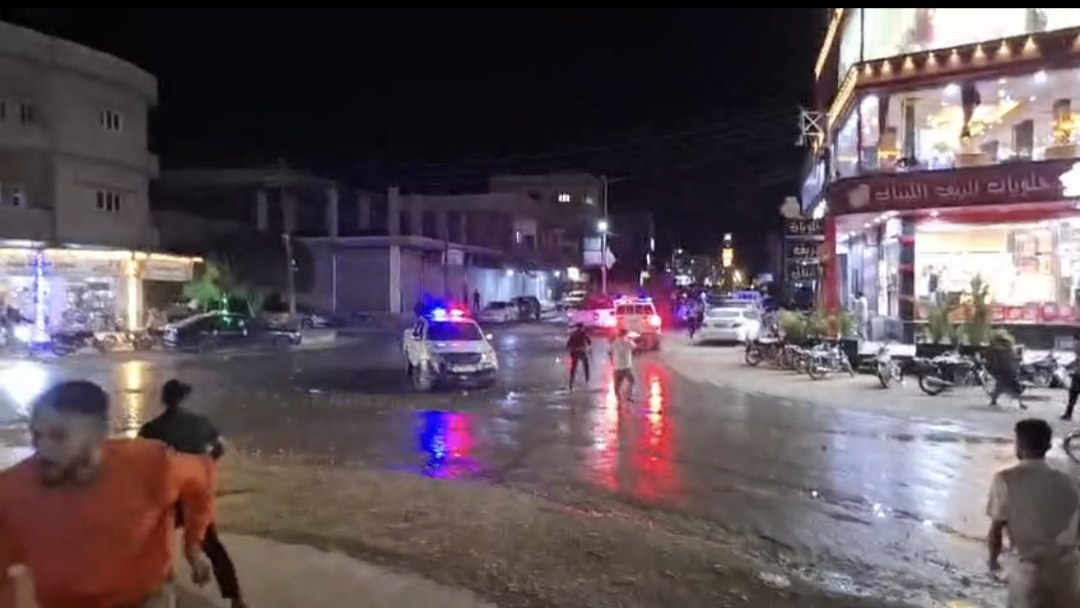
On the morning of Saturday, September 12, 2026, the city of Kobani in Western Kurdistan (“Rojava Kurdistan”) awoke to a fire that broke out inside the city prison. According to available information, the incident resulted in the killing of 8 Kurdish detainees and the injury of around 20 others, including critical cases, while the surroundings of the prison witnessed chaos and tension alongside the release of all prisoners.
According to preliminary information, the fire broke out inside Kobani prison following a state of mutiny, amid conflicting accounts regarding the circumstances of what happened. At the same time, sources reported that some detainees managed to escape, while the remaining prisoners were evacuated and the injured were sent to hospitals for treatment.
Local sources reported that some prisoners set themselves on fire before events escalated into a large-scale blaze inside the prison, while other information indicated that one of the prisoners set fire to his mattress, causing the fire to spread throughout the facility.
According to the latest information from the hospital, the total number of casualties—including both killed and injured—reached approximately 26 people, as reported in circulated data.
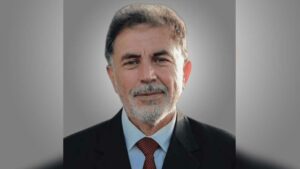
According to a circulated account, the individual named Majid al-Din Abu Omar, said to be the security chief in Kobani, provoked the prisoners and directed racially charged remarks at them in an attempt to push them toward escalation. This was reportedly intended to justify the continued presence of the General Security forces in Kobani under the pretext of a prison mutiny.
According to the same account, this attempt failed, after which an order was issued to transfer the prisoners to the city of Aleppo. This was categorically rejected by both the “recently integrated Kurdish” Asayish elements and the prisoners, out of fear that their transfer to Aleppo would expose them to torture or mistreatment there.
With the official and his personnel insisting on executing the transfer decision, one of the prisoners set fire to his mattress, leading to a major fire breaking out inside the prison amid ongoing tension at the site.
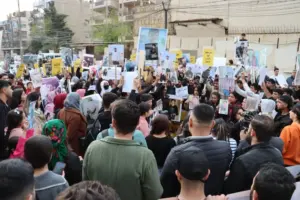
On Friday night, the city of Kobani witnessed security tensions coinciding with the Interim Government’s General Security forces sending reinforcements to the area. This came against the backdrop of Kurdish protests that erupted following the brutal martyrdom of the Kurdish fighter “Sipan” at the hands of Arab tribes currently considered militias of the interim authority.
According to circulated information, the situation remained tense between the Asayish forces and the General Security forces in the city, with efforts underway by all parties to calm and contain the situation.
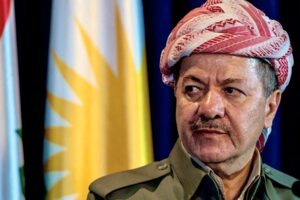
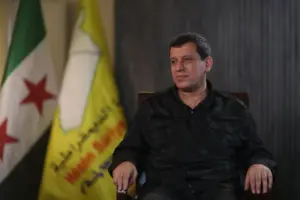
In another development, news reported the arrival of Presidential Adviser Mr. Mazloum Abdi in the city of Kobani following the recent events witnessed by the city early this morning.
The Syrian Observatory for Human Rights (SOHR) stated that it obtained video footage documenting part of the provocations and tension that preceded the outbreak of the fire, showing the presence of security forces around the prison alongside mutual chanting between security personnel and detainees.
SOHR called for the examination and review of surveillance camera recordings inside and around the prison to accurately clarify what occurred, establish the sequence of events, and determine responsibilities away from conflicting narratives.
Additionally, SOHR observed General Security personnel who entered Kobani on Friday night chanting slogans of a political and nationalist nature during the protests witnessed in the city following the killing of the integrated serviceman “Sipan.”
As documented by SOHR’s camera, several General Security personnel chanted slogans including: “Ahmed al-Sharaa is the crown on your head,” “We stepped on Qandil and broke you,” and “Where is your Rojava?”, alongside other chants, at a time when the city was experiencing a state of tension and public anger over the murder of “Sipan.”
These chants sparked widespread outrage among a number of protest participants, who considered them provocative and contributing to increased tension rather than calming the situation and containing the prevailing anger.
SOHR warned of the danger of issuing slogans or positions with nationalist or political dimensions in such sensitive circumstances, given their potential to deepen societal divisions and incite further tension among the region’s components.
Repercussions from the martyrdom of the Kurdish serviceman Sipan continue in Al-Hasakah Governorate amid new details that SOHR said it obtained. These details indicate that the crime was not the result of a passing tribal dispute, but rather occurred within the context of an organized political scheme aimed, according to this information, at igniting an Arab-Kurdish conflict and suffocating the Kurdish movement and its demands.
According to information obtained by SOHR, a meeting was held a few days ago in the Mazzeh area of Damascus, attended by a representative from Turkish intelligence and representatives from the Transitional Government. Discussions focused on how to target demonstrations and activities linked to Kurdish demands, particularly those concerning the Kurdish language and the right to mother-tongue education.
According to the same data, the martyr Sipan’s name was not mentioned during the meeting; however, attendees agreed on an option based on reviving blood feuds between Arabs and Kurds as a tool to generate widespread societal tension that could be politically exploited.
Information indicates that choosing the Baggara tribe to carry out the crime was not accidental, but based on old calculations dating back decades. These were used, according to SOHR, as a pretext to launch a bloody trajectory serving political objectives unrelated to blood revenge or tribal custom.
The initial assessment of the crime, according to the incoming information, concludes that what occurred was not an individual or purely tribal act, but rather the execution of a political decision made by official entities. This highlights the necessity of distinguishing between the direct perpetrators who committed the crime and the planners and instigators.
According to SOHR, Turkish intelligence and the Transitional Government bear the greatest and most dangerous responsibility, as they are—according to this information—the two entities that contributed to creating the environment, managing the incitement, and directing the path toward murder.
These developments come, according to the same source, after the failure of the same entities to spark a direct clash between Arabs and Kurds, as well as the failure of attempts to set up war tents a while ago, shifting—according to the information—to more dangerous methods based on reviving old feuds and dragging society into a fabricated confrontation aimed at suffocating Kurdish demands.
In this context, according to the information obtained by SOHR, the silence of the Transitional Government up to this point stands out, particularly since the martyr Sipan was one of its integrated military personnel within the Syrian Ministry of Defense and part of the Hasakah Regiment. This makes commenting on the crime politically costly and reveals, according to the source, the extent of entanglement between the entities that planned it and those supposed to protect their personnel.
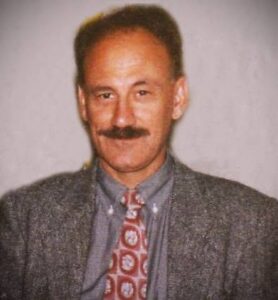
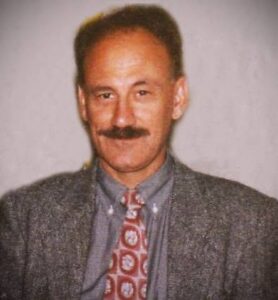
Sipan, known as Sami Sheikhmous Hasso, was a fighter in the Hasakah Brigade. He was kidnapped before his body was found murdered in the Al-Hasakah countryside. The Internal Security Command in Al-Hasakah Governorate announced on September 11, 2026, that it managed to identify the primary suspect in the case following security follow-ups and documentation of the kidnapping operation, while confirming that investigations are ongoing ahead of referring the accused to the judiciary.
The issue of Sipan’s murder comes at a sensitive phase in the trajectory of relations between Damascus and Kurdish forces in northern and eastern Syria, following a series of agreements aimed at integrating the civil and military institutions of the region into Syrian state institutions.
Under these developments, the murder of Sipan carries special sensitivity given his status as a fighter in the Hasakah Brigade following the integration of military formations. Meanwhile, the crime triggered protests in Kurdish areas amid calls for an investigation and for holding those responsible accountable.
Following hours of tension and security alertness, the city of Kobani experiences a state of calm this morning, while the area surrounding Kobani prison remains under the impact of the fire’s aftermath—which left dead and injured—amid efforts to contain the tension and prevent its escalation.
Note: This text is translated from the original Arabic version… Read the Arabic version:Click here