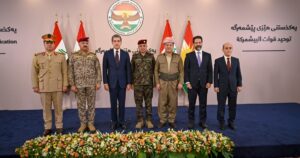
Mazloum Abdi Reveals Developments in Integration Path and Understandings Regarding Political, Military, and Administrative Files, and the Return of Displaced Persons and Prisoners
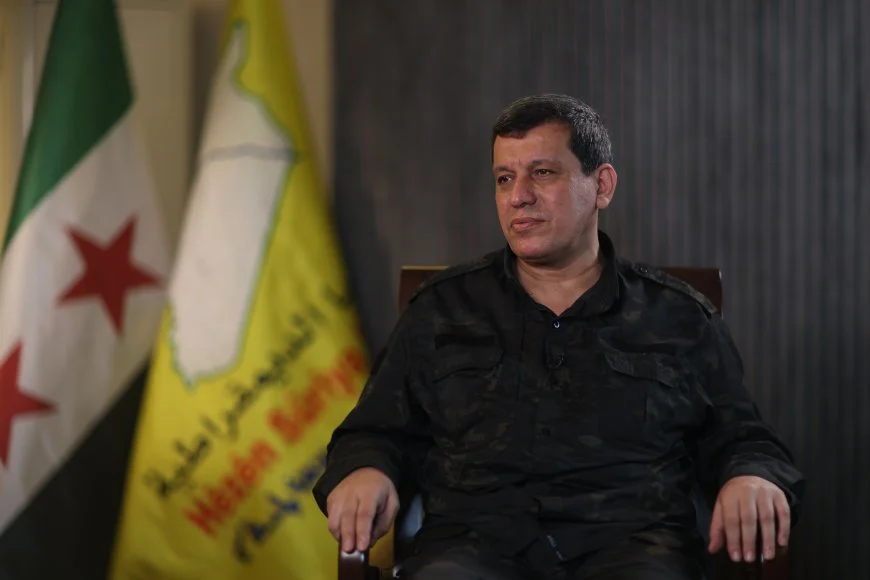
The Commander-in-Chief of the Syrian Democratic Forces (SDF), General Mazloum Abdi, revealed in an interview with Hawar News Agency (ANHA) the developments of the integration process and the accompanying understandings in the political, military, and administrative sectors. He also discussed the return of displaced persons and prisoners, noting gradual progress despite ongoing complexities, lingering outstanding issues, and the file of Kurdish unity. He emphasized that the current stage represents a new political transition that requires continued struggle to guarantee rights.
Text of the Interview:
1. After the formation of four brigades, what will happen to the remaining number of your forces? Will we see the formation of additional brigades or battalions, or will the current four suffice?
In the military sphere under the January 29 agreement, this aspect is considered the most important. We see significant developments achieved here, with tangible progress in terms of acceptance from commanders and the agreed-upon forces. Currently, we are in the phase where leadership is assuming duties within military academies, and progress is moving in this direction.
However, there are still issues we are working to resolve. When the agreement was signed, a specific number was not agreed upon; rather, it was the level of military formations. There is an issue regarding numbers that we are seeking to resolve, both in the military sector and the Internal Security Forces.
Furthermore, an understanding was reached that no employee within the Autonomous Administration shall be excluded. Based on this approach, we are working to reach a formula for our commanders and fighters who are outside the framework of these military formations; work is ongoing in this path.
2. According to our monitoring, the integration process is progressing in several files, but we are seeing the agreement stumble regarding the Judiciary file. What are the reasons? What are you proposing that Damascus is rejecting?
Some problems emerged in this file about two weeks ago, which were a direct cause for stalling the integration path for a period. The dispute began due to the absence of a clear mechanism for integrating Autonomous Administration judges into the government within the integration process, accompanied by concerns regarding the protection of their rights and the specificity of the region.
The reaction from the judges and the judicial administration in the region was justified, represented by a rejection of exclusion, which contradicts the essence of integration based on consensus. The initial absence of a consensual agreement led to a stumble in this file and a halt in the integration path, which was reflected in public opinion.
Several meetings were held in Damascus and in regions of North and East Syria at various levels following this setback. I also held a meeting with those concerned with the judicial file to overcome the crisis and prevent it from becoming an obstacle to the comprehensive agreement.
Understandings were reached with the government that included accepting the integration of Autonomous Administration judges without exclusion. Additionally, it was agreed that some judges from the previous era (the Ba’ath era) would continue their work to ensure that citizens’ files do not stop and work continues through joint cooperation.
Lists of the names of Autonomous Administration judges—who constitute the majority—have been submitted in preparation for their enrollment in government judicial courses and their appointment in courts. It was agreed to expedite the resolution of this file and the opening of judicial centers in the region, given its link to many official services. The continued disruption of the Palace of Justice affects various issues, including elections, passport procedures, real estate records, and other transactions requiring judicial documents.
Solving the Palace of Justice problem is a gateway to solving many other files. Regarding the removal of the Kurdish language from the identification sign of the Palace of Justice in Hasakah, the government justified this by stating the Palace of Justice is a sovereign institution within the governorate and the sign must be in Arabic only. Meanwhile, regional representatives did not want this dispute to become a new reason to stall the integration path.
The recent agreement with the government regarding the judiciary includes adopting identification signs in both Arabic and Kurdish in cities with a Kurdish majority, such as Kobani, Qamishlo, Derik, Amuda, ad-Darbasiyah, and others, provided that the current sign in Hasakah is dealt with for a specific period, to be reconsidered later under new understandings.
We consider the popular reactions rejecting the exclusion of the Kurdish language to be justified and strong, especially among the youth, as they reflect society’s sensitivity toward preserving the Kurdish language. Based on new developments, and taking into account local protests and the sensitivity of the judicial file, the subject was reintroduced and reviewed.
The matter was raised again in continuous communication with government representatives, and it was agreed that the issue of language and naming at the Palace of Justice in Hasakah must be addressed in the coming stage, in accordance with what is being implemented in other Kurdish cities. The other side gave promises to solve the problem and return the bilingual sign at a later stage, not at the current time.
Until then, we call on our people, especially the youth, to allow an opportunity for calm and leave room for understandings to be translated on the ground, so as not to disrupt the integration path or delay other files linked to this institution. We appreciate the people’s great sensitivity toward safeguarding the Kurdish language, which is a source of pride, and we emphasize the necessity of continuing efforts to ensure the Kurdish language is established within the Syrian constitution in the future.
3. Regarding the Education file, according to the agreement, integration should have included all institutions. Will basic, secondary, and higher education certificates be certified?
Regarding education, there is a problem that has not yet been solved: the issue of the curriculum being entirely in the Kurdish language. However, dialogues and discussions are ongoing. In the January 29 agreement, we did not accept that the reality of the Kurdish language be reduced to the content of Decree 13 only, as it does not meet the needs of the language and the Kurdish community.
At that time, we included a clause in the agreement stating the necessity of conducting dialogues with the Ministry of Education and Higher Education to develop solutions. Subsequently, several meetings took place with the Syrian Ministry of Education, and we reached an agreement which, in my opinion, considers the aspirations of the Kurdish people in the region. However, these understandings have not yet been signed by the Prime Minister.
During our last visits to Damascus, discussions were held on this topic at the highest levels. They do not reject it directly, but they point to technical and procedural obstacles; therefore, the subject has been postponed more than once. Nevertheless, the issue of Kurdish as the language of study is a primary issue for us, and I will personally follow up on this.
I can confirm that, according to what we were told, the recognition of Autonomous Administration certificates for the preparatory and secondary levels will be announced today or tomorrow, for this year and the next. There are also efforts to recognize certificates issued in previous years, as well as university degrees. There is a delay, but there is progress.
4. What curriculum will be taught in Kurdish schools in the coming years?
According to what was agreed upon, the Autonomous Administration curricula will remain in place for this year and the next to avoid harming students and the educational process, until comprehensive national Syrian curricula are issued. We will work to ensure they are in the Kurdish language.
5. What about the students from Afrin who studied according to the Autonomous Administration curricula? Will their education continue according to it in Afrin? Will we see the opening of schools in Afrin? What about teachers from the people of Afrin?
I can divide the answer into two parts. The first concerns displaced persons returning to Afrin. In our recent meetings in Damascus, we agreed in principle that newly returned students can join the examination process. Students who studied the Autonomous Administration curricula and returned to Afrin will not be deprived of taking exams, and their certificates will be accepted, just as the certificates of students from Jazira and Kobani will be accepted. To achieve this, the stage requires preparations from the Ministry, and discussions and arrangements are ongoing.
Regarding your question, I want to emphasize that there is no discrimination between Kobani, Jazira, and Afrin for us. Regarding the Kurdish language and the educational process, the situation of Afrin will be similar to that of Jazira and Kobani. We know the situation in Afrin is different, but we will engage in a long struggle and work to ensure that study within the educational process is in the Kurdish language for Kurdish students in Afrin.
6. Work was supposed to be done on Decree 13. Will the effects of the unjust 1962 census be removed? What about the “Arab Belt,” the return of regional names to their origins, and the return of Kurdish lands seized by the Ba’ath?
In general, whether in Decree 13 or the January 18 agreement, the specificity of Kurdish regions was included, as well as in Decree 13 regarding the language issue. The subject you touched upon must be applied on the ground.
While we aspire to recognize Kurdish as an official language, according to the decree, it is recognized as a national language, and in this case, it should be implemented as a positive step. However, reaching broader recognition requires a greater struggle to establish the Kurdish language within the constitution, in addition to including the clauses in the decree within the constitution and completing the deficiencies within them.
Conversely, there are still issues needing treatment regarding nationality, property, and Kurdish lands, in addition to the damages of chauvinistic policies practiced against the Kurdish people. There are agreements on this, but they need actual implementation. We also continue the struggle for the representation of Kurds in government institutions.
There are steps, but I see that the government is generally taking slow steps. In other matters, the implementing parties apply things according to their own interpretations. As I explained, there are files that must be implemented clearly and effectively because our people fought this struggle and made great sacrifices; therefore, it requires continuing the struggle more strongly to ensure Kurdish rights and specificity.
7. Moving to Kobani, how do you evaluate the progress of the integration process there? No actual steps have been recorded so far; rather, some obstacles and new challenges are observed. What is the reality of this integration in the city?
There were some villages in Kobani where government-affiliated forces were stationed during the last battle, and they are Kurdish villages, such as what happened in the al-Jalabiya sub-district, where some problems appeared. There are pledges to return things to normal and return the administration of these areas to the Kobani administration.
On the other hand, there is a problem in Kobani regarding the sub-districts of Sarrin and Shilkhir, where the Arab component lives, which have seen problems recently. There were also some issues related to the Kobani administration, and we are currently working to reach a formula to address them.
Meetings were held recently with the tribes, and there are attempts to reach understandings, especially since Kobani is characterized by a geography where Kurds and Arabs live together.
Regarding another issue—appointing a director for the Kobani region—we do not have a problem with the person himself, but the objection was to the method of his selection, without giving importance to the views of the people of Kobani and without collective consensus. This file is also currently being worked on; meetings were held recently with officials in Damascus, and a certain framework for the administration of Kobani was reached, and we await practical steps.
8. We are seeing the return of the people of Afrin to their areas, but many are still unable to return due to violations and fears of strangers in the region. Is there a joint mechanism to monitor and address violations to limit them?
The truth is that the return of our displaced people from Afrin has been delayed, and certainly, this delay was not from our side. The government, for its part, was late in taking its measures. In the first meeting we had with the Prime Minister, we agreed on the return of all displaced persons. We were given promises outside the framework of agreements that, whether we as SDF agreed with the government or not, work would be done to return the displaced to their lands, as the issue of the displaced affects all of Syria.
But unfortunately, the matter was delayed a lot. It is related to Afrin itself, the change that occurred in the authority there, and the armed groups that were deployed and refused to leave. The government was also late in taking its measures regarding these matters.
Furthermore, the recent issues regarding the Palace of Justice in Hasakah also played a role in delaying this path. I can confirm that we agreed that no one in Afrin should be harmed. This exceeds international institutions, as the government itself pledged this, and the Prime Minister personally took responsibility for this matter, which was also indicated in the media.
We hope that no problems surface in this regard, and we will follow the matter closely at all levels. But the most important thing now is for the people of Afrin to be able to fully recover their assets and property after the seizures, and for conditions to return to normal. Most importantly, the rights achieved for our people in Jazira and Kobani must be the same in Afrin.
For example, military personnel from the region must return to service in Afrin, just as there are military personnel from Jazira and Kobani serving in and protecting their own areas. Likewise, institutional employees and teachers must return to their same jobs in Afrin. Great work awaits us for Afrin.
Afrin is also in great need of development. For our part, we have begun working on special and expanded programs to strengthen the economy in Afrin. In this regard, I appeal to all Kurdish businessmen and merchants to contribute to the development of Afrin’s economy and improve the living conditions of its people.
9. The Ras al-Ayn (Sere Kaniye) camps remain as they were, and we have not seen anyone return to that area, nor the Kurds of Tell Abyad. Why has the road not been opened for their return yet?
Some time ago, we met with representatives of the people of Sere Kaniye, both Arabs and Kurds. For the same reasons that led to the delay in the return of Afrin’s displaced, the return of those from Sere Kaniye and Tell Abyad was also delayed, in addition to the Turkish state and its commanders remaining in the region for a long time—and they are still present—along with the refusal of a number of armed groups to withdraw.
The Syrian state was also late in appointing a representative as the director for the Sere Kaniye region, and he has not yet assumed all his duties. Regarding security and military matters, the Syrian government has not taken over all decision-making levers, but we are monitoring the issue closely.
Our handling of the Sere Kaniye and Tell Abyad file is similar to our handling of the Afrin file. Everything that falls on us to return them, whether they are Kurds or Arabs, we will work to achieve. Now, after a notable development in the Afrin file specifically, and after the Syrian government appointed representatives for Sere Kaniye and Tell Abyad recently, we have the opportunity to advance with steady steps.
The first step—since Sere Kaniye belongs to the Hasakah Governorate—is that we will work to restore a natural atmosphere by removing front lines and contact points, leaving only joint security checkpoints to create an atmosphere of comfort and ease of movement; this is one of our priorities. There are many completely emptied villages on the contact lines, and we are trying to bring life back to them by returning the residents.
We are currently preparing to send a group of Sere Kaniye representatives to the city to assess the situation and prepare for the return of the displaced to their villages. There are also families of the Arab component, originating from the Guwayran neighborhood in Hasakah, living in Sere Kaniye; we are working to provide a suitable environment to return them to their homes.
As for Tell Abyad, the situation is completely different. I expect we will apply the same path there, but practical application may be more difficult. Especially since there are many Kurdish villages there that have been occupied by some chauvinistic armed groups that terrorize the Kurds and prevent them from returning. One of our priorities is solving this issue to ensure their safe return.
10. The first step in implementing the agreement was supposed to be the return of prisoners. What is delaying their return?
Regarding the subject of prisoners and martyrs, this is indeed very important to our people and to us. This issue pained us greatly. The primary reason behind the capture of such a large number of our comrades—and this is the first time this has happened to us in groups—is that we had made the decision to withdraw from Deir Hafer. Our forces were preparing to withdraw from specified locations, and we had issued a statement. This decision was welcomed by the Syrian Ministry of Defense, the United States, and other parties, but in the end, a “stab” occurred, and forces from both sides engaged in confrontation; this attack should not have happened.
From our side, we contacted our comrades, told them we decided to withdraw, and asked them not to engage in confrontation because an agreement had been made, which led to our comrades falling into captivity in these numbers. It was supposed that our comrades would be released at that time, and we had agreed on that, but unfortunately, this file was exploited as a pressure card against us and is still being used. I do not find this behavior correct; rather, this clause should have been implemented from the beginning, especially since we are in the integration phase.
Our efforts continue to release all prisoners. Indeed, a large portion of our comrades, both Kurds and Arabs, has been released. We are still communicating with the state regarding a remaining group of our fighting comrades and civilians; communication is ongoing regarding their numbers, and we are working to release them during this week.
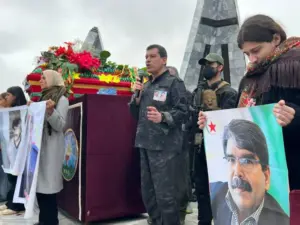
In this regard, I want to be clear and transparent: what is being promoted or circulated that the numbers of our martyrs are in the thousands is incorrect. We have recovered the bodies of all our comrades whose martyrdom we confirmed and identities we verified. With this, we have finished the largest part of this file, and what remains is at the level of a few individuals only.
In total, the number of our comrades who were martyred in the recent attacks, including those whose bodies we received, reached about 260 martyrs. They were martyred in Deir Hafer, Raqqa, Tabqa, Deir ez-Zor, Kobani, Derik, Tishrin Dam, and al-Milbiya in Jazira. Yes, the number is large compared to the agreement we signed, and it should not have happened.
After finishing the file of prisoners and martyrs, we will issue a statement in the name of the SDF and reveal the numbers of our martyrs and prisoners to the public.
Regarding the stance of the Arab people toward what happened recently—the stabbing of our forces—this is also sensitive. When we talk about the Arab component, we have martyrs from this component as well. In Deir ez-Zor, for example, there are about a thousand families of our martyrs. We must not generalize this subject to everyone. Yes, there are those who worked to spread discord and slandered us. Conversely, there are those who stayed with our forces.
In my opinion, the most important thing is to review our mistakes, take criticism into account, and review the reasons why we were unable during ten years to organize the people there. There were errors in our method of dealing, and we must work to extract lessons.
11. A meeting was held recently in Damascus, and it was announced that you evaluated the progress of the integration process. In your view, are you today closer to an agreement with Damascus or to a crisis?
First, I want to say that we participated in this agreement and, from our side, we are serious about implementing it, even though it did not meet all our ambitions or the level we wanted. But given the current situation and the war imposed on us, this was the maximum that could be obtained. Additionally, it allows space to start anew to protect gains and continue the struggle for the Kurdish cause in Syria.
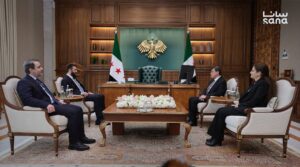
Therefore, I can say the agreement serves the interest of the Kurdish people. In the recent meeting in Damascus, I noticed the same from government officials as well. In my meeting with Prime Minister Ahmed al-Sharaa, we discussed at length the subjects of solving outstanding problems and how to involve the Kurds in making Syria’s future.
We will do everything necessary for the success of this agreement, and we ask our people to support these efforts.
12. What are the obstacles to completing the implementation of this agreement?
If you want the truth, there are groups from both sides dissatisfied with the agreement. There are many parties affiliated with the state who believe they should have controlled Hasakah and Kobani. These categorize themselves as “revolutionaries,” but we see them as chauvinistic people who want to end our existence.
From our side, as well, there are many who expressed their hostility openly to the government and the agreement, carrying rigid nationalist thought. But I expect these groups will not become a mainstream current. Both sides agree on the necessity of achieving security and stability. At the very least, we are agreed on solving outstanding problems through dialogue and not returning to war. No one wants war; this is a collective demand.
13. In case the agreement fails, where is Syria headed?
This agreement must not collapse because it is not in anyone’s interest.
14. We are facing parliamentary elections in Syria. Will you participate as Kurds as a unified party, or will we see Kurds divided?
The Kurds must be one hand and have one discourse toward the outside. Kurdish political forces must be united. Even if there are differences or mutual criticism, in Damascus they must demand their rights with a unified voice.
Last year, the Conference for Unity of Kurdish Ranks and Position was held, and all Kurdish parties agreed on certain demands. They must carry these demands to parliament. There are ongoing meetings, and we hope to succeed in reaching a common vision and entering these elections unified; we will enter them unified.
15. Will we see representatives of the Autonomous Administration and its officials, as well as political parties, within the Syrian government in Damascus?
According to the signed agreement, there must be a presence for Kurds and workers in the Autonomous Administration within ministries and state institutions, and abroad as well. The recent appointments of our comrades in the Ministry of Defense came as a result of this agreement. We were asked to provide a list, and it has been submitted with names; we are following the results.
16. Regarding the Syrian Constitution, was the subject raised with you? Will anyone from this region participate in drafting the constitution?
Yes, this subject was touched upon in all our meetings, and the demand for Kurdish representation within the parliamentary committee for the constitution was raised. So far, a special committee to write the constitution has not been formed. It is expected that during the coming period, when parliament is formed and activated, a constitutional committee will be formed, and the Kurds will certainly be within it.
17. There are parties sponsoring the agreement, such as Washington and Paris. Is this sponsorship still ongoing, and how do you evaluate the Turkish role?
The International Coalition has left the region, but until now, we share relations and contacts. Among the topics forming the core of these contacts is the issue of integration. The agreement was concluded in the presence of representatives from Britain, France, and the United States. There is constant follow-up, in addition to existing contacts through bilateral channels between us and the government.
Turkey has a direct and strong influence on Syria. If we want this agreement to reach the stage of achievement, Turkey must be a party to it, or at least not be an obstacle. In this regard, there are currently open communication channels between us and Turkey, and we discuss many security topics. We hope in the coming stage to intensify these contacts and for Turkey to take a positive role.
18. In light of the political, social, economic, and rights-related deadlock in Syria, what are the reasons? How can Syria reach stability?
There are attempts by the authority or government institutions to enter and oversee a new stage that could be called “the post-Ba’ath collapse stage,” but so far we cannot say Syria has reached a clear path. There are still many economic and social problems, in addition to the divisions that deepened over the past 15 years, including the continued existence of ISIS.
Each region has its specificity. If we look at our region, or Raqqa, or North and East Syria, we find the reality is intertwined; there are remnants of the Ba’ath regime, alongside the government system, the Autonomous Administration system, and ISIS is still present.
The economic situation is the most influential compared to other factors because it reflects on various aspects and is the basis for rebuilding the state, yet there is no tangible development in this aspect. We have heard that the investment file is still suspended due to obstacles. The basic problem is the necessity of the participation of all components of society in founding this state. I expect the safest way to transition to the “New Syria” is through the participation of all, by allowing fair representation for all groups.
19. Are you personally satisfied with the progress of implementing the clauses of this agreement?
Currently, the majority of my work is focused on making this agreement with the government a success. But we are not entirely satisfied with the progress; some steps came late, and some files should have been solved immediately, headed by the file of prisoners and displaced persons. Nevertheless, our struggle continues. Some steps have been achieved in military, security, and some administrative fields. If compared to last year, our situation is better. We haven’t reached the end, but there is progress.
A message you want to direct at the end of the interview:
What I want to say to our people: it is true we are passing through a new stage according to the path of integration, but that is not all. I ask our people not to confine themselves to this framework only, but to escalate the struggle to guarantee rights and gains within the announced integration.
Our basic work is to ensure continuity in the struggle. This integration does not mean the end of our struggle over the last 15 years. Rojava is passing through a new stage. In previous periods, our struggle was based on political work within existing parties; since 2012, we entered a new experiment under the umbrella of the Autonomous Administration and the SDF. Now there is a new situation within the framework of the announced agreement to build the new state of Syria by joining this state with our identity.
To guarantee our rights and strong participation in the future, a difficult path lies ahead that needs a strong struggle. Therefore, we need to organize ourselves again, re-establish our civil social institutions, restructure our political discourse, and strengthen Kurdish unity and relations with all components of the Syrian people on new foundations.
Note: This text is translated from the original Arabic version… Read the Arabic version:Click here