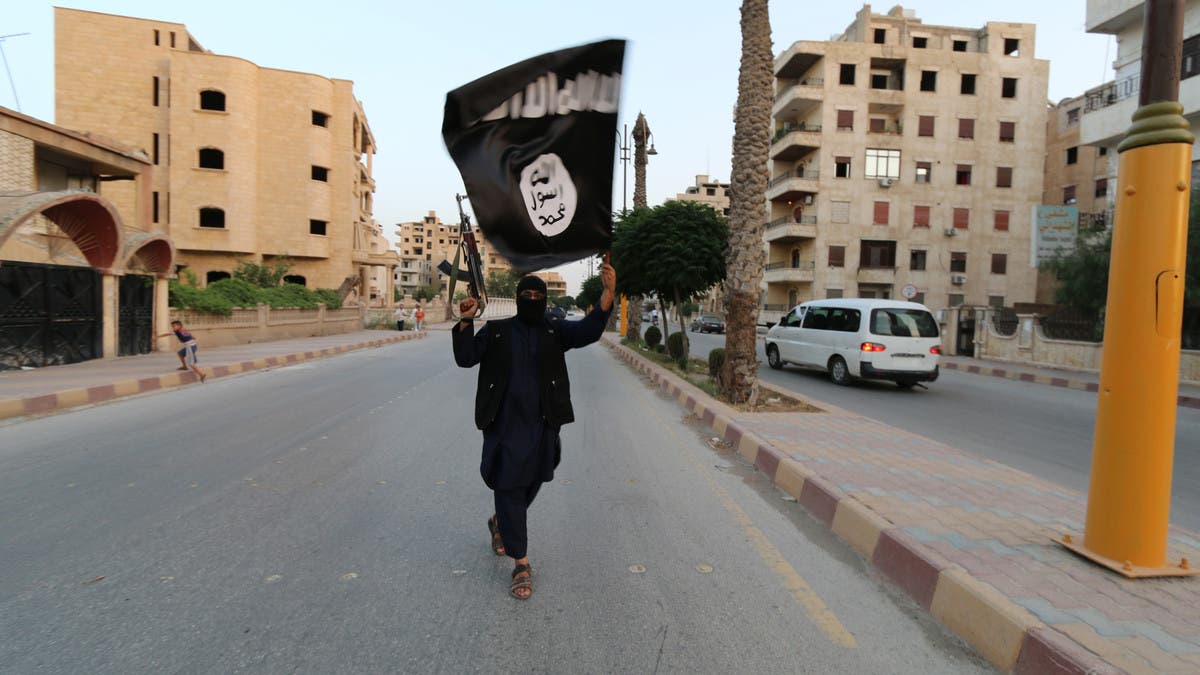
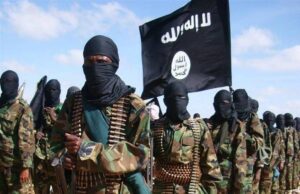
The Syrian Observatory for Human Rights reported that the so-called Islamic State (ISIS) has escalated its attacks across various areas of the countryside of Raqqa and Deir ez‑Zor, following an audio statement issued by the group’s official spokesman Abu Hudhayfah al‑Ansari announcing that the organization had entered a “new phase of work” inside Syria.
According to the Observatory, the group carried out 10 attacks since the statement was released, resulting in the deaths of 13 people, including one civilian, eight members of the Ministry of Defense affiliated with the transitional government, one member of the Internal Security Forces, and one member of the Desert Security forces, in addition to two ISIS attackers who were killed during the clashes.
The Observatory noted that the attacks were concentrated in areas of the Raqqa and Deir ez-Zor countryside, indicating a resurgence of the group’s activity, particularly following the smuggling of hundreds of its members from al-Shaddadi and the evacuation of al-Hol camp. Intelligence admissions by international agencies also indicated that more than 20,000 people from the families of ISIS members were smuggled out of al-Hol camp.
Sequence of Attacks
Saturday, 21 February
ISIS claimed responsibility through its official channels for the killing of two members of the Syrian Ministry of Defense in the Raqqa countryside, and also announced responsibility for the assassination of a young man from the town of Baqrus in the Deir ez-Zor countryside.
In the first incident, two members of the 42nd Division of the Syrian Ministry of Defense were killed in an armed attack targeting them in the village of al-Wasita, which is administratively affiliated with the town of Suluk in the northern Raqqa countryside. Gunmen riding a motorcycle opened direct fire on the two soldiers during the iftar time before fleeing the scene.
In the second incident, a young man was killed on Saturday afternoon after being directly shot by gunmen riding a motorcycle near the sheep market in the city of al-Mayadin in eastern Deir ez-Zor countryside.
Sunday, 22 February
A member of the Internal Security Forces affiliated with the transitional government, originally from Idlib province, was killed in an armed attack carried out by cells believed to belong to ISIS. The attack targeted the al-Sabahiya checkpoint at the western entrance of Raqqa city.
The attack was followed by intense clashes using machine guns, which resulted in the death of one of the attackers. Security forces also seized an explosive belt, hand grenades, and a machine gun that had been in his possession.
On the same day, a member of the Ministry of Defense affiliated with the transitional government was killed after being shot by gunmen believed to belong to ISIS while he was riding a motorcycle on the road leading to the village of Tash Bash, south of the city of Tell Abyad in the Raqqa countryside.
Later on Sunday evening, unidentified gunmen targeted a checkpoint belonging to the Internal Security Forces near the bridge of the city of al-Busayrah in eastern Deir ez-Zor countryside, with no reports of casualties. The attack was followed by a strict security cordon and large-scale combing operations in the city and its surroundings.
Monday, 23 February
Four members of the Public Security Forces were killed in an armed attack targeting the al-Sabahiya checkpoint inside the city of Raqqa. The death of one of the attackers during the same assault was also documented.
On the same day, a member of the transitional government forces was killed after being directly shot by unidentified gunmen in the city of al-Mayadin in the Deir ez-Zor countryside.
Tuesday, 24 February
A member of the Desert Security forces was killed in the city of Al‑Bukamal east of Deir ez-Zor after being directly shot by gunmen from ISIS cells riding a motorcycle. According to available information, the victim had previously been a member of the Free Syrian Army before recently joining the Desert Security forces affiliated with the transitional government. The attackers opened fire on him in front of his home before fleeing.
On the same day, unidentified gunmen targeted the headquarters of the 86th Division in Al-Bukamal using machine guns, with no reports of human or material losses. An Internal Security Forces checkpoint in the town of al-Baghouz, as well as a security center in the town of al-Sousa in eastern Deir ez-Zor countryside, were also targeted, though there is no confirmed information regarding the scale of the losses.
Background
The Islamic State (ISIS) had announced on 21 February 2026 the start of what it described as a “new phase of operations” inside Syria, issuing a direct threat to the Syrian interim authority and its president Ahmed al‑Sharaa through an audio message broadcast by its spokesman Abu Hudhayfah al-Ansari.
In the recording, al-Ansari attacked the government of al-Sharaa, describing it as a “secular government that has apostatized from religion,” calling for fighting it and stating that al-Sharaa’s fate “will not be different from that of” Bashar al‑Assad.
The spokesman also claimed that Syria “has moved from Iranian rule to Turkish-American rule,” adding that “the Jolani regime is subject to American influence, and al-Jolani has been captivated by the devils of the Turks and the West.” He further described the operation known as “Deterrence of Aggression” as “a Turkish play directed by the United States,” asserting that “Syria is ruled by crusaders and al-Jolani is a lifeless puppet that they move from in front of the curtain, not behind it.”
The message coincided with the organization’s claim of responsibility for two attacks targeting members of the interim authority led by Ahmed al-Sharaa in the north and east of the country. At the same time, the Syrian Ministry of Defense announced the killing of a soldier and a civilian in an attack carried out by “unknown assailants,” noting that the soldier belonged to the 42nd Division of the army.
This escalation comes months after political transformations in Syria following the fall of the Assad regime at the end of 2024 and the rise of a new leadership headed by Ahmed al-Sharaa, who had previously been a senior figure in al‑Qaeda before splitting from it in 2016 and forming a coalition of Islamic factions.
Al-Sharaa had also signed, during a visit to the United States last November, Syria’s accession to the International Coalition to Defeat ISIS, where he met with Donald Trump.