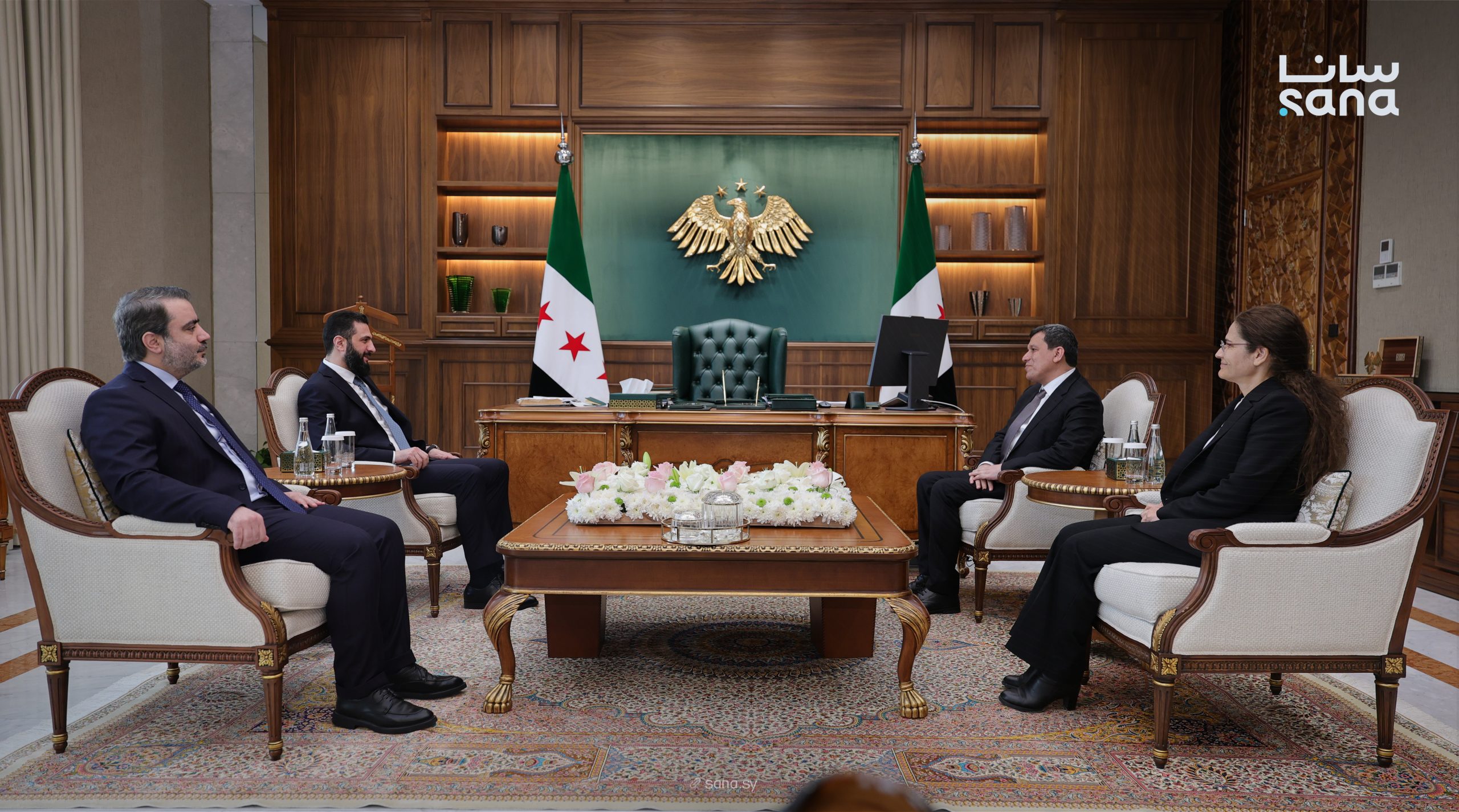
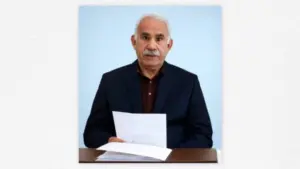
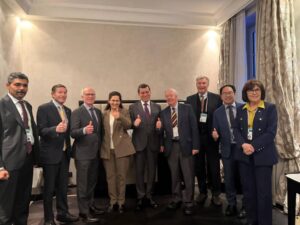
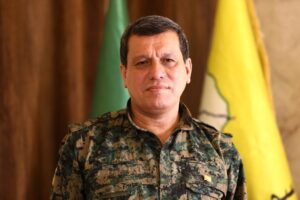
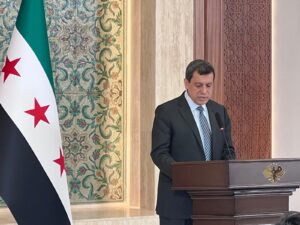
Ilham Ahmed, Co-Chair of the Department of Foreign Relations in the Autonomous Administration, disclosed details of the meeting held in Damascus on April 15. The meeting brought together Ahmed, General Commander of the Syrian Democratic Forces (SDF) Mazloum Abdi, and The Head of the Syrian Interim Authority Ahmed al-Sharaa, to discuss the integration process and the obstacles hindering it.
In a statement to the Kurdish Hawar News Agency (ANHA), Ahmed explained that the meeting focused on the challenges facing the implementation of the integration process, confirming that both parties are working to overcome them despite the slow progress in certain files.
Education File Remains Unresolved
Ahmed noted that the education system was among the most prominent issues discussed, pointing to the ongoing problem of non-recognition of certificates despite the time elapsed since the January 29 agreement. She stated: “A long time has passed since the January 29 agreement, yet this file has not been resolved. We agreed that the Ministers of Education and Higher Education will conduct a visit to Hasakah province soon to establish a mechanism and finalize this matter. Subsequent meetings will also be held to discuss and decide upon the educational system and language.”
She added that the administrative steps completed so far have been limited to appointing directorates in the health and education sectors, with a plan to define the remaining directorates and set a mechanism to complete appointments.
Limited Progress in the Integration Track
Ahmed clarified that while some steps have been achieved within the integration framework, the process is still moving slowly. She noted progress in appointing regional representatives, contrasted by the continued need to complete appointments at the ministerial and directorate levels.
Crossings and Management Mechanisms
Regarding border crossings, she confirmed that the management mechanism for the Semalka crossing and others has been established. Personnel working under the name of the Autonomous Administration continue to perform their duties within the integration framework.
Disputes Over Appointments
She highlighted the emergence of issues during the implementation of the mechanism, particularly concerning prior appointments made by the Provisional Government after the fall of the Assad regime. She stated:
“Some directorate heads were previously appointed by the Provisional Government after the fall of the Assad regime, which creates a problem. There must be an agreement regarding these officials. There is a large number of Autonomous Administration cadres, and they should not be excluded. An understanding must be reached regarding appointments proposed by the Autonomous Administration and those determined by the Provisional Government.
The Autonomous Administration possesses long-standing experience, and this experience must be taken into account. Competence and expertise are vital in appointing officials. Changes should be based on specialization, and the priority remains serving and representing society, especially since Kurds, Syriacs, and Arabs coexist in this region.”
Women’s Representation as a Key Challenge
Ahmed emphasized that women’s representation remains a major challenge, noting that recent appointments in the health and education sectors were limited to men, despite women’s names being included in the appointment lists. She said:
“Large numbers of women work within the Autonomous Administration. Structurally, there is some similarity between the institutions of the Autonomous Administration and the Government, but there is a difference at the directorate management level.
Within the integration framework, names of both women and men are proposed for appointments; however, so far, only men have been appointed as directors of health and education. Therefore, women’s participation must be considered a priority and granted a significant role. There are serious difficulties and obstacles in this file.”
YPJ File Still Pending
She indicated that the file of the Women’s Protection Units (YPJ) remains a contentious issue, adding:
“Although no new conclusion has been reached regarding the YPJ, the file remains on the agenda. Discussions regarding the formalization of the YPJ are ongoing within the Provisional Government’s agenda and will continue until an agreement is reached.”
Parliamentary Representation and Reorganizing Municipalities
Ahmed explained that the integration files include selecting representatives for Hasakah and Kobani provinces in the People’s Assembly through a central committee and a preparatory committee in Hasakah, which holds the power of initiative. She also noted a move to reorganize municipalities in Rojava within the new system to ensure improved service levels and enhanced representation.
The Constitution and the Kurdish Role
Regarding the constitutional process, she clarified that the proposal to draft a new Syrian constitution would be approached more seriously once Rojava’s representatives in Parliament are determined, stressing the necessity of involving all components in its drafting. She stated:
“Kurds will have a role in the drafting committee for the new constitution. Syria needs a new constitution, and the drafting committee must include representatives from all components. Kurds are essential partners in building this country and will play an important role in the coming stage.”
The Detainees File
Ahmed concluded by noting that the file of prisoners remains open, confirming that the meeting emphasized the necessity of releasing all prisoners as soon as possible.