The Shikhan (Sheikhani) tribe is one of the largest Kurdish tribes in Kurdistan. Its territory extends from Erzurum in the north to Suruç in the south. Furthermore, this tribe is spread across most Kurdish regions and cities, with branches in Syria, Iraq, Turkey, and Iran. Their distribution is as follows:
Kurdistan Region – Iraq: Mount Shingal (Sinjar), Mosul, Shikhan District, the area between the Tigris and the two Zab rivers, Koya (Koysinjaq) District, Ankawa sub-district near Erbil, Khabat District, Makhmur District (Guwer sub-district), Shamamok sub-district, Qushtapa sub-district, Bansalawa District, Pirmam sub-district (resort), Shaqlawa District, and the Harir Plain—in addition to the Badinan region, most of which belongs to the Duhok Governorate (1).
North Kurdistan (Turkey): Hakkari, Bitlis, Dersim, Diyarbakir, Mardin, Urfa, Suruç, Birecik, and other areas.
West Kurdistan (Syria): Kobani (Ayn al-Arab), Girê Spî (Tal Abyad), Serê Kaniyê (Ras al-Ayn), Qamishli, and Afrin—as well as other Syrian regions and cities such as Raqqa, Aleppo, Al-Haffah District in Latakia, Hama, Homs, and Damascus.
East Kurdistan and Khorasan (Iran): The foothills of the Hazar Masjid Mountains, the plains of Chenaran, Khar, Varamin, Quchan, Khoy, and Maku in West Azerbaijan. According to researcher Dr. Ali Rahmati, the Shikhan were displaced to these eastern regions and cities in Khorasan and Azerbaijan during the reign of Shah Abbas I in 1605 (2).
The Shikhan tribe inhabits more than a hundred villages in the Suruç plain south of the Turkish-Syrian border, and they have a presence in seventy-five villages in the Afrin region, in addition to those living in the “Mount of the Kurds” (Jabal al-Akrad) in the Latakia Governorate. The number of Shikhan in West Kurdistan and Syrian cities is no less than 200,000 people.
The majority of the Shikhan are Muslims, divided among Sunnis, Shiites, and Alawites (Qizilbash), while a portion of them follow the Yezidi religion. Their total population exceeds one million across Kurdistan, Syria, and Khorasan. Historically, during tribal alliances in West Kurdistan, some were part of the Milli alliance while others joined the Barazi alliance; at times, they remained independent of these alliances based on their own strength and strategic needs.
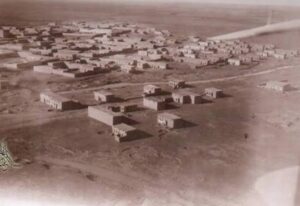
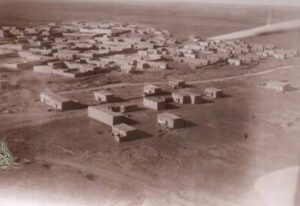
I will specifically mention here the Shikhan of West Kurdistan (the Kurdish part annexed to Syria), which is considered one of the major Kurdish tribes in West Kurdistan and Syria in general. The Kobani (Ayn al-Arab) region is regarded as the center of the Shikhan tribe as it forms a unified geographical block in that area. Their presence in the Suruç plain and the aforementioned cities dates back to before the 15th century AD according to Ottoman documents. As previously mentioned, they live in a single geographical area starting from the northeast of the city of Suruç to the borders of the Bedouin tribes in the Raqqa Governorate, spanning a length of over 80 km and a width ranging between 20 and 50 km. The southern part of their land is known as the “Shikhan Wilderness” (Qaraji Shikhan) (3). They are bordered to the east by the Kurdish Shaddad tribe, to the west by the Kurdish Kitkan tribe, and to the south by the Arab Bedouin tribes (Anizzah). The presence of some of them in the rest of the Levant dates back to the Ayyubid era.
This branch claims descent from the Prophet’s Household (the Ashraf); however, I have found no link between them and the House of the Prophet in historical sources. Furthermore, no descendants of Zayn al-Abidin settled in Kurdistan throughout Islamic history, not to mention that the Shikhan tribe existed in Kurdistan prior to the advent of Islam. Author Anthony Nutting states: “Even if some of the descendants of Zayn al-Abidin participated in the Qarmatian battles against the Turks in northern Syria in 900 AD, they were quickly defeated by a large Turkish force and subsequently returned to Kufa” (4).
There is no doubt that the Ottoman Empire exploited this matter to exert control over Arab lands and wrest the Caliphate from the Abbasid Ahl al-Bayt by co-opting Arab and Kurdish tribes that claimed Al-Husayni lineage. However, lineage based solely on oral tradition cannot be relied upon within a historical framework unless supported by clear historical facts. All claims regarding descent from Al-Husayn ibn Ali ibn Abi Talib are contradictory in terms of dates, facts, and names. Throughout Islamic history, political interests played a major role in validating or refuting such lineages according to the needs of rulers. Genealogists even denied the connection of the leader of the Zanj Rebellion—Ali bin Muhammad bin Ahmad bin Isa bin Zayd bin Zayn al-Abidin—to Al-Husayn, even though the time gap was less than a hundred years (5).
Furthermore, genealogists challenged the lineage of the Alawite (Fatimid) Caliphs of Egypt. A formal deposition was written in Baghdad, signed by Al-Murtada and his brother Al-Radi, Ibn al-Bathawi al-Alawi, Ibn al-Azraq al-Musawi, al-Zaki Umar bin Muhammad, and several judges and scholars including: Ibn al-Akfani, Ibn al-Kharazi, Abu al-Abbas al-Abiwardi, Abu Hamid al-Isfarayini, al-Kashfali, al-Quduri, al-Saymari, Abu Abdullah bin al-Baydawi, Abu Fadl al-Nasawi, Abu Abdullah al-Nu’man (the Shiite jurist), and others (6). Just as the lineages of hundreds of individuals were challenged during the Abbasid era, how can we prove the claims of hundreds of Arab, Persian, and Kurdish tribes today, in the 15th century after the death of Al-Husayn bin Ali bin Abi Talib, when no two accounts agree in terms of timing or the sequence of names in the genealogical narratives?
All the Ottoman documents I have referred to regarding the Abbasid lineage in this book are intended to examine the historical facts that prove the presence of the Shikhan tribe on their historical geography, rather than the Arab lineage they claim through oral traditions. The Kurdish identity of the Shikhan tribe is historically indisputable, as all these claims and documents emerged exclusively during the Ottoman period and no other.
References
The Family Tree of the Shikhan Kinsmen, Sadullah Shikhan, Erbil 2012, pp. 6-11.
Study and Identification of Kurdish Tribes and Clans in Khorasan, Dr. Ali Rahmati, Part I, Iran – Bojnurd 2015, p. 128.
The Caliphs’ Last Heritage, Mark Sykes, London 1915, p. 449.
The Arabs from the Pre-Islamic Era to the Era of Nasser, Anthony Nutting, Cairo, n.d., p. 234.
Biography of the Twelve Imams, Hashim Ma’ruf al-Husayni, Beirut 1990, p. 488.
Al-Kamil fi al-Tarikh (The Complete History), Ibn al-Athir, Beirut edition, Dar al-Kutub al-Ilmiyyah 1987, Vol. 8, p. 37.