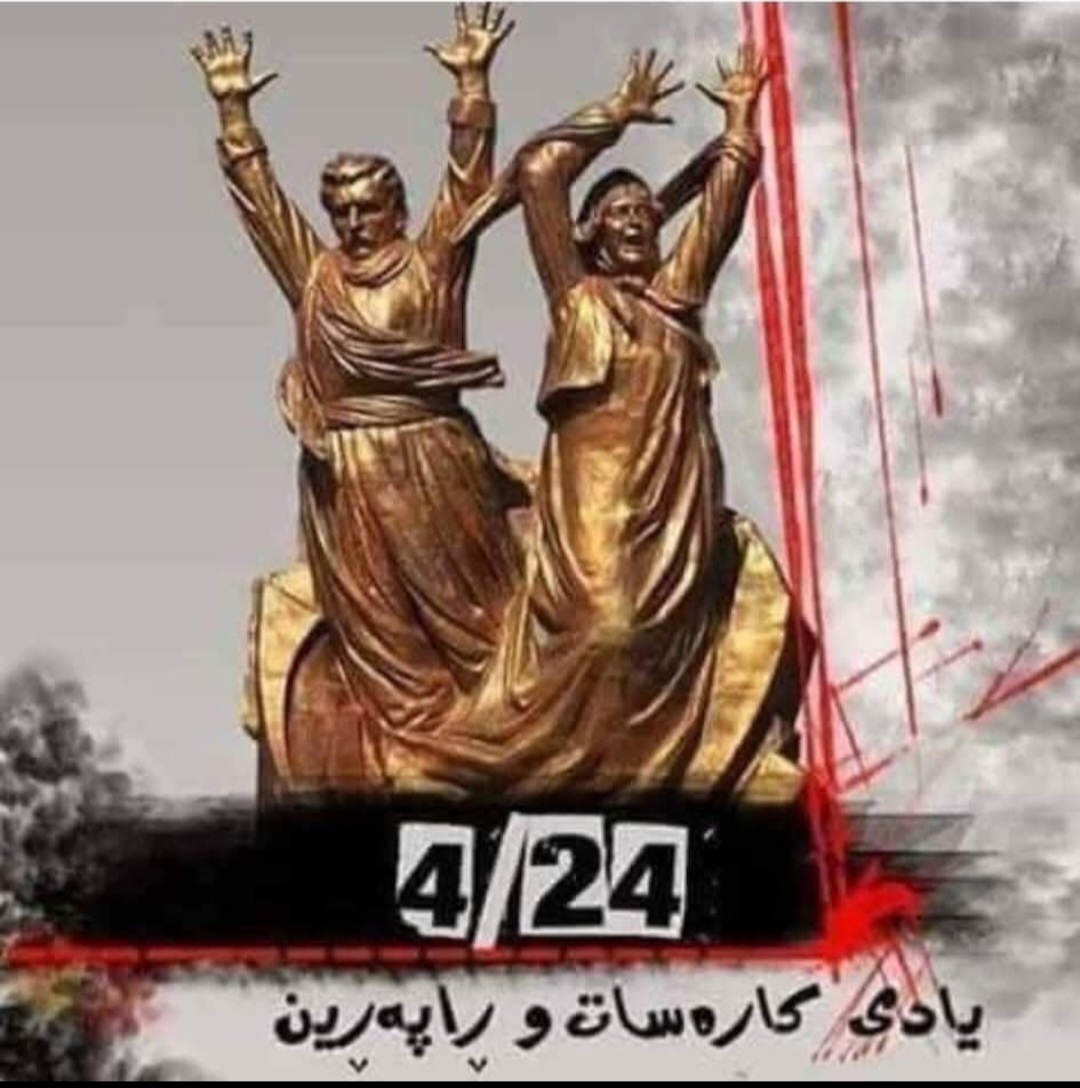
Today, the people of the Kurdistan Region mark a painful anniversary that weighs heavily on our hearts: the 52nd anniversary of the bombing of the resilient city of Qaladiza with internationally prohibited weapons.
On this day 52 years ago—specifically on April 24, 1974—the bloody Ba’athist regime targeted the steadfast city of Qaladiza and the University of Sulaymaniyah (which had relocated to Qaladiza to ensure the continuation of the educational process). This attack, carried out with internationally banned napalm weapons, was part of a calculated criminal policy aimed at the genocide of the Kurdish people. It was driven by the regime’s fear of the burgeoning alliance between the “weapon of resistance” and the “pen of intellect,” and the unified front formed by the Peshmerga, professors, and students of Kurdistan.
The bombardment resulted in the martyrdom of 123 innocent civilians, including residents of the city and students and professors from the University of Sulaymaniyah, while 400 others were wounded. Due to the intensity of the shelling, a large portion of Qaladiza’s infrastructure was destroyed, leading to the displacement of a vast number of its inhabitants. This heinous crime committed by the defunct Ba’athist regime left a lasting wound in the hearts of the city’s people and all of Kurdistan.
The martyrs of this crime are honored annually. On April 24, 1982—the eighth anniversary of the tragedy—the city’s residents organized a mass demonstration to commemorate the victims and denounce the regime’s atrocities. The protesters were met with fire and steel by the regime’s henchmen, resulting in several unarmed casualties. Among them was the teacher Sanobar, who became a symbol for the martyrs of Qaladiza. Many others were wounded or arrested during the crackdown.
The fallen regime did not stop there. In 1989, as part of its systematic plans mirrored across other regions of Kurdistan, the regime attacked the people of Qaladiza for a third time. In a move devoid of all human values, it forcibly displaced the inhabitants of the city and the villages of Pshdar to compulsory resettlement camps (Khabat, Daratou, and Kawergosk) within the borders of Erbil, as well as Bazian in Sulaymaniyah and other camps. Qaladiza was completely demolished, leaving no trace of life; the area was declared a “prohibited zone,” and its people were even barred from visiting the graves of their loved ones.
Following the fall of the regime in 1991, the displaced people of Pshdar returned to their ancestral lands and rebuilt their city. In place of the wounded University of Sulaymaniyah, dozens of advanced public and private universities now flourish across Kurdistan.
After the establishment of the Supreme Iraqi Criminal Tribunal, the file regarding the forced displacement of the people of Pshdar was among those investigated. Following a series of sessions, the tribunal ruled that the forced displacement of the people of Pshdar and Sayed Sadiq constituted a crime of genocide within the framework of the criminal Anfal operations.
To honor the memory of the martyrs of Qaladiza and the University of Sulaymaniyah, the Kurdistan Regional Government’s Council of Ministers issued Order No. 2262 on March 4, 2013, designating April 24 as “University Martyr’s Day.” The order calls upon universities and institutes to commemorate the martyrs of Qaladiza on this day through cultural and scientific activities.
As we pay tribute to the souls of the victims of the Qaladiza bombing this year, we must all work to erase the scars of these crimes by planting hope in the hearts of our people and future generations.
On this somber occasion, we call upon the Federal Government—based on the ruling of the Supreme Iraqi Criminal Tribunal—to:
Fairly compensate the victims of this crime.
Implement the provisions of Article 132 of the Constitution to provide essential services to the region.
Care for the families of the victims and provide medical treatment for the wounded.
Furthermore, the Kurdistan Regional Government must intensify its efforts to internationalize this crime and other atrocities committed against the people of Kurdistan, making this a top priority. Relevant authorities should also incorporate this crime and others into educational curricula across all levels, tailored to students’ academic stages and ages.
We bow in reverence and honor to the souls of the martyrs of the Qaladiza bombing of April 24, 1974, the martyrs of the 1982 demonstrations—led by the teacher Sanobar, the symbol of martyrs—and all the martyrs of Kurdistan.
A salute of appreciation and respect to the steadfast people of Pshdar.