With the signing of the January 29, 2026, agreement between the Syrian Interim Government—headed by Ahmed al-Sharaa—and the Syrian Democratic Forces (SDF), the Kurds in Syria entered a new phase that promised a comprehensive political solution to the long-standing crisis. However, more than ten months have passed since the agreement, and the Kurds still face an institutional exclusionary mentality that reproduces the worst policies of the Ba’athist past. These two mentalities can be analyzed through the parallels between the projects of the “Two Hilals”: Mohammed Talab al-Hilal, the architect of Arabization policies in the 1960s, and Ahmed Hilal, the presidential spokesperson for the implementation of the agreement.
On December 8, 2024, the regime of Bashar al-Assad fell after more than a decade of devastating war. A new interim government emerged, led by Ahmed al-Sharaa (formerly Abu Mohammad al-Julani), announcing its intention to build a new Syria based on justice and citizenship. The agreement signed with the SDF on January 29, 2026, was pivotal; it stipulated the phased integration of the SDF into the Syrian army, the merging of Autonomous Administration institutions into state institutions, the resolution of the detainees’ file, and the guarantee of Kurdish cultural rights.
However, after more than ten months, the Kurds are still waiting for this agreement to be translated into reality on the ground. The issue lies not in the texts of the agreement, but in the mentality attempting to implement it. It is the same mentality embodied by the Ba’athist political security officer Mohammed Talab al-Hilal since the 1960s, finding a new manifestation today in Ahmed Hilal, the spokesperson for the presidential team tasked with executing the agreement. Today, the Kurds find themselves “between the jaws of two Hilals” who are identical in ideology, despite differences in time and place.
Before analyzing the mentality of exclusion, it must be acknowledged that Ahmed al-Sharaa’s rise to power was not purely the result of popular will, but rather the product of complex regional and international balances. International recognition of his legitimacy followed, and he garnered regional support from Gulf states that want Syria to be a reliable ally against Iranian influence. Most controversially, the ranks of the new administration include remnants of the Al-Nusra Front and ISIS: former mercenaries and terrorists whose roles were reshuffled by geopolitical circumstances into legitimate players.
This fact should not oversimplify reality, but it clarifies the situation: the current leadership in Damascus was not elected based on a clear democratic program, and many within its ranks still hold Islamist and pan-Arabist nationalist mentalities that do not accept others. Nevertheless, the commitment to implementing the January 29 agreement is not a matter of choice so much as a necessity dictated by reality and the international community, which relies on the SDF as a primary force in the war against terrorism and the settlement of the Syrian crisis.
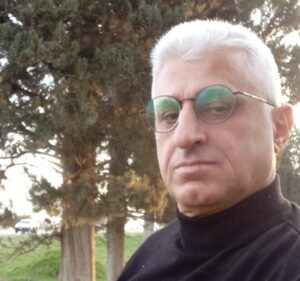
To understand the roots of the current exclusionary mentality, one must return to the project of Mohammed Talab al-Hilal, the political security officer in Al-Hasakah Governorate. In November 1963, al-Hilal submitted a detailed report to the new Ba’athist regime outlining the “Kurdish problem” and its solutions. The primary goal of the project was “to efface the historical identity of the Kurdish Jazira” and erase every trace related to the memory of that identity regarding both land and people:
Arabizing the names of Kurdish villages and towns.
Distributing Kurdish lands to Arab settlers brought from other Syrian provinces as part of what was known as the “Arab Belt project.”
Building an Arabist fence around the homeland of the Kurdish people to isolate them completely from their Kurdish surroundings, aiming to stifle and eliminate them.
Prohibiting communication in the mother tongue, banning Kurdish language instruction, and outlawing Kurdish national music and publications.
This project did not remain a mere theoretical thesis; it was “transformed into systematic action on the ground” starting in the 1970s, leaving devastating catastrophic effects on the Kurds for many years. Talab al-Hilal was the best “representative of the Ba’athist thought that aimed to dissolve the Kurdish element into the melting pot of Arabism.” His project is not just an obsolete document, but “a racist seed that continued to grow within the body of the Syrian state for decades.”
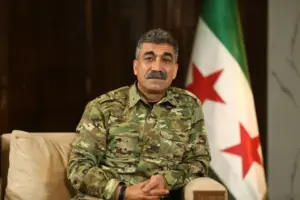
After the fall of the Ba’athist regime, it was hoped that Mohammed Talab al-Hilal’s project would expire forever. The tragedy, however, is that “the same mentality has returned in a new guise” through Ahmed Hilal, the spokesperson for the presidential team. Examining his statements and positions reveals striking parallels, most notably in the rejection of the Kurdish language. Presidential envoy Ahmed Hilal has refused the use of the Kurdish language on official signs for institutions in Kurdish areas, insisting on Arabic only. This stance is not a neutral administrative choice; it is a direct reproduction of the “identity erasure” policy practiced by his Ba’athist predecessor. Barring the Kurdish language from public spaces is a denial of the very existence of the Kurdish people.
Similarly, there is procrastination regarding the prisoners’ file. Despite the execution of reciprocal prisoner releases, the number of Kurdish prisoners not yet freed is far greater than those who have been released. Although media reports spoke of the release of “hundreds of detainees,” the majority of those freed were Arabs. The Kurdish prisoners still in Damascus jails represent a political pressure card, preventing the government from fulfilling its full obligations.
The Women’s Protection Units (YPJ) are not merely a military formation. Founded in 2013 with a strength of approximately 24,000 fighters, they were at the forefront of the international fight against the terrorist organization ISIS. They played a pivotal role in the Battle of Kobani in 2014, participated in the liberation of Manbij and Raqqa, and saved thousands of Yazidis in Sinjar. Thousands of female fighters were martyred, and the YPJ became a unique global model for women’s empowerment in a region where traditionalists view women as mere “commodities” whose place is only in the home to serve husbands and bear children.
In contrast to this liberationist feminist model, the interim government’s stance is no different from the miserable patriarchal heritage. The government has refused to grant the YPJ an independent status within the structure of the Syrian army, insisting instead on integrating them only into the internal security forces (female police). This effectively strips them of their military and political roles. The interim government’s position “is no different from previous ruling mentalities in Syria” and reflects a “rejection of the role of women in the future of Syria.”
While the Kurds adopt democratic behavior that grants women rights and views them as human beings before being bodies, the interim government remains trapped in an exclusionary patriarchal mentality. This fundamental contradiction threatens the very concept of “integration.”
Syria has become a stage for the clash of two contradictory models. The first (traditional, patriarchal, nationalist, Islamist), represented by Ahmed al-Sharaa and Ahmed Hilal, attempts to confine identity to a single framework (Arab-Islamic), views diversity as a threat rather than a source of wealth, sees women as “bodies” rather than political actors, and repeats the “center/periphery” duality practiced by the Ba’ath for years. The second (democratic, pluralistic, feminist), embodied by the Kurdish Autonomous Administration project, recognizes national, cultural, and religious diversity as the foundation of the state, makes women’s empowerment a cornerstone of its political project, and believes in equal citizenship rather than subordination to central hegemony.
The uncomfortable truth is that the Kurds today have become the “kingmaker” (the deciding factor) in the stability of Syria and the entire region. On one hand, they are the only effective ground force that fought ISIS and saved the region from cross-border terrorism. On the other hand, they constitute an obstacle to the project of rigid centralization promoted by Damascus.
This situation places the Kurds before an existential dilemma: “integrating into a state that does not recognize them as equal partners” or “clinging to the Autonomous Administration in defiance of the center’s will.” Both options are fraught with risk.
The continuation of the “Two Hilals” mentality (Mohammed Talab al-Hilal and Ahmed Hilal) will only lead to “more tension and the reproduction of conflict.” History has proven that Arabization and exclusion policies did not succeed in erasing Kurdish identity; rather, they increased its strength and political maturity. The Kurds are no longer a mere minority that can be absorbed into the Syrian centralist melting pot; they have become an essential actor that cannot be bypassed in the equation of national and regional stability.
If the current leadership in Damascus wants to rise to the level of challenges facing the new Syria, it must recognize the cultural and political rights of the Kurds as an integral part of the Syrian fabric. It must stop the procrastination in the prisoners’ file and release all Kurdish detainees without exception. Most importantly, it must accept the YPJ as an independent military force within the Syrian army structure—or at minimum, with strict guarantees protecting its existence and role. It must abolish all laws and policies that reproduce the Arabization project and open the door for education in the Kurdish language and its use as an official language in Kurdish areas. Agreements must be turned into physical reality rather than texts on paper through clear and transparent implementation mechanisms.
The alternative is the continuation—and even exacerbation—of the crisis, with all that entails for the region as a whole. The Kurds are not an enemy to be excluded, but an essential ally against extremism and terrorism. A “New Syria” will not be realized without recognizing their right to difference and equal representation. Let those in the interim authority know that identity is not canceled by decrees, women do not return to the cage, and rights do not lapse by the passage of time.
Note: This text is translated from the original Arabic version… Read the Arabic version:Click here