The file of victims in the Sheikh Maqsoud and Ashrafieh neighborhoods of Aleppo remains open amid a lack of accurate official statistics. This stands in contrast to firsthand testimonies documenting the scale of the tragedy left by recent attacks, accompanied by forced displacement and violations against Kurds, as reported by the Hawar News Agency.
“Dilyar” (a pseudonym), a resident of Sheikh Maqsoud, recounts that the number “4,800” is no longer just a figure; it now represents the number of graves he searched through looking for the remains of his brother, who was martyred during attacks launched by Syrian Interim Government factions, backed by the Turkish military, on the two Kurdish neighborhoods.
Forced Displacement and Human Losses
Dilyar explained that he was forced to flee with his children, along with more than 250,000 people, on January 8, due to the shelling and the siege imposed on the neighborhoods between January 6 and 10. According to the General Council of Sheikh Maqsoud and Ashrafieh, the population before the events was approximately 450,000, the majority of whom were displaced from Afrin since 2018.
He noted that the use of drones, armored vehicles, and jamming devices led to a loss of communication with his family members. He later confirmed the death of his brother, beginning a journey to find his body across hospitals and security centers.
Numbered Graves Without Names
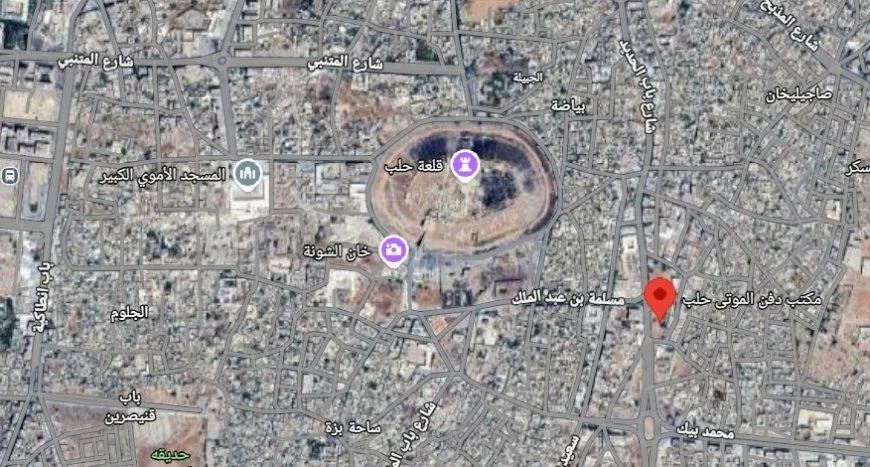
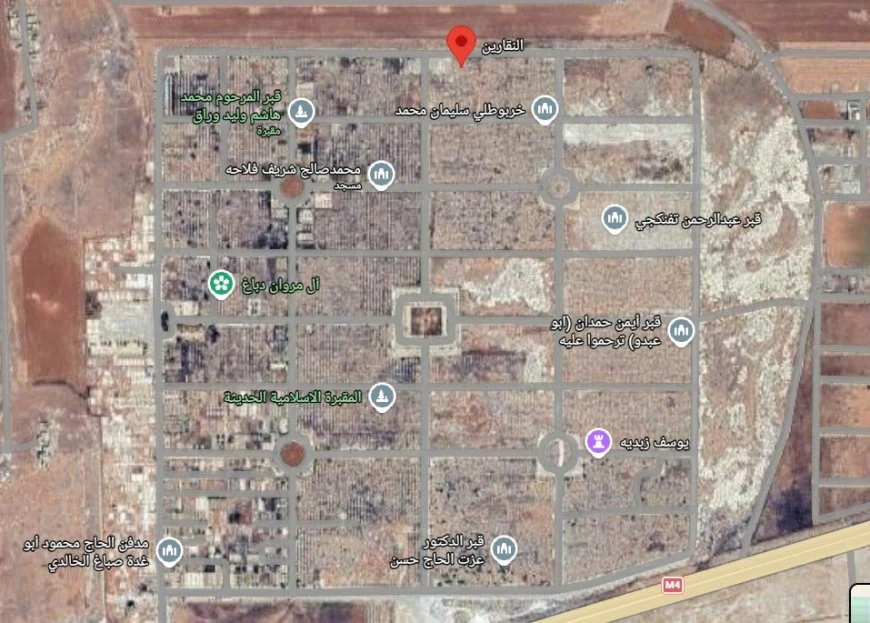
According to his account, relevant authorities led him to the burial office in the Jub al-Qubba area before directing him to the al-Naqarin cemetery east of Aleppo. There, thousands of graves are numbered without names, belonging to civilians, members of the Internal Security Forces (Asayish), and foreign fighters of various nationalities.
The cemetery, according to testimonies, contains more than 4,800 graves linked to the recent events in the two neighborhoods. Meanwhile, Hawar Agency documented an initial toll indicating more than 75 civilians killed or wounded—numbers that remain limited compared to the scale of violations, as human rights and media organizations are prevented from accessing comprehensive statistics.
Restrictions on Burials and Funerals
Dilyar pointed out that the process of identifying bodies was difficult; they were placed in plastic bags, and opening them to verify identity was prohibited before they were transported in closed coffins. He added that his family was prevented from burying his brother in their village cemetery in the Afrin countryside; they were instead ordered to bury him in a separate location “because he was a victim from Sheikh Maqsoud and Ashrafieh.”
The family was also barred from holding a funeral ceremony on the pretext that the victim resided in an area “opposed to the state,” according to what they were told by the controlling authorities.
Bodies in the Streets and Messages of Intimidation
For his part, “Ibrahim” (a pseudonym), a resident who returned to the neighborhood, said they were allowed back on January 14, four days after the entry of the Interim Government factions. They found dozens of bodies in the streets, particularly near the Maarouf al-Karkhi Mosque.
Ibrahim considered leaving the bodies unrecovered until the residents’ return to be a “veiled message of intimidation” aimed at terrifying the locals. He added that he identified several victims, including his neighbor “Awish” (70 years old) from the village of Aqiba, and a young man named “Basel” (32 years old), a phone shop owner who died from gunshot wounds. He noted that his last contact with Basel was on January 10.
The residents’ testimonies collectively indicate that what occurred in Sheikh Maqsoud and Ashrafieh has left a deep scar on the memory of the population, reinforcing the conviction that a reality imposed by force cannot form a foundation for the country’s future. Nevertheless, the file of hundreds—and perhaps thousands—of victims remains pending in the absence of a clear path for accountability and justice.