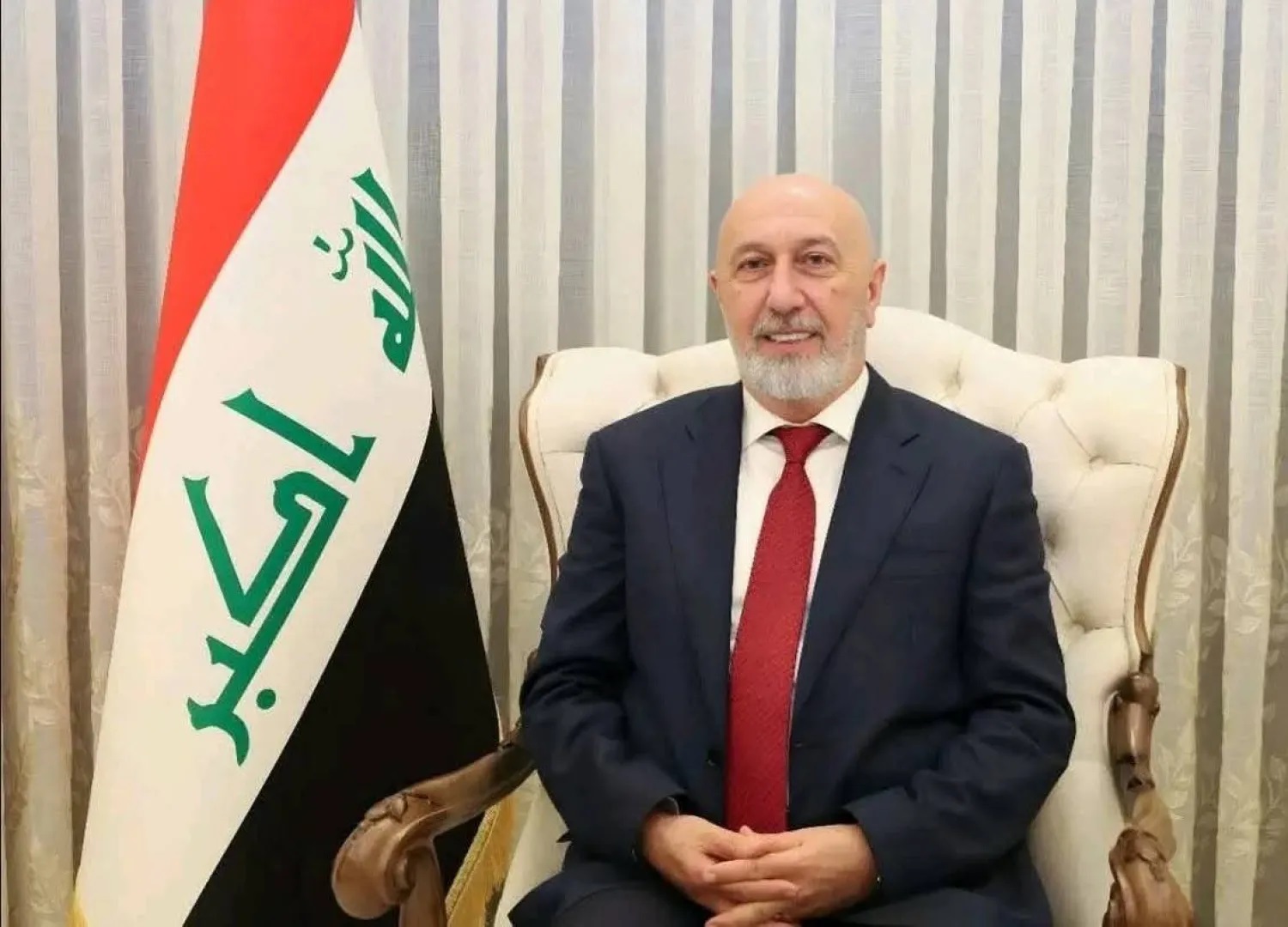
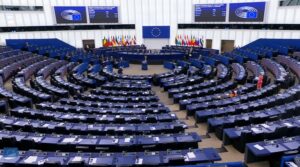
The Iraqi Parliament elected Nizar Mohammed Said Amidi, the candidate of the Patriotic Union of Kurdistan (PUK), as the President of the Republic of Iraq on Saturday. The election followed repeated postponements of the voting session due to political disagreements, occurring against a backdrop of tense regional conditions that have cast a shadow over the domestic landscape.
According to the Parliament’s media office, Amidi secured 227 votes, compared to 15 votes for his rival, MP Muthanna Amin Nader, while seven ballot papers were declared invalid. During the session, the Speaker of the Iraqi Parliament, Heibat al-Halbousi, announced that “a two-thirds quorum was achieved with the attendance of 223 deputies.” He noted that the number of candidates reached 16 following one withdrawal and announced that the outgoing President, Abdul Latif Rashid, had also withdrawn from the presidential race.
Amidi, 58, was sworn in as the successor to Abdul Latif Rashid after winning the majority of votes, according to a broadcast by the official Iraqi channel. Before taking the oath, Amidi stated, “My appointment is a great trust,” adding, “I assure you that I will work on the principle of ‘Iraq First’.”
Regional Context and Timing
The election of the new president comes at a sensitive regional juncture, coinciding with a ceasefire between Iran on one side and the United States and Israel on the other. It also aligns with the commencement of talks between Washington and Tehran in Islamabad. Meanwhile, the Iraqi arena has been affected by the repercussions of the war that broke out on February 28, which witnessed an exchange of strikes and attacks between parties linked to the conflict.
The Presidential Role in Iraq
The position of President of the Republic in Iraq is largely ceremonial, according to the political custom established since the first pluralistic elections in 2005 following the U.S. military intervention that toppled the rule of Saddam Hussein. Under this “ethno-sectarian” power-sharing system:
The Presidency is reserved for a Kurdish figure.
The Prime Minister position is designated for a Shia.
The Speaker of Parliament position is designated for a Sunni.
Since 2003, several presidents have held the office, beginning with Ghazi Mashal Ajil al-Yawar, followed by Jalal Talabani, Mohammed Fuad Masum, Barham Salih, and finally Abdul Latif Rashid.
The election session was originally scheduled for January 27 following the legislative elections held in November. However, it was postponed twice due to disputes between the two main Kurdish parties: the Kurdistan Democratic Party (KDP) and the Patriotic Union of Kurdistan (PUK).
Profile of Nizar Amidi
Amidi holds a prominent political and administrative record:
He is a member of the Leadership Council of the Patriotic Union of Kurdistan (PUK).
He served as the Minister of Environment in the government of outgoing Prime Minister Mohammed Shia al-Sudani from 2022 until his resignation in late 2024.
He previously served as a consultant to former presidents Jalal Talabani, Fuad Masum, and Barham Salih.
Nizar Mohammed Said Mohammed Amidi was born on February 6, 1968, in the Amadiya district of Dohuk Governorate. He is married with four children. He received his education in Mosul, where he earned a degree in Mechanical Engineering from the University of Mosul. He lived and worked in Sulaymaniyah and later Baghdad, providing him with a practical understanding of the political and institutional realities of both Iraq and the Kurdistan Region.
Notably, and unlike several previous Kurdish presidents, Amidi did not leave Iraq during the Ba’ath Party era and does not hold any citizenship other than Iraqi. He is fluent in both Arabic and Kurdish.
Domestic Complexities and Government Formation
The president’s election occurs amidst internal political complexities. The country often faces friction that delays consensus on high-ranking positions, particularly regarding government formation. According to the constitution, within 15 days of his election, the President must charge the candidate of the “largest parliamentary bloc” with forming the government. The Prime Minister-designate is then given 30 days to complete the task.
In this context, the “Coordination Framework” announced in January the nomination of former Prime Minister Nouri al-Maliki for the premiership. However, this nomination sparked international reservations, as Washington threatened to halt its support for Baghdad should he return to power. In February, al-Maliki reaffirmed his candidacy while seeking to reassure the United States regarding its demands, particularly concerning the regulation of pro-Iranian armed factions.
The Iraqi public is now closely watching the upcoming phase as the constitutional process to appoint a Prime Minister begins, amid ongoing political and security challenges and the influence of regional balances on domestic decision-making.