Several regions across northern Syria have witnessed a marked escalation in security and social tensions following an incident involving the lowering of the Syrian flag during Newroz celebrations in the city of Kobani on March 21, 2026. The incident was accompanied by a wave of nationalist-driven assaults and violations targeting Kurds in the Aleppo countryside, the city of Afrin, and its surrounding areas, amid official and human rights warnings of grave repercussions for civil peace.
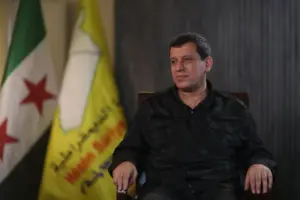
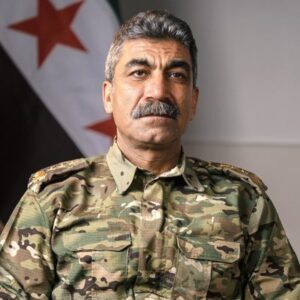
In this context, Sipan Hamo (Samir Ali Ouso), Assistant Syrian Defense Minister, stated that “due to an individual incident, the Kurdish people in Aleppo and some of its districts were subjected to beatings and insults.” He noted that “some are waiting for such individual events to sow discord among the components of the Syrian people,” calling on “patriots to remain calm, uphold the national spirit, and avoid being dragged into sedition.”
He added that “those who lowered the Syrian flag in Kobani and those who insult the Kurdish people and their symbols share the same mentality aimed at division,” emphasizing the need to “stand together against these rejected behaviors and work to strengthen national unity and peaceful coexistence among all Syrians.” He stressed that “everyone who insulted the Syrian flag or assaulted Kurds and their symbols will be held accountable,” and that “the law will take its course against anyone threatening stability and security in Syria,” calling for “respect for the Syrian flag, which represents all Syrians.”
In parallel, a statement issued by the General Command of the Internal Security Forces (Asayish) on March 21, 2026, explained that the flag-lowering incident in Kobani was an “individual and irresponsible act,” asserting that it “does not in any way represent the policy of the region or the values of coexistence.” The statement noted that the Internal Security Directorate in Kobani “took immediate action, arresting the individual involved to refer his file to the competent legal authorities.”
The statement further remarked that “certain parties and opportunists exploited this video clip to incite systematic chaos, particularly in the Afrin region, by fueling racial and sectarian sentiments and attacking residents.” This led to “escalating tensions at several points,” confirming that “these provocative actions do not serve the interest of the region but aim directly at destabilizing it.”
In light of these developments, the Asayish General Command announced on March 22, 2026, the imposition of a partial curfew in the cities of Hasakah and Qamishli, effective from 1:00 AM to 8:00 AM for a period of one day. It indicated that this measure is “among the necessary precautionary steps to protect citizens and maintain general stability as a top priority,” urging citizens to “fully comply and cooperate with security forces.”
For its part, the General Secretariat of the Kurdish National Council (ENKS) confirmed in a statement dated March 21, 2026, that this year’s Newroz celebrations carried a “special character,” pointing to joint activities and official meetings that “enhance hope for a better future for the country.” However, it noted “regrettable negative behaviors,” including the flag-lowering incident in Kobani and the “accompanying insults to the Kurdistan flag and Kurdish symbols, assaults on Kurds celebrating Newroz, and the attack on the Public Security headquarters in Qamishli.”
The statement emphasized that “these practices are strongly condemned for the threat they pose to the principles of coexistence and the attempt to sow discord,” calling for “swift and firm measures to control the situation and ensure security.” It also urged the Kurdish people to “exercise restraint and not be drawn into attempts at provocation.”
Additionally, a statement from the Syrian Democratic Council (SDC) described the flag-lowering incident as an “individual act that does not reflect the will of the region’s people or the positions of national forces,” while simultaneously rejecting “all reactions that took a retaliatory character or went outside the framework of the law.”
The Council affirmed that “the Syrian state flag is a unifying national symbol,” while also stressing that “Kurdish symbols represent an inherent part of the Syrian national identity.” It warned that “tampering with any of these symbols opens the door to sedition and serves agendas that are not in the interest of the Syrian people,” adding that “any violations, acts of incitement, or assaults must be dealt with according to the law.”
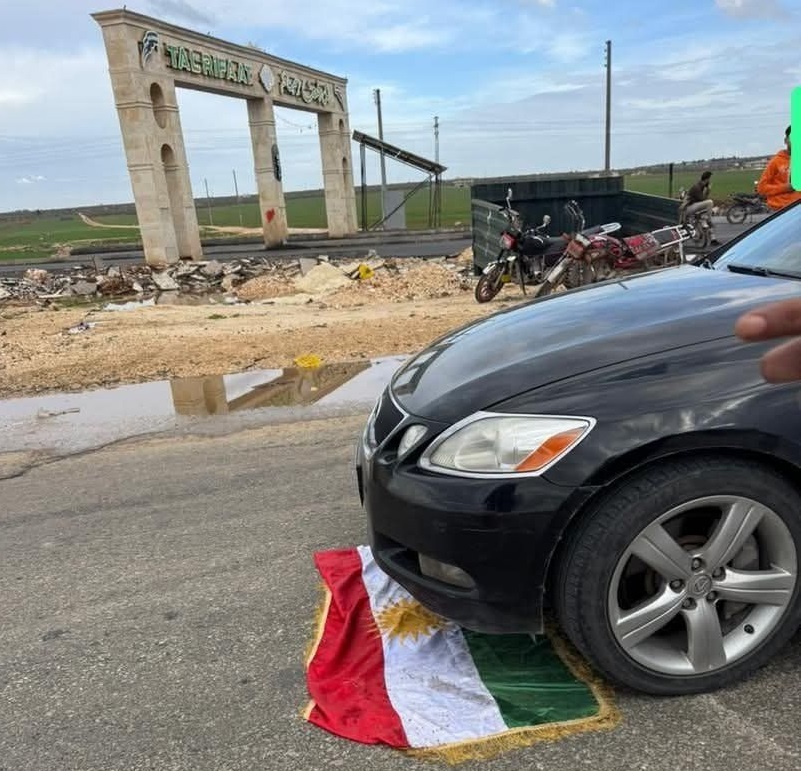
These positions come amid human rights reports indicating a rise in violations against Kurdish citizens in the northern Aleppo countryside and Afrin on March 21, 2026. The Rights Monitor Syria platform documented incidents of physical assault, the burning of Kurdish flags, and the prevention of Newroz celebrations, along with reports of road closures and the targeting of civilians based on their national identity.
Assaults were also documented in the city of Azaz, including the beating of a Kurdish youth and the burning of his motorcycle for raising the Kurdish flag, in addition to the removal of Kurdish flags from vehicles in Aleppo city. In Afrin, recorded violations included beatings, verbal insults, the burning of flags, and acts of vandalism against civilian property.
In the same vein, the Syrian Observatory for Human Rights (SOHR) noted that the Kobani incident “ignited a spark of tension that quickly spread to several areas,” pointing to “the escalation of hate speech and assaults on Kurdish youth and their national symbols,” warning of “the situation sliding toward further congestion and division.”
The Observatory added that several areas witnessed “mutual insults to flags and the forced imposition of specific symbols,” alongside demonstrations involving the burning of Kurdish symbols and physical assaults. In the capital, Damascus, an incident involving the cutting of the Kurdistan flag occurred in Umayyad Square.
The report also mentioned armed attacks targeting security checkpoints in the northern countryside amid calls for tribal mobilization, reflecting a “disturbing escalation in security tensions” and warning against “being dragged into sectarian or ethnic strife that could threaten the stability of the entire region.”
Conversely, tribal entities, including a statement attributed to the Sheikh of the Al-Jabbour tribe, called for a refusal to engage in any escalation or sedition, reaffirming the unity of Syria and holding those who issue calls for mobilization responsible for the consequences.