By: Mohammed Arslan Ali
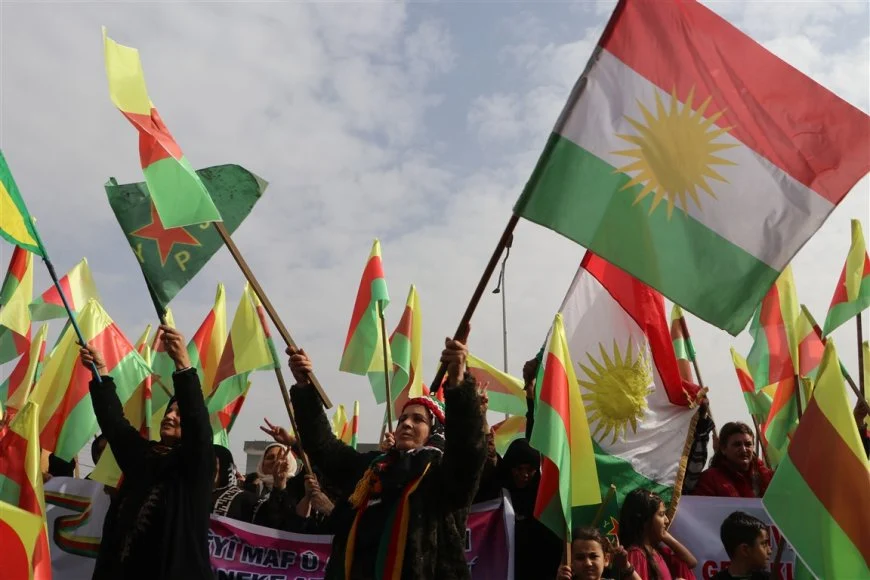
Syria is entering an exceptionally complex historical turning point today, characterized by attempts to rearrange political cards and stabilize the foundations of a new governance in Damascus, headed by Ahmed al-Sharaa, the leader of the temporary authority. Amidst these transformations, the relationship between the new interim government and Kurdish forces (primarily the Syrian Democratic Forces) emerges as one of the most significant challenges that will define the future shape of the country. Despite the signing of settlement agreements, practice on the ground reveals a deep chasm between political pragmatism and ideological stagnation, placing the Kurds once again before the challenge of confronting exclusionary mindsets that take on different names but agree in essence on the rejection of the “Other.”
The current Syrian scene cannot be read in isolation from the regional and international balances that have imposed a new political and military reality, leading to the rise of forces with radical Islamist and Arab nationalist roots to the seat of power. The profound problem lies not only in the historical background of some factions that joined under the banner of this rule, but in the persistence of the “mentality” with which state institutions and zones of influence are managed.
This exclusionary mentality finds extreme difficulty in accepting the Kurdish “Other” as an authentic partner in the homeland, resorting instead to political procrastination. This is clearly manifested in the continuous stalling regarding the implementation of the terms of concluded agreements, especially concerning the file of Kurdish prisoners—a matter that reflects the absence of genuine intentions to build mutual trust or establish a sustainable peace.
The Kurds have come to live in the syndrome of the “Two Hilals,” ranging from Arabization to cultural and linguistic erasure. Perhaps what is most alarming in the current stage is history repeating itself with new faces. The Kurds today live, metaphorically and realistically, “between the jaws of two Hilals,” in a reproduction of policies of cultural genocide and national marginalization:
Muhammad Talab Hilal (The Founding Past of Exclusion): The Ba’athist officer who, in the 1960s, established the methodology of systematic Arabization (the Arab Belt) in northeastern Syria through his notorious study that called for demographic change and the melting away of Kurdish identity. This first “Hilal” represented the pinnacle of chauvinistic Arab nationalism.
Ahmed Hilal (The Continuous Present of Exclusion): The current envoy of the new government to the Kurdish regions, who reproduces the same policies by refusing to install the Kurdish language on the official signboards of institutions. This behavior is not merely an administrative procedure; rather, it is an extension of the same mentality that considers linguistic and cultural diversity a threat and uses authority as a tool for cultural erasure.
This similarity proves that changing regimes or slogans (from Ba’athist nationalism to political Islamism) has not changed the exclusionary and dictatorial essence of the central authority toward the Kurds.
The perspective on women and their participation serves as the most prominent point of civilizational clash between the two models presented on the Syrian stage. The contrast here is not merely political, but an existential and social contradiction that defines the shape of the coming society.
While the new ruling mentality adopts a traditional view that objectifies women and reduces their role to the domestic and reproductive sphere—excluding them from the public square and decision-making centers—the Kurdish model presents a completely opposite approach. The Kurdish experience in northern and eastern Syria has proven a commitment to genuine democratic behavior that renders the woman an active human being, a partner in politics, and a fighter in the ranks of the military forces that defeated the most formidable terrorist organizations. This liberatory model constitutes, in itself, an “ideological threat” to closed mindsets that cannot comprehend the idea of a free and leading woman.
Faced with these challenges, decision-makers in Damascus and regional capitals must realize a geopolitical reality that cannot be bypassed: the Kurds are no longer merely a minority that can be marginalized or suppressed by administrative or military decisions. The Kurds have become the “kingmaker” (the deciding factor) in the equation of stability, not only in Syria but in the entire region, due to several considerations:
Field Legitimacy: The military and organizational power they possess, which has proven its effectiveness in eliminating terrorism.
The Administrative Model: Their ability to present a model of peaceful coexistence that recognizes pluralism (ethnic and religious) in a region suffering from polarization.
Geopolitical Weight: The connection of their cause to the overlapping international and regional power balances within the Syrian geography.
No government in Damascus, regardless of its orientation or who heads it, can succeed in building a “New Syria” by reproducing the policies of Muhammad Talab Hilal using the tools of Ahmed Hilal. The mentality of exclusion and rejection of the “Other” is a recipe for sustaining civil war and fragmenting geography. True national integration does not mean the melting of components and the cancellation of their identities; rather, it means the constitutional and practical recognition of cultural and political pluralism, and respect for human rights and gender equality. Without this, Syria will remain a prisoner of a vicious cycle of violence, and the Kurds will remain the “difficult number” that determines the compass of stability or chaos in the Middle East.
Note: This text is translated from the original Arabic version… Read the Arabic version: Click here