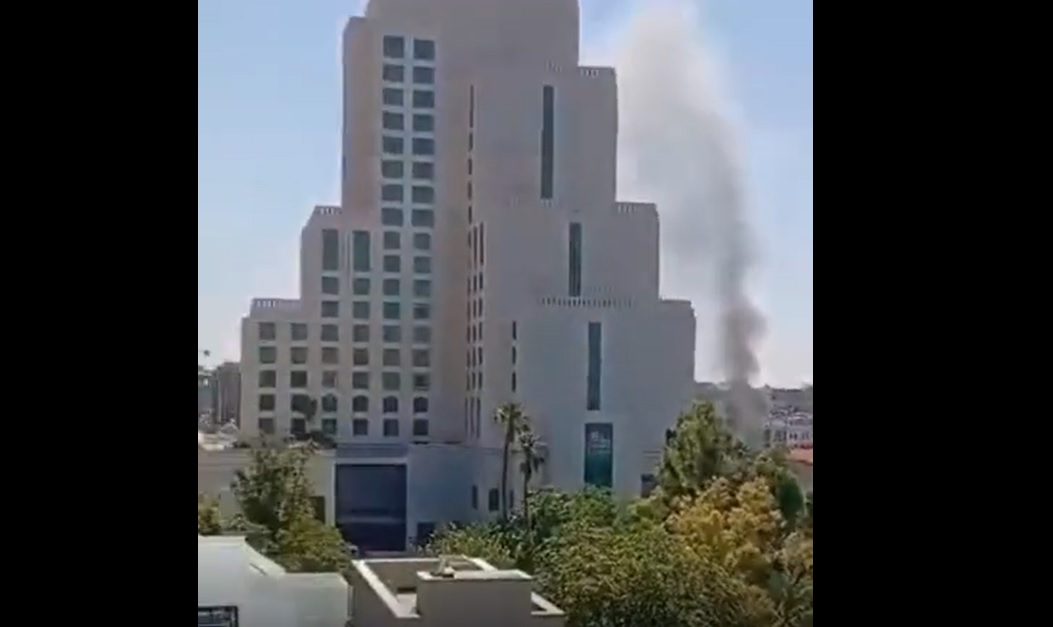
The Syrian capital, Damascus, witnessed a series of explosions today, Tuesday, caused by improvised explosive devices (IEDs) targeting locations along the road between Victoria Bridge and Umayyad Square. This coincided with French President Emmanuel Macron’s visit to Syria, while competent authorities have launched an investigation into the circumstances of the incident.
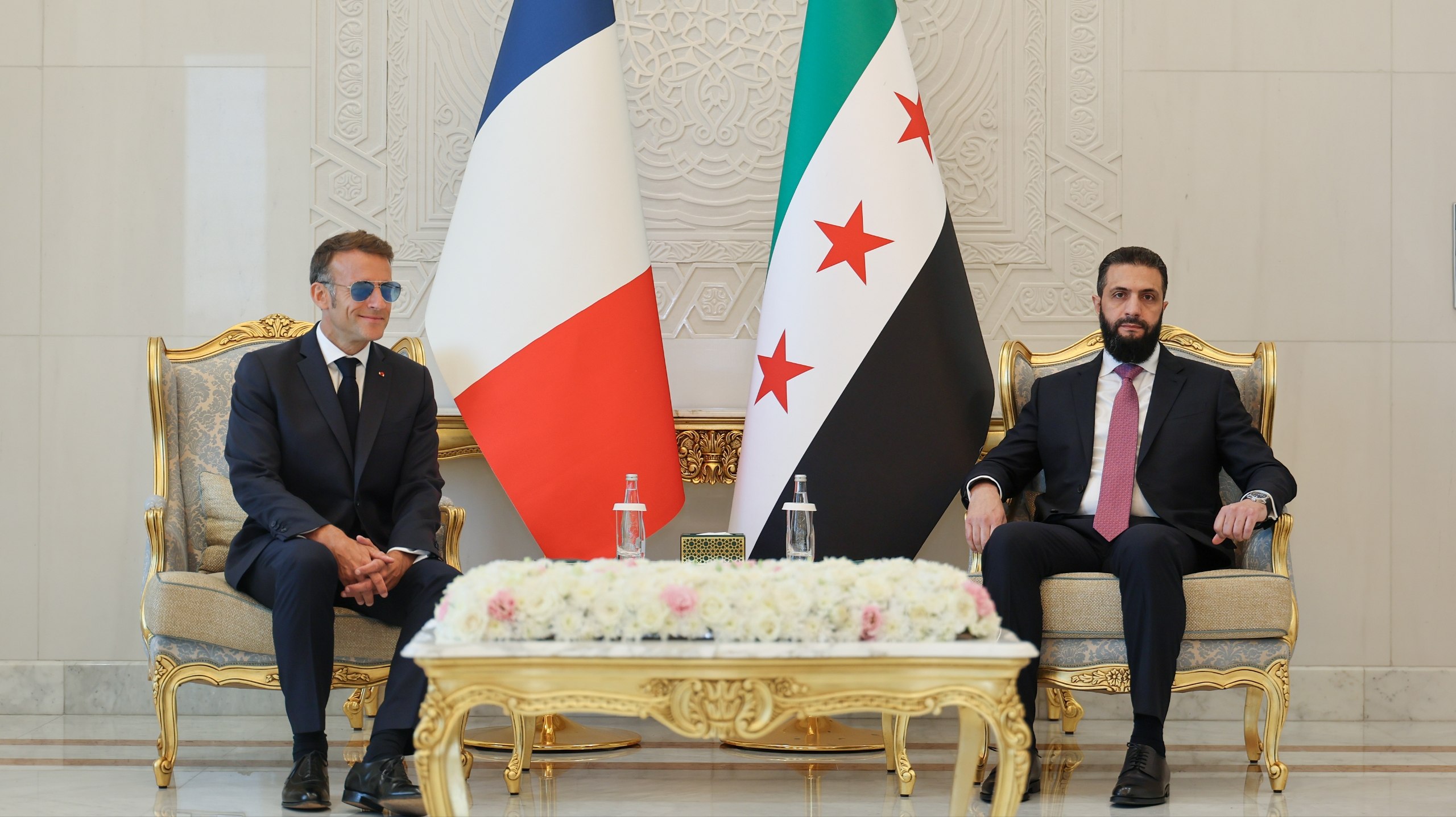
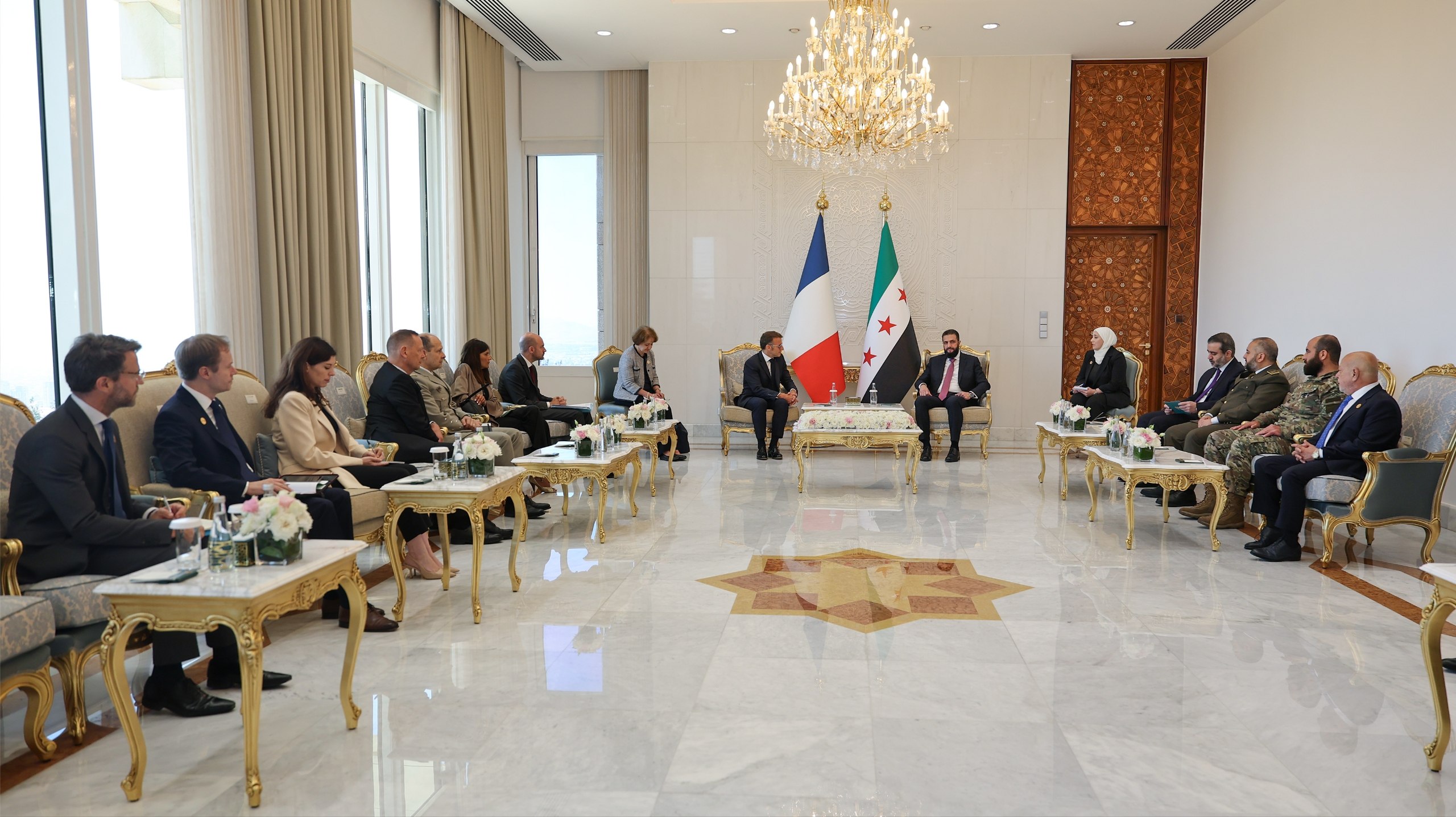
Syrian state media reported that two IEDs exploded near the hotel where the French president is staying. However, the Elysée Palace confirmed that Macron did not hear the sound of the explosions, noting that shortly afterwards, he met with his Syrian counterpart, Ahmed al-Sharaa, according to the scheduled program.
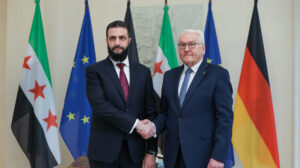
On Monday evening, Macron began a visit to Damascus, marking the first by a European president to Syria in 17 years, and the first by a leader of a major Western nation since Ahmed al-Sharaa assumed power in late 2024 following the overthrow of Bashar al-Assad’s regime.
The French president commenced his visit with a night tour accompanied by Syrian President Ahmed al-Sharaa at the Umayyad Mosque in Damascus, following a dinner that brought them together at a restaurant in Old Damascus, according to Agence France-Presse (AFP). The two presidents toured the courtyard of the mosque, visited the tomb of Prophet Yahya (John the Baptist to Christians), viewed a large copy of the Holy Quran, and signed the VIP visitors’ log.
In the context of the visit, Elysée Palace circles explained that the visit carries “a message, but it is not a naive message, nor is it a blank check granted by the President to the new Syrian authorities.”
The Elysée added that what Macron will emphasize in Damascus is “reaffirming our steadfast, long-term commitment to a free, pluralistic Syria that respects all its components, and is also capable of playing the role it deserves in the region; the role of a bridge between parties, a contributor to defusing tensions, and a partner to European Union countries, and to France in particular.”
The Elysée described the visit as “important,” clarifying that its goal is not limited to meeting President Ahmed al-Sharaa and Syrian officials, but also includes “expressing admiration for the courage of the Syrian people and conveying to the new authorities our commitment to having them meet the people’s aspirations, adopt a responsible and inclusive approach with us, the Europeans, and Middle Eastern countries, for the sake of Syria’s benefit, unity, and prosperity.”
Although Paris acknowledged that the situation in Syria remains “complex” and “fragile,” it considered that achieving stability is “possible.” It also described the visit as a “courageous visit,” given its long duration and Macron’s eagerness to meet Syrians of various backgrounds, rather than limiting his program to visiting the presidential palace.
In a message published on the “X” platform, the French president said: “I come to reaffirm France’s commitment alongside the Syrian people. For a sovereign Syria, united in its pluralism, and at peace with its neighbors.”
For his part, Syrian President Ahmed al-Sharaa welcomed Macron’s visit, describing France as one of the “friends of the Syrian people.” In an interview with the French channel BFMTV, he said: “France was considered one of the friends of the Syrian people during the Syrian revolution, and was supportive of the path of the Syrian revolution to achieve the people’s freedom and dignity from the tyranny of the previous regime,” adding that there has been a “constructive role” for France since the fall of Bashar al-Assad’s rule.
Al-Sharaa stressed that Macron’s visit represents an important development in relations between the two countries, noting that France will contribute to the fields of infrastructure and the financial sector, alongside other sectors.
He explained that the visit will witness the signing of agreements, pointing out that rebuilding the state is based on multiple tracks, including reconstruction and empowering state institutions. He noted that Syria has overcome many obstacles during recent months and established excellent relations with many countries, pointing out that France contributed to Syria’s opening up to the outside world.
The Syrian president added that the country has entered the phase of reconstruction and is in need of countries advanced in technology, emphasizing that France is one of the leading nations in this field.
He also pointed out that “the defunct regime was active in the manufacture and trade of narcotics,” confirming the government’s success in dismantling a large number of those networks since the liberation of the country, and stressing that France continued its support for Syria after liberation and played a constructive role in lifting sanctions on it.
Agencies
Note: This text is translated from the original Arabic version… Read the Arabic version:Click here