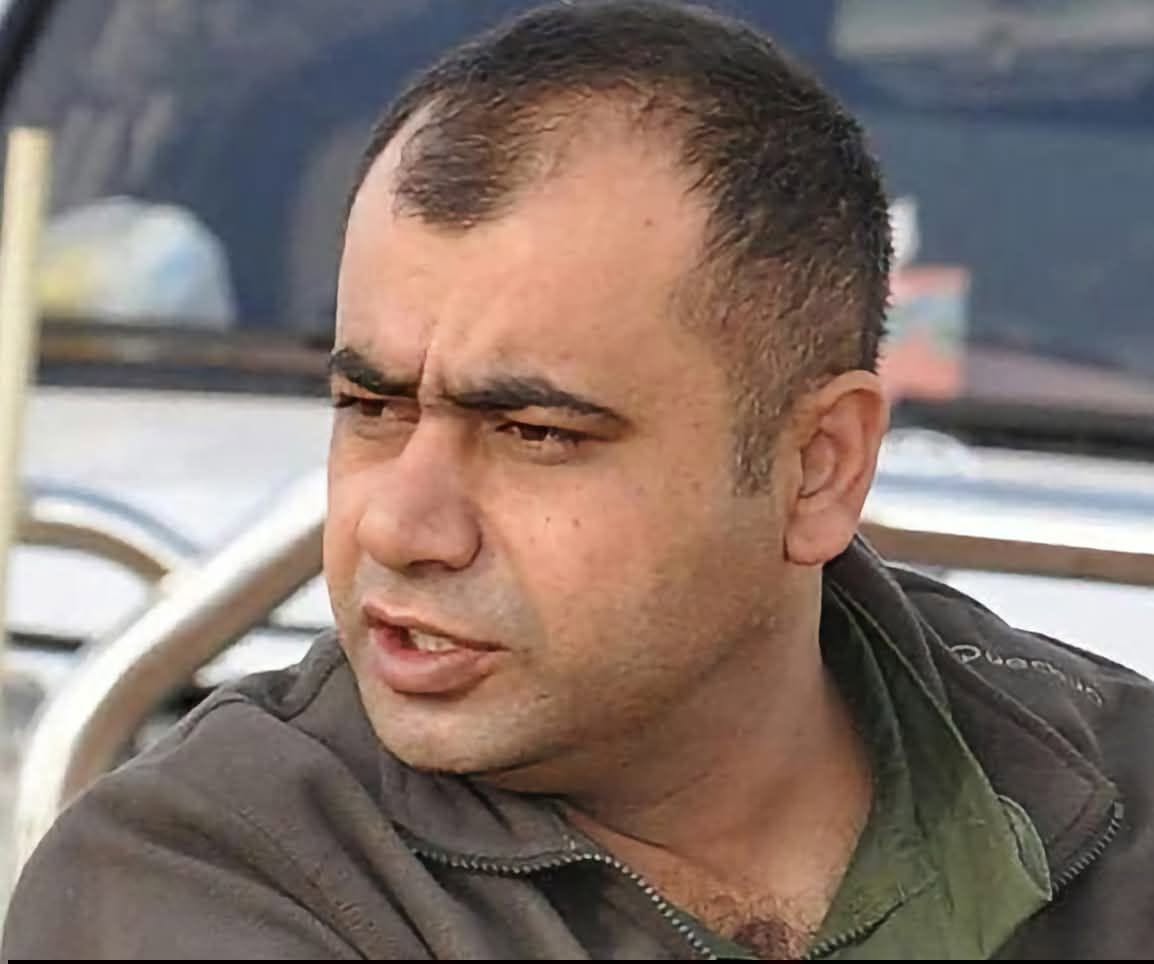
The announcement came within a list of fighters martyred across various regions; the deceased was among the most prominent Kurdish leaders coordinating with US forces and the founder of the security apparatus in northeastern Syria (“Rojava”).
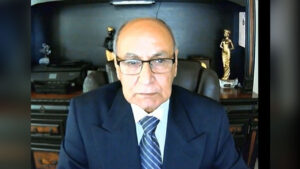
HASAKAH — The martyrdom of Jawan Ibrahim, founder of the Internal Security Forces (“Asayish”) in Western Kurdistan (“Rojava”) and one of the most prominent Kurdish leaders who coordinated on the ground and in security with US forces since their initial entry into the region, has been announced in the city of Hasakah.
The announcement was made via media outlets close to the Kurdistan Workers’ Party (PKK) today, Monday (November 2, 2026). A commemoration tent is scheduled to be set up tomorrow, Tuesday, in the city of Hasakah for thirty male and female fighters from the People’s Defense Forces (HPG) and the Free Women’s Units – Star (YJA-STAR) who were martyred at different times and locations. Ibrahim’s name was included in the list without further details being disclosed.
Ibrahim hailed from a Kurdish family known for its patriotic stance in the city of Sere Kaniye (Ras al-Ayn), where his grandfather was a prominent religious figure. His career was marked by fighting ISIS, the Syrian regime, and Iranian militias. Reports noted his prior military experience in the Qandil Mountains, where he had fled from the Assad regime to join the PKK, before returning to Syrian Kurdish areas in late 2011 to establish the “Asayish” force, which eventually comprised around 15,000 to 16,000 members, including Kurds, Arabs, and other ethnicities.
In an interview published on July 27, 2017, in Okaz newspaper (conducted by Abdullah Al-Ghadawi), Ibrahim disclosed his security and political vision regarding the region’s key issues, summarized in the following points:
Ibrahim stressed at the time that the Iranian project in Syria and the broader region posed a greater danger than ISIS, describing it as a calculated regional project aimed at domination and erasing the Syrian identity, while identifying Qasem Soleimani as the most dangerous figure.
He completely denied any security or military coordination between the Asayish and the Syrian regime, as well as receiving weapons from it, noting that their arms came from the International Coalition and arguing that it would be illogical for the United States to tolerate such coordination.
Furthermore, he denied the existence of any political or military relationship between Syrian Kurds and Turkish Kurds beyond shared national bonds, emphasizing that Turkey’s conflict with the PKK is an internal Turkish affair with a solution that lies within Turkey. Regarding the display of Abdullah Öcalan’s portraits, he explained that it represents a social and morale-driven phenomenon tied to the Kurds’ affection for and influence by him, rather than the execution of a political agenda imposed by the imprisoned leader.