On August 16th of each year, the memory of Kurdistan recalls one of the most prominent milestones in its modern history: the anniversary of the founding of the Kurdistan Democratic Party (KDP) in 1946. This event was not merely the birth of a political organization, but the launching pad for a long journey of struggle, sacrifice, and the defense of the legitimate rights of the Kurdish people.
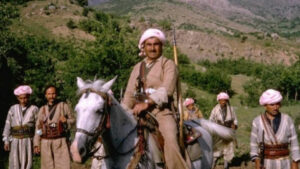
Eighty years have passed since the immortal leader, Mulla Mustafa Barzani, laid the foundational stones of this political edifice. Eight decades have unfolded through successive revolutions, setbacks, and victories, during which regimes and alliances shifted, and regional and international circumstances evolved. Yet, the Party remained at the heart of events, preserving its identity and core principles, and continuing its path in defense of the aspirations of the people of Kurdistan.
The Kurdistan Democratic Party was not born under ordinary circumstances or within luxurious political halls; rather, it emerged from the womb of suffering and from the reality of a people long deprived of their national and political rights. Thus, its establishment expressed a popular will aspiring to freedom, dignity, and the recognition of rights. From its inception, the Party adopted a vision grounded in political, popular, and military struggle, relying on a firm conviction that the rights of peoples cannot be safeguarded without a political will and an organization capable of assuming the responsibility of the era.
The slogan “Democracy for Iraq, Autonomy for Kurdistan” was an early expression of the Party’s vision for an Iraq spacious enough for all its components, and of its belief that the Kurdish cause is inseparable from building a democratic state that respects national, religious, and sectarian diversity, ensuring rights and freedoms for all its citizens.
The Great September Revolution of 1961 marked a crucial turning point in the history of the Party and the Kurdistan liberation movement. Its sacrifices contributed to reaching the March 11 Manifesto of 1970, which represented an important step toward the recognition of the national rights of the Kurdish people. However, the subsequent collapse of the agreement and the painful events that accompanied it opened a new chapter of conflict, leading the Party to continue its path amidst arduous conditions until the outbreak of the May Revolution in 1976, led by President Masoud Barzani and the martyr Idris Barzani.
With the leadership torch passing to President Masoud Barzani, the Party entered a new phase characterized by the strengthening of political and diplomatic work alongside the continued defense of the legitimate rights of the Kurdish people. President Barzani managed to combine firmness of position with political flexibility, and adherence to core principles with an openness to dialogue, making his presence one of the most influential factors in the trajectory of the Kurdish and Iraqi cause.
The 1991 Uprising was another historic milestone, as it paved the way for establishing political and administrative institutions in the Kurdistan Region and consolidating a new political experience based on elections, parliament, government, and institutions, gradually transforming Kurdistan into a political model with a tangible presence on the Iraqi and regional stage.
After 2003, the political role of the Party and its leadership stood out through participation in rebuilding the new Iraq, contributing to the drafting of the political and constitutional process, and defending the principles of pluralism, partnership, and balance, while simultaneously ensuring the protection of the gains of the Kurdistan Region and the rights of its people.
In confronting the terrorist organization ISIS, the Peshmerga forces proved their ability to counter terrorism and defend the land of Kurdistan. Meanwhile, President Masoud Barzani was present on the battlefield, close to the fighters, and closely monitoring the developments of the battle during one of the most difficult phases the region has endured. The sacrifices of the Peshmerga contributed to enhancing their stature as a primary force in countering terrorism and protecting the peoples of the region.
In 2017, the independence referendum marked a prominent landmark in the history of the Kurdistan political movement, led by President Masoud Barzani, who played a pivotal role in expressing the will of the Kurdish people and their aspirations to determine their future. Millions of Kurds expressed their will in the referendum, and despite the complexities and regional and international pressures that accompanied that phase, President Barzani remained steadfast in his position, emphasizing that the will of the people and their legitimate rights cannot be ignored, and that major national issues require leadership with a clear vision and the courage to assume the responsibility of decision-making. The referendum experience affirmed that the will of peoples remains a fundamental factor in shaping history.
Reading through eight decades of the Party’s journey reveals that the secret of its continuity lay not only in its ability to face storms, but in its capacity to adapt to changing variables without compromising core principles. Across multiple stages, the Party transitioned from revolution to institution building, from field action to political and diplomatic engagement, and from confronting regimes to participating in building state institutions—transformations that required significant political flexibility while preserving the essence of the national project.
Here lies one of the most prominent features of this experience: core principles do not mean rigidity, openness does not mean abandoning ideals, and strength does not contradict dialogue. Rather, the ability to combine these elements gives any political movement the capacity to endure in a dynamic regional and international environment. From this perspective, eight decades of the Party’s history do not represent a mere temporal span, but reflect the ability of a political organization to reshape its tools in alignment with the shifts of the times while preserving its identity and core objectives.
The Party also realized that the struggle for rights is incomplete without human development and institutional construction, and that safeguarding gains requires firm political, economic, and social institutions, as well as a collective consciousness that preserves coexistence, respects diversity, and believes in partnership. From this angle, the Party’s experience cannot be read merely as a history of confrontations, but also as an experience of gradual transition from the stage of defending rights to the stage of building institutions that protect those rights and grant them sustainability.
Hence, the current phase in the country imposes a responsibility on political forces to transition from crisis management to constructing sustainable solutions, and from the logic of political rivalry to consolidating national partnership. In this context, the Party has played an important role in achieving a balance between constitutional rights and national interests, and between the distinct status of the Kurdistan Region and support for the federal government—particularly in addressing economic challenges, strengthening state authority, and reinforcing the restriction of arms to state control. These issues remain among the most prominent challenges that require a calm and realistic political vision capable of protecting and developing national gains.
In conclusion, on this glorious anniversary, we can only recall with profound reverence the founder of the Kurdistan Democratic Party, the historic leader Mulla Mustafa Barzani, as well as the martyr Idris Barzani and all the martyrs of Kurdistan who gave their lives for freedom, dignity, and legitimate rights.
As we evoke their legacy and sacrifices, we look to the future with faith and confidence, moving forward under the leadership of President Masoud Barzani, drawing from his wise leadership a firm vision to continue the Party’s path, consolidate the gains of the people of Kurdistan, safeguard its core principles, and build a more secure, stable, and prosperous future for generations to come.
Note: This text is translated from the original Arabic version… Read the Arabic version:Click here