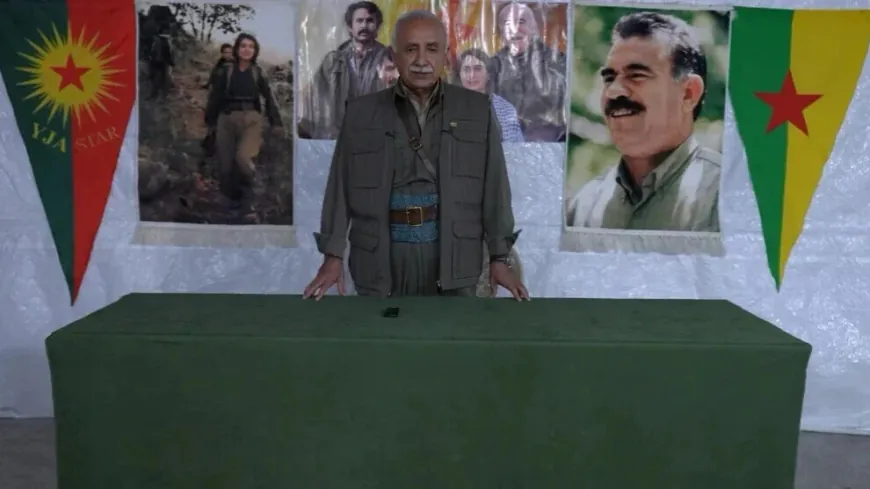
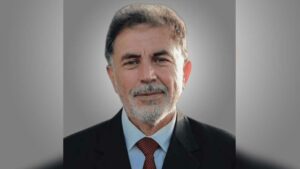
Murat Karayılan, a leader in the Kurdistan Workers’ Party (PKK), criticized the Framework Law passed by the Turkish Parliament on August 10. While considering it a new and significant step in the history of the Republic, he noted that it contains “many deficiencies and errors,” stressing that the continuation of the process requires it to be managed by party leader Abdullah Öcalan, along with the realization of his physical freedom.
In a message marking August 15—the anniversary of the PKK’s launch of armed struggle—Karayılan stated that the Framework Law passed by the Turkish Grand National Assembly (TBMM) “is considered a new matter in the history of the Republic.” He pointed out that since its founding, the Republic “has not recognized the Kurdish will and sought to eliminate the Kurds through killing.”
He added that the law, despite being a “new and important step,” suffers from deficiencies and errors, chief among them the exclusion of party leader Abdullah Öcalan, whom he described as the “architect of this process,” stating: “Yet, the one who launched this process is Leader Apo.”
Karayılan noted that the word “Kurd” does not even appear in the law, nor does it address democracy, and it did not sufficiently take into account “the sensitivities of our people, the views of our movement, and the vision of our leader.”
He opined that reducing the entire issue to guerrilla fighters laying down their arms represents a “narrow approach,” explaining that the issue “dates back a whole century” and that such an approach will not be sufficient to resolve it.
Karayılan asked: “What drove the guerrillas to appear on the stage of history?” He asserted that failing to reveal this “properly” will prevent reaching a fundamental solution to the problem.
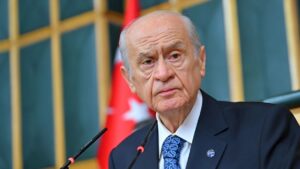
Regarding the course of the process, Karayılan cited the initial call made by Devlet Bahçeli to Abdullah Öcalan, which, according to him, included an invitation to “stop the war, dissolve his party, come to parliament, speak in the Democratic Peoples’ Party (DEM Party) parliamentary group, and recognize his right to hope to the end.”
He clarified that his movement made its resolution conference decisions on this basis, saying: “The process should be managed by Leader Apo.”
The PKK leader underscored his stance by stating: “Leader Apo must manage this process. Leader Apo’s physical freedom must be realized. Without that, things will not work.”
Full text of the message published by Firat News Agency:
First of all, in the name of all freedom fighters and comrades, we congratulate Leader Apo on the 42nd anniversary of the Resurrection Day, and we extend to him our greetings, respect, and loyalty.
We also congratulate all mothers of martyrs, their families, our dear people, all peoples of the region, our friends, and our comrades on Resurrection Day.
We remember with all respect and gratitude, in the person of the immortal leader Egîd (Mahsum Korkmaz), all martyrs of the revolution, and we renew once again the pledge we made to them, saying: “We will achieve your goals and prevail in your struggle!”
We also remember with all respect, in the person of Erdal (Engin Sincer), Zeki Şengali (İsmail Özden), and Atakan Mahir (İbrahim Çoban), all our martyrs who were martyred during the month of August.
The August 15 initiative was not merely an initiative for guerrilla fighters; it was at the same time an initiative for our people. Our people have continued their resistance from those days until today, enduring numerous massacres. We remember with all respect and gratitude all those who lost their lives in the massacres of Şırnak, Digor, and Kendal, and all those who were martyred in the attacks of the Turkish state.
Dear Comrades;
After the suppression of the uprisings in Northern Kurdistan, a deep and wide-ranging assimilation policy was developed. By the 1970s, this policy had made significant headway, to the point that our people were on the brink of extinction and disappearance. At such a stage, Leader Apo launched a historic initiative.
The freedom struggle that began in that period under various names developed and provided a breath of fresh air for our people. However, immediately after that, on September 12, 1980, the fascist military junta came to power.
It is true that the junta came to power to liquidate the revolutionary movement in Turkey and the Kurdistan liberation movement, but at the same time, it came into effect in Kurdistan with the aim of implementing the Eastern Reform Plan—that is, trying in 1925 to complete the execution of the Eastern Reform Plan.
In Kurdistan, they forcibly imposed the learning of the Turkish language on the people: by day on children, and by night on women and men. They banned the Kurdish language, reaching the point of preventing people from speaking Kurdish even inside their own homes.
They also turned village squares into places of torture. They stripped Kurdish men and women naked, lined them up in the same place, served them food in animal containers, and practiced brutality of this nature. These practices were not limited to prisons; they turned all of Kurdistan into a prison.
Naturally, silence in the face of that brutality was equivalent to abandoning humanity. At first, Mazlum Doğan, Ferhat Kurtay, and their comrades, alongside the activists of July 14, stood up against this situation in Amed Prison, broke the silence, and developed the resistance.
Leader Apo exerted great efforts to prevent silence toward these inhumane practices and made the necessary preparations for that purpose.
In this context, the breakthrough of the August 15 leap, led by Mahsum Korkmaz, came into effect. For there was no other path to rise up in the face of that brutality.
However much the August 15 leap began with arms, its meaning was greater than arms. It was a call against the state of silence that had hung over society.
Initially, our people approached the matter with doubt and anxiety; because up to that time, wherever the Kurds had risen up, they were suppressed. For this reason, the people approached this process with caution and concern.
However, when they saw that the guerrillas were operating with a different style, would not be defeated, and consisted of distinct individuals determined to press forward, they realized then that the path to freedom and liberation lay in the guerrilla struggle.
Thereafter, the people embraced the guerrillas, youth joined their ranks, and in this manner, a transformation occurred in Kurdish society. Disbelief turned into faith, fear into courage, and despair into hope. A people on the brink of death stood up on their feet once again.
On this basis, the Kurdish people took to the streets, starting from Nusaybin and Cizre, and then across many regions of Kurdistan. Our people went out into the streets to hold funeral ceremonies for our heroes. Thus began the Serhildan (uprising), opening the way for major transformations in society.
Thus, the Revolution of Resurrection was achieved, becoming an intellectual, political, cultural, and social revolution, as well as transforming into a women’s revolution. Kurdish women joined this revolution under the leadership of Bêrîvan, Sêvê, and Hawa. In this manner, the breakthrough of the August 15 leap created a social revolution itself. Thus, the true revolution was realized.
In 1992, the Turkish Prime Minister at the time, Süleyman Demirel, stated: “We recognize the Kurdish reality.” In this way, the guerrilla strategy that lasted from 1984 to 1990 had achieved success and begun to bear fruit.
When we reached the year 1993, the victory of the guerrilla strategy became certain. For this reason, the Turkish President at the time, Turgut Özal, through the mediation of Mr. Mam Jalal, requested a ceasefire declaration to begin a new process.
Accordingly, Leader Apo declared the first ceasefire during Newroz in 1993, marking the beginning of a new phase in our struggle and the start of a new strategy: the strategy of a political solution.
War had played its role and accomplished what it was meant to do. It exposed the Kurdish issue, which had been concealed, and placed it on the discussion table. Therefore, the need arose to advance the solution through political means and methods.
However, immediately after that, we saw a deep intervention take place within Turkey regarding the process: Turgut Özal was assassinated, as were several figures, including General Eşref Bitlis—who had advocated resolving the Kurdish question through political means and stood by Turgut Özal—as well as Cem Ersever, who had extensively managed the special warfare in Kurdistan. In this manner, an internal state intervention turned this issue into a complex knot.
Afterward, Leader Apo continued declaring ceasefires whenever the opportunity arose. In order to stop the war and develop a political solution, he presented the necessary paths and methods. To date, we have declared ceasefires nine times; out of 42 years of war, 11 years passed in ceasefire periods and 31 years in active war. Why? Because a mentality within the state prevented it, wanting to eliminate us by force and weapons. Every time they launched an attack, they would say: “We will win and achieve the result.” A psychological and special warfare of this kind was conducted on a broad scale.
During the last ten years as well, they viewed the progress of our movement as a threat to them, saying: “Turkey faces an existential threat.” All factions within the state united and declared war. They wanted to eliminate us through force and war.
We went through a period of intense and widespread warfare. They used all kinds of modern weapons against us, as well as prohibited weapons. They wanted to eliminate us with the support of NATO, and even with the support of neighboring countries and some Kurds. Yet, they were unable to eliminate us. They were defeated in Zap and Metina, unable to advance. When they realized they could not eliminate us by force, a call for dialogue was launched once again.
Devlet Bahçeli’s call should be viewed within this context. As is known, Leader Apo also responded positively to it, and the process has continued to this day.
Dear people and comrades:
The “Framework Law” passed by the Turkish Parliament (TBMM) on August 10 is considered a new matter in the history of the Republic. Since its founding, the Republic has not recognized the Kurdish will and sought to eliminate the Kurds through killing. In this context, this law is considered a new and important step. However, it contains many deficiencies and errors. Above all, this law did not include our leader Abdullah Öcalan, the architect of this process. Yet, the one who launched this process is Leader Apo.
Furthermore, the word “Kurd” does not even appear in it, nor does it address democracy at all, nor were the sensitivities of our people, the views of our movement, and the vision of our leader sufficiently taken into account. The whole issue was reduced to guerrilla fighters laying down their arms. But this issue dates back a whole century. This is a narrow approach. Certainly, this narrow approach will not solve the problem. What drove the guerrillas to appear on the stage of history? If this is not revealed properly, it will not be possible to reach a fundamental solution to the problem.
On the other hand, Devlet Bahçeli said in his first call to Leader Apo: “Let him stop the war, dissolve his party, come to parliament, speak in the Democratic Peoples’ Party (DEM Party) parliamentary group, and recognize his right to hope to the end.” The truth is that we also made our resolution conference decisions on this basis. That is, we said: “The process should be managed by Leader Apo.” We are saying the same thing now. Leader Apo must manage this process. Leader Apo’s physical freedom must be realized. Without that, things will not work.
I previously said: “If Leader Apo is in prison, I cannot say to anyone: lay down your arms and go.” I still maintain the same stance. However, I can say: “Dear comrades, go, for Leader Apo will receive you and provide you with the horizons for this stage.” That is, Leader Apo’s entry into the process, his reception of comrades, holding meetings with them, and convincing them makes the matter possible. We are prepared to move this struggle off the ground of war and weapons and transfer it onto the terrain of politics and law. Our leader has sought this for 33 years, and we trust him; the war fought for 33 years is a war of attrition. It has repeated itself on the one hand and is no longer viable on the other. But we were forced to fight it against those who wanted to eliminate us. That was always the case. Now we want to stop this war, and this is our sincere approach.
What did Leader Apo say regarding this process? He said: “We have moved from the execution phase to the dialogue table, and this could form a start and a step toward an important process.” This statement is profoundly meaningful. We approach the matter from the exact same standpoint. But if the architect of this process is in prison, things will not work. Everyone must know this. I believe state officials know this too, because this is the reality.
On the other hand, the language used has not changed yet. The language of war was clear; the language of war used by the Turkish state was that of psychological warfare. They were always saying: “We defeated them and won.” When the August 15 leap began, Kenan Evren was the President of Turkey. He stated: “Whoever committed this crime, wherever they fled, and under whatever rock they hid, our army will capture them within 72 hours and bring them to justice.” But those 72 hours have now become 42 years, and that has still not been achieved. Leader Apo set out alone at first. As for us today, we are in the millions, with tens of thousands of cadres. So who won and who lost? These people who were on the brink of death have stood up today and recovered. They are the people most aspiring to freedom, democracy, and struggle in the region. They have also become a beacon of hope for all peoples in the region to build a free democratic system based on women’s freedom. This is what the August 15 leap created; it forged a national spirit across all of Kurdistan and a spirit of resistance in the region. Despite this, they still say: “We won.”
After receiving technological support from NATO in 2016, Süleyman Soylu said: “We will finish off the Kurdistan Workers’ Party (PKK) by April 2017, and no one will mention this name again.” They made similar statements many times, most recently in February 2021, when they launched an attack on our headquarters in Gare. At that time, with the support of the Iraqi state and certain Kurdish parties, they planned to eliminate us in Southern Kurdistan within three months. On this basis, they launched the attack, but what was the result? Last year, based on the request of state officials and under an agreement, the comrades withdrew from Zap. Yet our comrades remain in Metina, and they are demanding that we withdraw from Metina as well. If you had won, why were you unable to force us out of Zap? And why are our guerrilla comrades still present in Metina? Thus, a force and a determination still exist on the ground. It is clear that the Turkish state stumbled in those areas and was unable to advance. This is a fact.
We do not deny anyone’s due; the Turkish army is a powerful army—the second-largest army in NATO—possessing modern weapons and waging war. However, the Apocu Kurdistan freedom guerrillas, women and men, are also a force not to be underestimated. They are a sacrificial, professional force in warfare, and no one can defeat them. The proof of this is the resistance of Zap. As Prophet Jesus said: Give unto Caesar what is Caesar’s.
There are many experts in the world who monitor and analyze the struggles of oppressed peoples, among them Henry Kissinger, who served as US Secretary of State for decades. Kissinger and other experts state: “If a sovereign state fails to eliminate those who rebelled against it, then that state has been defeated; and if the rebels abandon the path of destruction and accept becoming part of society, then the rebels have won.” Is this not the situation in Kurdistan today as well? That is, reality must be seen. The language of psychological warfare must stop.
There is an approach as though the guerrillas committed a crime. This is untrue. Guerrilla fighters in Kurdistan society are among the most responsible and respected individuals. They are people who sacrifice themselves, expecting nothing in return, for their people and the cause they believe in, stemming from their responsibilities. They fought a war with dignity, and they will achieve peace in a manner that befits their dignity as well. They will participate with their heads held high in the march for peace. Every guerrilla fighter deserves that.
Of course, we, the guerrillas, may have shortcomings and deficiencies. It is very clear that we were unable to strengthen Leader Apo’s hand at the dialogue table as much as we should have. This is a serious shortcoming on our part. Due to these shortcomings, we direct our self-criticism to our leadership and to our people. In this sense, we are in a phase of self-criticism. However, we do not direct our self-criticism to any party outside our leadership and our people. Full responsibility was not fulfilled, and we criticize this matter. This is the truth. We are the descendants of Sheikh Said, the Zilan Valley massacre, and the Dersim massacre; we emerge from the depths of history. Everyone knows what we were subjected to. Our people have endured dozens of massacres. Around five thousand of our villages were burned, and attacks were launched against 17,520 of our sons and daughters under the name of “unsolved murders,” most of whom were killed. Who committed these crimes? In 2015, in Cizre, they poured gasoline and burned 271 of our unarmed youth in basements. Who committed this crime? Did Mehmet Tunç and Asya Yüksel carry weapons? Were they not making daily appeals through the media? Why were those youths killed with such brutality? In short, if we open the files of the past, it will become clear who is guilty and who is innocent. That is why we propose creating a truth and justice commission: let investigations be conducted, truths revealed, and accountability demanded. We view this as a necessity, and we announce our readiness for it.
Dear comrades, our noble people:
We truly want to reach an agreement with Turkey and end the hostility. We want to open a new page. We want to be part of the Democratic Republic, not a party to hostility. This was our expectation, but we see that the other side’s approach is not aligned with this. They still consider us terrorists and criminals; they say “terrorism” while practicing terrorism against our people for a hundred years. Can one party place responsibility entirely on another while absolving itself? On this issue, a fair approach is required. We will complete this process based on the visions of Leader Apo and the memories of our dear martyrs. We know that this process came into existence thanks to Leader Apo’s resistance, his efforts, and the sacrifices of our martyrs. Behind this Framework Law are the efforts of Leader Apo and the blood of our martyrs.
We do not regard the Framework Law as an ordinary thing, but its deficient aspects must be completed, because we want to achieve a lasting peace. No one should deceive anyone; a lasting peace will yield great gains for the peoples of Turkey. Turkey will become a leading state in the Middle East and achieve substantial gains. Historically, whenever the Turkish state aligned with the Kurds, it developed and gained strength. We are currently passing through a historic phase of this nature as well. If they adopt an approach within the framework we have outlined, we, in turn, will fulfill what falls upon our shoulders in this process. However, we remain steadfast in our values and wish to continue the cause of Kurdistan’s freedom through democratic politics, achieving victory in this manner. The opportunity for that must be provided.
Dear people and comrades:
It is true that we have brought the strategy of armed struggle to an end. We are now transitioning to the stage of democratic politics. However, the August 15 leap represents a turning point in the history of our people. It created a historical resurrection revolution. For this reason, our people should always welcome and celebrate the Resurrection Revolution as a national holiday. Our people have achieved many gains thanks to this revolution; above all, they reclaimed their identity. Our people stood up thanks to this revolution, expanded their cause for freedom, renewed themselves, and rebuilt themselves. Thus was resurrection realized, and for this reason as well, we will always adopt the Resurrection Revolution.
On this basis, I congratulate everyone once again on Resurrection Day, and I wish success for the path of struggle that lies ahead of us.
Note: This text is translated from the original Arabic version… Read the Arabic version:Click here