The Party Considers the Law a “Starting Point” for Resolving the Kurdish Issue and Consolidating Democracy, Emphasizing the Need to Develop Its Implementation Mechanisms in the Language of Peace
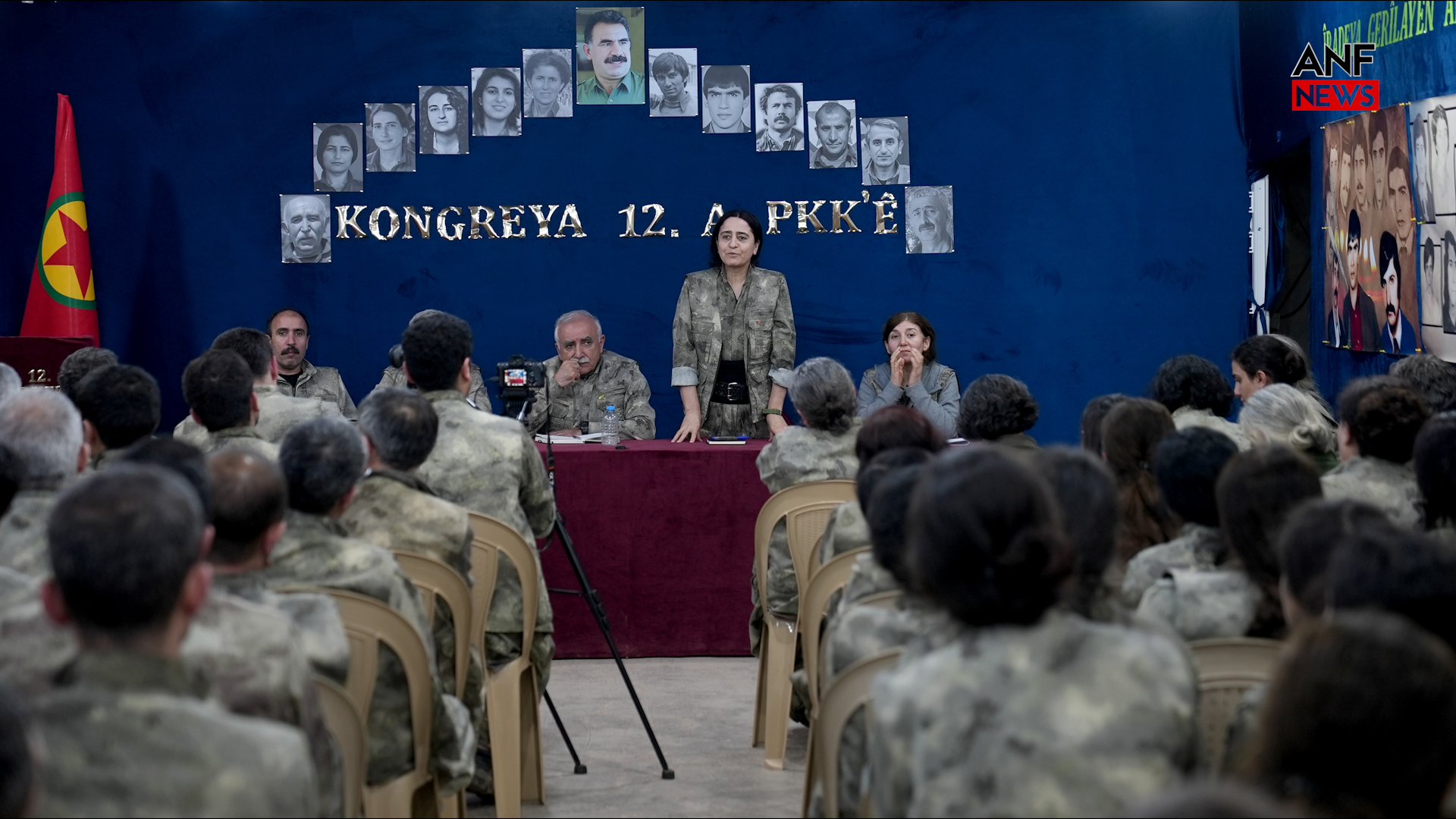
The Kurdistan Workers’ Party (PKK) issued a statement under the name of the “Kurdistan Freedom Movement Leadership” regarding the framework draft law that passed the Justice Committee in the Turkish Parliament. The statement considered that while the law contains “serious errors and shortcomings,” it could serve as a starting point toward resolving the Kurdish issue and consolidating democracy if implemented through democratic mechanisms and in the “language of peace.”
The statement comes at a time when the framework draft law—signed by the Peoples’ Equality and Democracy Party (DEM Party) and submitted by the ruling coalition to the Turkish Parliamentary Speaker’s Office—prepares for presentation to parliament for ratification after passing the committee.
Below is the text of the PKK statement:
” The framework law, which has been anticipated for months, has passed the committee and is scheduled to be submitted to parliament for ratification. Many strongly opposed this law, while others criticized it from various aspects. The Peoples’ Equality and Democracy Party also criticized the numerous shortcomings and flaws in the law within the committee and identified the steps that should be taken following its passage.
Following the statement by Devlet Bahçeli, Leader Apo stated that he possesses the capability to shift the state of conflict arising from the Kurdish issue onto a legal and political foundation. Through his call for peace and a democratic society on February 27, 2025, he set out a concrete roadmap on how to achieve this.
Our liberation movement fulfilled its responsibility, based on Leader Apo’s call, in order to advance the peace and democratic society process. On this basis, war has not broken out for a year and a half.
During this period, the ‘Committee for Democracy, Brotherhood, and National Solidarity’ was established in parliament to achieve peace, consolidate democracy, and resolve the Kurdish issue. Following the meetings held by this committee, a report was prepared that can be considered important, despite the significant shortcomings that flaw it.
During this process, Leader Apo engaged in communication and dialogue with state officials, as well as with the Peoples’ Equality and Democracy Party and our liberation movement, in order to enact a fundamental law defining the paths to resolving the Kurdish issue and consolidating democracy. For our part, we closely followed the discussions regarding the fundamental law during this process.
Regarding the draft law that reached us in various formats, we presented our views and criticisms to the public through our statements. Above all, we emphasized that the language of the fundamental law, which aims to achieve peace, must not be the language of war, but rather the language of peace. As Leader Apo stated, we stressed that the law must not come in a simple and narrow form that does not serve the future; rather, it should be drafted taking into account the mutual sensitivities of the parties. We also emphasized the necessity for Leader Apo to be free and capable of working freely so that the steps stipulated by the law can be implemented. We expressed the importance of this law including a commitment to enact laws related to freedom and the consolidation of democracy within a framework of specific steps.
Prior to the issuance of our statement, Leader Apo had clarified to the public, through the Peoples’ Equality and Democracy Party delegation, what the form and objectives of the framework law should be. The Peoples’ Equality and Democracy Party and democratic forces also expressed their views and proposals regarding the framework law during this process and held a number of meetings on this matter.
The law that was debated for months, and upon which our people, our movement, and democratic forces expressed their views, passed the Parliamentary Justice Committee with the approval of all other political forces, except for an anti-Kurdish faction within parliament whose stance was characterized by provocations.
This law contains serious errors and shortcomings. Furthermore, the proposals contained in the parliamentary committee’s report regarding the resolution of the Kurdish issue and the consolidation of democracy were not included in this law; thus, it did not fully respond to the intended goal. Moreover, speaking only about laying down arms, without using the term ‘Kurds,’ indicates that the issue was not evaluated in a comprehensive manner. In addition to serious content shortcomings, the terminology and language used in it also pose a serious problem for a law aimed at achieving peace. Undoubtedly, this language is one that our people and movement cannot accept.
Our movement and our people also affirmed that if a law is passed and this process moves forward, it can only be achieved by providing the conditions for free work and life for Leader Apo. This has been emphasized on every occasion. Our movement can only take and execute steps under conditions that provide a free life and work for Leader Apo. This is possible through the direct leadership of Leader Apo. Furthermore, the peace and democratic society process can only advance under conditions of free work and life for Leader Apo. As the liberation movement, we have taken all our steps based on our vision of the necessity to provide free work and living conditions for Leader Apo. Devlet Bahçeli had pledged from day one to apply the ‘Right to Hope’ for Leader Apo.
Devlet Bahçeli and officials from the Justice and Development Party (AKP) affirm that this process is a state policy, and all statements are made within the framework of this policy. Devlet Bahçeli had indicated that Leader Apo would assume the role of ‘Coordinator of Policy and the Peace Process’ within the peace and democratic society process. State officials also accepted this proposal presented by Devlet Bahçeli. However, the role that Leader Apo will play in this process was not defined in the framework law. Instead, it was mentioned unclearly, indicating that the body to be formed under the chairmanship of the Vice President could form committees. If Leader Apo is unable to fulfill the role of coordinator for this body under free living and working conditions, many of the provisions stipulated by the law will not find their way to implementation.
Therefore, the methods and mechanisms of applying the law are of paramount importance. Any law can only enter into force if applied through the correct methods and mechanisms. The method, mechanism, management, and approach are all important matters, as this law cannot be applied through unilateral imposition. In an issue of such importance, adopting creative and advanced methods and mechanisms is crucial. In short, this law can be implemented if the language of peace is adopted, Leader Apo leads and manages its practical application, and it is supported by new democratic laws to be enacted.
The law has set before itself, on the basis of democratization, the objective of developing the democratic political sphere. Democratic political work can only be practiced through a process of democratization that guarantees the freedom of organization and thought. Therefore, this framework law should be brought to success without delay through work and laws based on democratization. As emphasized by Leader Apo and all democratic forces, this law should serve as a starting point. If it becomes a law that paves the way for subsequent developments, it will fulfill its role as an organizing foundation and framework.
The guerrilla forces are requested to lay down their arms and withdraw. But if they go to Turkey and are unable to practice democratic politics on the basis of freedom of thought and organization, and if they are subjected to criminalization and arrest due to their organization and views, then the descent of guerrilla forces to the plains on one hand, and the politicians who were forced to seek refuge in Europe on the other, will not be able to return. This is merely a concrete example. Certainly, there are many different paths to achieving democratization and resolving the Kurdish issue.
This law is a starting point. In the first place, to resolve the Kurdish issue and address all problems, the struggle for democratization must be developed. Therefore, our peoples and all democratic forces must organize themselves and struggle for democratization and the resolution of the Kurdish issue. Only then can the enacted law truly perform the role of a framework law and form a starting point toward major developments.”
The Framework Draft Law
The details of the framework draft law, titled the “Law on Strengthening Social Unity and National Support,” which was signed by the Peoples’ Equality and Democracy Party and submitted by the ruling coalition to the Turkish Parliamentary Speaker’s Office, were revealed on August 5, 2026.
The draft consists of 12 articles and establishes a framework to verify the end of the organizational presence of the Kurdistan Workers’ Party (PKK), the Kurdistan Communities Union (KCK), and all affiliated organizations, as well as to identify and verify all types of weapons and ammunition under their control.
The draft enjoys the support of the majority of parliament members and is expected to be passed within this week, although opinion polls show skepticism regarding its ability to achieve a lasting peace, according to Reuters.
Under the draft law, the Turkish National Security Council will oversee the verification of the group’s disarmament, while a committee comprising the Vice President, several ministers, and the Head of the National Intelligence Organization (MİT) will supervise the surrender and disarmament of the fighters.
Öcalan: “A Journey of a Thousand Miles Begins with a Single Step”
On August 3, 2026, the İmralı delegation of the Peoples’ Equality and Democracy Party announced that on August 2, 2026, it held a three-hour meeting with PKK leader Abdullah Öcalan, during which the current process, ongoing work, and historical responsibilities associated with the upcoming phase were evaluated.
The delegation stated that Öcalan handed them a message addressed to the public, opening with: “A journey of a thousand miles begins with a single step,” adding, “With this law, we embark on resolving a historical problem; we are at the beginning of a democratic march no less important than the founding of the Republic.”
The statement noted that Öcalan stressed that the efforts and sacrifices made during the founding of the Republic should also be made today “for a democratic republic,” emphasizing that this path “is necessary for everyone on this land, not just for the Kurds and surrounding areas.”
He added that implementing this path will affect the destiny of the country and the region, pave the way for the development of democratic law, and enhance economic opportunities, considering it “a great service to 86 million people.”
Furthermore, according to the statement, Öcalan emphasized that “organizing society” would represent a “historic step” that would contribute significantly to the economy and peace.
The statement pointed out that Öcalan acknowledged that not all problems have been resolved yet, but he affirmed that “there is no situation in the country calling for a negative outlook,” highlighting the importance of understanding this step correctly and calling on everyone to take responsibility for making the process a success.
The statement concluded by conveying Öcalan’s affirmation that “the law issued by politics is like a key that opens the door to this process, and the door to the Democratic Republic is open to the end.”
Note: This text is translated from the original Arabic version… Read the Arabic version:Click here