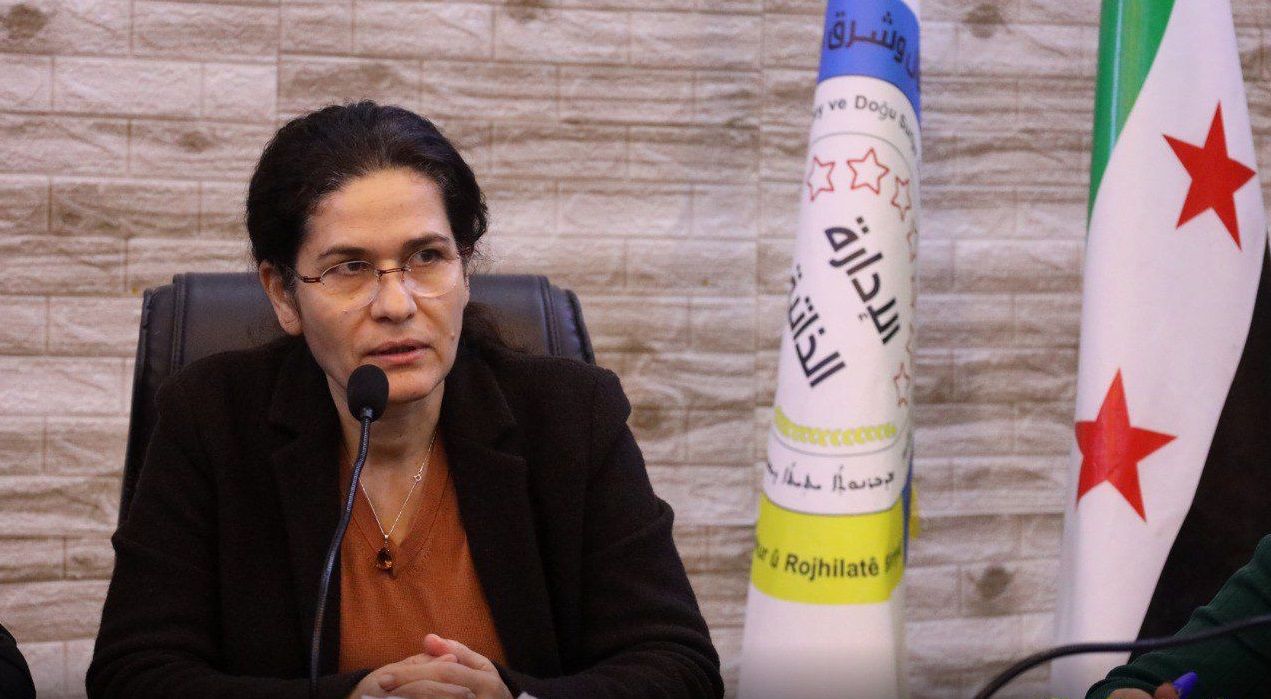
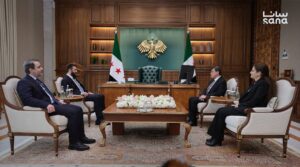
Ilham Ahmed, Co-Chair of the Department of External Relations of the Democratic Autonomous Administration, announced details of the agreement reached between the Syrian Democratic Forces (SDF) and the Syrian Interim Government, which aims to achieve a comprehensive ceasefire and open a new phase of political and military understandings. She stressed that the agreement constitutes a fundamental step to prevent a return to war and new conflicts.
Ahmed made the remarks during a press conference held via the Zoom application, explaining that work on implementing the provisions of the agreement will begin next Monday, alongside intensified efforts to ensure its enforcement despite any potential attempts to obstruct it.
She stated that the agreement provides for a comprehensive ceasefire and the withdrawal of military forces from both sides to their main bases away from the contact lines, as well as the formation of three military brigades to be stationed in Hasakah and Kobani. She emphasized that “the military forces will be kept apart so that this agreement does not collapse.”
Regarding the Women’s Protection Units (YPJ), Ahmed affirmed that “the Women’s Protection Units are a force within the SDF, and when the brigades are formed, they will be included within them.”
On the security front, she explained that the Asayish forces will be integrated into the Ministry of Interior, noting that security forces affiliated with the Damascus government will enter the cities of Hasakah and Qamishli to oversee the integration process of the Asayish for a limited period, after which they will withdraw. She stressed that these measures aim to regulate security integration, and that personnel and officials will be from the local population.
Administratively, Ilham Ahmed confirmed that a governor will be appointed for Hasakah, and that the institutions of the Autonomous Administration will be integrated into the institutions of the Syrian state without any change to their structure, with officials and employees remaining in their positions. She also stressed that all workers in the institutions, including border guards, will be from the local population.
In the field of education, she announced that Damascus will recognize certificates issued by schools and universities in North and East Syria, explaining that a special decree will be issued in this regard, while discussions will continue on curricula and teaching mechanisms in order to reach a consensual formula.
With regard to the Semalka crossing, Ahmed confirmed that the crossing will continue to operate and that its staff will continue their work in an official capacity, noting that no negative position has been issued regarding it.
Ahmed emphasized that the agreement enjoys international support, noting that France and the United States are ready to act as guarantors, and that there are serious international positions aimed at preventing the commission of crimes and ethnic cleansing against the Kurds. She added that the presence of guarantors to monitor the implementation of the agreement was demanded to ensure its success.
She further stated that the President of France and U.S. Senator Lindsey Graham were in contact with the Autonomous Administration and were present in the dialogue process, pointing to the participation of Arab parties in the talks with the aim of preventing any new war.
Assessing the U.S. role, Ilham Ahmed said that “America was not up to the level of responsibility we had hoped for,” but noted that Senator Lindsey Graham and American public opinion supported the Kurds, expressing hope that this support would continue. She called on the United States to play “a fair role in Syria that protects the rights of the components.”
She stressed that the agreement represents a prelude to a new phase of reconstruction, although it “is not the end of the war, as there are parties that seek the annihilation of the Kurds,” calling for continued vigilance and readiness to defend themselves.
Ahmed also addressed the issue of the return of displaced persons, confirming efforts to facilitate the return of the residents of Afrin, Serekaniye (Ras al-Ayn), and Tal Abyad (Girê Spî) to their homes and to ensure a safe return. She noted that she had met with Turkish officials who informed her of the withdrawal of Turkish forces from Afrin and Serekaniye and that they would not remain there.
Regarding Kobani, she explained that the city will be administratively affiliated with Aleppo Governorate, with a Kobani brigade allocated within the Aleppo Division. She confirmed that institutions will continue to operate normally and that official officials will be announced within the framework of the state.
Ilham Ahmed concluded by emphasizing that Kurdish rights in the Syrian constitution will be discussed during the upcoming visit of the Kurdish delegation to Damascus, within the political track linked to the agreement, considering this step a transition from a phase of defense to a phase of consolidating rights legally within Syria.