The Popular Defense Forces (HPG), the military wing of the Kurdistan Workers’ Party (PKK), announced the loss of the leaders Nurettin Sufi and Kogrourfa in Turkish raids in previous years.
The forces said in a statement, “Comrade Noureddine Sufi was martyred in an enemy attack on April 6, 2021, during his visit to the headquarters of the Popular Defense Center, and Comrade Cogro Urfa was martyred on November 4, 2019, in an airstrike carried out by the invading Turkish state by assassination.”
According to a statement by the forces, “Comrade Noureddine Sufi, joining the Kurdistan freedom struggle, fought an uninterrupted struggle for 24 years from 1990 to 2013 in the ranks of the PKK, and then another 8 years after leaving the ranks of the Krila and joining the Rojava freedom revolution, bringing the total of his struggle to 32 years. He assumed the highest responsibilities in the ranks of Krila Kurdistan Freedom, from a fighter to the leadership of the General Headquarters ofHPGHe did not hesitate to make any sacrifice for the sake of our people’s freedom struggle, rushing lovingly to every task small or large, performing his revolutionary duties. As the Rojava Freedom Revolution expanded and attacks intensified, he voluntarily left the ranks of the Krila and joined the Rojava Freedom Forces, where he also assumed important military and political responsibilities and led the work. On April 6, 2021, during his visit to the headquarters of the Popular Defense Center in the mountains of Kurdistan, where he spent 24 years, with the aim of meeting his old comrades, he was martyred in the enemy attack. “
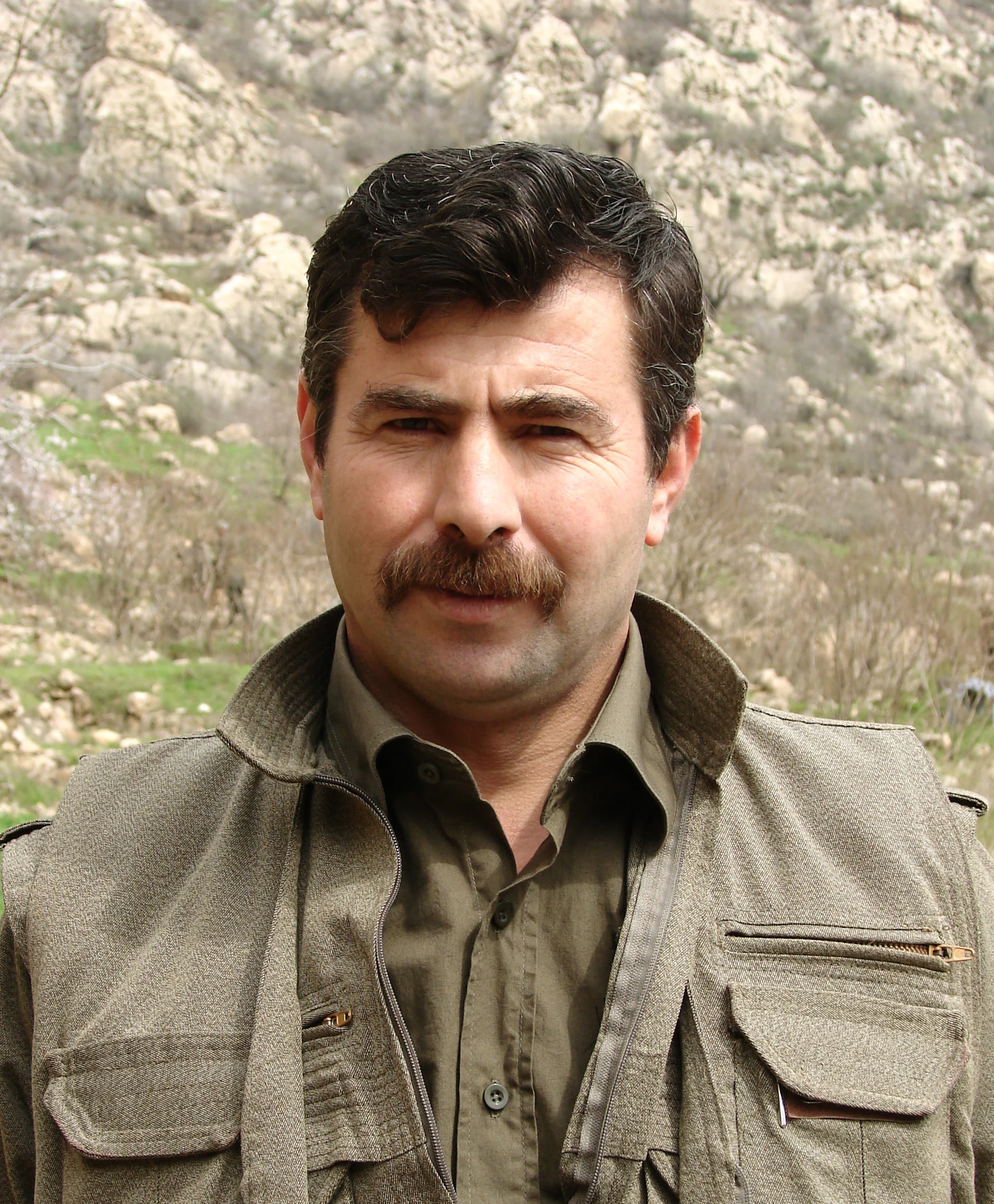
Today, the General Command of the People’s Protection Units (YPG) issued a statement to the public opinion about the loss of the leader Noureddine Soufi’s life, describing him as “the leader of the Rojava revolution”, stating:
With respect and respect, we remember Comrade Noureddine Sophie, the great leader and pioneer of the Rojava revolution.
We highly respect the memory of Comrade Noureddine Soufi, the leader of the Rojava Revolution, who was martyred as a result of an attack launched by the Turkish occupation army on the Barghari area of the Gari region on April 6, 2021, during his visit to his former comrades in the struggle. We extend our condolences to all the people of northern and eastern Syria and Kurdistan, especially his generous national family.
With the start of the Arab Spring in 2011, historic changes began in our region, and Syria’s population was among them. The region was heading towards a stage of radical change; either it would lead the people to a truly free and democratic system, or it would plunge them into deeper chaos.
Syria is a country with a multispectral structure comprising Arab, Kurdish, Assyrian, Armenian, Turkmen and Circassian communities that needed a new system and model.
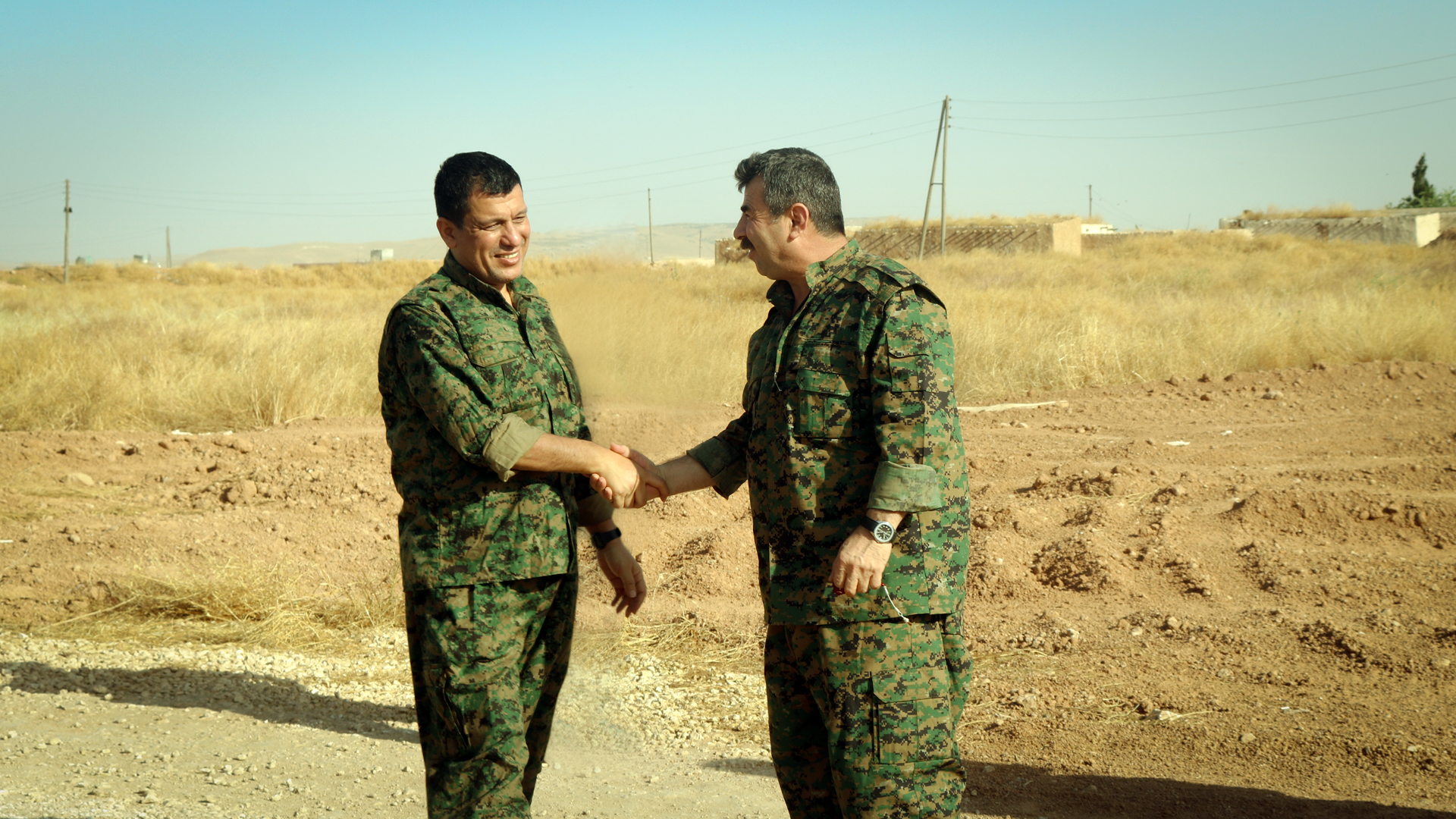
During this period, a popular revolt broke out in Rojava, led by the Kurdish freedom movement. The people of Rojava first organized themselves as the YXK, then as the YPG and YPJ, becoming the main defensive force in the region. Soon thousands of men and women joined the Rojava Defense Forces, composed of the structure of the people, and began to defend their region, and in a short time, the Rojava revolution turned into an international revolution, defending not only its region, but all of humanity, especially through its struggle against jihadist groups such as Jabhat al-Nusra and ISIS.
The Rojava Revolution, which was announced on July 19, 2012, was launched to establish its regime and become a pioneer of freedom and democracy. It has become an alternative system to the chaos that prevails in Syria and the entire region, and with its transformation into a joint revolution for the Syrian people, the Rojava revolution has become the basic area in which the people feel safe. It was a popular revolt against reactionary states in the region on the one hand, and against jihadist groups on the other. By establishing and organizing its own defense force and its own dynamics, the Rojava Revolution contributed to the building of a free and democratic system, and this has been the imagination of the peoples of the region over the centuries.
The Rojava Revolution was the result of heroism and great efforts. The sacrifice of thousands of martyrs created a revolution from the ashes, and rewrote history with great leaders, heroic warriors, and our sacrificed people. There is no doubt that one of the pioneers of our revolution is our great leader, our comrade Noureddine Sophie.
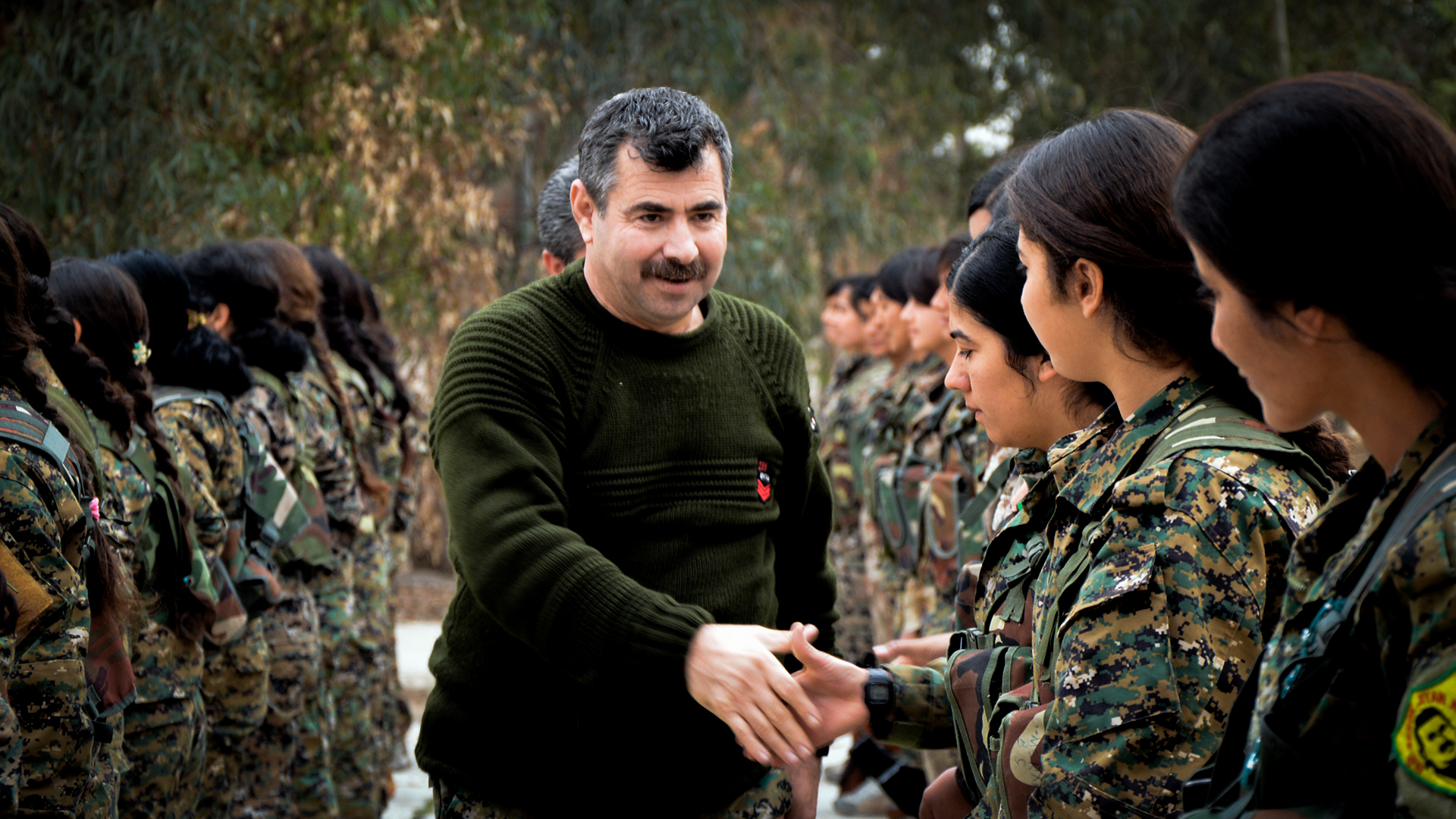
In 2013 the leader Noureddine Soufi arrived at his homeland Rojava, and led the revolution. He gained extensive experience in the struggle for Kurdish freedom and, with his military and political experience, made a significant contribution to the organization and continuation of the Rojava Revolution.
Rojava had a special place in Comrade Noureddine Sophie, because it was the land where he grew up. Born in 1970 in the village of Msheirefa in Qamishlo, which was mixed between Kurds and Arabs, his family was a patriot who maintained its religious traditions, and possessed a strong family tradition of social ethics. She was known and accepted within the Arab and Syriac communities, and many young people from his region participated in the struggle for freedom.
Sophie grew up in this strong social culture, he had strong national and social qualities, he grew up with a strong sense of Kurdish identity, he had Kurdish culture and literature, so, he had a great interest in Kurdish literature.
Sophie grew up in a society that had been under the oppression of the Baath regime for many years. He was seeking a solution to state repression from an early age. He had known about socialism since his youth, and was by nature a person fond of reading and research, he had read many books, especially in socialist philosophy and scientific socialism, and made friends. He studied physics and mathematics at the University of Aleppo, and during his university years, he learned about Apogee Thought (APOCÎ), and saw Apogees practicing the scientific socialism he was constantly searching for.
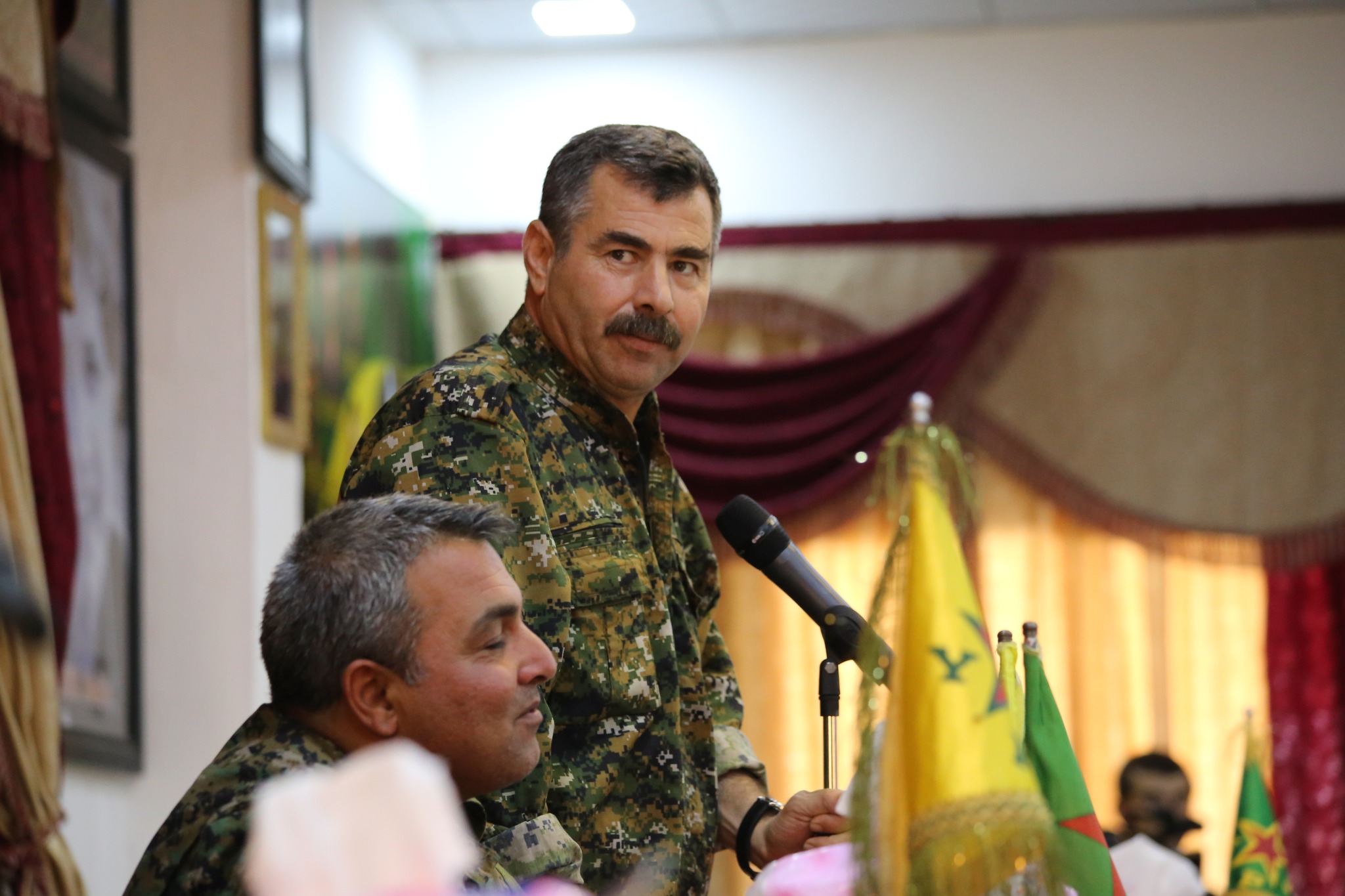
On this basis, he joined the Kurdish freedom movement in 1990. Over a period of 24 years, he gained extensive military and political experience in the Kurdish freedom movement.
From 2013 onwards, he assumed a responsible role in building the revolutionary process, co-led political, ideological, diplomatic and military activities in a multifaceted manner, and was directed to coordinate efforts throughout northeastern Syria to establish a “TEV-DEM” and district system. He traveled from town to town, organized the work of the communes and the parliament, and participated in all institutions. In all his activities, he worked closely with the people, and their pro-worker spirit was recognized and accepted by the people.
He personally addressed all institutional and public issues, never patronizing the people and striving to find solutions to their problems as if he were one of them. His popular and social nature had a profound effect on everyone he met. He was a child with children and an elder with old people, with a strong oratorical spirit. His deep philosophical, historical, scientific, and ideological intellectual character deeply influenced everyone he met, and engaged them in revolutionary efforts. Social relations flourished in his presence. He understood everyone’s language, knew exactly what he was talking about and who he was talking to.
He played an important role in the establishment of (SDC) and the efforts of the Autonomous Administration, and if the Autonomous Administration is considered a basic model throughout Syria today, this is with the contribution of Comrade Noureddine Sophie the Great. He foresaw and defended these efforts, did not stop for a moment, and was keen to unite the society; the Kurd, the Arabs, the Assyrians, the Armenians and the Turkmen within the framework of the democratic nation system.
He has also led defense efforts, which is one of the most important pillars of construction efforts, and has been particularly instrumental in developing the People’s Protection Units (YPG) and the Women’s Protection Units (YPG), which are our people’s defense force. He coordinated the war effort, especially during periods when ISIS and al-Nusra guerrillas intensified their terrorist attacks.
Thanks to his long military experience and leadership skills, his efforts played a role in the development of defense, and with the intensification of ISIS and Al-Nusra attacks, the YPG and YPG forces carried out many campaigns in response. He assumed direct responsibility and directed the battles of Tal Hamis and Tal Brak that developed during those years, the battle of Jazaa, the Tal Hamis revenge campaign, the Euphrates Wrath campaign in Raqqa, the Bajira al-Jazeera campaign in Deir ez-Zor, and the campaign to eliminate Daesh in Al-Bagouz.
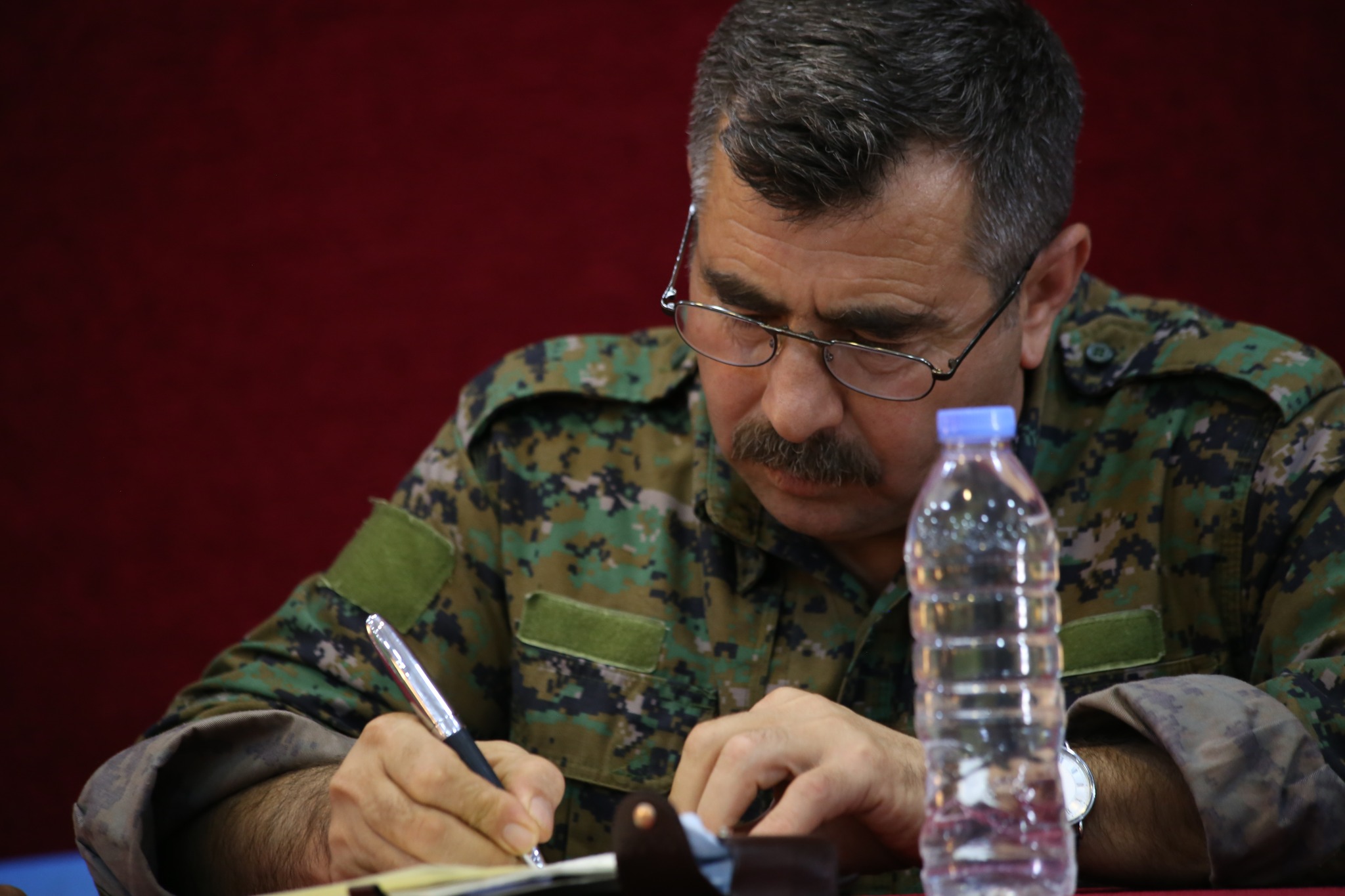
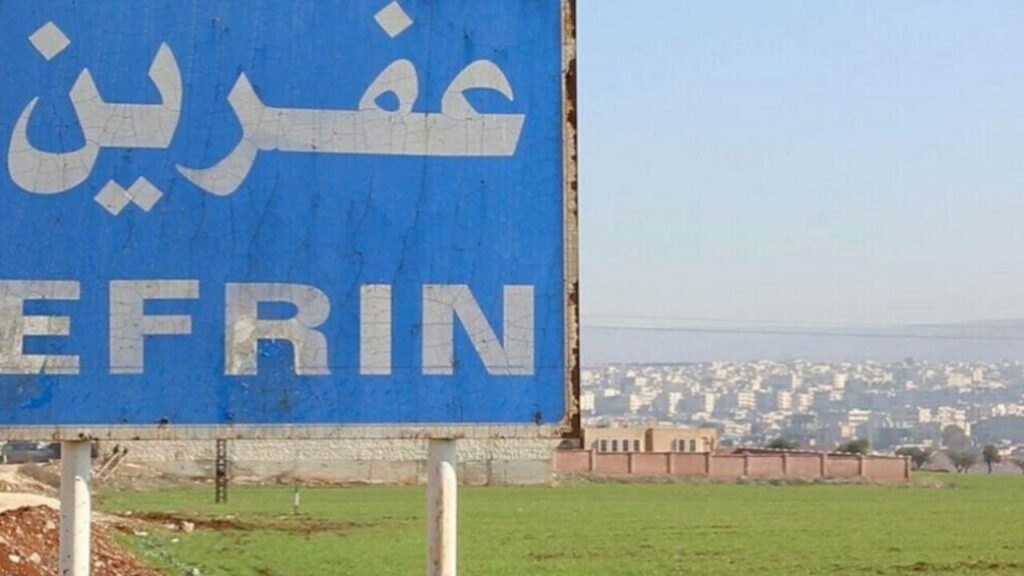
He also played an active role in the continuity of resistance during the ISIS attack on Kobani. He also directly coordinated and directed resistance efforts that developed against guerrilla attacks in Aleppo and Afrin. He also coordinated the war at the command level during the Turkish state invasion attacks on Afrin, Serê Kaniyê, and Tal Abyad (Girê Spî).
Commander Noureddine Soufi was central to a relentless effort to create a common defense system for all the peoples of this region. On this basis, he personally played a role in establishing the Syrian Democratic Forces (SDF), the joint defense force for the people of northeastern Syria, in 2025.
As commander of the People’s Protection Units (YPG) in 2016, he assumed primary responsibility for military operations during a period of increased attacks by terrorist gangs and the occupying Turkish state. His tactical and military experience contributed significantly to the defeat of ISIS in northeastern Syria. He was a multi-skilled commander in battle. His awareness and deep expertise combined with his tactical wealth. Wherever he was, the fighters felt safe. Even in the most difficult moments, Comrade Sophie was finding a solution. It never remained unresolved or unaltered. In each discussion, he consulted his colleagues and made a constructive decision. He was clear and courageous in his decisions. He was a brilliant leader and fighter, who never hesitated.
Sophie’s socialist personality stood out in her approach to women’s liberation, and he lived with women as real and solid comrades at every moment, and established his principle of recognizing the will of women to work and live with them, and cooperated with women in social construction efforts and in the stage of establishing the Women’s Protection Units (YPJ) as well. He was the companion of the path of the free woman, and he never dealt with her liberation in a traditional way, but became the companion of the path of the free woman.
In addition to all his revolutionary qualities, Comrade Sophie was distinguished as a leader by his internationalist personality. During the struggle against ISIS, hundreds of internationalist friends from all over the world joined our struggle. Comrade Sophie personally communicated with each internationalist comrade, seeking to enable him to participate more strongly in the struggle. He sensed the social and sociological reality from which each companion emanated, effectively addressing their hearts.
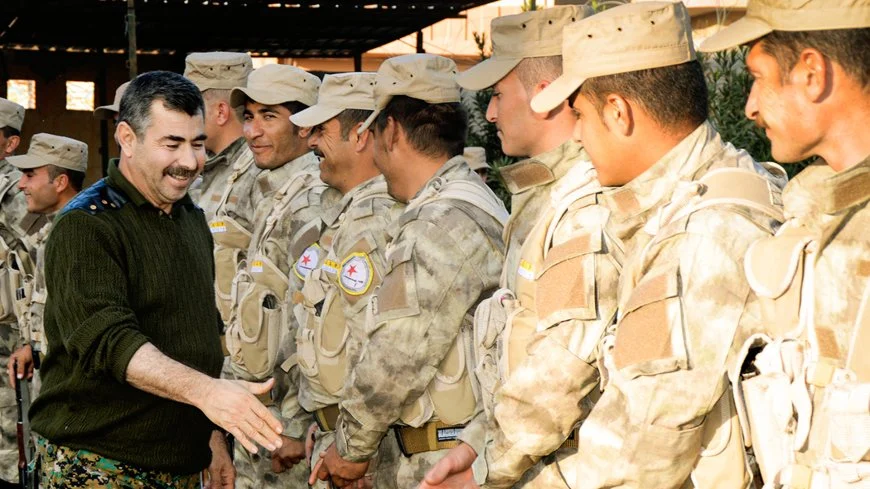
Comrade Sophie left his mark on our struggle in every sense of the word, and in our minds and hearts, a pioneer and exemplary leader in social construction and military action. He was a rebel, his words and actions were the same and he had a stable revolutionary career. He was a prominent social figure. He never gave up his enthusiasm and passion for life, never ceased to develop intellectually. He always read and educated himself and his companions.
He became a teacher for every companion he worked with. He was educated and always discussed with his colleagues, reading constantly. He researches every topic of interest to him. Thanks to these traits, which became his way of life, he became a real socialist. Alongside his unwavering commitment to the founding values, he always pursued the new, never tired. He was also a model figure in his intellectual and physical work, and not bound by any mold, he was always energetic. He lived every moment for the struggle. He and his colleagues worked as a team.
He was a socialist leader, practicing the style of collective management, and did not insist on his own opinion, but highly valued the views of each comrade. Morale was his foundation, and he greatly valued literature, art, and the creations of struggle. He was a true preacher, an articulate orator, who knew exactly what to say and how to say it. He adopted the philosophy of life in winning everyone he met and including him in the struggle. He left an unforgettable impact on everyone he met and knew, and even carved a place for himself in the minds and hearts of people, with his humility, honesty, sincerity and revolutionary moral values, he became a model leader in every environment he encountered.
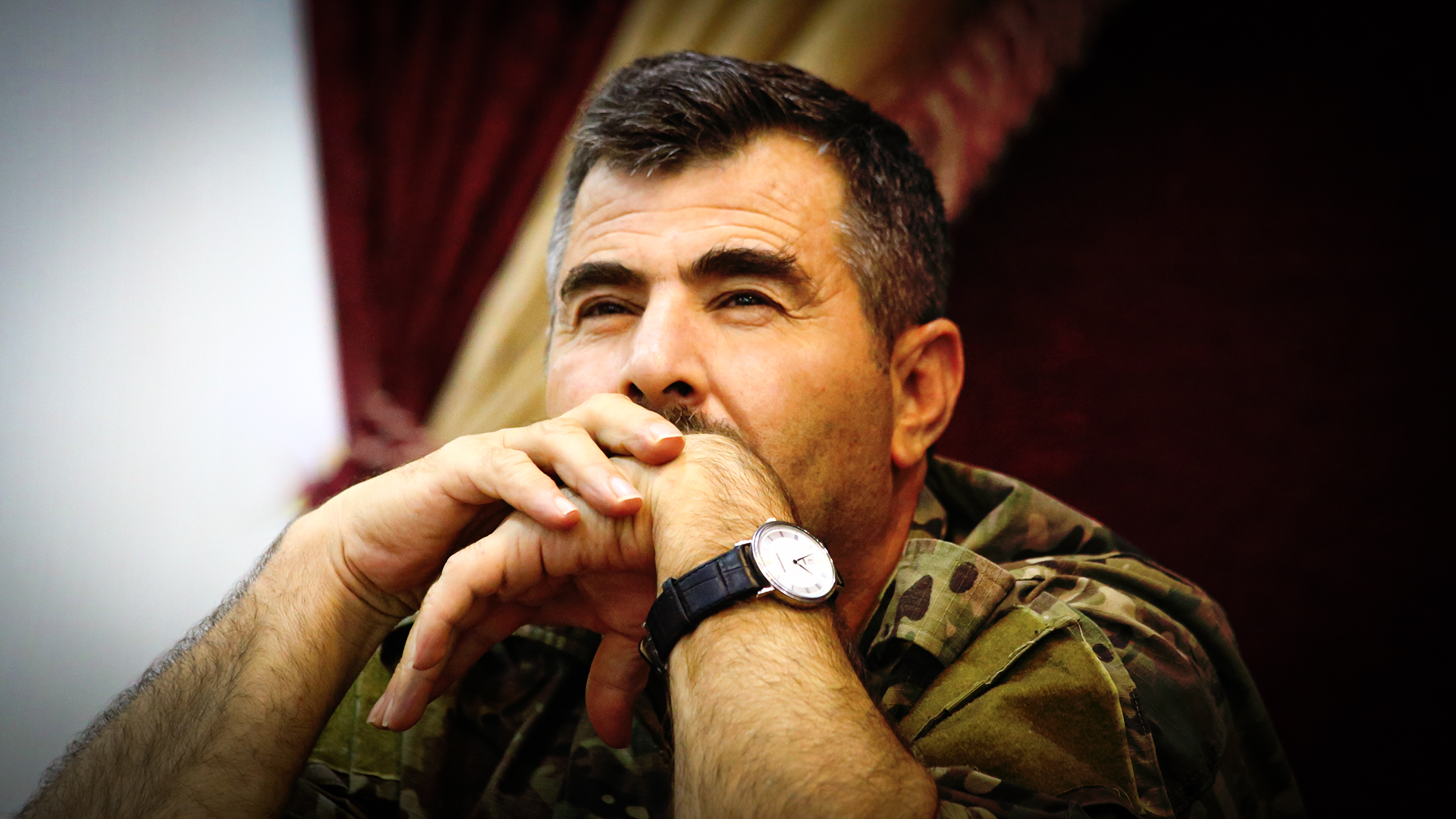
Our great comrade Noureddine Sophie left us a great revolutionary legacy. He fought his name in history throughout the four parts of Kurdistan against the genocidal and genocidal policies committed against our people. He was a leader, a comrade, a revolutionary whom we will never forget.
We commemorate all the freedom fighters who were martyred in our struggle for freedom, in particular Noureddine Soufi, who led the Rojava revolution, which paved the way for the regime of northeastern Syria, to this day.
We offer our condolences to the families of Noureddine Sophie and the struggling Krila Bakhtiar Gabar, with whom he was martyred, and to all our people. We pledge to you to continue the revolutionary legacy left to us by the martyrs, and to lead the struggle of freedom towards victory
The article appearedKurdistan Workers’ Party (PKK): Leaders Noureddine Soufi and Kogro Urfa were martyredFirst onKurd Online.
Note: This is a machine translation of the original text in Arabic.اقرأ المزيد