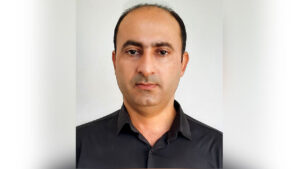
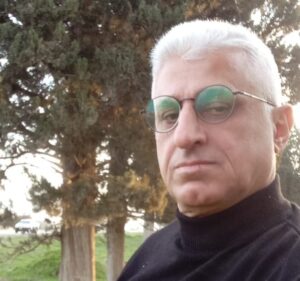
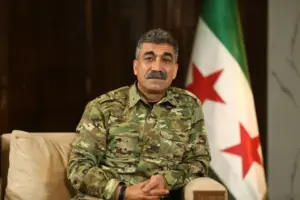
On 22 February, a delegation of lawyers affiliated with MAF-DAT arrived in Rojava Kurdistan from several European countries with the aim of documenting violations committed during the war. The delegation visited a number of human rights and political institutions and met with war-wounded individuals and witnesses to the events.
Upon completing their investigations, they held a press conference today in the city of Amuda, during which they issued a public statement.
During the conference, delegation member and former Minister of Justice of Iceland, Ögmundur Jónasson, stated: “The people of Rojava are appealing to the world for justice. I will speak on two points, the first concerning the political situation. Everyone knows that Kobani is under siege, and when Kobani is under siege, it means the entire world is under siege, because Kobani and Rojava represent a symbol of resistance. Kobani resists for human rights and democracy.”
He continued: “We came to Rojava to meet representatives of the Autonomous Administration and to examine the legal situation here. We also met with many doctors and professionals working in various fields, as well as lawyers, and we met numerous witnesses to the events.”
Lawyer Rengin Ergül also paid tribute to the struggle of the people of Rojava and stated: “As part of our independent field visit to the regions of North and East Syria, we conducted meetings with war victims, internally displaced persons, wounded civilians, healthcare workers, and representatives of relevant institutions. This work is carried out independently and conducted in accordance with international law standards as a fact-finding mission.”
She added: “Today, I would like to share our assessment across five main axes.”
Justice and Rights
Ergül explained that they would share their independent report with international human rights mechanisms and relevant bodies and institutions.
1. Crimes within the framework of the Rome Statute
The documents collected require serious evaluation, not only under international human rights law but also under international criminal law.
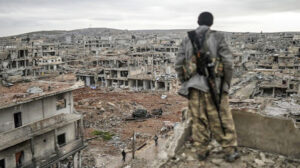
Attacks against civilians, indiscriminate use of force, destruction of civilian infrastructure, and violations against healthcare institutions may be classified as war crimes or, where conditions are met, as crimes against humanity under the Rome Statute.
Undoubtedly, the final legal assessment is long-term and complex, but our mission is to document evidence indicating this level of violations accurately and objectively according to international standards.
2. The silence of the international community
What is most strongly felt on the ground is not only the material destruction but also the silence of the international community.
Human rights standards are clear and binding: protection of civilians, prohibition of torture, and prevention of forced displacement are all general international rules.
However, the absence of an effective long-term international mechanism to investigate violations creates a sense of injustice among victims.
Silence encourages impunity and strengthens the perception of a lack of accountability.
3. Media manipulation
Our field observations indicate that information in conflict situations can be heavily exploited to manipulate public opinion.
Concealing civilian presence, blurring the distinction between military and civilian targets, and at times accusing victims themselves occur frequently.
Therefore, independent documentation must be objective and precise, based on multiple testimonies, medical records, and material evidence. A comprehensive assessment of testimonies is crucial.
4. Previous impunity and holding perpetrators accountable
In the collective memory of the local community, there are not only current violations but also serious past crimes for which justice has not been achieved and perpetrators have not been held accountable.
If justice is not effectively pursued in major crimes, this may entrench a culture of systematic violations. Under international law, impunity lays the groundwork for new crimes.
The aim of our work is not revenge but to establish legal responsibility based on the rule of law. Justice may be delayed, but systematic documentation cannot be ignored.
5. A message that the Kurdish people are not alone
The humanitarian dimension of this visit is that every victim we met does not only want to tell their story, but to be heard.
The pain and suffering of the Kurdish people and all civilians in the region cannot be ignored. Human rights, without discrimination based on identity, belong to everyone.
We are here not only to document violations but also to reveal the truth:
Within the scope of our mandate, this suffering is being documented.