The decisions included changes in the commands of the 76th, 80th, and 84th Divisions, while Observatory information indicates ongoing efforts to reduce the influence of commanders of the Turkish-backed “National Army” as part of a plan to rebuild the military institution.
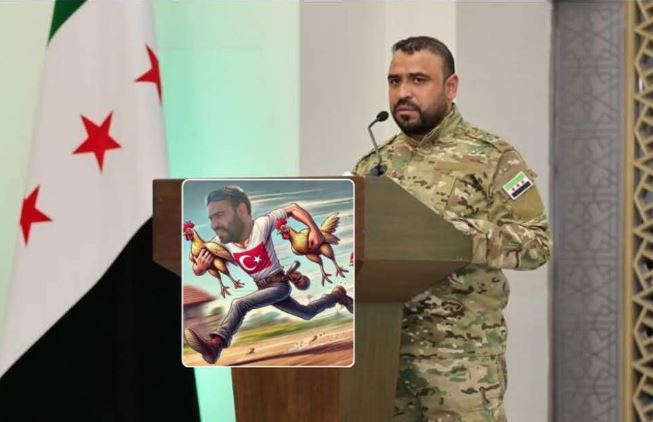
The Syrian military command continues to implement new steps within the path of restructuring the military institution by issuing decisions to dismiss several former faction commanders from their posts. This step comes after the dismissal of the 62nd Division Commander, Muhammad al-Jassem, known as “Abu Amsha,” amid efforts to redistribute command centers and reduce factional influence within the army, according to the Syrian Observatory for Human Rights (SOHR).
The SOHR reported on Wednesday that the Syrian military command continues to press ahead with restructuring the military institution through a series of new decisions aimed at reducing the influence of former faction commanders affiliated with the Turkish-backed “National Army.” This follows the dismissal of the 62nd Division commander, Muhammad al-Jassem (Abu Amsha), from his position.
According to information obtained by the Observatory, the recent decisions included the dismissal of several former commanders from the positions they held within the newly established military formations, alongside changes in the commands of the 76th, 80th, and 84th Divisions. This move reflects the continuous process of redistributing command centers within the military institution.
According to SOHR sources, these measures are part of a broader plan to dismantle factional power centers by removing former commanders from decision-making and field command positions, and rebuilding a more centralized military structure. This aims to strengthen the unity of command and limit the military formations’ ties to their previous factional loyalties.
In a related context, the SOHR stated in a report published on August 5, 2026, that during his summons to the military command in Damascus, Abu Amsha refused to relinquish the command of the 62nd Division in exchange for a leadership position within the Central Region Corps. The report noted that he demanded to assume the position of Corps Commander during the meeting held in Damascus as part of the efforts to restructure the military formations.
According to the Observatory’s information, international and local parties have requested the Syrian command to work on curbing Abu Amsha’s influence by transferring him from his area of influence and separating him from his local support base, against the backdrop of accusations that he committed abuses against civilians over the past years.
The Observatory added, quoting its sources, that the Syrian command is handling this file cautiously given Abu Amsha’s continued influence and power base within his area of control, in addition to his tribal presence in parts of the central Syrian region. Information also indicated that he enjoys support from entities within the Turkish government. This makes any steps aimed at curbing his influence or rearranging his military position fraught with complex political and security calculations, compelling Damascus to avoid measures that could lead to a direct confrontation or security tensions in the region.
According to the sources, rumors alleging Abu Amsha’s arrest spread after he remained inside the military command headquarters in Damascus for hours following his summons. The meeting lasted until approximately 1:00 AM without an official announcement regarding its outcome. This opened the door for speculation to spread on social media—including comparisons to the incident of Ali Haydar’s arrest following his rebellion in Lebanon—before it became clear, according to the Observatory, that those narratives were not based on confirmed information.
On the other hand, the Observatory stated that military reinforcements are heading to the Syrian-Iraqi border, adding that it is currently unknown whether these reinforcements are in preparation to carry out a preemptive strike in the event that the dialogue between the Lebanese government and Hezbollah fails. It also confirmed, quoting its sources, that information denying the existence of reinforcements on the Iraqi border is “misleading.”
In the same context, the Observatory pointed out the continuation of the state of military alert that began yesterday evening in the vicinity of the 62nd Division’s positions led by Abu Amsha. The alert has lasted for more than 15 continuous hours, amid ongoing military movements and reinforced deployments in the area.
It added that it had obtained video footage showing a buildup of government forces in the vicinity of the 62nd Division’s stationing points, indicating the continuation of the ongoing military measures.
The Observatory concluded by stating that this state of alert comes, according to its information, as part of movements led by the military command primarily targeting the 62nd Division, within the framework of efforts to restructure military formations and tighten control over the military institution.
Note: This text is translated from the original Arabic version… Read the Arabic version:Click here
Discover more from Kurd Online
Subscribe to get the latest posts sent to your email.