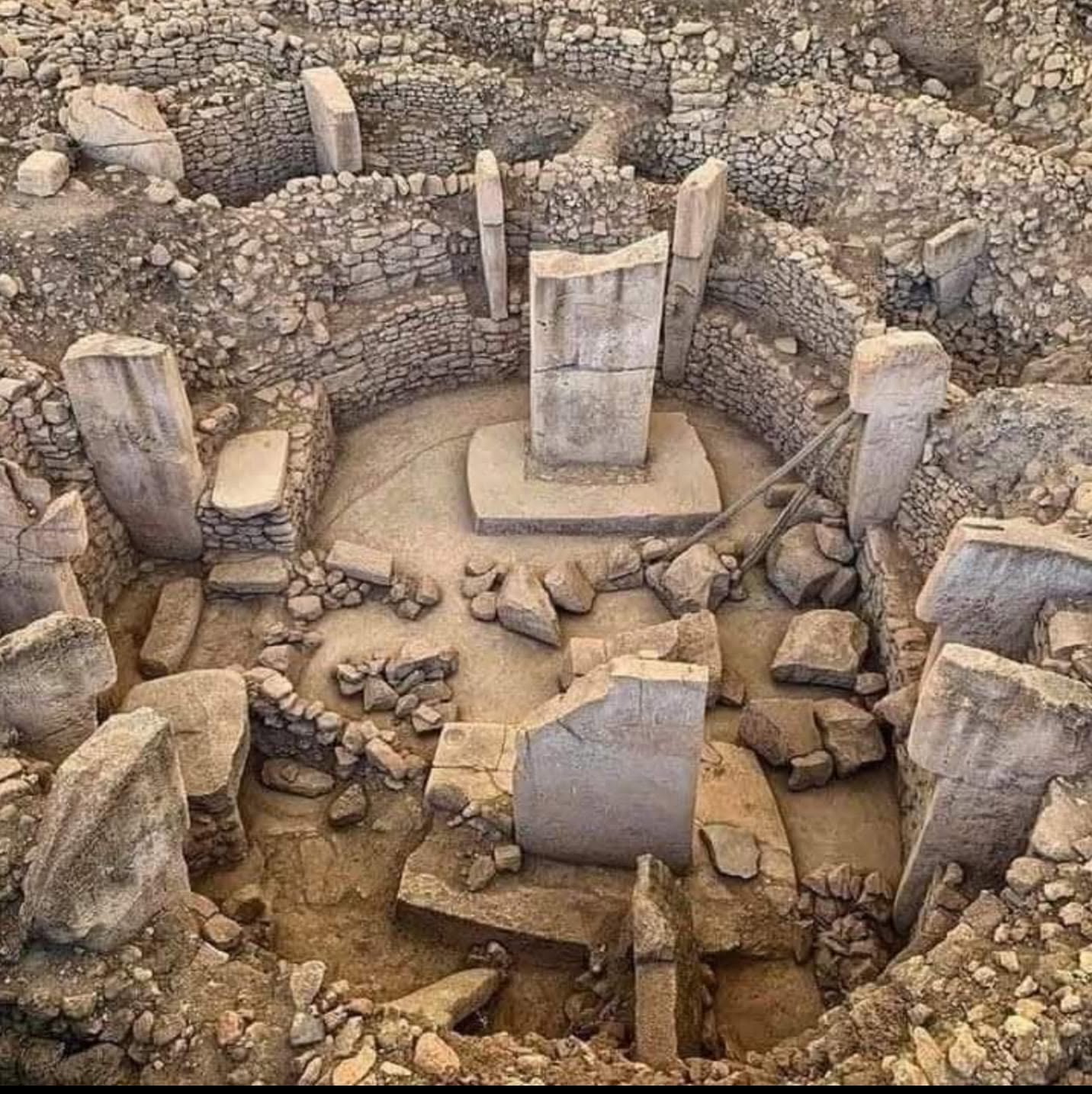
In ancient times, no other people lived in Kurdistan and the region except the ancestors of the Kurds. The traces of Kurdish caves bear witness to this, as the ages of some of them date back more than (100,000) one hundred thousand years, not merely (4,000) four thousand years.
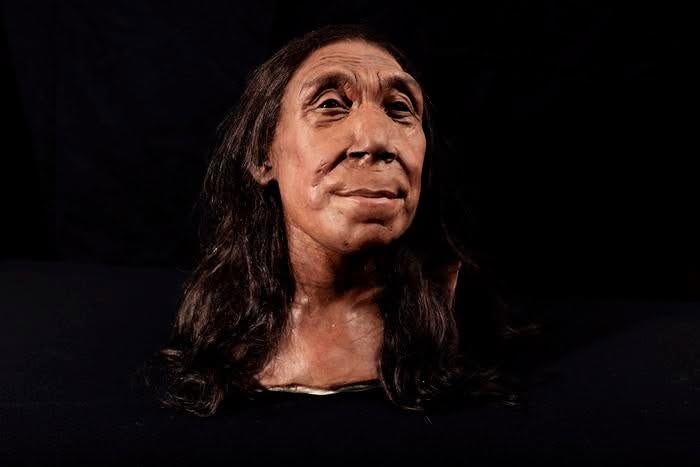
In the year 2025, the bones of a person were discovered in Shanidar Cave, located in the Zagros Mountains on the northwestern edge of the Bradost mountain range, overlooking the Upper Zab valley near the center of the Shanidar sub-district. The date of these bones traces back to more than (12,500) years ago. DNA testing of these bones indicates that modern Kurds are descendants of that individual who lived in Kurdistan over (12,500) years ago. This provides scientific proof that the ancient peoples who lived in Kurdistan are the ancestors of the Kurdish people.
Furthermore, the genetic composition of samples taken from the bone remains of the Hurrian ancestors of the Kurds from sites such as Urkesh, Nuzi, Hasanlu, and Alalakh from the end of the Bronze/Iron Age consists of a mixture of the mountainous Fertile Crescent component (Zagros) with the Anatolian Neolithic component, and occasionally a limited trace from the Caucasus Steppe. The paternal lineages of the Hurrians are J2G2a and some late R1b/R1a; thus, the genetics of the Kurdish people are identical to those of the Hurrians.
In the sixth and fifth centuries BC, the Kakeis had a state named the Kingdom of Kakei located in northwestern Punjab, extending from Gandhara to the Beas River [d], where the Kakei tribes were living at that time in the region extending from Kurdistan to India. It is worth noting that Gandhara is an ancient region located in the Peshawar Basin in the northwest of the ancient Indian subcontinent, which at present includes northwestern Pakistan and northeastern Afghanistan. To the present day, there are remnants of Yarsani Kakeis in India, Pakistan, Afghanistan, Iran, Kurdistan, and Turkey, who continue to practice the Yarsani religion. In India, Pakistan, and Afghanistan, they are called Zikri.
According to historical facts, no major migrations occurred from Kurdistan to the outside, nor did major migrations into Kurdistan occur throughout history such that the migrating ethnicity or ethnicities to Kurdistan dominated the ethnicity of the ancestors of the Kurds; rather, the peoples who migrated to Kurdistan assimilated into the indigenous population (the ancestors of the Kurds) and were absorbed into them (became Kurdified).
Now we discuss the history of the presence of the peoples currently living in our region. At the end of the third millennium BC, the Greeks migrated from the southern end of the Balkan Peninsula to the area now called Greece [a, b]. This proves the absence of Greeks in the region at the time of the invention of agriculture and the transmission of language from Kurdistan to the peoples speaking the Kurdish-origin languages termed Indo-European languages.
During the period (2000–1500) BC, there was an influx of Amorite migrants from the west toward northern Mesopotamia (Subartu), meaning the region of Southern Kurdistan. Up until around the year (1100) BC, Assyria was composed of several weak city-states controlled by the Zagrosian ancestors of the Kurds, where the region was ruled by the Subarians, who were the native inhabitants of present-day Southern Kurdistan and the founders of the Kingdom of Assyria. Additionally, the Mitanni ancestors of the Kurds ruled Assyria from the year 1500 to the year 1350 BC, a duration of 150 years [1]. This means that the Amorite migrants, who were a minority in Kurdistan, assumed actual rule in the Kingdom of Assyria from the year 1100 BC until the year 612 BC, which is the year of the overthrow of the Assyrian Empire by the Medes and Babylonians. Thus, the Amorites ruled Assyria for only (488) years, whereas the Subarian ancestors of the Kurds founded the Kingdom of Assyria, which was ruled by the Subarians and Mitannis for more than a thousand years. Following the disappearance of the Assyrian Empire, the Amorites assimilated into the Kurdish people. It is worth noting that the term Amorites is a geographical term rather than an ethnic one, originating from the Sumerian word Amurru, which means “west.” Therefore, the term Amorites means “western inhabitants,” referring to the population that lived to the west of Mesopotamia (in the Syrian Desert), and Martu/Mat Amurru means “the western land” in the Sumerian language.
Studies mention that the Persians migrated from the Caspian Sea region to present-day Persia around the year 1100 BC [c]. From this, we realize that the Persians were not among the original inhabitants of the region.
Regarding the Armenians, the historian Marwan Al-Mudawwar notes that Herodotus states the Armenians are an Indo-European (Western Aryan) people who left the Balkan region in the twelfth century BC for Asia Minor across the Bosphorus and the Dardanelles, then advanced eastwards in stages until reaching Ararat in the late seventh century BC, arriving in present-day Armenia shortly after the collapse of the Urartu state [2], which was established by the ancestors of the Kurds. The Kingdom of Urartu lasted until the year 625 BC, after which it remained under the protection of the Medes for a period of time until it was eliminated during the uprising of the Gutian Kurdish tribes in the year 585 BC, whereupon the Armenians, who had been residing in the western lands of the Urartians, seized control of it. Marwan Al-Mudawwar adds that in reality Armenia was not known by this name, as the name Armenia as we know it today formed starting from the years (550–521 BC) [3]. Thus, the Armenians arrived in present-day Armenia at a late date and are not indigenous to the region.
It is worth noting that even less than a thousand years ago, the Kurds had kingdoms and emirates in present-day Armenia and Azerbaijan, as outlined below, which confirms the historical depth of the Kurdish presence in both Armenia and Azerbaijan. Furthermore, the Armenian language has borrowed a vast amount of Kurdish vocabulary that remains in use today.
Kurdish Emirates
Eishanid Emirate (912–961 AD): Included Nahavand, Dinawar, Hamadan, and Samnan up to the borders of Azerbaijan.
Rawadid Emirate (948–1071 AD): Included the regions of Maragheh, Tabriz, Azerbaijan, Urmia, Khoy, Salmas, and Armenia.
Shaddadid Emirate (951–1198 AD): Included the region of Arran in the cities of Barda’a, Dvin, Ganja, and Baku (regions located in present-day Armenia and the Republic of Azerbaijan), with its borders extending from the city of Rawanduz to the city of Ganja in present-day Azerbaijan.
Hasanwayhid Emirate (959–1015 AD): Ruled the regions of Lorestan, Dinawar, and Hamadan, governing western Iran and northern Mesopotamia, with its capital being the city of Dinawar located northeast of the present-day city of Kermanshah. The rulers of this emirate were Yarsanis.
Marwanid Emirate (983–1096 AD): Ruled central and northern parts of present-day Kurdistan, in Diyarbakir within the cities of Mayyafariqin, Mardin, Amed, Ahlat, and Bitlis, and also governed the region of Western Kurdistan and southern Anatolia.
Annazid Emirate (1046–1139 AD): Established in the Holwan region and extended to the areas of Asadabad, Daquq, Mandali, and Al-Nu’maniyyah in Kut Governorate, up to the city of Kermanshah.
Hadhbani Emirate (958–1139 AD): Emerged in the city of Erbil and ruled most of the areas surrounding Erbil.
Ardalan Emirate (1169–1869 AD): The Ardalan Emirate encompassed Isfahan, Hamadan, Kermanshah, Hawraman, Sharazor, Erbil, Rawanduz, Kirkuk, Mosul, Kifri, Khanaqin, Mandali, Tikrit, and parts of Kut Governorate.
Republic of Red Kurdistan 1923 AD: Kurdistan was partitioned into five parts, with each part annexed respectively to Turkey, Iran, Iraq, Syria, and Armenia. Lenin exposed the secrets of the Sykes-Picot Agreement, resulting in Russia losing most of its share of Northern Kurdistan, which was subsequently annexed to Turkey. A small part of Kurdistan remained under the Soviet Union, becoming a republic named the Republic of Red Kurdistan on July 7, 1923 AD. This republic encompassed the Kurdish-majority area located near the Nagorno-Karabakh region belonging to Azerbaijan. It was bordered by Azerbaijan, Armenia, and Georgia. Its area reached (6,210) square kilometers and its population in 1926 was approximately (51,426) people, of whom (37,182) individuals (72.3%) were Kurds and the remainder were Azeris (27.2%).
As for the Arabs, their presence in Kurdistan came as a result of the Arab-Islamic conquest of Kurdistan during the reign of Umar ibn al-Khattab; thus, their homeland was confined to the Arabian Desert. On the other hand, the migration of the Turks to the region and their occupation of Northern Kurdistan began only about 900 years ago.
Thus we see that at the time of the invention of agriculture and the transmission of language from Kurdistan to the peoples speaking the Kurdish-origin languages termed Indo-European languages 12 thousand years ago, there was no presence whatsoever of Greeks, Amorites, Armenians, Persians, Arabs, or Turks in the region, as the ancestors of the Kurds inhabiting the caves of Zagros and Taurus were the sole occupants of the region. The people of Kurdistan transferred agriculture from Kurdistan to Europe, India, and other countries. Along with the transmission of agriculture, the ancestors of the Kurds also transferred their language to the countries speaking the Kurdish-origin languages known today as Indo-European languages, whose proper designation is Kurdish-origin languages because they originated from Kurdistan.
Thus we see that historical Kurdistan encompassed all the regions and countries mentioned in this article, which were the homeland of the ancestors of the Kurds, as no other peoples lived in the region of Southwestern Asia other than the ancestors of the Kurds. The Kurdish people did not descend from the sky into the land of Kurdistan. Nor does history record that all the ancestors of the Kurds migrated from Kurdistan or that foreign peoples dominated the inhabitants of Kurdistan.
Note: This text is translated from the original Arabic version… Read the Arabic version:Click here