The production of cheese, Serk, and whey cheese (Lorik) in the Aliyan region—stretching across the countrysides of Girkê Legê and Çil Axa in the Jazira region of Rojava—stands as one of the oldest traditional industries preserved by the local population. These products form an integral part of the popular food culture and hold a central place on local tables, particularly as essential winter provisions.
With the onset of the grazing season in spring, specifically during April when livestock reach peak milk production due to flourishing pastures, residents of this region, alongside those in the Kocharat areas of the Dêrik countryside, begin preparing these traditional products, which remain a staple on their tables year-round.
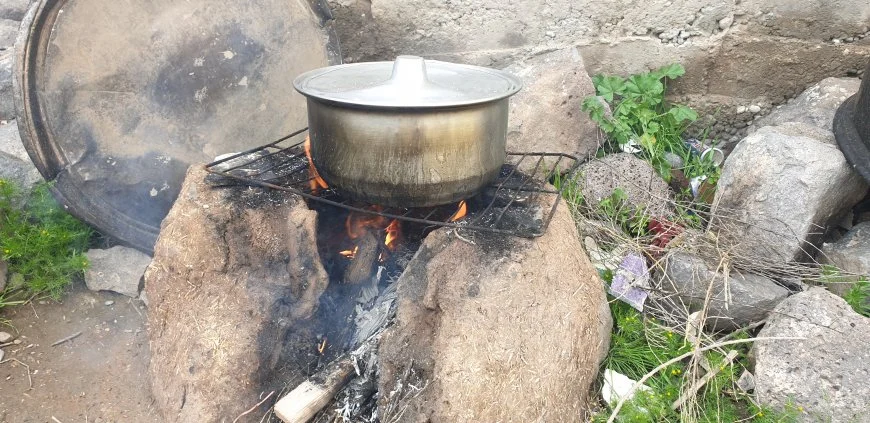
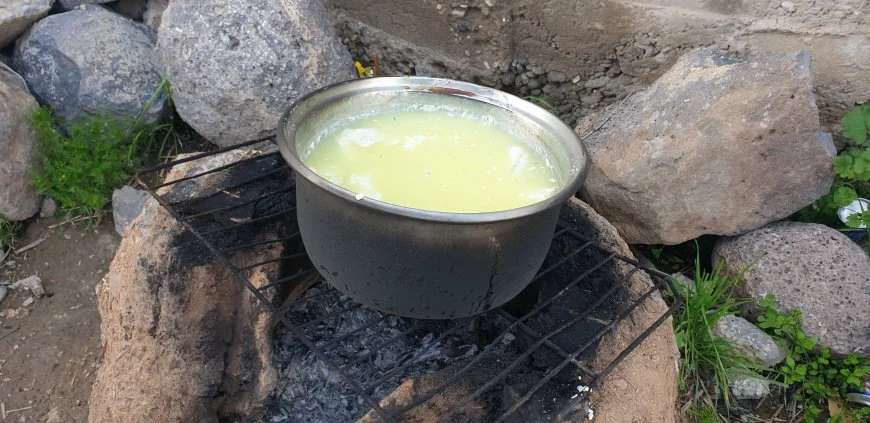
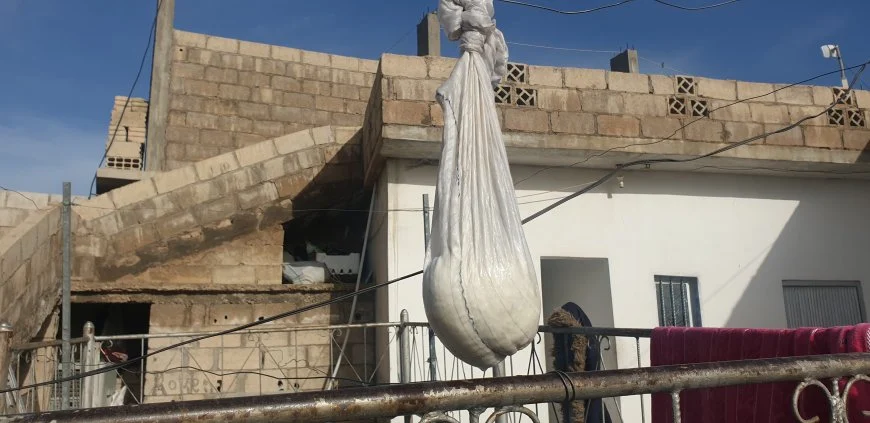
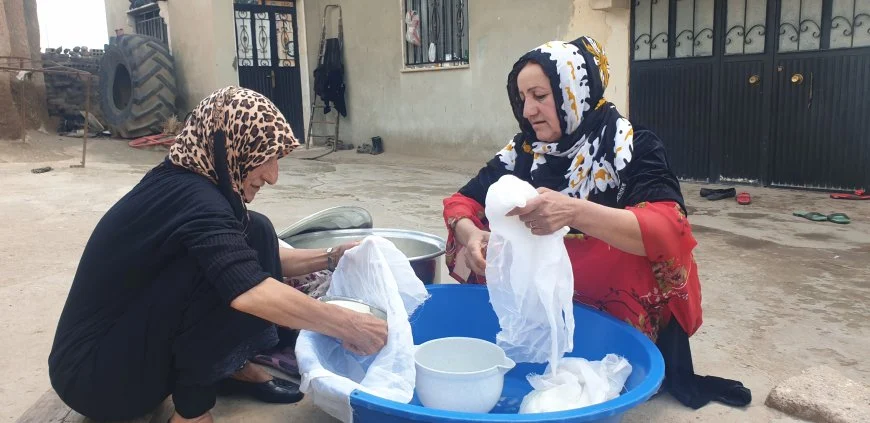
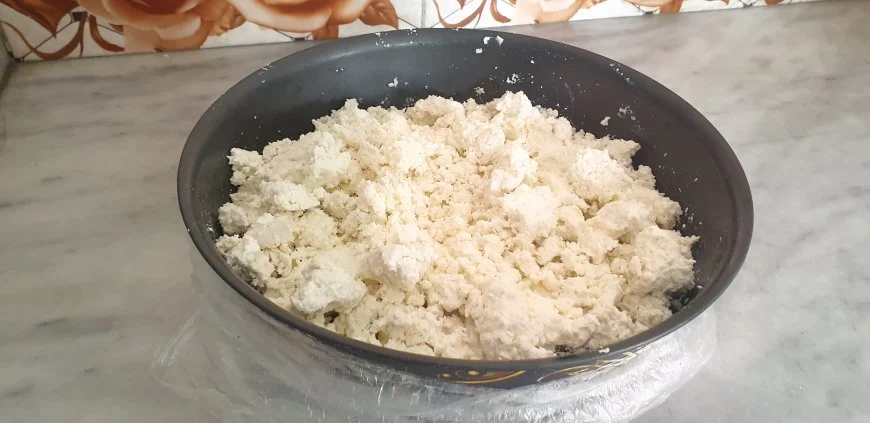
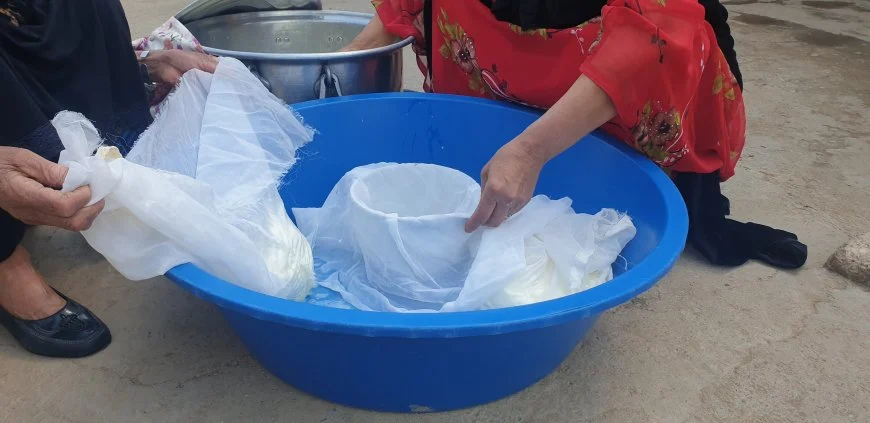
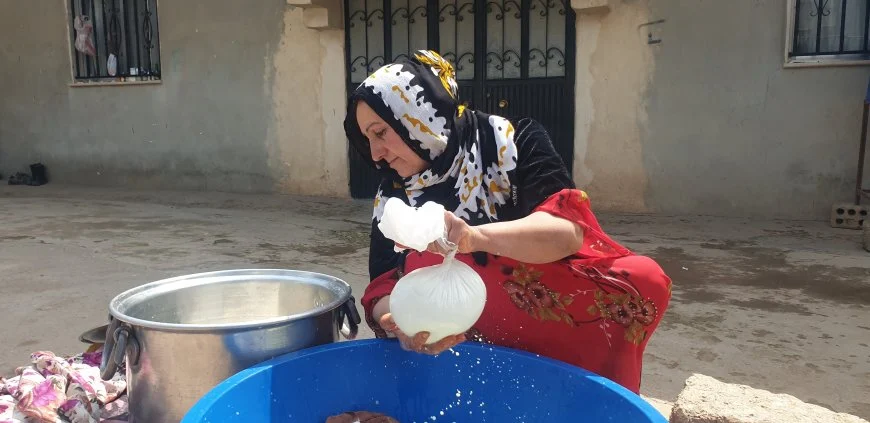
The cheese-making process demands significant time and effort. It begins with collecting and boiling fresh milk—a stage that lasts several hours—before adding “rennet” to aid coagulation. Following this, the cheese undergoes careful monitoring to ensure successful fermentation, after which it is strained in white cloth bags and left overnight to drain excess fluids.
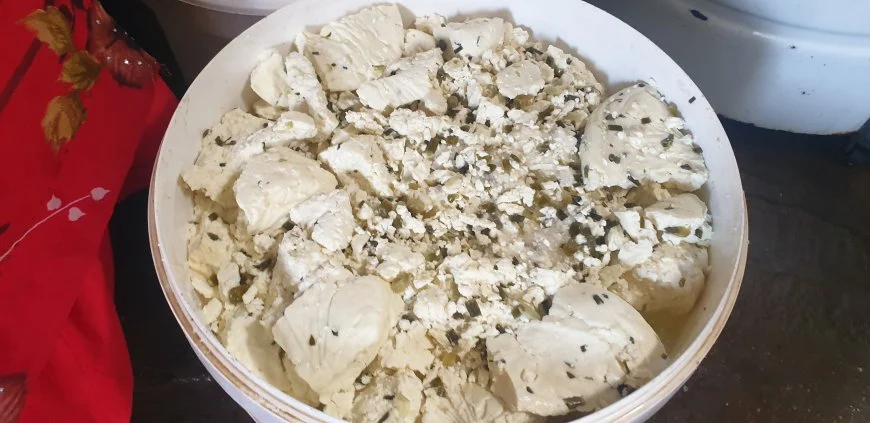
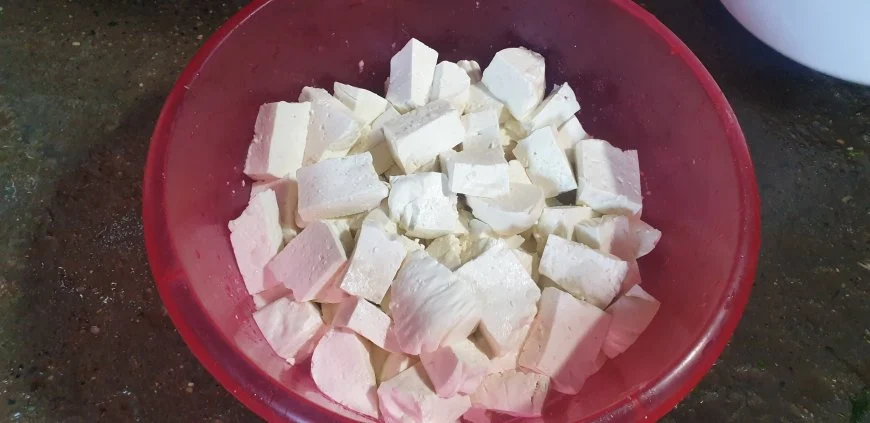
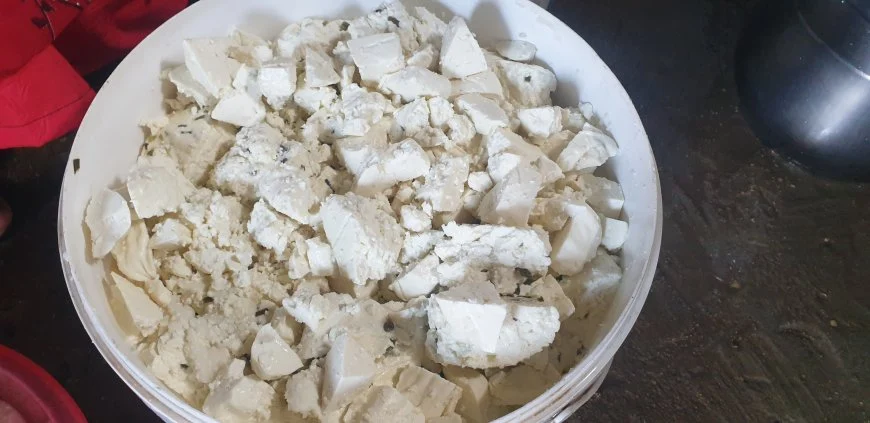
The types of cheese produced in the region vary, ranging from fresh cheese to varieties mixed with wild or green garlic. They also include braided cheese, locally known as Kazi and Shalilik, as well as nigella seed (Habbat al-Barakah) cheese. Additionally, dry white cheese intended for long-term storage is prepared by salting and boiling it until it becomes firm, ensuring it lasts through the winter until the start of the next grazing season.
The importance of this industry extends beyond mere food production; it represents a cultural heritage reflecting the deep relationship between humans and nature. This legacy is preserved primarily by women, especially grandmothers and mothers, who pass the craft down from one generation to the next.
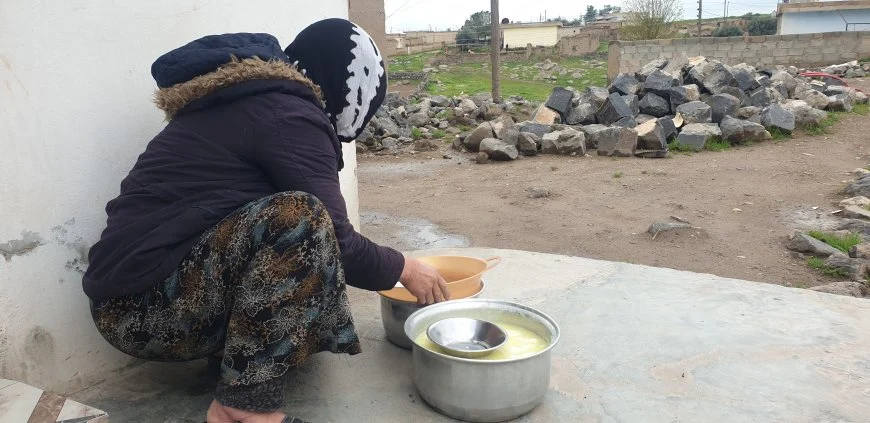
In this context, Ruwayda Hamdou, a resident of Khirbet Jehou village in the Aliyan region, has continued practicing this craft for decades. She begins her day with family members by collecting fresh milk from the livestock before proceeding to boil it and add rennet for curdling.
Ruwayda explains that cheese-making is one of the most vital traditional industries in the area, noting that it constitutes a fundamental part of winter stores and is never absent from breakfast tables. “For sixty years, we have relied on cheese production to meet our household needs,” she says. “What exceeds our requirements, we give to relatives or sell to families who do not own livestock.”
She further points out that the liquids resulting from the cheese-straining process are not wasted; instead, they are used to manufacture Serk and whey cheese (Lorik), both of which are also staple ingredients in the local kitchen.
Serk is prepared by re-boiling these liquids and adding fermented garlic. Lorik is prepared in a similar fashion but without the garlic, and is often mixed with yogurt and small pieces of cheese. Both products are stored alongside the cheese to form part of the winter provisions.
Despite modern developments, the inhabitants remains deeply connected to their land and traditions. These traditional industries maintain their status despite ongoing changes, serving as a witness to a cultural identity rooted in the life of the local community.