The German philosopher Friedrich Nietzsche once said, “Power is the only belonging.” Certainly, power here is intended in all its pillars, designations, tools, and branches—meaning both physical and mental power. Primitive man perhaps relied on the physical strength of his body to control the dangers lurking around him; thus, bodily strength was considered the basis for evaluating power and weakness. Accordingly, we find that most ancient battles and conflicts relied for their victories on physical and muscular strength, naturally accompanied by numbers or quantity.
However, with human evolution and the discovery of effective lethal tools and the possibility of killing or striking from a distance—such as spears, arrows, and slingshots—the scales began to tip in the balance of power, weakness, profit, loss, victory, and defeat. This progression continues until we reach the present day, with advanced and precise scientific discoveries embodied in smart and nuclear weapons, aircraft, missiles, etc. The world’s race to possess and develop these tools has placed the entire globe on a “devil’s palm” regarding the possibility of stability and peaceful coexistence, especially given the authoritarian tendency within human nature.
The Conflict Between History and Geography on One Side, and Scientific Development on the Other
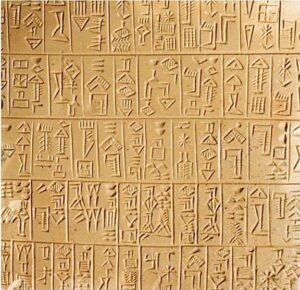
If we consider modern-day Iran to be an extension of the Persian Empire (as it views itself), then the current war with the West will undoubtedly be fierce. This is because Persians and the various ethnicities in the region viewed—and still view—themselves as having the primary right to manage this land, based on historical depth and roots. The Assyrians, for instance, view themselves as the oldest and most entitled according to their history, as do the Kurds and Persians, and so on.
Today, however, we are witnessing a new era of global empires based on science, advanced technology, and indirect forms of hegemony instead of traditional occupations. Consequently, the United States views itself as the most entitled to manage and dominate the world, believing that the era of ideologies and religious doctrines has passed. On this basis, it acts and sets its short-term tactics and long-term strategies. Added to its factor of power is its monopoly over the conquest of space and earth; it views itself as the guardian responsible for protecting this planet and creating a balance, especially after World War II and the vacuum created by the victorious and defeated nations alike.
The United States certainly exploited this opportunity to the fullest, evidenced by the near-surrender of the entire world—particularly the Soviet Union, which was a candidate to create competition through unrest on the Cuban and Vietnamese fronts. However, with the agreement to end the Cold War and the surrender and dissolution of the Soviet pole, the arena became empty and fully prepared by the end of the last century for global capitalism to control the world in one way or another.
The American-Iranian War: Between Science and Doctrine
It is no longer a secret that the ongoing war between the West (led by the United States and Israel) on one side, and the Islamic Republic of Iran on the other, is largely a semi-world war. This is due to its repercussions for everyone and the underlying alliances formed by each party according to their interests and goals.
According to readings apparent to analysts and observers—excluding what is hidden—the United States aims through this war to:
Strike the economy of the rising Chinese dragon, which creates a type of competition with the American economy by exploiting nearly free energy obtained from Iran (taking advantage of the international siege on Iran due to its nuclear program).
Increase pressure on Europe following the siege and boycott of Russian energy due to the ongoing and grinding war in Ukraine.
Pressure the Arab countries bordering Iran and extract more funds from them.
As for Israel, it aims through this war to consolidate its influence in the region and expand it geographically at the expense of partitioning the region on new national, ethnic, and sectarian bases. In its view, this is an effort to correct historical errors following World War I and restructure geopolitical geography on this basis.
Meanwhile, Iran is trying to restore international balance by attempting to mobilize and involve stronger international parties in this war, such as Russia and China, to maintain its competitive position—and theirs—against the West.
The West relies on science in this war. This is evident in the extreme precision of achieving its goals, starting with the surgical operations to assassinate Hamas leaders—foremost among them the head of the executive council, Ismail Haniyeh, in the heart of the Iranian capital, Tehran—followed by the leader of Lebanese Hezbollah, Hassan Nasrallah, and so forth. Israeli sources indicate the neutralization of more than 250 Hezbollah leaders distributed among the party’s top three ranks.
In contrast, the opposing side relies on the power of doctrine in the confrontation. This is evident in the recent statement by the party’s leader, Naim Qassem, who emphasized that the party’s weapons are not a point or condition subject to negotiation. He confirmed their readiness to fight a “battle of Karbala,” as he described it—a reference to the battle of Hussein bin Ali against the army of Yazid bin Muawiya 1,400 years ago, which historians consider to have been a suicide mission due to the imbalance of power.
Consequently, we conclude that Iran and its allies are prepared for political and military suicide rather than surrender. This stems from religious doctrine, not from political reality which moves within the realm of the possible. The negotiations currently taking place in Pakistan are practically negotiations between the Pakistani government and the Iranian side regarding a paper presented by the United States—or more accurately, the signing of a memorandum of surrender, nothing more. On the other hand, Iran has trapped itself in a “double siege” when it played its most important card: the Strait of Hormuz. It tried to pressure world capitals by creating a global economic crisis due to this corridor’s geopolitical and economic importance. However, the American move was a “siege of the already besieged,” leaving the region under the mercy of a double blockade. Thus, Iran besieged itself before it besieged the world.
There is a fact that everyone must understand: it is illogical for the United States to enter any war without a clear strategy and pre-set goals to be achieved. Another fact is that it is a state of institutions, not individuals, regardless of the president’s power or authorities. (We are not engaging in propaganda for the United States; it does not need it). However, we must be realistic in reading the scene in the 21st century. We must read the present as it should be read, not through the eyes of the past, weeping over ruins and claiming we were once masters of glory, empires, and history. Certainly, history is important, and as the Spanish philosopher and poet George Santayana said: “Those who do not read history are condemned to repeat it.” But realism and living the current stage as it exists is far better than losing everything.