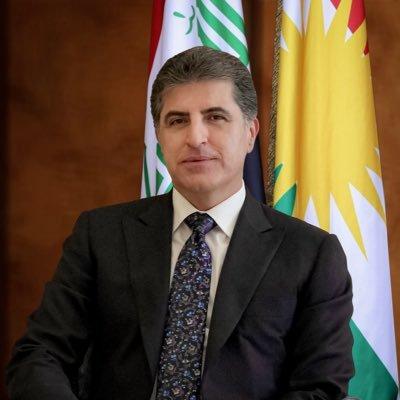
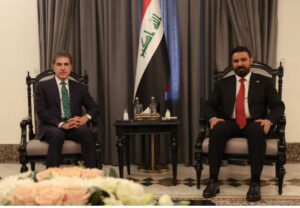
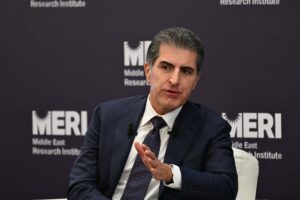
Over the past three decades, Nechirvan Barzani has emerged as one of the most prominent political figures in the Kurdistan Region of Iraq. Transitioning from party activities and participation in political negotiations to assuming the premiership across multiple terms, he ultimately assumed the presidency of the region in 2019. His career embodies the profile of a political figure shaped within the environment of the Kurdish movement, with a rise closely tied to the institutions of the Kurdistan Democratic Party (KDP) and the political transformations witnessed in Iraq and the Kurdistan Region after 1991.
Balancing executive work, diplomacy, and regional and international relations, his name has been linked to major economic and political files. These include the development of the region’s governmental institutions, relations with Baghdad, Ankara, and Washington, the oil export file, and efforts to maintain internal stability and manage relations among Kurdish political forces.
Barzani hails from a prominent political family within the Kurdish nationalist movement; he is the grandson of the Kurdish leader Mustafa Barzani, the son of Idris Barzani, and the nephew of Masoud Barzani. However, his career was not defined solely by his familial background; rather, it was accompanied by successive party and governmental responsibilities that established him as one of the region’s primary political decision-makers.
Nechirvan Barzani assumed the presidency of the Kurdistan Region in June 2019 and continues to hold the office as of the preparation of this biography in October 2026. He also serves as the Vice President of the Kurdistan Democratic Party.
I. Personal Information Card
Name: Nechirvan Idris Barzani
Name in Kurdish: نێچیرڤان بارزانی
President of the Kurdistan Region of Iraq: Since June 2019
Statement
Information
Name
Nechirvan Idris Barzani
Name in Kurdish
نێچیرڤان بارزانی
Date of Birth
September 21, 1966
Place of Birth
Barzan, Kurdistan Region of Iraq
Nationality
Iraqi
Ethnicity
Kurdish
Father
Idris Barzani (1944–1987)
Grandfather
Mustafa Barzani (1903–1979)
Uncle
Masoud Barzani
Political Affiliation
Kurdistan Democratic Party (KDP)
Current Position
President of the Kurdistan Region of Iraq
Party Position
Vice President of the Kurdistan Democratic Party
Education
Studied Political Science and International Relations in Tehran, but did not complete his studies
Academic Honor
Honorary Doctorate from Washington & Jefferson College, USA
Marital Status
Married with five children
Languages
Kurdish and Persian; speaks good Arabic and English
II. Upbringing and Family Background
Nechirvan Idris Barzani was born on September 21, 1966, in the town of Barzan. He grew up in a family whose name is intertwined with the history of the Kurdish political movement in Iraq, most notably the Kurdistan Democratic Party founded by his grandfather, Mustafa Barzani.
His father, Idris Barzani (1944–1987), was a prominent leader in the KDP, undertaking political, organizational, and diplomatic roles within the Kurdish movement. His uncle, Masoud Barzani, later assumed the leadership of the KDP and the presidency of the Kurdistan Region.
Nechirvan’s childhood underwent a major shift in 1975 when his family relocated to Iran following the collapse of the armed Kurdish movement in Iraq in the wake of the Algiers Agreement between Baghdad and Tehran. This phase formed part of the refugee experience shared by numerous Kurdish families and leaders, which shaped his upbringing and education.
During his residence in Iran, he pursued his education in Tehran and lived in a political and social environment distinct from his birthplace, prior to gradually returning to political and organizational activity within the ranks of the KDP.
His father, Idris Barzani, passed away in 1987 while Nechirvan was in his early youth—a period preceding his direct entry into party leadership positions, where his name subsequently rose within party institutions in the following years.
Official biographies indicate that his familial affiliation formed part of his political background, yet he entered party work and advanced through its institutions before assuming senior government positions.
III. Education and Intellectual Formation
Nechirvan Barzani received his education during his family’s stay in Iran, enrolling in university studies in Tehran where he studied Political Science and International Relations.
However, his university studies remained incomplete; biographies published on the official website of the Kurdistan Region Presidency note that he was forced to interrupt his studies due to political and personal reasons.
Despite not earning a complete university degree in this specialization, his interest in politics and international relations later correlated with the nature of the positions he held, whether in negotiations with the Iraqi government or in managing the foreign relations of the Kurdistan Region.
As an academic honor, Washington & Jefferson College in Pennsylvania, USA, awarded him an honorary doctorate in recognition of his career and achievements—an honorary degree rather than a research doctorate earned through a graduate studies program.
Barzani speaks Kurdish and Persian fluently and commands a good proficiency in Arabic and English, enabling him to communicate with various political, regional, and international actors throughout his career.
A notable milestone linked to his commitment to education was the founding of the University of Kurdistan – Hewlêr in 2006 during his tenure as Prime Minister of the Region. This university established English as the primary language of instruction, aiming to provide a university education keeping pace with scientific, technological, economic, and political developments.
IV. Career, Political, and Professional Journey
Beginnings within the Kurdistan Democratic Party (1989–1996)
Nechirvan Barzani began his active political career inside the KDP, to which his family belongs, and his name emerged within the party’s institutions during the late 1980s.
In 1989, he joined the Political Bureau of the KDP, according to a biography published by the Anadolu Agency, positioning him among the young figures beginning to assume political and organizational responsibilities within the party.
Following the 1991 Gulf War and the subsequent Kurdish uprising, he participated in negotiations with the Iraqi government during a period when Kurdish forces sought to establish a new political and administrative reality in regions outside Baghdad’s control.
His participation in these negotiations facilitated his transition from internal party work to the political and negotiating arena, paving the way for him to assume governmental responsibilities in the Kurdistan Region.
Deputy Prime Minister of the Kurdistan Region (1996–1999)
On September 26, 1996, Nechirvan Barzani assumed the post of Deputy Prime Minister of the Kurdistan Region within the third cabinet formation.
His appointment came at a time when the region’s political and administrative institutions were still in their foundational stages, with Kurdish parties working to administer the affairs of areas under their influence and develop local governance structures.
This position marked his first prominent executive experience within the regional government, enabling him to gain expertise in managing governmental files and handling political, economic, and security challenges.
First Premiership (1999–2006)
In 1999, Barzani assumed the premiership of the Kurdistan Region in the fourth cabinet formation, becoming one of the region’s most prominent executive officials.
This period witnessed continued efforts to build government institutions and develop public administration and services, amid the political and administrative division persisting between the KDP and the Patriotic Union of Kurdistan (PUK).
Consequently, this phase must be understood within the context of managing a government tied to KDP influence prior to the formation of the unified government that later brought the two parties together.
During this period, his standing within the party and government was reinforced, establishing him as a key figure managing vital political and economic files alongside participating in shaping relations with Iraqi and regional parties.
Leadership of the Unified Government and Foundation of the University of Kurdistan – Hewlêr (2006–2009)
The year 2006 marked an important milestone in Nechirvan Barzani’s career when he assumed the premiership of the fifth cabinet of the Kurdistan Region. This occurred within the framework of the unified government that united the KDP and the PUK following years of administrative and political division.
During this period, the government moved toward expanding service and investment projects and working on infrastructure development, including education, health, transport, energy, and communications.
Among the prominent initiatives linked to this phase was his founding of the University of Kurdistan – Hewlêr in 2006, aimed at establishing an educational institution utilizing English as the language of instruction and providing an academic environment engaging with global developments.
This era also witnessed an expansion of economic and investment activity in the region as international companies entered the oil, gas, and energy sectors.
In 2009, his governmental term concluded, and Barham Salih succeeded him as Prime Minister of the Region.
Vice President of the Kurdistan Democratic Party (2010)
In 2010, Nechirvan Barzani assumed the position of Vice President of the Kurdistan Democratic Party—a post that reinforced his presence within the party’s leadership structure and solidified his standing as one of its leading figures entrusted with political and organizational responsibilities.
This development followed years of serving as Prime Minister, allowing him to combine executive experience with partisan relationships and continue participating in shaping the party’s political orientation.
Return to the Premiership (2012–2014)
Barzani returned to the premiership of the Kurdistan Region in 2012 to lead the seventh cabinet formation, succeeding Barham Salih.
His return occurred amid mounting economic and political challenges, most notably disputes between the regional government and the federal Iraqi government regarding the general budget, oil exports, and constitutional authorities.
Relations with Baghdad stood out as one of the primary files facing his cabinet, alongside the continued development of infrastructure and the attraction of foreign investment.
Oil and Budget Crisis and the War against ISIS (2014–2017)
The beginning of his eighth cabinet term in 2014 coincided with an exceptionally difficult phase in the Kurdistan Region’s history due to escalating financial and oil disputes with Baghdad, the suspension of the region’s share of the federal budget, and simultaneous attacks by ISIS on Iraq and wide areas of the region.
The issue of oil exports became one of the files most closely associated with his name during this period.
On March 20, 2014, Barzani announced a regional government initiative offering 100,000 barrels of oil per day to Iraqi exports starting April 1, as part of efforts to reach an agreement with Baghdad concerning the management of oil exports and revenues.
He explained in his statement that the initiative served as a gesture of goodwill to support negotiations while affirming the preservation of the region’s rights stipulated in the Iraqi Constitution.
Conversely, the policy of independent oil exports via Turkey triggered a sharp political and economic dispute between Erbil and Baghdad.
An analysis published by the Middle East Institute in 2016 noted that the strategic oil agreement signed by the regional government with Turkey in 2013—which enabled oil and gas exports through Turkish territory—was among the factors contributing to escalating friction with the Iraqi government, which suspended the region’s budget share in February 2014.
During this phase, the region also faced the repercussions of the war against ISIS, declining global oil prices, and the hosting of large numbers of displaced persons and refugees, placing the government under simultaneous financial, security, and humanitarian pressures.
The Independence Referendum Crisis and Managing Relations with Baghdad (2017–2019)
The Kurdistan independence referendum held on September 25, 2017, constituted one of the most prominent political events impacting the region’s future and its relations with the Iraqi government and neighboring states.
Following the referendum, Erbil and Baghdad entered a political and security crisis that culminated in Iraqi federal forces taking control of Kirkuk and disputed territories in October 2017, alongside subsequent economic and political repercussions.
Amid this crisis, Kurdish leader Masoud Barzani’s presidential term ended in November 2017, leaving the presidency vacant while certain presidential authorities were distributed between Prime Minister Nechirvan Barzani and Deputy Prime Minister Qubad Talabani under temporary political and legal arrangements.
During this period, Barzani emerged in managing political communications with Baghdad and working to rebuild federal relations amid the aftermath of the referendum and disputes among Kurdish forces.
A research report prepared by researcher Renad Mansour for the European Parliament’s Directorate-General for External Policies in 2018 described Nechirvan Barzani as representing, in his assessment, the most pragmatic current within the KDP, noting that he quietly opposed the referendum and moved to rebuild relations with Baghdad and foreign countries.
This characterization represents a research analysis by the author rather than a direct, documented official statement by Barzani regarding his personal stance on the referendum.
Election as President of the Kurdistan Region (2019)
On May 28, 2019, the Kurdistan Parliament elected Nechirvan Barzani as President of the Region after he secured 68 votes out of 81 deputies participating in the voting session.
His election followed the vacancy of the presidency since the expiration of Kurdish leader Masoud Barzani’s term in 2017 and in the wake of the parliamentary elections held in the region in September 2018.
Nechirvan Barzani took the constitutional oath on June 10, 2019, assuming the presidency of the Kurdistan Region as the second president in the region’s history since the establishment of the presidency institution in 2005, succeeding his uncle Masoud Barzani.
Regional and International Presidency and Diplomacy (2019–2026)
Since assuming the presidency of the Kurdistan Region, Nechirvan Barzani has worked to establish the presidency as an institution representing the region in its relations with the Iraqi federal government, regional states, and international powers, with a focus on political dialogue and coordination among various parties.
Relations between Erbil and Baghdad topped the priorities of the new phase, particularly files related to the federal budget, public salaries, oil and gas, disputed territories, and the constitutional competencies of both the federal and regional governments.
Barzani also continued working to expand the region’s foreign relations through meetings with leaders and officials from the United States, European nations, Turkey, Iran, and regional countries, as well as participation in international conferences and forums.
The biography published on the University of Kurdistan – Hewlêr website indicates that more than 30 countries opened official representative offices in the Kurdistan Region during his tenure in government leadership, reflecting the expansion of the region’s diplomatic presence according to the official university source.
Relations with Baghdad
Barzani’s policy toward the Iraqi federal government has been characterized by an emphasis on negotiations, political settlements, and calls to address disputes in accordance with the Iraqi Constitution rather than resorting to escalation.
Key files he worked on included financial relations between the two sides, the region’s budget share, oil exports, border crossing management, disputed territories, and the future of security coordination between federal forces and the Peshmerga.
This approach reflects an attempt to preserve the federal status of the region within Iraq while demanding the implementation of constitutional rights and powers granted to it.
Relations with Turkey, Iran, and the United States
Relations with Turkey, Iran, and the United States represent core axes in Barzani’s foreign policy, given these nations’ direct influence on security, economic, and political files concerning the Kurdistan Region.
Turkey stands out particularly in trade, oil, and security-political files related to Iraq and Syria. Meanwhile, the United States constitutes a key international partner in political and security relations with the region.
In his relations with Iran, Barzani focuses on political and security coordination, preserving border stability, and avoiding turning the region’s territory into an arena for confrontation among regional powers.
In an interview with Al-Sharqiya TV, the full text of which was published by the Kurdistan Region Presidency in Austria on August 14, 2026, Barzani stressed the necessity for Iraq to maintain a balanced policy and refrain from joining any regional axis, stating that Iraq’s interest requires avoiding becoming a party to surrounding conflicts.
Stance on the Kurdish Issue in Syria
The Kurdish issue in Syria received prominent attention within Nechirvan Barzani’s political and diplomatic movements, particularly following the fall of Bashar al-Assad’s regime and the transformations witnessed across the country.
In an interview with Al-Sharqiya TV on August 12, 2026, Barzani addressed the relationship between Damascus and the Syrian Democratic Forces (SDF) and the position of Kurds in Syria’s future.
He affirmed that the Kurdistan Region is prepared to play a cooperative role in helping resolve differences between Damascus and the SDF within the framework of a unified Syria, noting that determining the shape of Syria’s political and administrative system rests with Syrians themselves.
He also emphasized the need to reach an agreement with Damascus guaranteeing the rights of Kurds and other components—including Alawites, Druze, and Christians—and ensuring these rights are reflected in the Syrian constitution.
He stated in the interview that his stance centers on resolving these issues within a unified Syria while leaving the determination of the political and administrative model to mutual consensus among Syrians.
These statements reflect an orientation based on supporting the national and political rights of Kurds in Syria, coupled with backing Syria’s territorial integrity and rejecting the imposition of any political model from abroad.
Intra-Kurdish Relations
Alongside external files, relations between the KDP, the PUK, and other political forces constituted a continuous challenge facing Barzani’s presidency.
Managing these relations requires preserving political equilibrium within the region’s institutions, ensuring the uninterrupted functioning of the government and parliament, and reaching understandings on contentious files.
In this context, a persistent challenge concerns the extent of the regional presidency’s capability to operate as an inclusive institution uniting various political forces independent of partisan competition.
Key Political Positions During the Presidential Term
Through his official speeches and interviews, several core principles declared by Barzani in managing political files can be observed:
Adherence to Iraq’s federal system and working to resolve disputes with Baghdad in accordance with the constitution.
Adopting dialogue and negotiation to address political disputes between Kurdish and Iraqi forces.
Supporting the constitutional and political rights of Kurds in the region while respecting the unique context of each political arena.
Endorsing coexistence among religious and ethnic components in the Kurdistan Region.
Enhancing the region’s international relations and avoiding involvement in regional axes and conflicts.
Supporting political settlements in Syria that guarantee the rights of Kurds and other components within a unified state.
These principles are grounded in his stated positions in interviews and official statements, and do not necessarily mean all associated files have been definitively resolved or their objectives fully achieved.
V. Political and Intellectual Orientation
Nechirvan Barzani belongs to the Kurdistan Democratic Party, one of the foremost Kurdish political parties in Iraq, serving as the party’s Vice President alongside his role as President of the Kurdistan Region.
The political background of the party and the Kurdish movement in which he matured forms a fundamental element in understanding his orientation, alongside his governmental experience gained since the 1990s.
His political orientation can be examined through four main axes:
1. Federalism and Relations with Baghdad
Barzani’s stated positions embrace adherence to the constitutional status of the Kurdistan Region within federal Iraq, coupled with demands to implement constitutional articles regulating the relationship between the federal government and the regional government.
This orientation has appeared clearly in his positions regarding oil, the budget, and disputed territories, where he focuses on negotiation and reaching political and legal agreements.
2. Political Pragmatism
Pragmatism is highlighted by various observers and researchers when analyzing Barzani’s career, particularly in managing relations with Baghdad, Ankara, Washington, and Tehran.
In this context, a report prepared by researcher Renad Mansour for the European Parliament in 2018 viewed Barzani as representing the pragmatic current within the KDP leadership and working to rebuild relations with Baghdad following the aftermath of the independence referendum.
This characterization remains a political analysis rather than a self-declared definition of his personality.
3. Coexistence and Pluralism
Barzani’s official speeches emphasize the importance of coexistence among ethnic and religious components in the Kurdistan Region and the development of political and administrative institutions based on participation and consensus.
His official biography similarly links his political orientation to principles of pluralism, tolerance, and peaceful coexistence among various components.
4. Diplomacy and Regional Dialogue
Barzani attaches importance to relations with regional states and international powers, focusing in his speeches on dialogue, political coordination, and avoiding conflicts that could impact the region’s security and stability.
This orientation has surfaced in his positions concerning Iraq and Syria, as well as his calls to maintain a balanced Iraqi policy toward regional conflicts.
VI. Key Positions and Milestones in a Timeline
Year
Position or Event
1966
Born in the town of Barzan.
1975
Relocated with his family to Iran.
1987
Death of his father, Idris Barzani.
1989
Joined the Political Bureau of the Kurdistan Democratic Party, according to the Anadolu Agency.
1991
Participated in negotiations with the Iraqi government following the Gulf War.
1996
Assumed the position of Deputy Prime Minister of the Kurdistan Region.
1999
Assumed the premiership of the Regional Government in the fourth cabinet.
2006
Assumed the premiership of the fifth cabinet of the unified government and founded the University of Kurdistan – Hewlêr.
2009
His governmental term concluded, and Barham Salih assumed the premiership.
2010
Assumed the position of Vice President of the Kurdistan Democratic Party.
2012
Returned to the premiership of the Kurdistan Region in the seventh cabinet.
2014
Assumed the premiership of the eighth cabinet and announced an oil initiative to negotiate with Baghdad.
2017
His role emerged in managing the aftermath of the independence referendum and the crisis with Baghdad.
2019
Elected by the Kurdistan Parliament as President of the Region on May 28 and took the constitutional oath in June.
2026
Continues to serve as President of the Kurdistan Region of Iraq and Vice President of the Kurdistan Democratic Party.
VII. Current Status and Political Presence (October 2026)
Nechirvan Barzani continues to serve as the President of the Kurdistan Region of Iraq as of the preparation of this biography, pursuing his role in managing the region’s internal and external political relations.
Activities of the regional presidency published during October 2026 indicate the continuation of his diplomatic movements, most notably:
October 12, 2026: Received Syrian Democratic Forces Commander Mazloum Abdi as part of meetings concerning political developments in Syria and the Kurdish issue.
October 12, 2026: Conducted an interview addressing political transformations in the Middle East.
October 13, 2026: Received Iraqi Prime Minister Mohammed Shia’ al-Sudani.
October 19, 2026: Met with the British National Security Advisor.
October 21, 2026: Issued a statement affirming the continued defense of the rights of the Yazidis.
These meetings reflect the ongoing presence of the regional presidency in Iraqi, regional, and international files, particularly developments in Syria, relations with Baghdad, and international powers.
Note: This text is translated from the original Arabic version. Read the Arabic version:Click here