The historical roots of the idea of establishing an independent Kurdish Liwa (province) or Governorate in Iraqi Kurdistan do not date back to 1969 only, but rather extend to the beginnings of the founding of the modern Iraqi state in 1921. At that time, the British government, in its capacity as the mandatory power over Iraq, was attempting to find a formula that would guarantee the retention of the Kurdish regions within the new Iraqi state while granting them a sort of administrative and cultural distinctiveness. From the very beginning, the Kurdish issue was one of the most complex problems facing the nascent Iraqi state because the Kurds did not view themselves merely as an administrative part of Arab Iraq; rather, they possessed a growing national consciousness that had developed since the late Ottoman era.
When the Kingdom of Iraq was established under the rule of King Faisal I in 1921, Britain realized that incorporating the Mosul Vilayet—the extensive parts of which had a Kurdish majority—into Iraq would not be easy without offering political and administrative guarantees to the Kurds. Therefore, London exerted pressure on successive Iraqi governments to recognize certain Kurdish rights, whether in the field of language, local administration, or political participation.
This policy appeared clearly in British correspondence and reports during the 1920s, as Britain feared the possibility of the secession of the Kurdish regions or Turkey claiming them, especially since the issue of the Mosul Vilayet was still a matter of dispute between Iraq and Turkey after the collapse of the Ottoman Empire. For this reason, Britain believed that granting the Kurds a form of local administration might help secure their loyalty to the new Iraqi state.
From here began the idea of establishing administrative units with a Kurdish character within royalist Iraq. Consideration was given early on to administratively separating some Kurdish regions from major Arab centers and granting them a sort of relative administrative autonomy. The goal was not to recognize full self-rule, but rather to create a balance that would allow for the integration of the Kurds into the Iraqi state without a direct clash with their national aspirations.
Some British memoranda stipulated the necessity of using the Kurdish language in education and administration in regions with a Kurdish majority, and a number of Kurdish officials were appointed to local positions. In the year 1922, the Iraqi government issued a statement recognizing, in a limited manner, the cultural and administrative rights of the Kurds. This came under clear British pressure, especially since Britain needed to win the support of Kurdish leaderships in confronting Turkish demands to annex Mosul.
Furthermore, during the discussion of the Mosul issue in 1925, the League of Nations emphasized the necessity of respecting Kurdish distinctiveness within Iraq and recommended granting the Kurds administrative and cultural rights, including the use of the Kurdish language in schools, courts, and local administrations. The Iraqi government officially agreed to these obligations in order to ensure that the Mosul Vilayet remained within Iraq.
In this context, early attempts emerged to establish more independent Kurdish local administrations. The governorates (Alwiya) of Erbil, Sulaymaniyah, and Kirkuk included a large number of Kurdish districts (Aqdiya) and sub-districts (Nawahi), but Duhok remained administratively linked to the Mosul Governorate, despite its national and geographical distinctiveness. Nevertheless, the idea of separating the northern Kurdish regions into independent administrative units remained on the table indirectly since the royalist era.
Britain viewed this administrative organization as a means to contain Kurdish nationalism, not as an encouragement for independence. It wanted a unified Iraq under British influence, but it realized that this goal could not be achieved without making some cultural and administrative concessions to the Kurds. Therefore, it supported local administration and Kurdish education projects, even though those projects remained limited in application due to the opposition of some Arab nationalist elites within the Iraqi state.
Successive Iraqi governments also dealt cautiously with these demands because they feared that granting the Kurds broad powers might encourage secessionist tendencies. Consequently, government policies kept fluctuating between limited recognition of Kurdish distinctiveness and attempts to reinforce centralization and link the Kurdish regions to Baghdad and Mosul administratively and security-wise.
With the passage of time, especially after the July 14 Revolution in 1958, Kurdish demands evolved from mere cultural and administrative rights to demanding political partnership and autonomy. Here, the idea of administratively reorganizing the Kurdish regions returned to the forefront, but this time within the framework of the conflict between the Iraqi state and the armed Kurdish movement led by the Kurdish leader Mullah Mustafa Barzani (1903–1979).
From this perspective, the establishment of Duhok Governorate on May 27, 1969 can be viewed as a historical extension of an old idea whose roots date back to the beginnings of the founding of the Iraqi state in 1921, when Britain was pushing toward granting the Kurds a sort of administrative and cultural distinctiveness within royalist Iraq. It is true that the 1969 decision came under entirely different political circumstances, linked to the Kurdish conflict and divisions within the Kurdish movement, but at the same time, it revived the idea of Kurdish local administration that had been proposed since the 1920s.
Therefore, the establishment of the Duhok Governorate was not an isolated event from modern Iraqi history; rather, it was the result of a long accumulation of policies and projects related to the administration of Kurdish regions within the Iraqi state. Since the founding of Iraq, there was a conviction among some British and Iraqi politicians that the stability of the country required recognizing national diversity and granting the Kurds a scope of local administration, even if that remained within the framework of the central state.
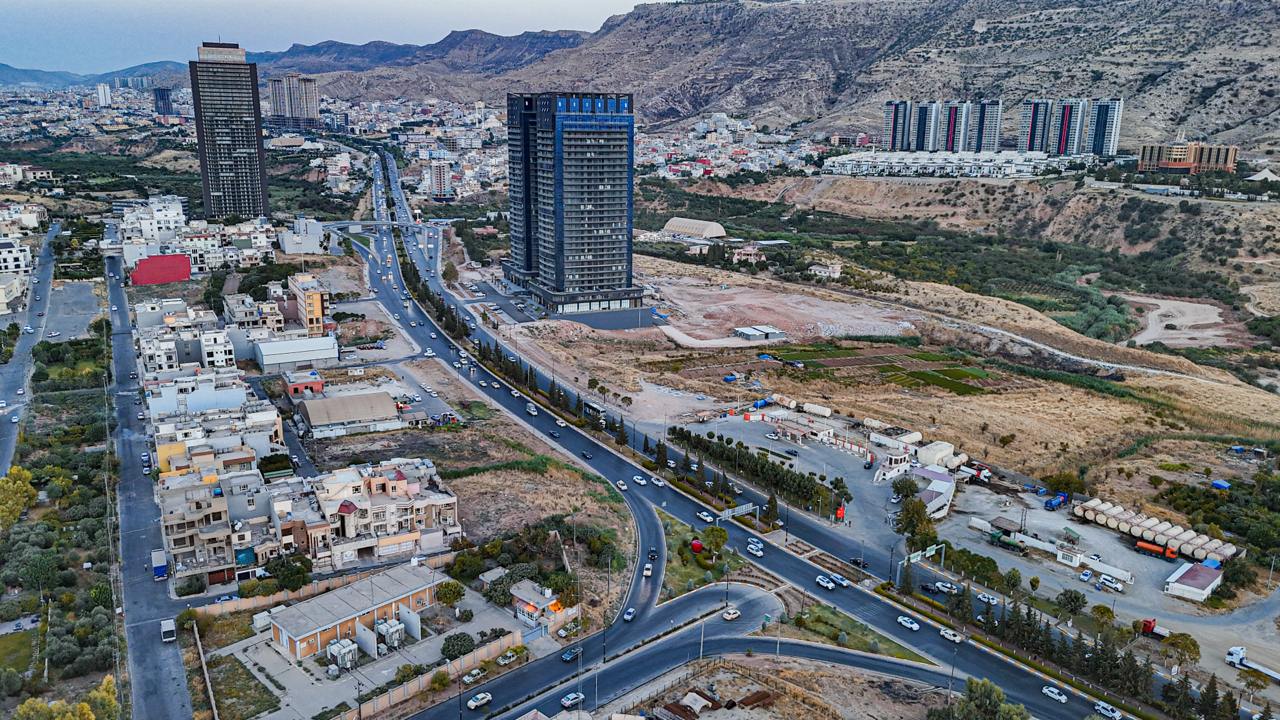
During the twentieth century, the city of Duhok witnessed important political and administrative transformations that saw it transition from a mere district belonging to the Mosul Governorate to an independent governorate in 1969. This transformation was not merely administrative, but was closely linked to the political and military conditions that Iraq experienced during the sixties, particularly the Kurdish issue and the conflict between the central government and the armed Kurdish movement. This decision drew the attention of researchers and historians because the creation of Duhok Governorate came at a critical stage that witnessed repeated attempts to find a political settlement with the Kurds, in addition to internal divisions within the Kurdish movement itself. This prompted some researchers to link this decision to the political understandings that had emerged since the project of Dr. Abd al-Rahman al-Bazzaz, the Iraqi Prime Minister during the Arif era (1965–1966), or to Baghdad’s attempts to support the breakaway faction of the Kurdistan Democratic Party led by Ibrahim Ahmad and Jalal Talabani as a form of support and appeasement for them. However, the majority of studies confirmed that the establishment of Duhok Governorate and the creation of the University of Sulaymaniyah came within the secret clauses of the Al-Bazzaz agreement with Barzani in 1966.
Before 1969, Duhok was a district administratively subordinate to the Mosul Governorate, and it remained for many years a part of Nineveh Governorate since the founding of the modern Iraqi state in 1921. Despite its important geographical location and its proximity to the Turkish and Syrian borders, it did not receive significant administrative and developmental attention compared to the city of Mosul, which was the center of power and decision-making in the northern region. This reality was reflected in services, infrastructure, and government institutions, as most major projects remained concentrated in Mosul, while the regions of Duhok suffered from weak development and a shortage of official institutions.
With the escalation of the Kurdish national movement in Iraq after World War II, the Kurdish regions began to gain increasing political and military importance, and Duhok was one of the most prominent of those regions due to its mountainous nature and strategic location. When the Kurdish revolution broke out in 1961 under the leadership of Mustafa Barzani against the government of Prime Minister Abd al-Karim Qasim (1958–1963), the regions of Duhok, Amadiya, and Zakho became among the most important arenas of confrontation between the Iraqi army and the Peshmerga forces. The continuation of the war exhausted the Iraqi state economically and militarily, and caused complications in the internal political situation, which prompted successive governments to search for political solutions to the Kurdish issue instead of relying completely on the military option.
In this context, the role of Al-Bazzaz emerged, who, since assuming the prime ministership in 1965, attempted to present a more moderate settlement project with the Kurds. Al-Bazzaz was one of the few civilian figures who believed that the Kurdish issue could not be resolved by military force alone. Therefore, in 1966, he announced a political project known as the “Al-Bazzaz Declaration,” which included the recognition of some national and cultural rights of the Kurds, a call for administrative decentralization, political participation, and achieving a form of local administration for the Kurdish regions. This declaration was considered an advanced step compared to previous policies because it indirectly recognized the distinctiveness of the Kurdish regions within the Iraqi state. Although Al-Bazzaz’s project was not fully implemented due to objections from the military establishment led by Major General Abd al-Aziz al-Uqaili—who wanted to eliminate the Kurdish movement by military force by bringing the Iraqi army to the Haj Omran region and cutting off Iranian support from the Kurdish movement—as well as from hardline nationalist forces, it opened the door to thinking about reorganizing the Kurdish regions administratively, especially after the Iraqi army’s loss in the Battle of Handren in the month of May 1966. This is what prompted Dr. Abd al-Rahman al-Bazzaz to issue his famous declaration or agreement regarding granting rights to the Kurds, which appeared more clearly after the Ba’ath Party came to power in 1968, as they also attempted to eliminate the Kurdish movement with the support of the breakaway faction of the Kurdistan Democratic Party (the Political Bureau faction) led by Ibrahim Ahmad and Jalal Talabani. However, the winds did not blow as the ships desired; therefore, the Iraqi government thought of conducting a political settlement with the Kurdish leadership in exchange for recognizing Kurdish rights in all fields (= autonomy), as was the case with the Al-Bazzaz government in 1966.
A number of researchers believe that the idea of creating new administrative units in the Kurdish regions, including Duhok Governorate, was linked to the political climate created by Al-Bazzaz’s project, as the Iraqi government was trying to provide some administrative gains to the Kurdish population in order to ease military tension and win the trust of local leaders.
At the same time, the Kurdish movement itself was experiencing internal divisions. A dispute broke out within the Kurdistan Democratic Party led by Mullah Mustafa Barzani and some members of the Political Bureau who adopted leftist, Maoist ideas. The breakaway faction accused the leadership of Mustafa Barzani of monopolizing power and representing a conservative wing that was trying to maintain the social (tribal) structure of the Kurds, while Barzani considered that his opponents were trying to weaken the Kurdish movement and defect from it at a sensitive stage, supporting the Iraqi military machine against the Peshmerga forces. The Iraqi government clearly benefited from this division, as it attempted to establish relations with some of the breakaway leaders and use them as a card for military, political, and cultural pressure against Barzani. Thus, Al-Noor newspaper appeared as their mouthpiece (the faction of Ibrahim Ahmad and Jalal Talabani) in mid-October 1968, and Mr. Talabani used to write most of its editorials.
From here, hypotheses emerged linking the establishment of Duhok Governorate to Baghdad’s attempt to rearrange political influence within the Kurdish regions. Some researchers believe that the Iraqi government realized that the areas near Duhok and Zakho included diverse social and political forces, and that granting them an independent administrative status might help strengthen the influence of the central state there and reduce reliance on Barzani’s traditional authority. Furthermore, creating a new governorate meant increasing government institutions, administrative jobs, and security presence, which allowed Baghdad to expand its direct presence within the region.
On May 27, 1969, Revolutionary Command Council Resolution No. 211 was issued, decreeing the establishment of Duhok Liwa, which later became Duhok Governorate. The resolution included separating the districts of Duhok, Zakho, Amadiya, and Aqrah from Mosul Governorate and linking them administratively to the new governorate. The decision came at a time when the Ba’athist regime was seeking to consolidate its power after the July 1968 coup, and was also trying to improve its relationship with the Kurdish movement in preparation for reaching a comprehensive political settlement.
The Iraqi government presented the decision as an administrative and developmental step aimed at improving services and bringing the administration closer to the population, especially since the Mosul Governorate was very large and difficult to manage effectively. No doubt, this explanation carries a side of truth, because the northern regions were in actual need of administrative development and independent institutions. However, the timing of the decision and the political circumstances surrounding it suggest that political motives played a primary role in its making.
On the other hand, the Ba’athist regime realized that the continuation of the war with the Kurds threatened the stability of Iraq; therefore, it attempted to combine military force with flexible politics. From this standpoint, the establishment of Duhok Governorate can be understood as a political message to the Kurds indicating that the government was ready to recognize the distinctiveness of the Kurdish regions and grant them a larger share of local administration. Moreover, the decision came less than a year before the signing of the March 11, 1970 Agreement between the Iraqi government and the Kurdish movement led by Mullah Mustafa Barzani, which officially recognized the national rights of the Kurds and granted them autonomy for the first time in the history of the Kurdish people.
Therefore, some historians believe that the establishment of Duhok Governorate was part of a series of preparatory steps that preceded the Autonomy Agreement, as Baghdad wanted to show its good intentions toward the Kurdish regions by granting them tangible administrative gains. Furthermore, transforming Duhok into an independent governorate gave it greater political and administrative status, making it later one of the most important cities in the Kurdistan Region of Iraq.
The decision led to important results at the local level, as government institutions expanded, and the number of official departments, educational, and health services increased. The city also witnessed remarkable urban and economic growth during the subsequent decades. With the passage of time, Duhok became an important administrative and political center in Iraqi Kurdistan, particularly as the editorials of the Arab Socialist Ba’ath Party’s newspaper Al-Thawra during the year 1969 witnessed an important political and media shift in the way the Kurdish issue within Iraq was handled. The newspaper became the official media facade for the policy of the new Ba’athist regime after the July 17, 1968 coup; therefore, it focused increasingly on the topic of “Arab-Kurdish brotherhood” and the rights of the Kurds within the unity of Iraq. This shift came in the context of the new authority’s endeavor to consolidate its rule and calm the armed conflict with the Kurdish movement after long years of war and instability.
On another note, the editorials of Al-Thawra newspaper, the mouthpiece of the Ba’ath Party, directly reflected the official political discourse of the Revolutionary Command Council. Therefore, starting from the year 1969, it began to speak about the “legitimate national rights of the Kurdish people” and the necessity of resolving the Kurdish issue peacefully within the framework of the unity of Iraq. The editorial articles also focused on the idea that the July 17 Revolution came to end the “policies of national discrimination” pursued by previous governments, and that it believed in coexistence between Arabs and Kurds and building a state based on national partnership.
This discourse was linked to political decisions issued in that stage, including the 1969 decision of the Revolutionary Command Council regarding “consolidating the pillars of solidarity and brotherhood between Arabs, Kurds, and all national minorities,” in which the Ba’athist authority emphasized that national oppression was a legacy of previous regimes, and that the new regime sought to recognize national diversity within Iraq.
Within this framework, the editorials of Al-Thawra repeated phrases such as “the joint struggle between Arabs and Kurds,” “unity of destiny,” and “recognition of cultural and administrative rights.” It was also politically paving the way for the idea of autonomy that would be announced later in the March 11, 1970 Agreement. Therefore, the year 1969 can be considered a stage of media and political preparation for the Iraqi public opinion to accept the settlement project with the Kurdish movement.
Title of Legislation: Resolution on Consolidating the Pillars of Solidarity and Brotherhood between Arabs, Kurds, and All National Minorities
Classification: Resolution
Content 1
Legislation Number: 484
Legislation Year: 1969
Legislation Date: 1969-09-10
The Revolutionary Command Council, in its session held on 9-10-1969, decided the following:
The July 17 Revolution firmly believes in the right of nations to achieve their existence and assert their identity, and considers national oppression a phenomenon inherent to reactionary regimes linked to imperialism. It also believes that brotherhood and solidarity among nationalities is a phenomenon inherent to regimes hostile to both [reaction and imperialism]. At the same time, it believes that the Kurdish people will find real opportunities to achieve their aspirations and hopes through their struggle-based solidarity with their brother, the Arab people. Therefore, the Revolution, in its eagerness to remove every form of national and social injustice, expresses its belief that this path is the correct expression of the historical course of the Arab revolutionary movement, and is the sound method for consolidating the pillars of solidarity and brotherhood between Arabs, Kurds, and all national minorities.
Therefore, the Revolutionary Command Council has decided:
First: The Kurdish language shall be taught in the sixth grade of secondary education, all universities, teacher-training institutes for men and women, the Military College, and the Police College.
Second: All illustrative aids shall be made in the Kurdish language in all schools that teach in the Kurdish language.
Third: The Arabic language shall be taught in all schools that teach in the Kurdish language.
Fourth: The necessary measures shall be taken to prepare a radical and comprehensive change in the Directorate General of Kurdish Education so that it can rise to the tasks awaiting it, and to create all the necessary departments to run Kurdish educational affairs in the future.
Fifth: All Kurdish scientific, literary, and political books expressing national and ethnic aspirations and introducing the Kurdish people shall be introduced into all public libraries and all school libraries.
Sixth: Kurdish literalists, poets, and writers shall be enabled to establish a union for themselves, and efforts shall be made to assist them, enable them to print their publications, provide opportunities to increase their linguistic capabilities and talents, and link the union to the Iraqi Writers Union after its establishment.
Seventh: A printing and publishing house in the Kurdish language shall be established.
Eighth: A Directorate General of Kurdish Culture shall be created, linked to the Ministry of Culture and Information.
Ninth: A weekly newspaper and a monthly magazine shall be issued in the Kurdish language by the State Organization for Press.
Tenth: Kurdish programs on Kirkuk Television shall be increased until a special television station in the Kurdish language is established.
Eleventh: All schools and official departments in the Kurdish region shall be named after historical and geographical Kurdish names.
Twelfth: All ministries concerned shall implement what is stated above.
It is worth mentioning that the Revolutionary Command Council had previously issued a resolution making study in the Kurdish language mandatory in the primary, intermediate, and secondary educational stages in all Kurdish regions. The Revolutionary Command Council had also previously issued a resolution to open schools that teach in the Arabic language, in addition to the existence of schools that teach in the Kurdish language.
Ahmed Hassan al-Bakr
Chairman of the Revolutionary Command Council
Published in Al-Waqai’u al-Iraqiyya, Issue No. 1792 on 25-10-1969
The editorials also addressed the topic of administratively reorganizing the Kurdish regions, including the creation of Duhok Governorate in 1969, presenting it as evidence of the state’s interest in developing the Kurdish regions and involving them in state institutions. The newspaper was trying to show the new regime as a supporter of national rights within the framework of Iraqi national unity, while emphasizing at the same time the rejection of any secessionist orientation.
From a political standpoint, the newspaper’s editorials also performed an important propaganda function, as they attempted to portray the Ba’ath Party as the first Iraqi regime to “effectively” recognize the Kurdish issue, even though previous governments, especially during the era of Al-Bazzaz, had put forward similar projects related to decentralization and cultural rights. However, the Ba’athist discourse in Al-Thawra newspaper sought to monopolize the image of the “national solution” to the Kurdish issue and link it to the July 17 Revolution alone.
The editorials of 1969 were also characterized by a clear Arab nationalist character, as they asserted that the recognition of Kurdish rights did not contradict the Arabism and unity of Iraq, but rather reinforced it. For this reason, the newspaper combined two parallel discourses: an Arab nationalist discourse focusing on the unity of Iraq, and a conciliatory discourse speaking about the rights of the Kurds and equality among nationalities.
By following the language of the newspaper at that stage, it can be noted that it was using political expressions that were relatively new in the official Iraqi media, such as “legitimate national rights” and “the Kurdish people,” which were terms not commonly used with such clarity in government discourse during the royalist era or the early years of the republic. This reflects the Ba’athist regime’s realization of the importance of media in managing the Kurdish conflict, and its attempt to win over Kurdish public opinion through the official press.
Accordingly, the editorials of Al-Thawra newspaper in 1969 were not mere ordinary journalistic articles; rather, they were part of an integrated political project through which the Ba’athist regime wanted to reshape the relationship between the Iraqi state and the Kurds. These editorials played an important role in the media and political preparation for the phase that preceded the Autonomy Agreement in 1970, and reflected the authority’s attempt to present itself as a patron of plural nationalism within Iraq, even if those policies subsequently remained governed by political balances and the conflict with the Kurdish movement after the establishment of the federal Kurdish administration at the beginning of the 1990s decade.
Source: Kurdistan 24
Note: This text is translated from the original Arabic version… Read the Arabic version:Click here