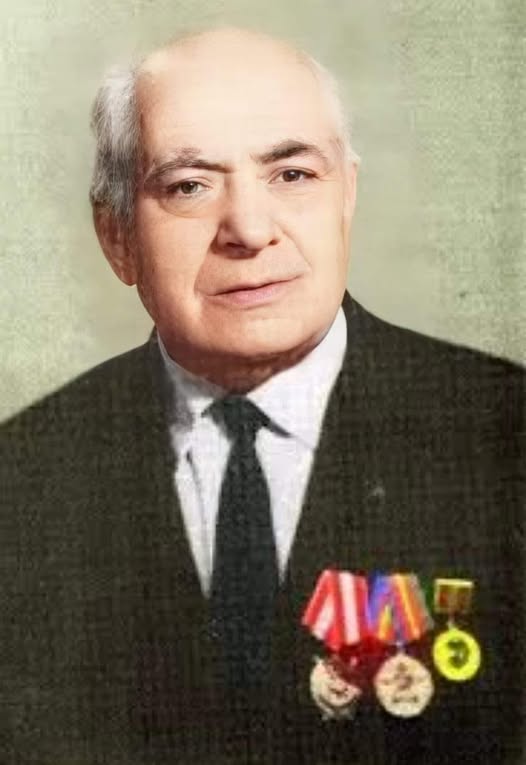
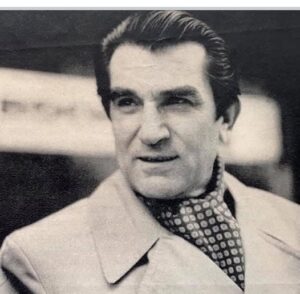
The name of the Kurdish writer Arab Shamo has shone brightly in the field of the modern Kurdish novel. Moving from political and intellectual struggle to cognitive and cultural pursuits, he left behind a vast legacy in the realms of literature and fiction.
The Kurdish people are among the oldest peoples of the Middle East, having contributed over long centuries to the building of human civilization in the fields of thought, politics, literature, science, and philosophy. Kurds have lived across a vast geography historically known as Kurdistan, forming a civilizational bridge between Mesopotamia, Anatolia, Iran, and the Levant. Despite the political divisions and attempts to erase their identity and language, they preserved a rich cultural heritage and produced prominent figures who left a deep impact on human history. Among the great leaders, the name of Saladin Al-Ayyubi stands out, associated with the liberation of Jerusalem and the spirit of tolerance and chivalry. Likewise, great scholars, writers, and thinkers emerged who contributed to enriching Islamic and human culture, such as the scientist Abu Hanifa Dinawari, Ibn Khallikan, Ibn al-Athir, Ahmedi Khani, Melayê Cizîrî, Abu al-Fida al-Hamawi, and others. In Kurdish literature specifically, poetry and folk literature served for centuries as the primary vessel for Kurdish identity, until the modern Kurdish novel emerged in the twentieth century. Its most prominent pioneer was the great Kurdish writer Arab Shamo, whom many consider the spiritual father of the modern Kurdish novel.
Upbringing and Early Life
Arab Shamo (Arab Shamilov) was born in 1897 in the village of Susuz in the Kars region of Bakur (Northern) Kurdistan, into a conservative Kurdish Yazidi family. He lived a harsh childhood characterized by poverty and suffering, forced from his early years to work as a shepherd—an experience that left a profound mark on his literary soul and later appeared in his most famous novel, The Kurdish Shepherd. Despite the difficult circumstances, he showed a great passion for learning and languages, mastering Russian, Turkish, Armenian, Georgian, and several other languages alongside his native Kurdish. This later helped him engage with modern intellectual and literary trends. Due to the oppressive practices of the Ottoman authorities, he was forced to migrate to Armenia. There, he met Isahak Marogulov, and they worked on preparing a Kurdish alphabet. In 1928, they completed the preparation of Latin characters and authored the first book for learning the Kurdish language, titled Learn the Kurdish Language Yourself.
Political and Intellectual Struggle
Arab Shamo’s life coincided with a period full of major political transformations, including World War I (1914–1918), the Bolshevik Revolution of 1917, and the fall of the Ottoman Empire in 1923. During that period, he became involved in political activity, joining the Bolshevik Party in 1918. He attended the Lazarev Institute of Oriental Languages in Moscow, graduating with honors in 1924. He returned to Armenia to become a driver of multi-faceted activity among the Kurds and was entrusted with the responsibility of following Kurdish affairs within the Central Committee of the Armenian Bolshevik Party. He contributed to the establishment of Kurdish schools and was chosen as the first editor-in-chief of the newspaper Riya Taza (The New Path), which began publication in Yerevan in 1930; he remained its head until 1937. Shortly thereafter, the first Kurdish teacher-training institute was established in Armenia, and he was chosen as its first dean, where hundreds of Kurdish teachers from the Transcaucasian Kurdish regions graduated. During 1933, Arab Shamo joined the Institute of Oriental Studies in Leningrad (St. Petersburg) to obtain a doctorate in Kurdish grammar.
Arab Shamo and the Birth of the Kurdish Novel
Arab Shamo is the true founder of the modern Kurdish novel, having written his famous novel Şivanê Kurd (The Kurdish Shepherd), which was printed in 1930 in Yerevan by Isahak Marogulov. It is considered the first novel written in the modern Kurdish language. The novel tells the story of the lives of the poor and shepherds and the suffering of Kurdish society under oppression and deprivation. It utilized a simple language close to the people, making it a significant literary event in the history of Kurdish literature. His works were characterized by social realism, as he drew much inspiration from the details of his personal life and the daily experiences of the Kurdish people; thus, his novels carried the concerns, hopes, and pains of the common Kurdish person. It is worth noting that The Kurdish Shepherd was reprinted in 1931 translated into Russian in Moscow, then printed a third time in Kurdish in Georgia in 1935, and was later translated into French by Basile Nikitine.
Literary Works
In addition to his famous novel The Kurdish Shepherd (Şivanê Kurd), Arab Shamo left a number of novels, stories, and writings that formed the cornerstone of modern Kurdish literature. He also published the play The False Monk, which was the first play in the history of Kurdish literature. In 1936, he published his second novel, The Kurds of Alagoz (Kurdên Elegez), in which we find intellectual maturity and high-level artistic development, as his expressive tools became complete, reaching the artistic and aesthetic level of the best Russian novelists. His third novel, The Dawn (Berbang), was published after his return from exile; it appears he wrote it during his years of exile and imprisonment in Siberia. His fictional works continued with the novel The Happy Life (Jiyana Bextewar), published in 1959, followed by The Castle of Dimdim, inspired by the famous Kurdish epic and its hero, the Kurdish Khan with the Golden Hand (Xanê Lep Zêrîn), in 1965, in addition to collections of tales and Kurdish folk folklore. Some of his works were translated into several languages, and his influence reached beyond Kurdish circles, to the extent that some of his novels were turned into operatic works in Europe.
Years of Exile and Suffering
In 1937, Shamo was at the height of his scientific and cultural activity and was preparing to defend his doctoral thesis on the Kurdish language when he was arrested and exiled to Siberia. He spent the years of exile in the desolate and harsh reaches of Siberia, suffering injustice and persecution under the despotic rule of Joseph Stalin, who carried out the forced displacement of tens of thousands of Kurds from their original areas to Central Asian regions (Kazakhstan, Kyrgyzstan, Uzbekistan, etc.). This was in addition to the state of political exclusion and cultural marginalization that Shamo faced along with many Kurdish writers and intellectuals of the Stalinist era, such as Hajie Jindi, Qanate Kurdo, and others. Despite the exile and suffering, Arab Shamo did not cease his cultural activity, continuing to write and publish in Kurdish. After Stalin’s death in 1953, Arab Shamo was allowed to return to his home, where he continued his activities and writings in defense of his mother tongue until the final years of his life.
Death and Cultural Legacy
On May 21, 1978, Arab Shamo passed away in the Armenian capital, Yerevan, at the age of 81. He spent most of those years in the service of Kurdish language and literature, leaving behind a vast literary and cultural legacy for subsequent Kurdish generations. Today, he is considered one of the most important pillars of modern Kurdish literature and a symbol of cultural and linguistic struggle. He opened the door for the development of the Kurdish novel and proved that the Kurdish language is capable of producing modern fictional literature that carries human issues and expresses the identity of an entire people. Arab Shamo was more than just a novelist; he was a comprehensive cultural enlightenment project who dedicated his life to defending the Kurdish language and preserving Kurdish collective memory. Therefore, his name remains present in the conscience of the Kurdish people in general, and Kurdish intellectuals in particular, as the spiritual father of the modern Kurdish novel.
Ronahi Newspaper
Note: This text is translated from the original Arabic version… Read the Arabic version:Click here