Kurdish carpets have never been just ordinary pieces furniture laid out in homes; rather, across long centuries, they have formed a living record of Kurdistan’s memory and cultural heritage. Between the wool threads and natural dyes, Kurdish women have woven stories of life, nature, customs, and traditions, transforming each carpet into an artistic canvas that narrates the history of a people who preserved their identity and legacy despite transformations and challenges.
Kurdish carpets in various regions of Kurdistan have been distinguished by the diversity of their patterns and styles, influenced by the geographical environment and local lifestyle, thus becoming more than just a handicraft—they serve as a living map reflecting the details of Kurdish life in all its dimensions.
Under the Fingertips of Kurdish Women… A Carpet Colored by History
In Kurdish mountain homes over thousands of years, carpet weaving has transformed into an authentic part of Kurdistan’s cultural identity. Carpets were not used solely to furnish homes; rather, they carried within their details stories of life, nature, customs, and traditions that shaped the features of Kurdish society.
Historians believe that the roots of the carpet industry trace back to the regions of Kurdistan, where the nature of mountainous life dictated the need for durable and warm rugs. This prompted Kurdish women to develop this craft and transform it into an artistic and cultural legacy that became part of the Kurdish people’s history.
The regions of Sanandaj (Sena), Kermanshah, Mukriyan, Hakkari, Sulaymaniyah, Erbil (Hewler), and Mahabad are among the most prominent centers of Kurdish carpet manufacturing. Meanwhile, Sanandaj carpets gained international fame thanks to the precision of their patterns, their softness, and the beauty of their designs, with clear variations from one region to another depending on geographical and cultural specificities.
During the Middle Ages, Kurdish carpets enjoyed a prominent status in Middle Eastern markets and reached Iran, the Levant, Turkey, and even Europe via trade routes. Despite changing lifestyles and the spread of industrial products, Kurdish carpets still maintain their status as a cultural and artistic symbol that narrates the history of Kurdistan through its colors and patterns.
Kurdish Carpets… A History of Knots and Ornaments
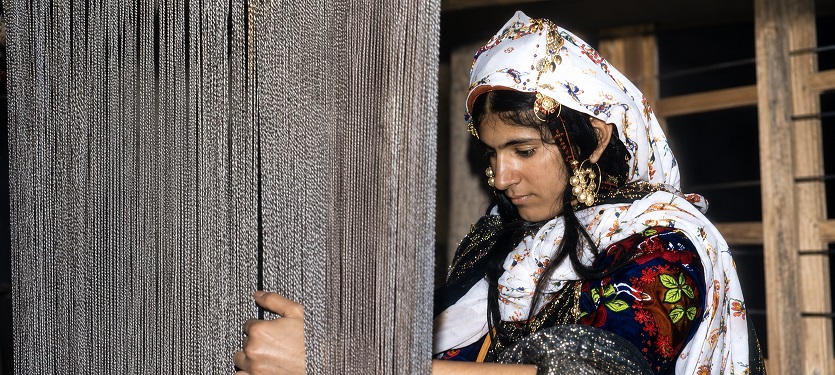
In the mountainous regions of Kurdistan, and with the widespread practice of sheep herding and the abundance of pastures, the earliest forms of spinning and weaving emerged, forming the foundation of the Kurdish carpet industry. Throughout this process, women played the most vital role, starting from cleaning the sheep’s wool and spinning the threads, all the way to preparing natural dyes extracted from mountain plants and weaving the carpets on traditional looms.
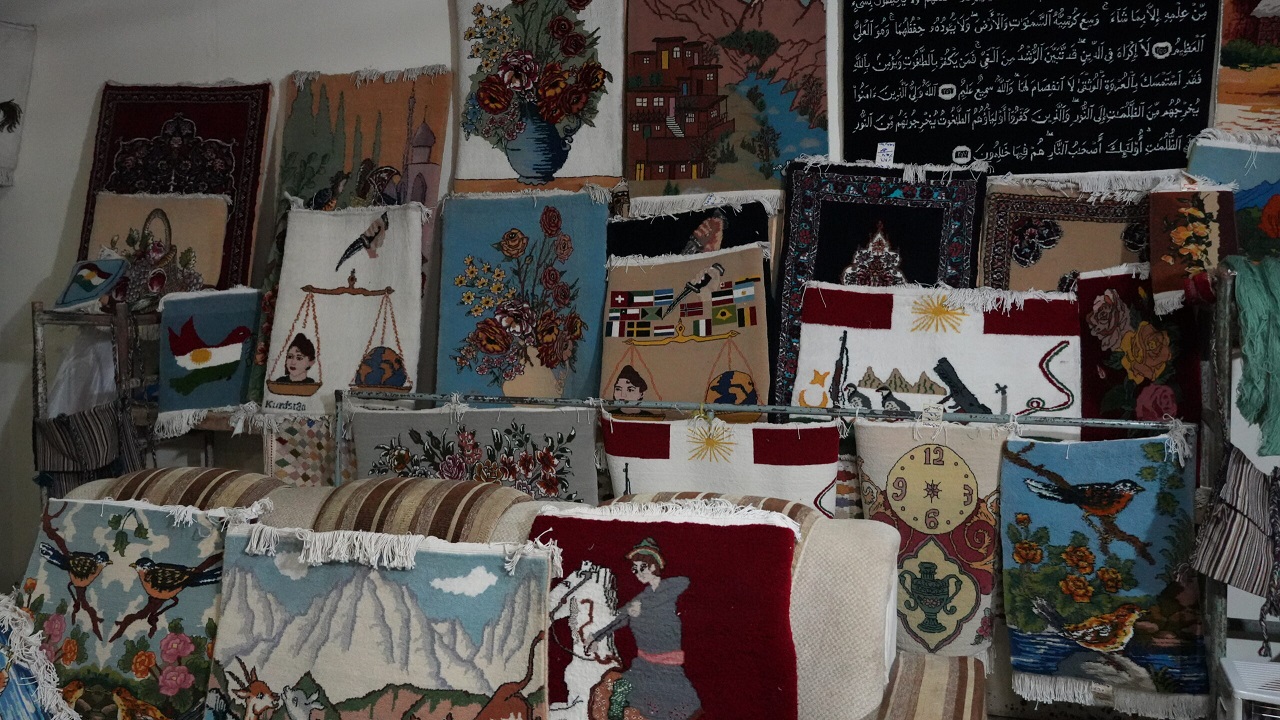
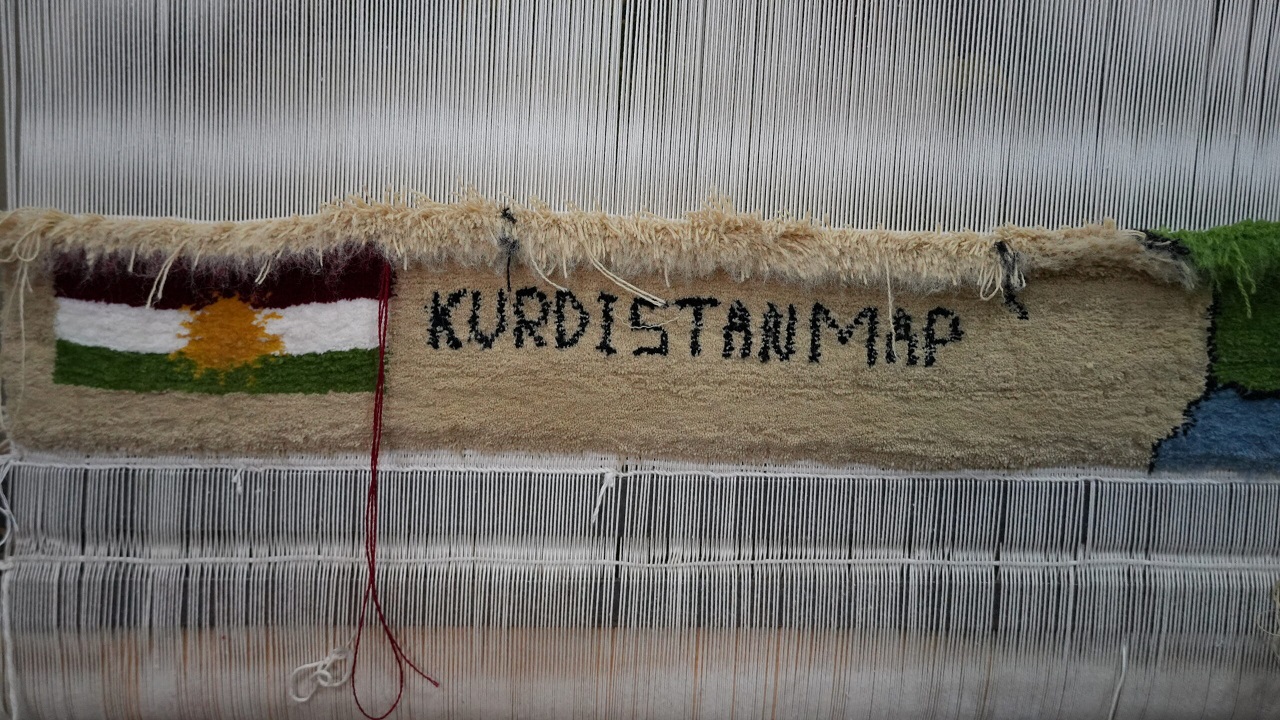
Kurdish carpets are known for using the symmetrical (double) knot, which grants them durability and longevity, while their motifs reflect Kurdish nature and life, featuring flowers, fish, birds, and the Zagros Mountains in diverse colors and patterns.
Qadriyah Muhammad, who has been working for 29 years in the field of carpet weaving inside a cultural center in Sulaymaniyah, says: “Almost all elements of nature have been present in the patterns of Kurdish carpets, from flowers to horses.”
Women… The Hidden Hand in the History of Kurdish Carpets
In old Kurdish homes, women were the backbone of the carpet industry. Through their knowledge of mountain plants and herbs, they were able to produce stable, natural colors in a process that combined art, creativity, and traditional knowledge.
Each pattern had a meaning and a symbol linked to life and nature, while the colors conveyed the tales of Kurdish society and the details of its daily life.
Around the carpet looms, women would gather to work, converse, share folk songs, and strengthen social bonds. This contributed to preserving the cultural heritage and passing this craft from one generation to another, as a carpet was frequently passed down from a mother to her daughter as a family heirloom.
Qadriyah Muhammad notes that women in Sulaymaniyah were the most frequent practitioners of this craft due to its association with precision and creativity in drawing patterns and motifs, pointing out that a number of European travelers who visited Kurdistan during the eighteenth and nineteenth centuries documented the skill of Kurdish women in this field.
Kurdish Carpets… A Source of Income and an Artistic Legacy
Throughout the history of Kurdistan, carpet weaving formed an important source of income for many families, especially during periods when job opportunities were limited. In Kurdish cities and villages, carpets were produced to meet household needs, and they were also marketed and sold in local bazaars, providing a vital economic resource for households.
Kurdish carpets also caught the attention of Western merchants, who admired their authenticity, the quality of their colors, and the durability of their craftsmanship, viewing them as distinctive artistic masterpieces. This recognition contributed to their global spread and introduced the world to Kurdish artistic heritage.
The Carpet Industry Between Highlighting Heritage and Market Constraints
At present, this craft faces increasing challenges as a result of the spread of industrial products and changing lifestyles, which has led to a decline in demand compared to the past.
Qadriyah Muhammad asserts that if greater forms of support, specialized centers, and markets for displaying carpet products were available in the Kurdistan Region, marketing these products and raising awareness about them would be much easier. However, she explains that the absence of specialized shops and organized sales outlets causes many products to remain within local markets without reaching foreign markets, which poses an obstacle to the development of this sector.
She adds that many private carpet exhibitions have been held over the past years, yet this craft still requires more support, organization, and promotion to preserve it and expand its presence both inside and outside Iraq.
In the end, each Kurdish carpet remains akin to an open book carrying between its threads the unwritten stories of the woman who wove it, turning into a mirror that reflects the thoughts and memory of Kurdish society, and a living record documenting an important aspect of Kurdistan’s history and cultural heritage.
Source: Rojnews
Note: This text is translated from the original Arabic version… Read the Arabic version:Click here