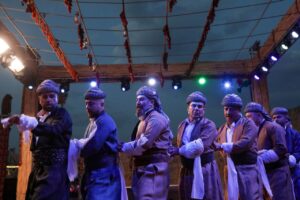
The Kurds are a people with an insatiable thirst for music and singing, a trait shaped by the mountainous nature of their homeland. Music has long resonated throughout all corners of Kurdistan, echoing in its deep valleys and towering mountains to carry sighs, pains, and hopes across successive generations. This musical heritage reflects their enduring struggle to attain freedom and live with dignity upon the soil of this sacred homeland, which has been watered by the blood of hundreds of thousands of martyrs from ancient times until the present day.
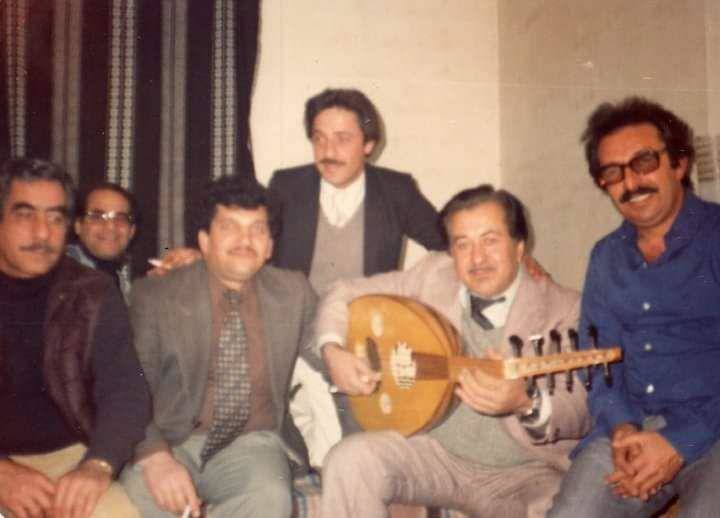
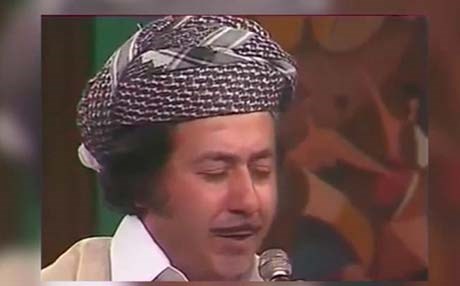
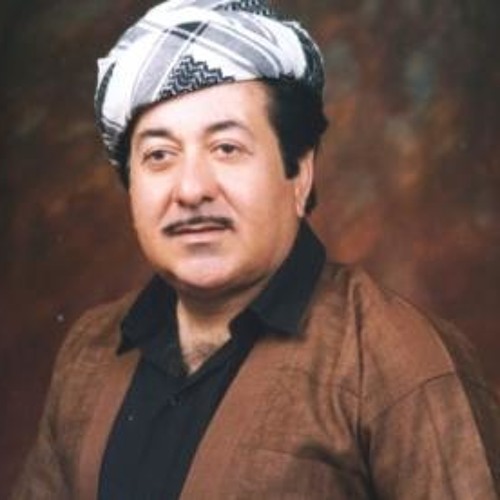
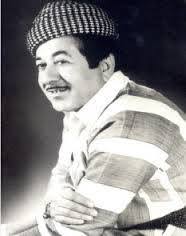
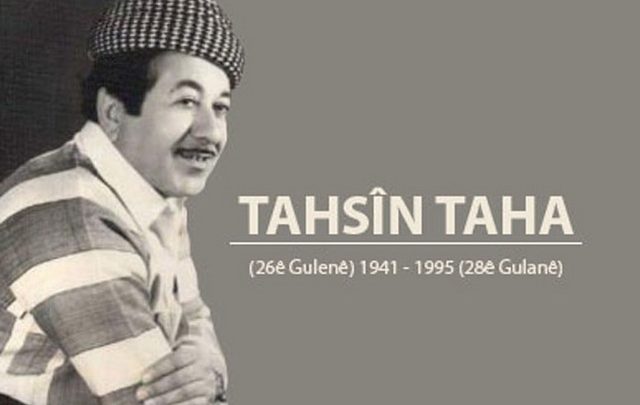
From the womb of this nation emerged numerous writers, scholars, leaders, thinkers, and politicians, as well as artists spanning various creative fields—from fine arts, painting, theater, and cinema, to traditional folk dances, authentic musical heritage, and deeply moving songs of both sorrow and joy. Consequently, many immortal voices have emerged, remaining timeless long after their owners passed away. Among these voices, we recall today an artist on the 31st anniversary of his passing: the highly capable and esteemed artist “Tahsin Taha.” Let us discover him and his journey.
Who is Tahsin Taha?
Amidst the mountains of Amadiya and the beauty of its citadel, the distinguished artist “Tahsin Muhammad Salim” was born on the twenty-fifth of May (the spring month) in 1941, in the town of Amadiya, located in the Duhok Governorate of the Kurdistan Region. He grew up in the care of a patriotic family consisting of his father, Taha Muhammad Salim, and his mother, Ghurbat Salim Khan. Due to his father’s employment as a government official, the child moved with his family to several Kurdish regions, including “Zakho, Mangesh,” and others. This mobility later helped shape his pristine aesthetic memory and infused his youthful soul with the melodies of nature and the authentic folklore songs of Kurdistan’s enchanting environment.
A Committed National Consciousness
Tahsin Taha was distinguished by a sincere national consciousness and a deep commitment to the causes of his homeland and people. In 1958, he was expelled from his studies in the city of Mosul for participating in the protests of 1956–1957. He subsequently returned to Amadiya and completed his intermediate education there. In 1960, he joined the Institute of Fine Arts (Theater Department) in Baghdad, but he could not complete his studies due to his arrest and subsequent expulsion from the institute for his involvement in political activities. Later, he joined the ranks of the Peshmerga forces at that time. Tahsin Taha was not merely a singer with a beautiful voice; rather, he was an artist firmly committed to the causes of his people and homeland.
The Transition to Singing
The late artist Tahsin Taha recognized his passion for singing and his inclination toward art at an early age. Since he possessed a unique and exceptional vocal quality that is rarely replicated, composers and poets dedicated themselves to writing and composing his finest and most beautiful songs. The first to discover his vocal capabilities was his father, and his earliest songs were written by his father (such as Rabe Jotyari, Behdinan, and Chume Zakhoki). He also sang for prominent Kurdish poets, such as Dr. Badarkhan Al-Sindi and Rekish Amadiya. In 1970, he went to Baghdad and sang on Baghdad Radio and Television, recording numerous songs in the Kurdish section of Baghdad Radio in collaboration with the artists Aziz Mulla and Fadhil Akreyi. Furthermore, in 1987, he recorded a number of songs with the Duhok Art Group, led by the musician Dilshad Muhammad Said.
A Voice Carrying the Soul of Kurdistan
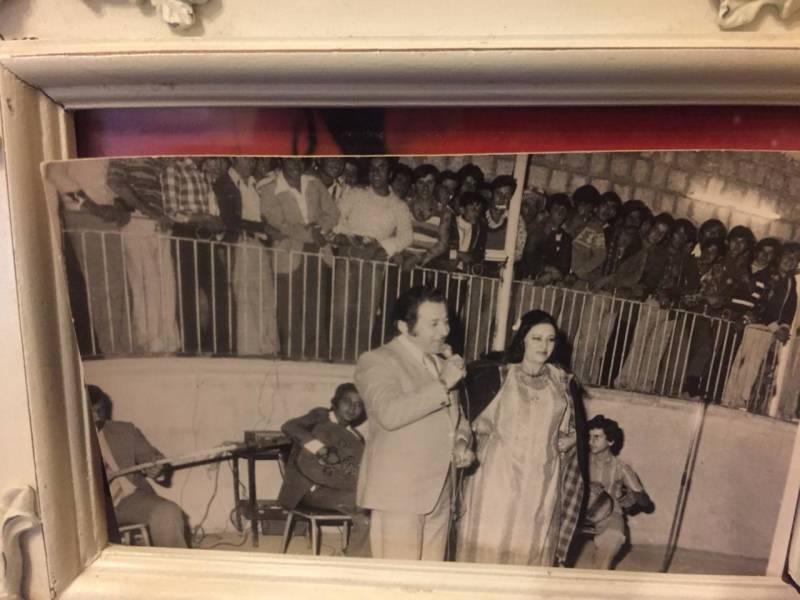
Tahsin Taha was characterized by a unique vocal tone that combined warmth and power, and he was renowned for his exceptional ability to perform romantic and love songs blended with nostalgia and yearning. His artistry was not limited to solo performances; rather, he is considered one of the most prominent pioneers of dialogue songs and duets in the history of Kurdish music. He shared his voice with giants of Kurdish art, such as the female artists Gulbahar and Ayşe Şan, alongside his distinguished collaborations with the artists Shamal Saib and Fuad Ahmad.
The themes of his songs shifted with astonishing fluidity between love for a beloved and love for the homeland; he saw in the eyes of the woman he sang to a reflection of the beauty and freedom of Kurdistan. His songs were characterized by sweet melodies and a simplicity that resonated deeply with the public. He relied heavily on Kurdish folklore, reintroducing it with a modern spirit, which made him a bridge between heritage and contemporary song. Among his most prominent immortal songs are: Berivan, Aso, Mela Teymi, Ey Felek, Kheji, Lore, and many others.
Departure and Musical Legacy
As is the case with all dictatorial, authoritarian regimes when they detect the scent of patriotism or the spreading of a spirit of love and peace, they tighten the noose around artists through various means, extending to arrest. As a result of continuous persecution and systematic pressure, he was forced in 1994 to leave the beloved land of Kurdistan (which he had so often sung of) and head to Europe, settling in the Kingdom of the Netherlands. However, his heart remained attached to his birthplace, Amadiya.
His stay in the Old Continent did not last long; after performing several concerts for Kurdish diaspora communities in numerous European countries, and upon his return to the Netherlands to settle down, he passed away from an acute heart attack on May 28, 1995. He returned to his homeland and birthplace carried on shoulders in a wooden coffin, where he was buried in his city of Amadiya, in accordance with his last will.
In conclusion, we can say that despite the passage of more than three decades since his departure, Tahsin Taha remains present as one of the giants of authentic Kurdish music alongside Mihemed Arif Cizrawî, Karapetê Xaçô, Isa Berwari, Mihemmed Şêxo, Aram Tigran, and many others. This is in addition to him being the founder of a distinct artistic school that combined musical beauty, human sincerity, and national belonging. He was more than just a singer; he was a voice that resembled Kurdistan itself—with its sorrow, its joy, its dignity, and its eternal longing for freedom.
On the anniversary of his passing, his voice returns once again to confirm that a true artist does not die, but rather remains alive in the conscience of his people. Tahsin Taha was not merely a singer who delighted ears; he was a true ambassador for the Kurdish identity, managing through his melancholic and moving tone to carry Kurdish art to wider horizons. His songs and melodies remain engraved in the conscience of successive generations, broadcast on national and patriotic occasions as an enduring symbol of authenticity, sacrifice, and an eternal beauty that absence cannot erase.
Ronahi Newspaper
Note: This text is translated from the original Arabic version… Read the Arabic version:Click here