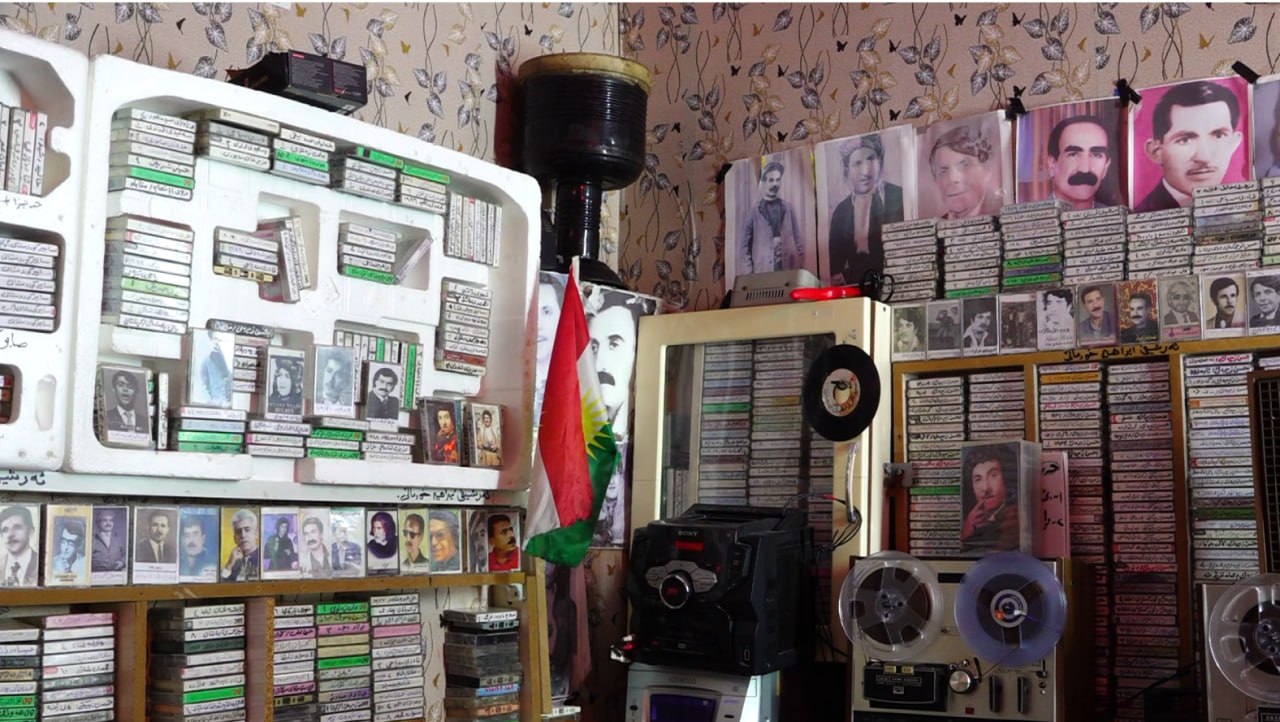
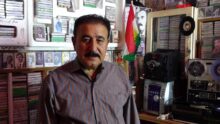
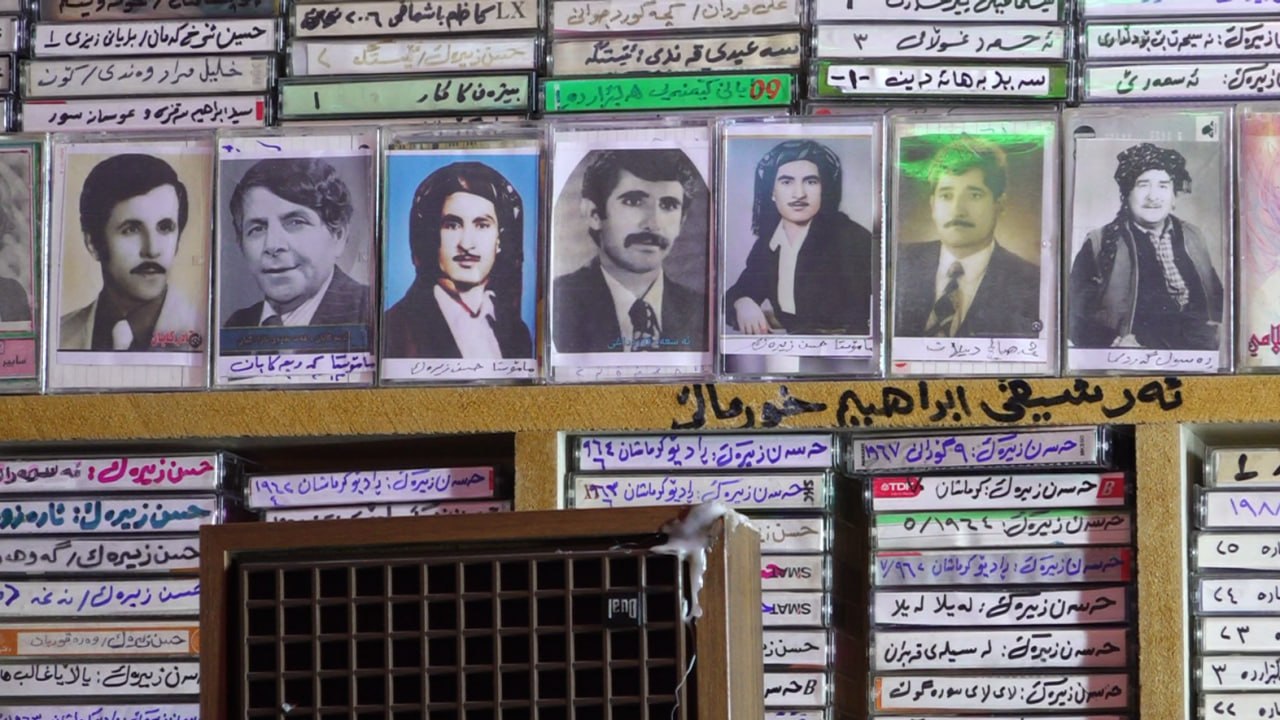
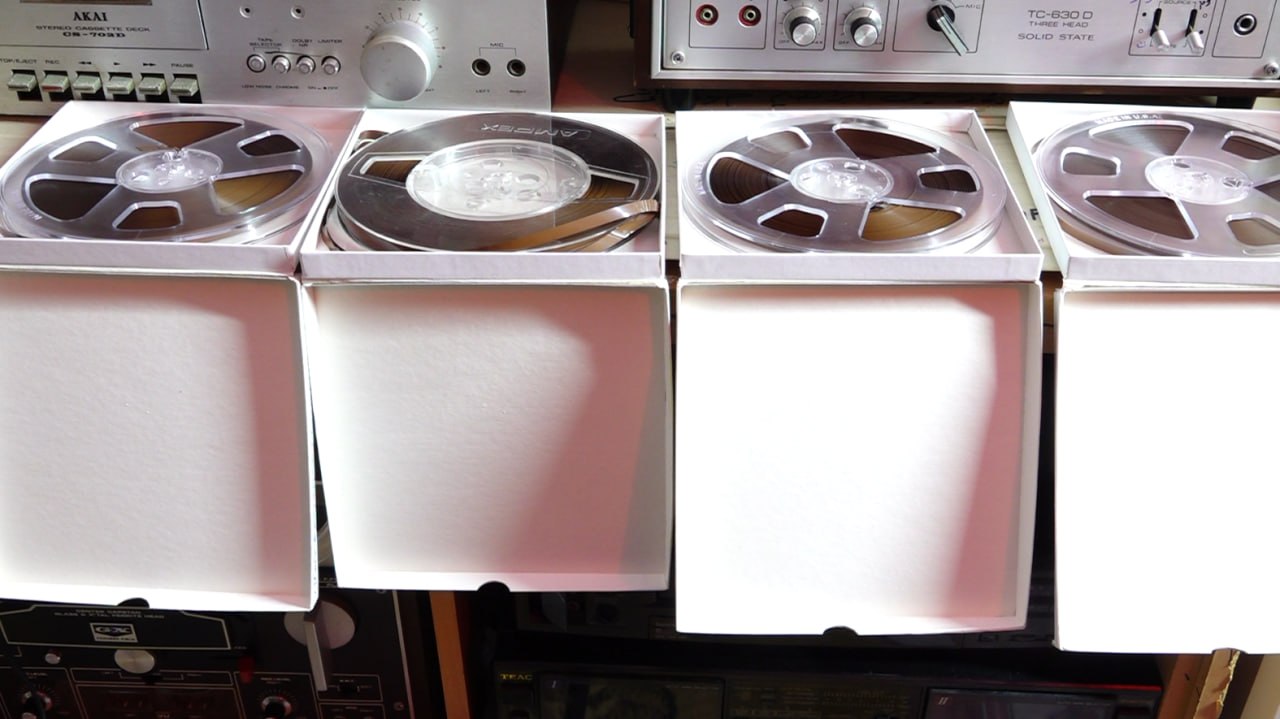
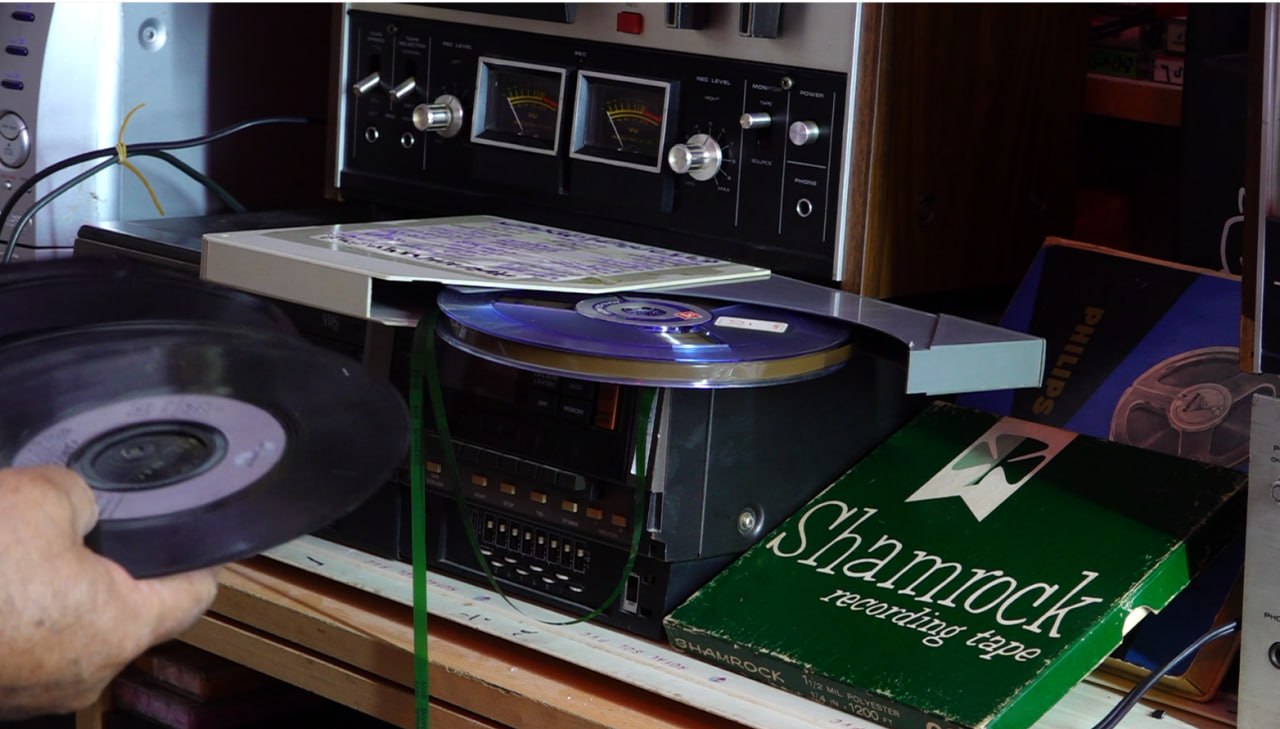
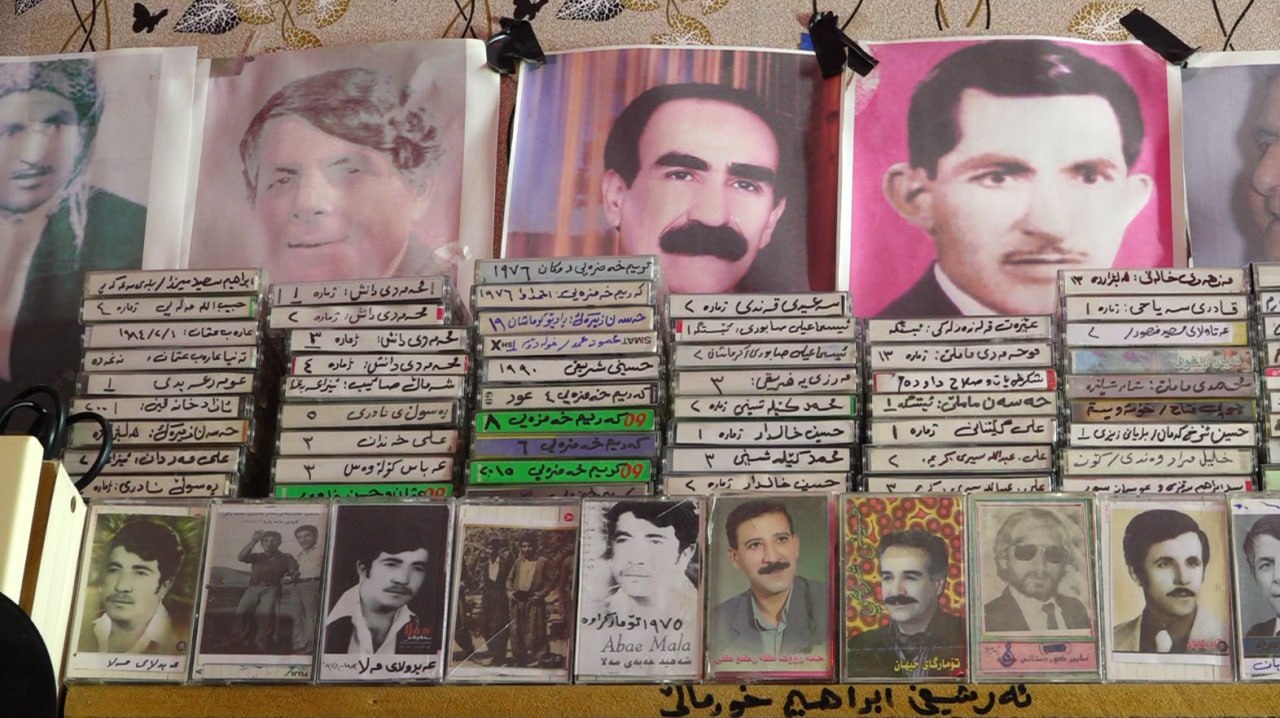
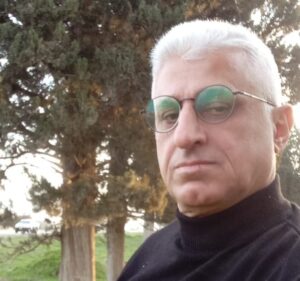
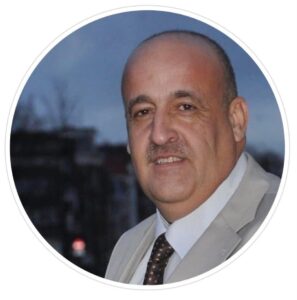
Ibrahim Ali, an artist and researcher in Kurdish musical heritage known as “Ibrahim Khormali,” has transformed one of the rooms in his home in the town of Khormal, located in the Halabja governorate, into a comprehensive artistic archive. This archive contains hundreds of rare musical works by prominent Kurdish artists, representing an individual effort to preserve an important part of Kurdish artistic and cultural memory.
Art is considered one of the fundamental pillars that express the identity of peoples and nations; through it, nations present themselves to the world and preserve their language, culture, and heritage. However, the decline in official interest in art and cultural heritage has prompted many enthusiasts to assume the responsibility of preserving this legacy. Among them is Ibrahim Khormali, who has dedicated a large part of his life to collecting and archiving authentic Kurdish artistic works.
Ibrahim Khormali told “Roj News,” “Since my childhood, I have had a great desire to collect and archive the national songs and artistic works of our people. When I was twelve years old, in 1977, my father bought me my first recorder, and he also used to buy me cassette tapes. Since then, my real relationship with Kurdish art began, and the idea of preserving this heritage was born.”
He added that his father used to give him a daily allowance, which he saved to buy song tapes weekly. He explained that he started by collecting only ten tapes, but his collection expanded year after year until one of the rooms in his house was completely transformed into an artistic archive containing the works of a large number of Kurdish artists.
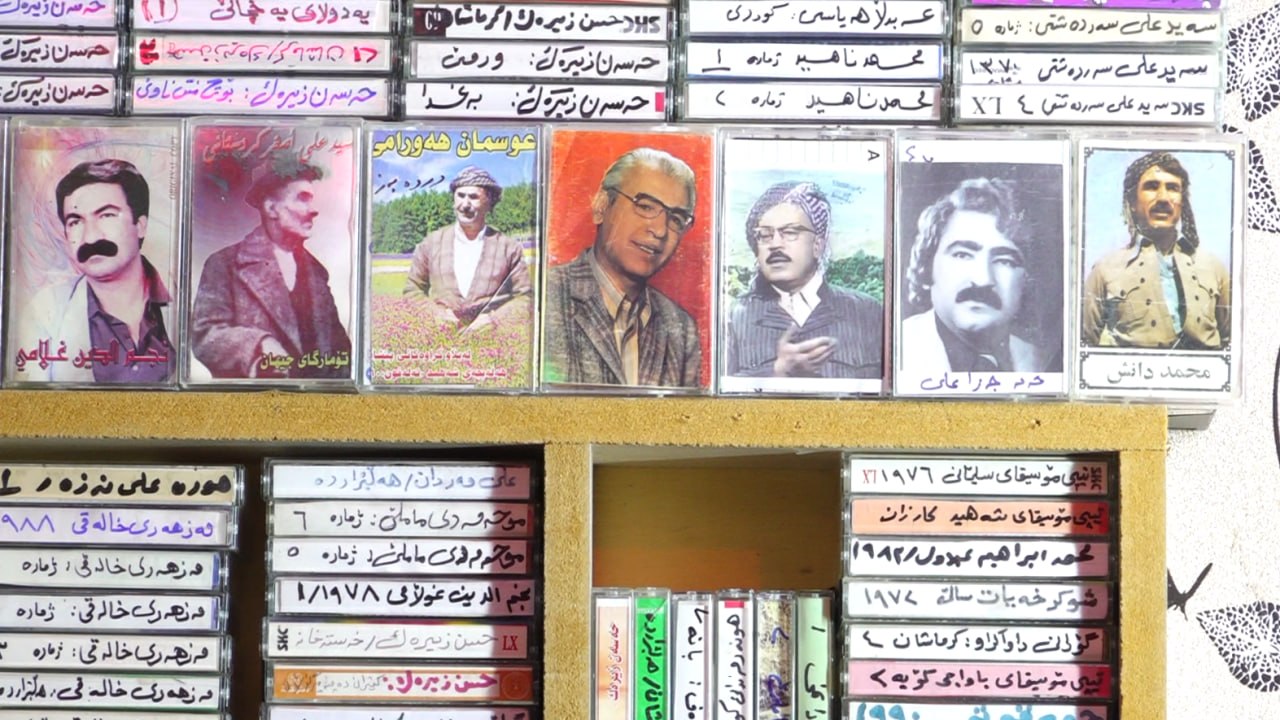
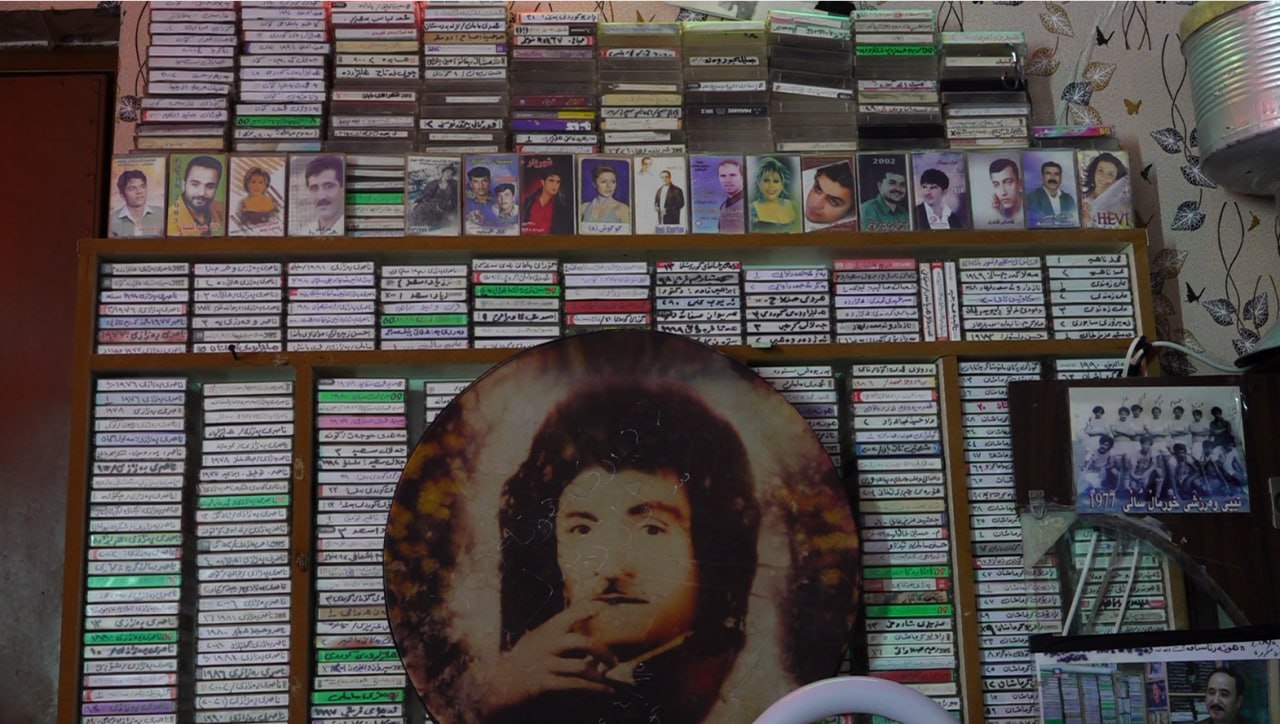
Over decades, Khormali has managed to collect nearly a thousand cassette tapes. He purchased a large portion of them himself, while obtaining another portion from art lovers and those interested in Kurdish musical heritage.
The archive includes works by an elite group of classical Kurdish artists, especially those who shaped the features of Kurdish song between the 1940s and the end of the 1990s—a phase considered one of the most important periods in the history of modern Kurdish art.
Among the most prominent names in his archive are Dayki Jamal, Sayed Ali Asghar Kurdistani, Sewa, Nazar and Asmar Farhad, Mullah Karim, Hasan Zirak, Muhammadi Mamle, Nasser Razazi, and Hama Zan, alongside a large number of artists who left a clear mark on the journey of Kurdish song.
Khormali ensures these recordings are preserved inside special cases to protect them from damage, emphasizing that many of them represent rare copies that are difficult to find today.
He stressed that art represents the identity and living memory of peoples, saying, “Art is the identity of the nation, and any people who do not possess true art lose a large part of their identity. Were it not for these great artists, our Kurdish language would not have remained this strong and vibrant; they played a fundamental role in protecting, developing, and passing the Kurdish language across generations.”
He added that Kurdish artists contributed significantly to enriching the Kurdish language with authentic vocabulary and expressions, which helped maintain its presence and continuity despite the challenges it faced over the decades.
He noted that approximately 90 percent of authentic classical Kurdish songs are contained within his private archive, emphasizing his commitment to retaining works that carry artistic and national value and reflect the cultural identity of the Kurdish people.
He said, “For me, this place is not just a room inside a house, but rather like a small national institute that preserves the memory of an entire people. These are precious Kurdish artistic treasures, and through them, the world learns about our culture, art, and history.”
Despite the immense efforts he has made over decades to collect and preserve this artistic heritage, Khormali points out that he has not yet received any official support or attention from the relevant authorities, whether to document this archive or to provide a more suitable location for its preservation and maintenance.
He believes that this archive is not his personal property, but rather a part of the cultural and artistic memory of the Kurdish people, which calls for the attention of cultural and government institutions to ensure its continuity and protection for future generations.
Source: Roj News
Note: This text is translated from the original Arabic version… Read the Arabic version:Click here