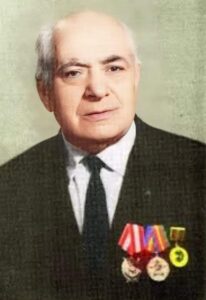
Sayed Mahmoud | Managing Editor of Al-Ahram Newspaper and Egyptian Film Critic
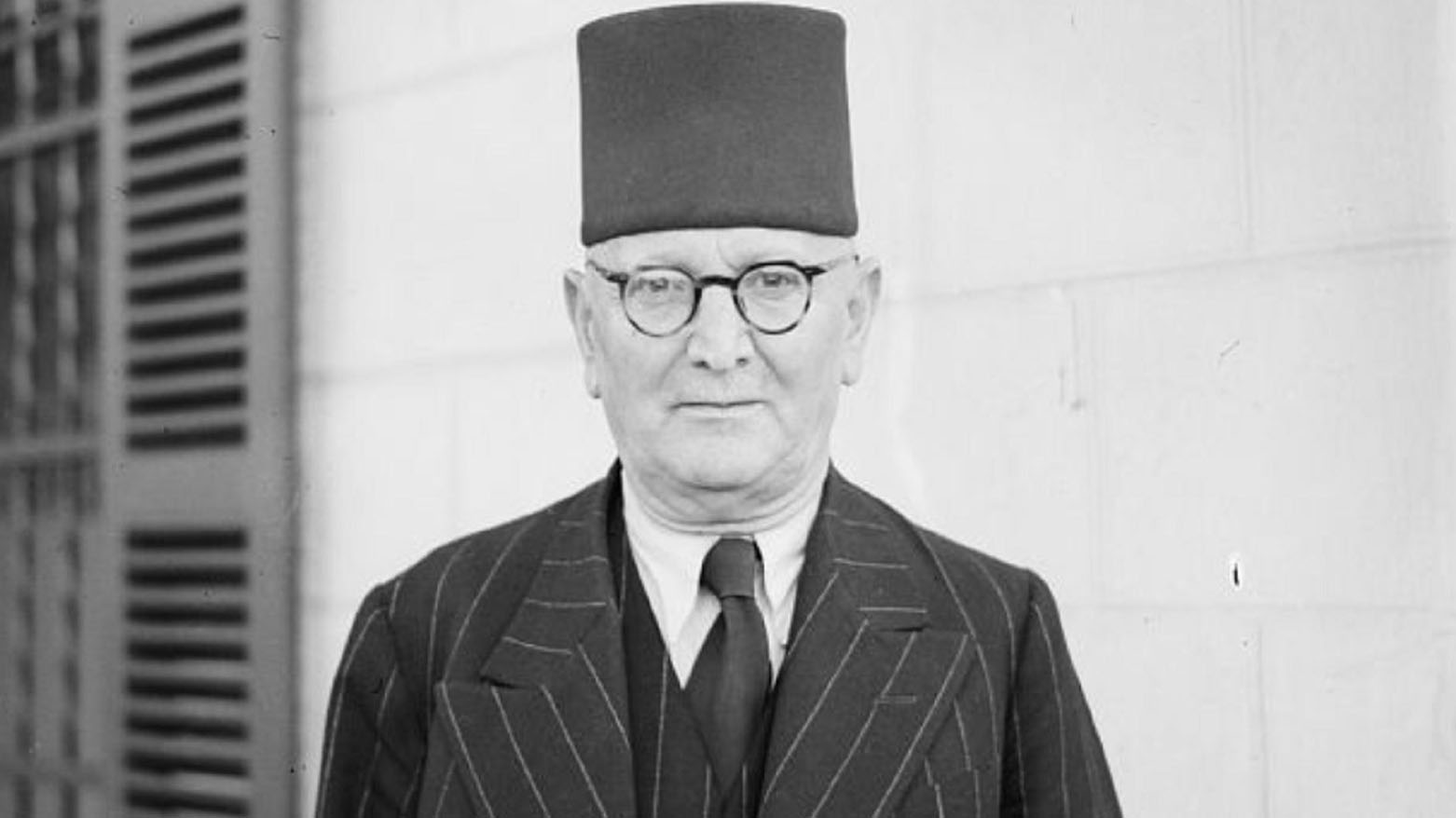
If history records in its pages that the first to establish newspapers in Egypt was Muhammad Ali Pasha, who issued the newspaper “Al-Waqai’a al-Misriyya” (The Egyptian Chronicles) in 1828 to be the first official newspaper in Egypt and the Arab region, and that the first to establish independent and private newspapers were the Lebanese brothers Salim and Bishara Takla, who founded “Al-Ahram” newspaper in 1875; then in the archives of the media and the academies of the Arabic language, one of the most important Kurdish personalities is remembered, with a sense of pride, as the one credited with consolidating the renaissance of Arab journalism between Egypt and the Levant: Muhammad Kurd Ali.
One hundred and fifty years after the birth of the founder of the media renaissance in Egypt and the Levant, the name of Muhammad Kurd Ali is recalled. Born in Damascus in 1876, he completed his media career in Egypt to establish one of the most important Arabic documentary magazines, “Al-Muqtabas”, which remains preserved in libraries and Arabic language academies as an important historical document. Under his tutelage, dozens of writers and journalists studied, who later became leading figures of Arab thought and culture.
Knight of the Arabic Language
It is impossible to speak about modern Arab journalism without pausing at Muhammad Kurd Ali (1876–1953), the man who dedicated his life to defending the Arabic language and serving Arab culture. He moved between Damascus and Cairo, edited a number of major newspapers, founded “Al-Muqtabas” magazine, and left behind a massive intellectual legacy of books and studies. He also contributed to establishing the first Arabic scientific academy in Damascus.
Muhammad Kurd Ali is considered one of the most prominent pioneers of the Arab intellectual and journalistic renaissance at the beginning of the twentieth century. He was not merely a journalist or a historian, but an integrated school of thought that graduated generations of writers and thinkers in the Levant and Egypt. “Al-Muqtabas” magazine turned into a platform for enlightenment, literature, politics, and science, becoming a model for modern Arab journalism based on rigorous language, enlightened thought, and the defense of cultural identity.
Intellectual Impact
A large number of writers and thinkers were influenced by Muhammad Kurd Ali, most notably Khalil Mardam Bey, Muhammad Bahjat al-Bitar, Munir al-Ajlani, Ali al-Tantawi, Najib al-Rayyes, and Shakib Arslan, in addition to a number of Egyptian journalists who benefited from his editorial experience and his vision for developing Arab journalism.
He was able to establish a journalistic and intellectual school that transcended the borders of Damascus and Cairo, contributing to the shaping of modern Arab cultural awareness. Consequently, his influence has remained present in successive generations of journalists and writers who carried his message of defending the Arabic language and the values of renaissance and enlightenment.
Journalism of the Renaissance
The late nineteenth and early twentieth centuries witnessed the birth of modern Arab journalism as an intellectual and cultural project that went beyond reporting news to manufacturing awareness and reshaping society. At the heart of this renaissance emerged the name of Muhammad Kurd Ali, who transformed journalism into an integrated school of knowledge and made the word an instrument for reform and enlightenment.
While the newspaper “Kurdistan”, published by Prince Mikdad Midhat Bedirkhan in Cairo in 1898, inaugurated modern Kurdish journalistic awareness, “Al-Muqtabas” magazine embodied the pinnacle of intellectual maturity for modern Arab journalism. Thus, the two projects appeared as if they were two wings of a single cultural renaissance that took off from the Arab East toward broader horizons.
A Cultural Bridge
The Kurdish journalist was not isolated from his Arab surroundings; rather, he was part of the modernization and reform movement in the region. In this climate, Muhammad Kurd Ali grew up. Born to a Kurdish family in Damascus, he was deeply immersed in Arab culture until he became one of its most prominent defenders.
He combined the talent of a historian, the precision of a researcher, and the enthusiasm of a journalist, serving as a model for the encyclopedic intellectual who views journalism as a civilizational mission, not merely a profession.
Al-Muqtabas Magazine
Muhammad Kurd Ali founded “Al-Muqtabas” magazine in 1906, and it quickly became one of the most important intellectual and cultural magazines in the Arab world. It combined politics, literature, science, history, and translation, and it was concerned with simplifying modern sciences for the Arab reader, stemming from the belief that a renaissance is not built on politics alone, but on building a conscious and educated human being.
Its founder also paid special attention to the Arabic language; thus, the magazine was produced in a language that combined eloquence and clarity, becoming a journalistic school that influenced an entire generation of writers and journalists.
A Kurdish Role
The experiences of “Kurdistan” and “Al-Muqtabas” demonstrate the magnitude of the role played by Kurds in establishing modern journalism in the Middle East. They contributed to the establishment of Arabic, Kurdish, and Turkish newspapers and magazines, and participated in spreading the values of enlightenment, rationality, and cultural openness.
This is attributed to several factors, including multilingualism, cultural openness, and the interest of many Kurdish families in science and literature, which produced an elite group of journalists, translators, and thinkers who played a prominent role in the modern renaissance.
The school of Muhammad Kurd Ali was characterized by three fundamental principles: respect for reason and science, the defense of the Arabic language as the vessel of civilization, and openness to global cultures without losing Eastern identity.
He was also a staunch believer in the role of journalism in resisting tyranny. He faced persecution and censorship due to his bold writings, yet he continued his project with determination, believing that press freedom is an essential condition for any true renaissance.
Biography
He is Muhammad bin Abdul Razzaq bin Muhammad Kurd Ali, born in Damascus in 1876, descending from a Kurdish family whose roots trace back to Sulaymaniyah. He received his education in Damascus and, from an early age, demonstrated a passion for reading, writing, and collecting books.
In 1897, he was entrusted with editing the weekly government newspaper “Al-Sham”, and then began corresponding with the Egyptian magazine “Al-Muqtataf”, which extended his fame to Egypt. After moving to Cairo, he worked for several newspapers and became acquainted with an elite group of scholars and writers, which contributed to the broadening of his intellectual horizons.
He returned to Damascus and then emigrated again to Egypt in 1906, where he established “Al-Muqtabas” magazine and edited a number of newspapers. Following the declaration of the Ottoman Constitution in 1908, he returned to Damascus, published “Al-Muqtabas” magazine along with its daily newspaper, and established a dedicated printing press for it.
Despite the political harassment and persecution he faced, he continued his cultural and journalistic project with determination, moving between Damascus, Cairo, and some European capitals.
An Arab Academy
Following the establishment of the Arab government in Damascus in 1919, Muhammad Kurd Ali found the opportunity to realize his dream of creating an Arabic scientific academy dedicated to language, heritage, and science. Thus, the Arab Scientific Academy in Damascus was established, and he was appointed as its president, remaining in this position until his death.
He dedicated his life to serving the Academy until it became one of the most prominent cultural institutions in the Arab world, paving the way for the emergence of Arabic language academies in Egypt and other Arab countries.
Muhammad Kurd Ali combined journalism, authorship, academic work, and administration, and he served as the Minister of Education twice. His style was characterized by fluidity, clarity, and the avoidance of affectation, with a focus on meaning and the intellectual message.
He left behind more than twenty-two works in history, civilization, literature, and thought, the most famous of which are: “Islam and Arab Civilization”, “History of Civilization”, “Wonders of the West”, “Princes of Eloquence”, and “Memoirs”.
He passed away in Damascus on April 2, 1953, leaving an immortal mark on the history of Arab journalism and culture as one of the great early builders of modern Arab journalism, and a symbol of the intellectual who combined authenticity with openness, and cultural belonging with a humanitarian mission.
Source: Kurdistan 24
Note: This text is translated from the original Arabic version… Read the Arabic version:Click here