Kurdistan, as an internationally partitioned and occupied homeland in the Middle East, occupies a highly strategic position on the political map. Most of the region’s primary energy sources are located within the territory of Kurdistan. Oil, a major global energy source, is found in such abundance that it can be said the largest future oil reserves originate from Kurdistan. This is in addition to significant reserves of sulfur, phosphate, gold, uranium, iron, and other minerals. Furthermore, the region’s agricultural potential and vast water resources further highlight the immense wealth of the Kurdish land.
Beyond these resources, Kurdistan is a contiguous and interconnected land located at the heart of the Middle East, possessing multi-dimensional importance and wealth, particularly in the geopolitical field, making it one of the most vital geographic regions in the world.
Kurdistan possesses six gateways: the first opens toward Anatolia and Europe; the second toward the Caucasus and Russia; the third toward Central Asia; the fourth toward the Persian world; the fifth toward the Levant (Sham); and the sixth toward the Gulf states.
Consequently, Kurdistan has always been a focal point for powerful nations and a collision point for expansionist and monopolistic powers seeking to occupy its land and plunder its wealth. If we look back at ancient history, such as the Treaties of Chaldiran and Lausanne—both of which were monumental crimes against Kurdistan and the Kurdish nation—we see they became the primary cause for the partitioning and occupation of Kurdistan. However, the results of those crimes did not pass without a response. Throughout the history of partition and occupation, the Kurdish people have consistently engaged in revolutionary sacrifices against occupiers and oppressors to defend their existence, secure their survival, expel occupiers, and establish a national and patriotic entity.
Despite these immense sacrifices, international, regional, and local conditions often stood directly against the Kurdish liberation movement, or failed to grasp the weight and greatness of the cause. Yet, what Kurds can take pride in today is that, because of these heroic sacrifices and despite a multitude of fierce and barbaric enemies, they have managed to preserve their identity as a nation, defend their existence, and protect themselves from extinction and annihilation. This undoubtedly represents a brilliant point in Kurdish history and the greatest achievement of its sacrifices.
Regarding the political situation, the occupation of Kurdistan was unlike that of other nations. As a land, it passed through several stages of division among various powers. It was first divided after the Battle of Chaldiran in 1514 between the Safavid and Ottoman Empires, followed by the Sykes-Picot Agreement and then the Treaty of Lausanne, which partitioned it among four politically distinct states (Iraq, Turkey, Iran, and Syria). This division led to Kurdistan being governed by four different political systems. Socially, the Kurdish nation, as one of the major nations of the Middle East, was divided among three large nations: the Arabs, the Turks, and the Persians.
In the South (Iraqi Kurdistan) and among our brothers in the West (Syrian Kurdistan), there is a significant influence from Arabic thought, culture, customs, and traditions. This influence persists because the ruling nation always seeks to impose its heritage and social relations upon the oppressed nation. The regime is in a constant quest to erase the social traditions of the Kurdish nation and strip away its national character. Similarly, in Northern Kurdistan, Turkish national culture predominates, and in the East, Persian thought and culture prevail. Socially, this has created three different realities.
Therefore, the historical influences on our nation have made the conditions of Kurdistan’s occupation very different from other countries. For instance, Vietnam, Cuba, and Palestine dealt with a single occupier. The primary problem for the Kurdish nation is that it faces four occupiers politically. Socially, these influences have significantly hindered the struggle. Any progress in Southern Kurdistan at this stage has a direct impact on the other three parts, which drives regional states to constantly ensure that peace and stability do not prevail in Southern Kurdistan, fearing it will influence the Kurdish political movements elsewhere. Consequently, any external change or development regarding Kurdistan must often navigate the interests of regional states, which frequently means these external powers distance themselves from supporting our people.
Arabization and Al-Anfal
The crime of “Arabizing” Kurdistan is one of the greatest atrocities executed against the Kurdish people by occupying regimes. It is a fierce assault that threatens Kurdish national security now and in the future. Unfortunately, very little has been written on this subject, though it warrants extensive research and scrutiny.
Following World War I and the partitioning of Kurdistan among the four artificial states (Iraq, Syria, Iran, Turkey)—specifically the annexation of Southern Kurdistan to Arab Iraq and Western Kurdistan to Arab Syria—both states began implementing Arabization. They carried out organized campaigns in various forms characterized by brutality and a lack of human decency, involving genocide, looting, and the destruction of Kurdish cities, towns, and villages. They spared no means to harm the Kurdish people and land whenever possible, and these criminal policies continue to this day.
Alongside the Arabs, the Turkish regime practiced similar schemes to “Turkify” our people in Northern Kurdistan, as did the Iranian regime to “Persianize” our people in Eastern Kurdistan. Thus, the occupiers of all four parts of Kurdistan have always sought to melt and assimilate the Kurdish people, attempting to eliminate their existence by all possible means.
On July 31, 1983, the Iraqi regime launched the “Al-Anfal” campaign by arresting 8,000 Barzanis from the Barzan region, transporting them to the deserts of southern Iraq, where they were killed and buried in mass graves. This campaign expanded to other regions of Kurdistan, resulting in the deaths of at least 250,000 people, including many women, children, and the elderly, and the displacement of hundreds of thousands more.
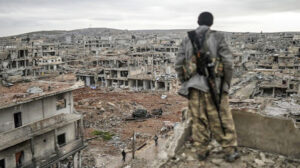
The year 1988 was one of the most ominous, tragic, and bloody years for the people of Kurdistan. It can be described as the year of Kurdistan’s destruction and the genocide of its people by the Iraqi regime. The most brutal phase of the Al-Anfal campaign lasted from March 1988 until September 5 of the same year. Through this savage campaign, the regime emptied 49.41% of the land of Southern Kurdistan. Over 4,500 Kurdish villages and towns in the governorates of Kirkuk, Erbil, Sulaymaniyah, and Duhok were destroyed, burned, and erased, along with 31 Assyrian Christian villages in Duhok. Approximately 250,000 (a quarter of a million) Kurds—men, women, children, youth, and the elderly—disappeared in these infamous campaigns, buried in mass graves. More than 300 Kurdish villages were subjected to chemical weapons attacks. Using “fire and iron,” the regime scorched the earth and committed numerous other crimes against humanity.
All these crimes were executed against the Kurds by the Iraqi authorities and the defunct Ba’ath regime. On the night of August 21/22, 1988, all inhabitants of the town of Dibega (Makhmur district, Erbil governorate) were deported. The regime left no one behind and immediately settled Arab “newcomers” in the homes of the forcibly displaced Kurds. Naturally, the Al-Anfal campaigns were part of the Arabization process; the regime intended to utilize these campaigns to Arabize Kurdish territories, destroy Kurdistan, and reduce the Kurdish population in the south.
These infamous campaigns caused a significant decline in the population of Southern Kurdistan and its growth rate. The villages and towns destroyed by the regime were later given to Arabs. Arab settlement was concentrated around Kirkuk, the Garmian regions, the Qarachogh and Makhmur plains, Kendinawa, Guwer, and parts of the Erbil plain. This confirms the regime’s dual intent: the genocide of the Kurds and the subsequent Arabization of their land. After the Al-Anfal campaigns, the regime continued its destruction. In 1989, it deported the residents of Qaladze, Sangasar, and Bimalik, destroying them completely. Under Decree 263 issued by the so-called “Revolutionary Command Council,” several forced housing complexes (collectives) were built in Erbil, Sulaymaniyah, and Duhok to monitor and control the displaced.
On May 3, 2011, the Iraqi High Tribunal officially designated the Al-Anfal campaign as a “crime against humanity and genocide.”
Repeating Past Mistakes
Following the fall of the Ba’ath regime on April 9, 2003, all parties expected Iraq to be governed by a democratic system that would not repeat the mistakes of previous regimes toward the Iraqi peoples. However, we have seen current rulers adopt the same old mindset, attempting to implement the same policies. This style of governance has harmed and continues to harm all parties, leading to a recurrence of past tragedies. It is imperative for everyone to confront and reject this method of rule.
The current governing system in Iraq, through its practices, has moved toward individualism and dictatorship. Like previous regimes, it has stood against Kurdish demands. Simultaneously, it has moved against Iraq’s Sunni Arabs through marginalization and persecution. The flawed and hostile policies of the current Iraqi government toward the components within Iraq’s artificial borders have led to a series of security and administrative crises. The current situation in Iraq is a direct result of these failed policies; it seems that controlling this situation will not be easy, and it will continue to cause significant damage to Iraq’s infrastructure and social fabric—a heavy price for sectarian and erroneous politics.
We Kurds must monitor the situation with vigilance and caution, ensuring we do not fall under the influence of any external party. We must learn from the past. I have often spoken about the bitter experience of the Kurdish people with Iraqi governments. I find it necessary to remind all parties that our experience shows that whenever Iraq is weak, it resorts to the Kurds and negotiates. However, as soon as it gains strength and capability, it turns against the Kurdish people and their demands.
Historically, every Iraqi authority showed flexibility at the start of its rule. But once their power was consolidated, they returned to hostility. Abdul Karim Qasim showed flexibility from 1958 to 1961, but then reneged on his promises, leading to the September Revolution in 1961 led by the immortal General Mustafa Barzani. Qasim’s forces did everything in their power—bombing cities and burning villages—to kill Kurds. Another example is the Ba’ath Party in 1968. They initially engaged in dialogue with the Kurdish revolution, leading to the March 11, 1970 Agreement. Peace prevailed from 1970 to 1974, but as the Ba’ath grew stronger, they abandoned their commitments and launched a war involving Arabization, chemical attacks, and finally the Al-Anfal campaigns. Their goal was the total annihilation of the Kurdish people and land.
The final example is the fall of the Ba’ath in 2003. When the regime collapsed, those who called themselves the “Iraqi Opposition” had no popular base inside Iraq. When they returned with the help of the Coalition and neighboring countries, they sought help from the Kurdish leadership at every turn. The Kurdish leadership spared no effort in supporting them—often doing more for these Arab parties than for Kurdish factions. However, after the fall of the regime, we saw these same parties stand against the demands of the Kurdish people.
It is only right that the Kurdish leadership re-evaluates its positions and policies, reorganizes the political sphere, and takes the views of the faithful defenders of the homeland into account. They must listen to the criticisms of the people and prioritize solving their problems. What is done for external parties should instead be done for the people of Kurdistan. This is a reality we must acknowledge, and consultation among Kurdish parties is essential.
The Solution
The best solution to escape the current situation in Iraq and block the path to individual rule and dictatorship is to practically divide Iraq into three states: a state for the Kurdish people, a state for Sunni Arabs, and a state for Shia Arabs. This is a realistic solution suited to the Iraqi context. Over a century of experience has proven that it is extremely difficult to coexist indefinitely within the artificial map of Iraq.
We, the people of Kurdistan, must benefit from the past and not waste time in vain. Our experience with Iraqi regimes tells us not to trust the central authorities. Therefore, we must prepare ourselves starting now for the possibilities and developments that are manifesting on the ground, which will undoubtedly impact the people of Kurdistan.
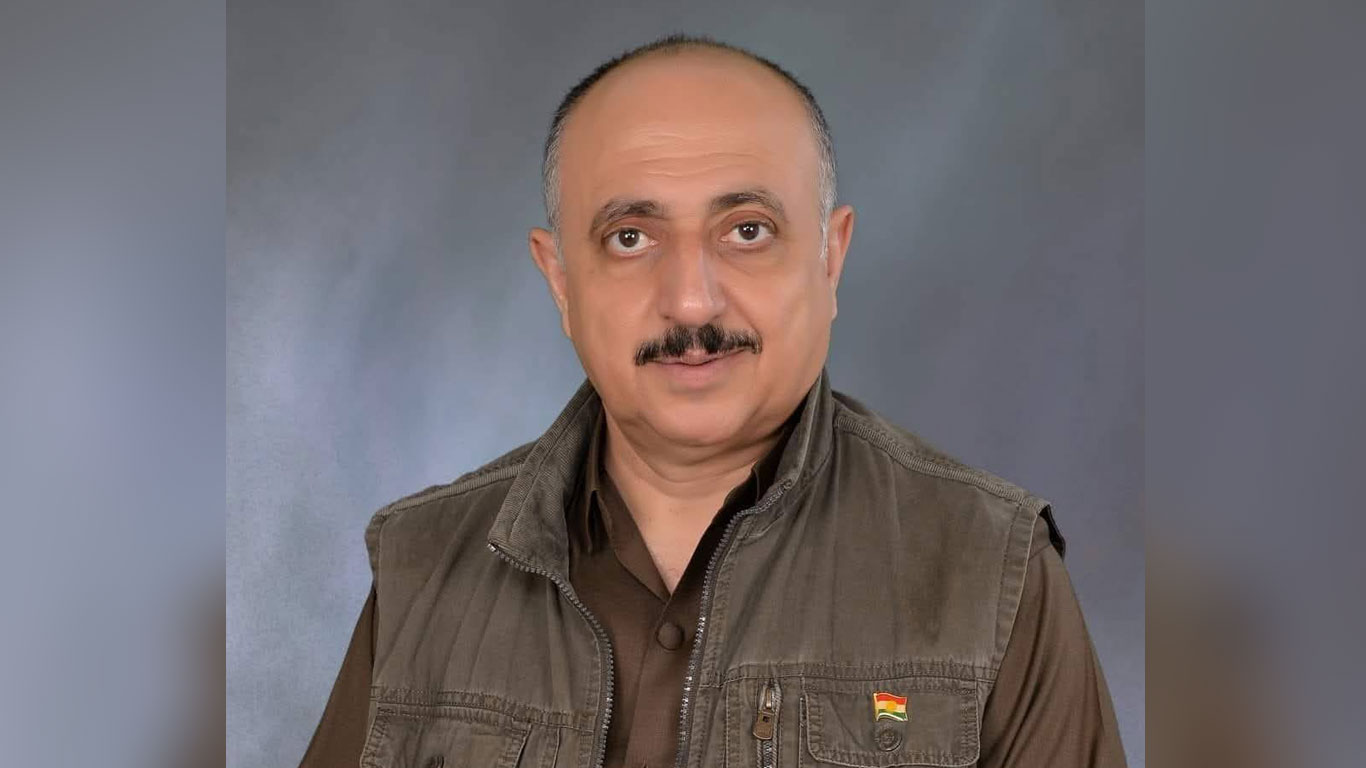
Ghafur Makhmuri
General Secretary of the Kurdistan National Democratic Union (YNDK)