In times of conflict, the Kurds become an important element in security and military equations. However, when transitioning to the phase of settlements, their political presence often recedes in favor of state calculations and regional balances of power.
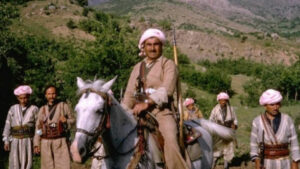
When the revolution of the Kurdish leader Mustafa Barzani came to a halt following the 1975 Algiers Agreement, the Kurds felt they had not merely lost a military battle, but that a new chapter of unfulfilled international promises had been closed at their expense. Since that date, the question of trust has continuously accompanied the relationship between the Kurds and major powers: Are the Kurds viewed as genuine partners in shaping the future, or as temporary tools imposed by military necessity, only to be discarded when interests shift?
After more than half a century, this question remains forcefully present. The wars and crises witnessed by the region have changed, but the political pattern governing the relationship between the Kurds and international and regional powers seems to repeat itself remarkably. In times of conflict, the Kurds become an important element in security and military equations; however, when transitioning to the phase of settlements, their political presence often recedes in favor of state calculations and regional balances of power.
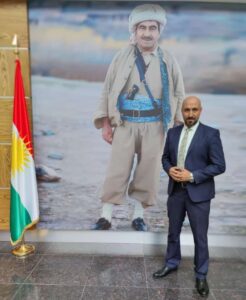
In Iraq, the Kurds were an essential part of the confrontation against terrorism, and the Peshmerga forces played a prominent role in the war against ISIS. These sacrifices earned widespread praise from the international community; nevertheless, many core political issues remained without final solutions. This has reinforced a feeling among broad sectors of the Kurdish population that the recognition of their military role is not necessarily met with a corresponding recognition of their political rights.
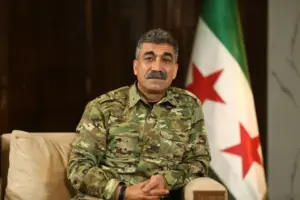
In Syria, Kurdish forces formed the most effective ground partner for the United States and the international coalition in the war against ISIS, suffering thousands of casualties in the confrontation with the organization. Yet, with changing international priorities and shifting regional calculations, Syrian Kurds found themselves facing new challenges, without that military partnership being accompanied by clear and sustainable political guarantees. Hence, a sense emerged among many Kurds that they bore the burdens of the confrontation while failing to receive the same level of political commitment once the urgent military need had ended.
In Iran, this historical anxiety resurfaced during recent tensions in the region. While the United States and its allies preferred to avoid involvement in a direct ground war against Iran, political analyses and discussions emerged regarding the possibility of leveraging opposition forces against the Iranian regime to exert pressure on it from within. In this context, the Kurds raise a legitimate question: Is it expected of them once again to be at the forefront of a confrontation with a powerful and militarily cohesive state, without real guarantees or a clear partnership in the outcomes?
This apprehension does not reflect a rejection of change or of defending rights; rather, it is based on a realistic reading of the balance of power. Entering into an open confrontation with a state of Iran’s magnitude without direct and sustainable support could expose Kurdish regions and their populations to significant dangers. This leads many to approach with caution any external bets that might push them into conflicts exceeding their self-capabilities.
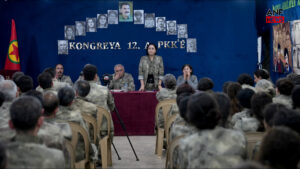
In Turkey, the Kurdish issue often appears absent from international discourses concerning democracy and human rights. Despite the fact that millions of Kurds live within Turkey and their cause remains one of the largest political issues in the region, international stances toward it are frequently influenced by the nature of strategic relations with Ankara rather than by considerations of rights and freedoms.
The common denominator among these diverse experiences is that the Kurds are often viewed as an important factor in conflict management, yet they do not enjoy the same standing when the maps of settlements are drawn. The support granted in times of war recedes when peace arrives, and the promises made during crises frequently clash with the calculations of self-interest when political negotiations begin.
This does not mean that the major powers act out of hostility toward the Kurds; ultimately, states build their policies on interests, not emotions. However, the problem lies in the repetition of a pattern of relationships that renders the Kurds part of the tools for crisis management rather than full partners in crafting solutions. Consequently, many Kurds view certain past experiences as instances of abandonment of allies who played major roles at crucial moments in the region’s history.
Past decades have proven that military partnership alone is insufficient to guarantee political rights. Therefore, the greatest challenge facing the Kurdish political movement lies not only in building alliances during wars, but in possessing the capability to transform those alliances into an effective political presence when settlements are formulated. The Kurds have never been absent from the battlefields, but the question that still searches for a just answer remains: How long will they continue to be allies in war, yet absent in peace?
Note: This text is translated from the original Arabic version… Read the Arabic version:Click here