Amidst the dramatic shifts currently unfolding in the Middle East and the crises ravaging the region—where the wills of great powers collide and the language of arms has become the dominant medium for expressing political interests—the name of the President of the Kurdistan Region, Nechirvan Barzani, emerges as one of the few who adopt a “State Doctrine” founded on wisdom and balance. He is not merely a political leader, but an architect of “balance diplomacy” in an age of fragmentation. He is the man who proves day after day that true leadership is not measured by high-sounding speeches, but by the ability to extinguish fires and build bridges amidst the rubble of conflict, standing like a “towering mountain” against the hurricanes of chaos hitting the region.
Nechirvan Barzani has long pursued a piercing vision that places dialogue above all else. This vision was never just a tactical choice; rather, it is a firm belief that the stability of the Kurdistan Region and Iraq is fundamentally linked to peaceful coexistence and the “zeroing out” of problems with neighbors and national partners. Thanks to his quiet diplomacy, the Region has transformed into a regional pivot and an oasis of tolerance in a turbulent environment, managing to gain the trust of the international community and conflicting regional powers simultaneously. Through his diplomatic efforts, he has built bridges of trust with global decision-making capitals, making the Region a significant player that cannot be bypassed.
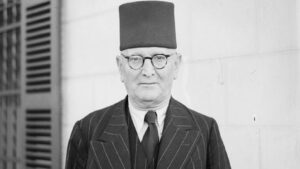
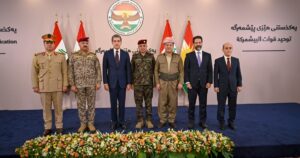
Nechirvan Barzani is considered an extension of a historical legacy. While the sacrifices of the immortal Father of the Kurdish Nation, Mulla Mustafa Barzani, forged the principles of steadfastness and sovereignty in his conscience, he drew from his late father, Idris Barzani—the “architect of national reconciliation”—the genius of dialogue and peace-building. Today, the fateful harmony between the wisdom of President Masoud Barzani and Nechirvan’s diplomacy emerges as an impenetrable bulwark protecting Kurdistan from regional challenges. This confirms to the world that the Region is resilient against intimidation, thanks to a leadership that blends the “Peshmerga” legacy with the spirit of national reconciliation, proving that the Kurdistan Region is no “easy prey” for treacherous drones or policies of terror.
The desperate attempts to undermine this stability—most recently manifested in the targeting of his home in Duhok by “rogue” drones—can only be interpreted as a hostile act against the “Peace Project” represented by Barzani. This targeting is not merely an assault on a leadership figure; it was a political declaration of war against the project of “Statehood and Wisdom” led by this man. It is a direct strike at social peace and the Region’s status as a successful model for administration and coexistence. Furthermore, it serves as an attempt to intimidate national symbols calling for de-escalation, revealing the aggressors’ desire to drag the region into total chaos that serves only agendas of destruction. This treacherous attack demonstrates the frustration of “rogue parties” with Barzani’s methodology of wisdom, which refuses to let the Kurdistan Region become a mailbox for regional messages of blood. They realize that his strength lies not in a military arsenal, but in the bridges of trust he has built with the international community and various Iraqi components. Targeting his home is an attempt to drag the Region into the square of “armed chaos,” which the Kurdistan leadership rejects in its entirety.
This escalation comes at a time when the region is experiencing a peak in the clash between the Iranian axis on one side and the American-Israeli axis on the other. In this complex landscape, certain forces seek to throw the Kurdistan Region into a furnace in which it has “neither camel nor ewe” (no stake or interest), by turning it into an arena for settling regional scores and sending messages of political and military pressure. They exploit tensions to execute foreign agendas that strike at Iraq’s sovereignty and the Region’s stability.
Amidst this sharp polarization, Nechirvan Barzani stands as a formidable barrier with a vision that refuses to embroil Kurds and Iraqis in proxy wars. Having been raised in the trenches of struggle and drinking from the spring of the “Immortal Barzani,” he understands that protecting the Region requires a delicate balance, adherence to state institutions, and working with international partners to ensure Kurdistan does not become a “postbox” for fire-laden messages between conflicting powers. He proves to the world that Kurdistan is not a party to the conflicts of opposing axes, but rather a “party” in the making of peace and the future.
The appreciation Nechirvan Barzani enjoys today stems from his deep realization that the “language of bullets” is temporary, while the “language of dialogue” is what builds nations. He refuses to be drawn into emotional reactions and holds fast to the diplomatic approach as the sole path to preserving achievements. His steadfastness in the face of external pressures and security threats confirms that the Kurdistan Region will remain resilient against agendas seeking to export their crises into the heart of Kurdistan. Let it be known to all that the will of the people of Kurdistan does not break; every missile or drone targeting the homes of sincere leaders is an assault on all values of tolerance and coexistence. Such acts only increase the cohesion of the people of Kurdistan around their leadership, and all rogue drones will shatter against the rock of historical Kurdish resilience, leaving the Region standing tall as a model for coexistence and a canopy of safety.