We had hoped that conscious Arab historians and patriotic intellectuals would stand up against that chauvinistic segment of Arabized writers (Musta’ribeen), who still feed on the remnants of the corruption and hatred of defunct regimes, reproducing animosity toward the peoples of the region, foremost among them the Kurdish people. This segment was not born out of a vacuum; rather, it emerged from the womb of regimes that did not stop at destroying politics and the economy, but went on to ruin culture, pollute memory, and tamper with the history of the region, particularly the history of the Kurds and Kurdistan. They turned ignorance into a tool of governance and forgery into a means of defending artificial maps built on the denial of peoples, the occupation of their homelands, and the partition of Kurdistan among states created at the expense of its historical and geographical reality.
Those regimes left behind cultural catastrophes no less devastating than their political ones. They did not only fracture societies and impoverish peoples, but they also deepened the rift between the Kurdish and Arab peoples, spreading their poison to all nations of the region. From this rubble emerged crisis-ridden Arabized writers who possess nothing of history except an inherited hatred, and nothing of knowledge except the fragments of an old authoritarian discourse, which they attempt to market today under the guise of research and identity.
What we mean here is neither the Arabs as a people nor Arab culture in its humanistic sense, but rather that crisis-ridden segment that cannot survive without tampering with all aspects of life—from contaminated politics to the distortion of history, and from denying the rights of peoples, top among them the rights of the Kurdish people, to expanding the boundaries of hatred among different components. These people do not seek the truth; rather, they search for the debris of narratives to salvage the sick nationalist illusions they inherited from autocratic authorities, single-party rule, and maps imposed by force.
At times, we preferred silence—not out of an inability to respond, but out of a desire to avoid sliding into the same moral swamp. However, the persistence of silence, combined with the perception that some tolerate or sympathize with these toxic ideas, compels us to respond. We do so not to counter hatred with hatred, nor racism with racism, but to protect the truth from distortion, memory from confiscation, and Kurdish culture from being contaminated by those intellectual deformities that attempt to drag everyone down to their level.
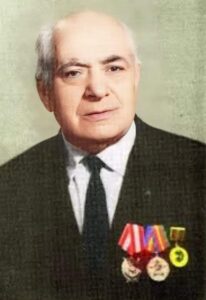
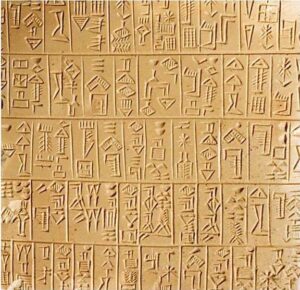
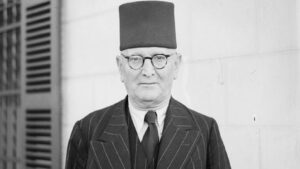
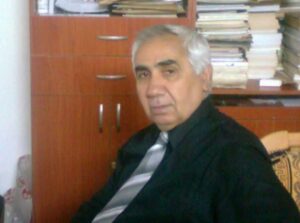
Whenever these individuals fail to push through their scheme of denying Kurdish existence or distorting its history, they resort to opening side doors and inventing new methods, which outwardly look like debate but inwardly harbor the exact same objective. At times, they claim they do not mean the Kurdish people as a whole, but rather a “faction” of their political movement. At other times, they aim their arrows at a specific Kurdish historian, as done by certain shallow figures such as Dr. Mohamed Bahjat al-Qubaisi, when he portrays the prominent scholar Mohamed Amin Zaki as if he were the one who created Kurdish history and invented its connection to ancient civilizations—as if no one before him had written about the ethnic, linguistic, cultural, and geographical links between contemporary Kurds and the Medes, Sassanians, Hurrians, and Mitannis, and as if the Kurdish people suddenly descended upon this geography without roots, memory, or historical continuity.
Herein lies the deception: they do not debate the scholar Mohamed Amin Zaki as a historian with whom one can agree or disagree regarding some of his interpretations; rather, they use him as a pretext to deny the entirety of Kurdish history. They want to convince the reader that Kurdish history began with a modern historian, not with geography, language, ancient evidence, or the accumulation of peoples who inhabited the Zagros Mountains, Upper Mesopotamia, and Eastern Anatolia. Therefore, the changing of their tools does not mean a change in their goals; the objective remains one and the same: to strike at Kurdish consciousness, drain Kurdistan of its memory, and transform history into a new arena of denial.
Our objective, ultimately, is not to ignite a war between peoples, but to stop the tampering with history. Our battle is not with conscious Arabs, but with those who want to turn history into an arena of denial, geography into a nationalist lie, and the differences between peoples into permanent fuel for hatred.
Nevertheless, the history of the Kurdish people, their language, and the reality of their existence on their historical geography have not been fundamentally affected by all these racist attempts, nor by the schemes and conspiracies that systematically targeted them throughout the past century. All this clamor has failed to uproot a deeply entrenched fact: that the Kurdish people are among the oldest peoples of this land, that their language belongs to one of the most ancient language families in the world, and that their presence in the geography of the Middle East is neither accidental nor transient, but rather a profound extension in history, memory, and place.
To be continued…
United States of America
June 1, 2026
Note: This text is translated from the original Arabic version… Read the Arabic version:Click here