The security archives of totalitarian regimes, after their fall, transform into a heavy mirror in which society is unable to look easily; they place nations before a critical moral and political test epitomized in an unfair dilemma: If you were asked to make a decision regarding the Ba’ath archive today, would you support opening it completely to the public in the name of transparency and transitional justice, or would you favor keeping it closed and preserved in secret to protect civil peace and the social fabric?
This question represents the grand dilemma for Iraq, which emerged from decades of dictatorship only to enter consecutive divisive crises. Opening the archive completely grants victims their legitimate right to know the truth, but in an environment controlled by tribalism and sectarianism, it might turn into a “ticking time bomb” igniting endless civil revenge wars, and revealing that many informers used to live in the houses of the victims themselves. On the other hand, closing the archive and the authorities’ secrecy surrounding it represents a form of covering up for the perpetrators and depriving the people of their right to write their history with dignity. What complicates this dilemma further is that the proportion of what has been disclosed and officially made available to the Iraqi public does not exceed 1% to 5% only, while the remaining 95% was distributed between documents burned in the chaos of 1991 and 2003, papers seized by parties and regional entities to be used in political blackmail, and the massive block seized by the United States of America for about seventeen years. Instead of establishing a national archives center that allows researchers and the public fair access within legal frameworks, successive governments have surrounded this file with walls of secrecy, leaving the Ba’ath archive a stolen key to the memory of a homeland torn between the desire for truth and the fears of chaos.
Sources of the Archive and the Formation of the “Archival State” under Saddam’s Reign
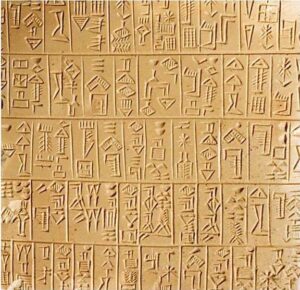
The Ba’ath Party regime led by Saddam Hussein was not satisfied with military or political control; rather, it built its authority on an integrated bureaucratic surveillance system in which the state transformed into an “archival state.” This massive archive, whose Regional Command files alone exceeded 5 million pages weighing 48 tons—not to mention tens of millions of papers from security agencies—was fed from multiple sources; chief among them were security correspondence and reports issued by the Regional Command, military organization offices, and security intelligence agencies: Public Security, Intelligence (Mukhabarat), and Military Intelligence. Records were not limited to official reports, but extended to include a wide network of informers and handwritten local reports against relatives, neighbors, and colleagues on charges of criticizing authority or belonging to the opposition. It also included files on the infiltration of Shia and Sunni religious institutions and the recruitment of some clerics as security agents, in addition to documents of the Iran-Iraq War and files on the pursuit of opposition political forces and the Kurdish component.
Complexities of the Kurdish Arena and the Phenomenon of “Black Files”
The Kurdish arena played the most complex role in dealing with this archive; since the 1991 uprising and the 2003 fall, Kurdish forces succeeded in seizing tons of sensitive documents in security directorates, especially the headquarters of “Red Security” (Amna Suraka) in Sulaymaniyah and the directorates of Kirkuk and Erbil. While the Kurds took the initiative to internationalize part of the documents with human rights organizations to prove the crimes of “Anfal” and Halabja, Kurdish leaders, headed by Jalal Talabani, held back the sensitive block related to local informers and spies. This file exploded in the Kurdish press between 2003 and 2005 through what became known as the “Black Files” (Fayle Reşekan); documents were published accusing revolutionary figures, militants, and clerics of collaborating with Saddam’s regime. Although the origin of the documents was authentic, their media circulation turned into a weapon for settling scores and character assassination through selective omission and manipulation of details. Evidences from that phase confirm that the decision of Talabani and Kurdish leaders to hide these files and officially ban their publication was based on an assessment of the consequences of publication; unearthing the “Black Files” without judicial controls would have triggered tribal and revenge conflicts, even though keeping them closed granted influential leaders the ability for “silent political control” over the local arena.
The Epic of Discovering the Archive and Transporting it to the United States
The dramatic nature of the file manifests in the story of transporting the archive to the United States following the fall of the regime in April 2003; amidst the chaos of looting that affected government institutions in Baghdad, urgent news reached the thinker Kanan Makiya and the activist journalist at the time Mustafa Al-Kadhimi stating that groups of looters were heading toward the Regional Command headquarters of the Ba’ath Party and the annex building of Michel Aflaq’s tomb. Makiya and Al-Kadhimi rushed with their team to the site, descending into the dark, flooded basements resulting from burst pipes and stopped pumps, and under the light of flashlights, they discovered the “Ali Baba’s Cave” of the Ba’athist archive. Fearing the destruction, drowning, or falling of files into the hands of militias, Makiya and Al-Kadhimi took the initiative to establish the “Iraqi Memory Foundation,” and began draining water, cleaning basements, and extracting thousands of boxes. With the escalation of violence between 2004 and 2005, an agreement sponsored by the Coalition Provisional Authority (CPA) and the Pentagon was struck to transport the massive shipment via the U.S. military and deposit it as a “trust and safe haven” at the Hoover Institution at Stanford University in California starting in 2008, where it was subjected to scanning, encryption, and digital archiving, while the Iraqi street and national institutions were deprived for long years from accessing their originals.
Behind the Scenes of Repatriation and Washington’s Control over the “Digital Copy”
When Mustafa Al-Kadhimi assumed the premiership in 2020, he found himself facing the responsibility of resolving the archive file he helped discover and secure seventeen years earlier. However, the process of repatriating the archive was neither comprehensive nor simple as rumored; the Pentagon had previously handed over about 120 million pages of government administrative and military records during Nouri al-Maliki’s era in 2013 away from the media spotlight. Then Al-Kadhimi, during his visit to Washington in August 2020, received the paper originals of the “Ba’ath Party Regional Command” record batch deposited at Stanford, weighing about 48 tons with 5 to 6 million pages, transported by a special military aircraft to be deposited immediately in an undisclosed secret location at the Iraqi National Intelligence Service headquarters in Baghdad without being made available to the public. However, what was not repatriated and remained in Washington’s possession lies in digital dominance; the American side, through the Hoover Institution and the “Harmony” database, retained a complete, encrypted electronic digital scan of all papers, alongside the exclusion of highly classified files concerning weapons of mass destruction and international relations under the pretext of “U.S. national security.” Thus, Washington handed over the paper originals to remove legal embarrassment, but retained “digital knowledge dominance,” leaving the informational influence of the documents divided today between Iraqi governmental hiding and secrecy of the paper originals in Baghdad, and American retention of comprehensive digital access authority in California.
Penetration of the “Deep State” and the Map of Beneficiaries of Secrecy
The fires and damage that affected the security directorates in 1991 and 2003 were not merely spontaneous acts of chaos, but were partly managed by individuals and interest networks belonging to the “deep state” and former informers seeking to destroy documents proving their involvement. Following the return of the archive to Baghdad in 2020, political and media reports circulated news about leaking sensitive parts of it to influential regional parties, foremost among them Iran, in cooperation with local parties and officials, to be used as a lethal weapon for political blackmail, subjecting political and religious figures, and eliminating opponents. Thus, the map of beneficiaries of keeping the archive closed is distributed among the influential political and religious class in Iraq that fears exposing the history of its past collaboration, American intelligence agencies possessing the complete digital copy as a leverage card, internal and regional influence centers exploiting leaks in silent liquidations, in addition to Western academic institutions that enjoyed the opportunity to study and deconstruct it.
A Roadmap for Just Management of National Memory: The German Model
Dealing with the Ba’ath archive places Iraq at a critical crossroads; random opening of files will result in a social bloodbath and tribal revenge conflicts, while total closure and secrecy represent a betrayal of the martyrs and victims of dictatorship, a cover-up for perpetrators, and leaving documents to be exploited as a blackmail weapon in the hands of influential powers. To prevent the archive from remaining a ticking time bomb, the wisest proposal lies in applying the German model of transitional justice—the Stasi archive experience—by nationalizing the archive and submitting it to a “National Authority for Memory and Judiciary” composed of independent judges, historians, and human rights experts away from political parties, and classifying documents in two stages: immediate opening of top authority files, political figures, and senior party officials to cleanse the political scene and achieve transparency, and imposing a specific time embargo of 30 to 50 years on reports of ordinary informers and individuals to protect civil peace and social fabric until society’s wounds heal, while granting the right only to victims and their families for personal inspection without public publication. Only through this act does the Ba’ath archive transform from a “weapon of mass destruction” threatening stability into a documentary and historical legacy serving justice, preventing the recurrence of dictatorship, and preserving the dignity of victims and civil peace in Iraq.
Note: This text is translated from the original Arabic version… Read the Arabic version:Click here