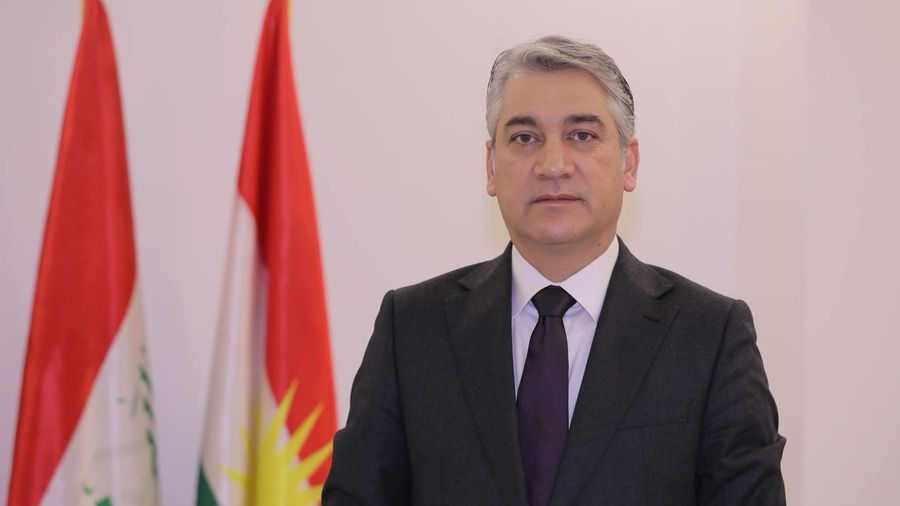
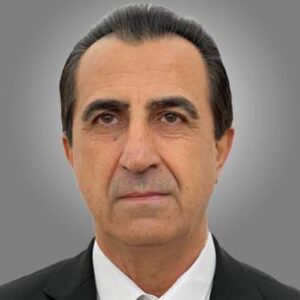
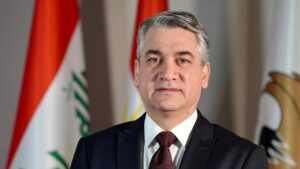
Dr. Jotiar Adil / Head of the Department of Media and Information in the Kurdistan Regional Government
Since the formation of the Ninth Cabinet of the Kurdistan Regional Government, headed by Mr. Masrour Barzani in mid-July 2019, efforts to find a common and sustainable ground between Baghdad and Erbil to resolve outstanding issues have not ceased. When the government commenced its work, Barzani’s visit to Baghdad during the tenure of former Prime Minister Mr. Adel Abdul-Mahdi was the first step and an urgent strategic mission he sought; this was driven by his awareness of the utmost necessity and the need for swift comprehension of the nature of historical balances and their impact on the political present and future of Iraq.
The Duality of Commitment and Independence: A New Constitutional Philosophy
The strategic vision of Mr. Barzani and his government is rooted in a high national premise and a constitutional specificity that has given political practice a new character, one that merges commitment and independence simultaneously. Indeed, commitment to the provisions of the Constitution is the very foundation that grants the Region its contemporary political specificity. This represents the core spirit of the Iraqi Constitution itself, which states in its preamble that “the commitment to this Constitution is what preserves for Iraq its free union.”
Consequently, commitment becomes the standard, and maintaining the partnership is the objective. Barzani’s vision for the relationship with the federal government does not represent a path contrary to the Constitution—as some mistakenly believe—but is rather a literal application of it that guarantees the Region its rights ensured by the supreme law of the land. From this, the features of this vision emerge through its candor, seriousness, and independence; this reinforces the union and fosters specificity, allowing this intellectual harmony to create genuine citizenship consistent with the concepts of modern decentralization and voluntary integration.
A Compass for Course Correction and Political Integration
This vision has formed a true compass for correcting the course of the relationship between Baghdad and Erbil, representing a qualitative shift in the pattern of political thinking and the management of outstanding crises. The fundamental premise here lies in the integration of the relationship, not its contradiction; it is an integration based on the principle of balance and justice embodied by the Constitution, rather than on momentary interests and temporary compromises.
A true realization of political power and capacity in this special relationship does not come from imposing dictates or political subservience; rather, it depends on consolidating the principles of partnership and effective participation in decision-making. Since the nature of political power changes according to the ruling system and the accumulation of experiences, reality dictates a flexible and courageous practice that possesses the ability to repair any structural imbalance appearing in the course of consensus.
The approach of Mr. Masrour Barzani has been characterized by boldness and candor in presentation, alongside the ability to innovate fair and practical solutions. This has enabled him to steer the helm of relations wisely and guide them to safety, despite numerous attempts to lure them toward dangerous turns. This vision was not merely a theoretical reading, but a direct engagement with reality and a reflection of a genuine, serious will to eliminate crises entirely.
Internal and External Balances
The understanding of the political perspective of the Regional Government’s Prime Minister stems from the premise that politics is a tool for achieving balance and creating a favorable environment for constitutional paths. These paths distance Iraq from political deadlocks and narrow interpretations based on polarization and partisan rivalries. The experience of Masrour Barzani is the product of a deep understanding of political shifts and the balances of competing powers on the Iraqi stage, accompanied by an accurate awareness of the magnitude of regional and international factors; this provides him with a comprehensive vision in making decisions and positions that preserve the entity and stability of the Region.
On the Internal Level: Decisiveness, Reform, and Digital Transformation
On the domestic front in Kurdistan, decisiveness, determination, and persistence were the crucial factors in bringing about a structural transformation in the Region’s institutions, developing their performance, and raising the efficiency of services provided to citizens. Absorbing the complex crises that buffeted the Region over the past six years constituted an exceptional experience in governance; for the first time since the early 1990s, the government succeeded in providing 24/7 electricity to most areas of the Region through the (My Light / “Ronahi”) project.
Within the framework of comprehensive modernization, the Region has entered the era of the digital banking system forcefully. In a record timeframe, it witnessed the issuance of nearly one million bank cards to public sector employees through the pioneering (My Account / “Hesabi”) project.
Furthermore, the forward-looking vision of Mr. Barzani did not overlook the potential impacts of climate change and future economic crises; the government managed to construct dozens of medium-sized dams and small lakes to enhance water security, alongside opening thousands of kilometers of highways and arterial roads that comply with international standards.
This approach demonstrates that protecting constitutional sovereignty and maintaining the specificity and independence granted to the Region by the Constitution are two sides of the same coin in modern governance philosophy. In the end, the true essence of political capacity is summarized in managing differences and resolving them without compromising the rights recognized by the Constitution. It is also the harnessing of the country’s capabilities to serve the citizen at the lowest costs and through the most effective methods—which is the inevitable strategic choice dictated by our reality today in light of political transformations and the accelerating economic competition among nations.
Note: This text is translated from the original Arabic version… Read the Arabic version:Click here