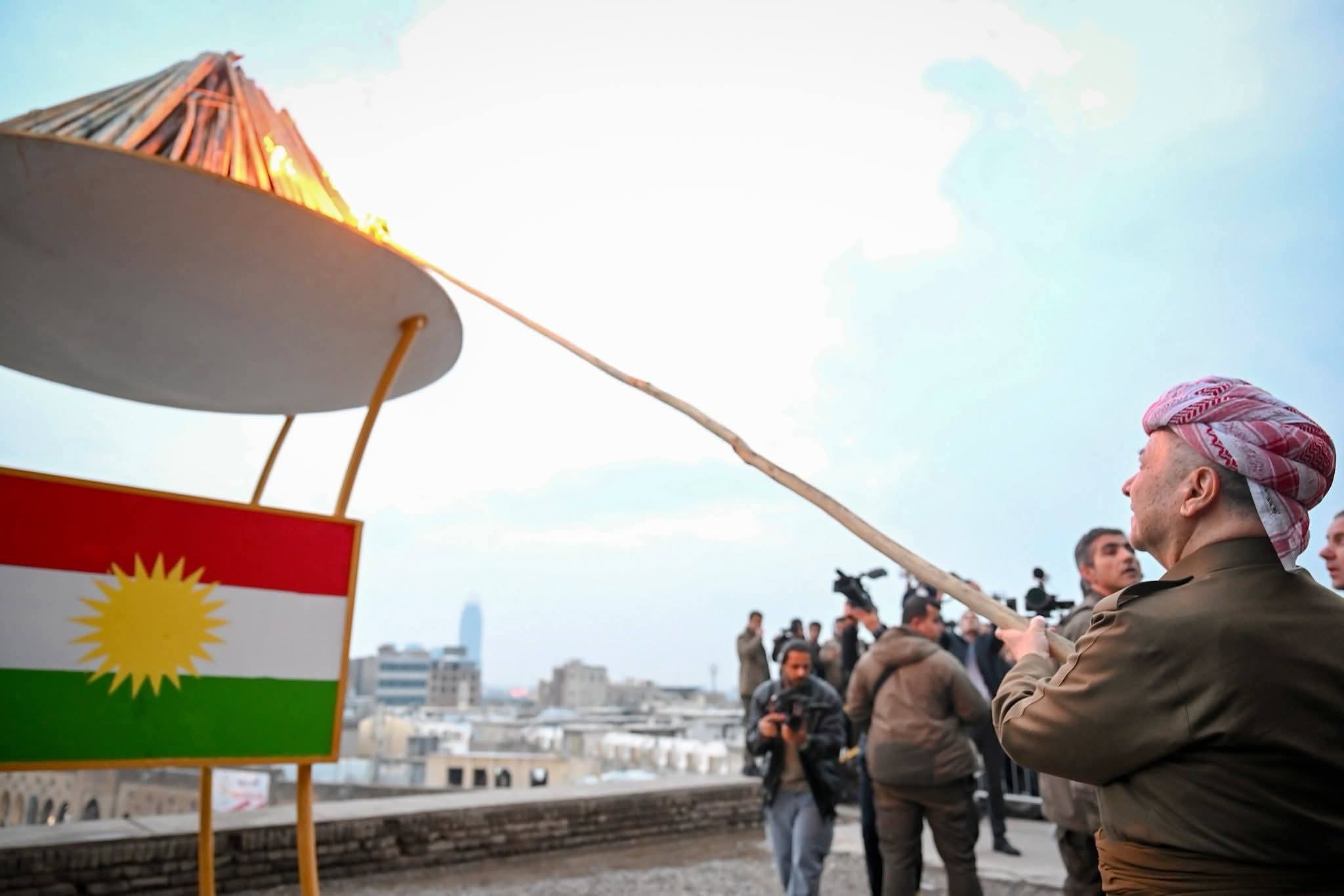
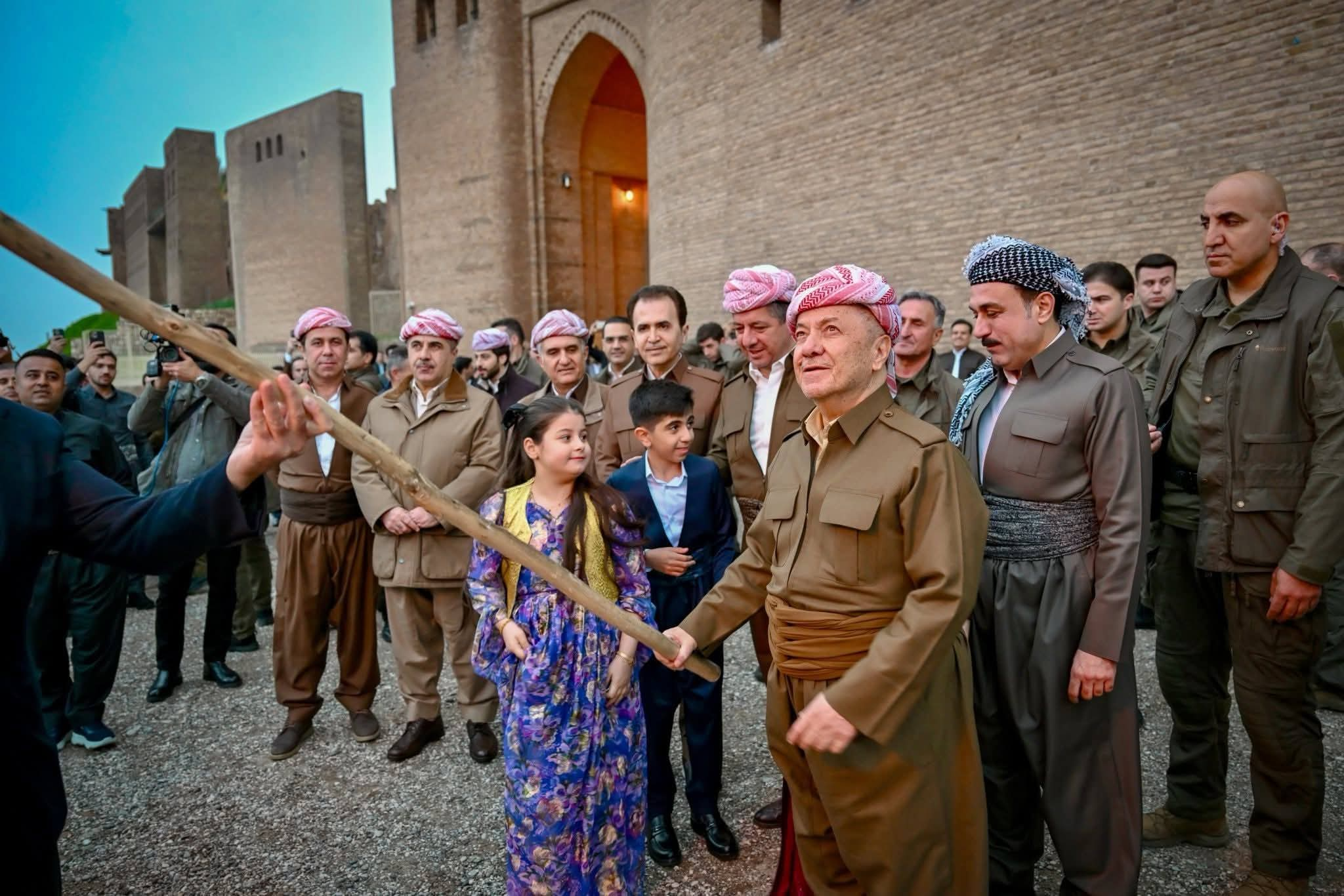
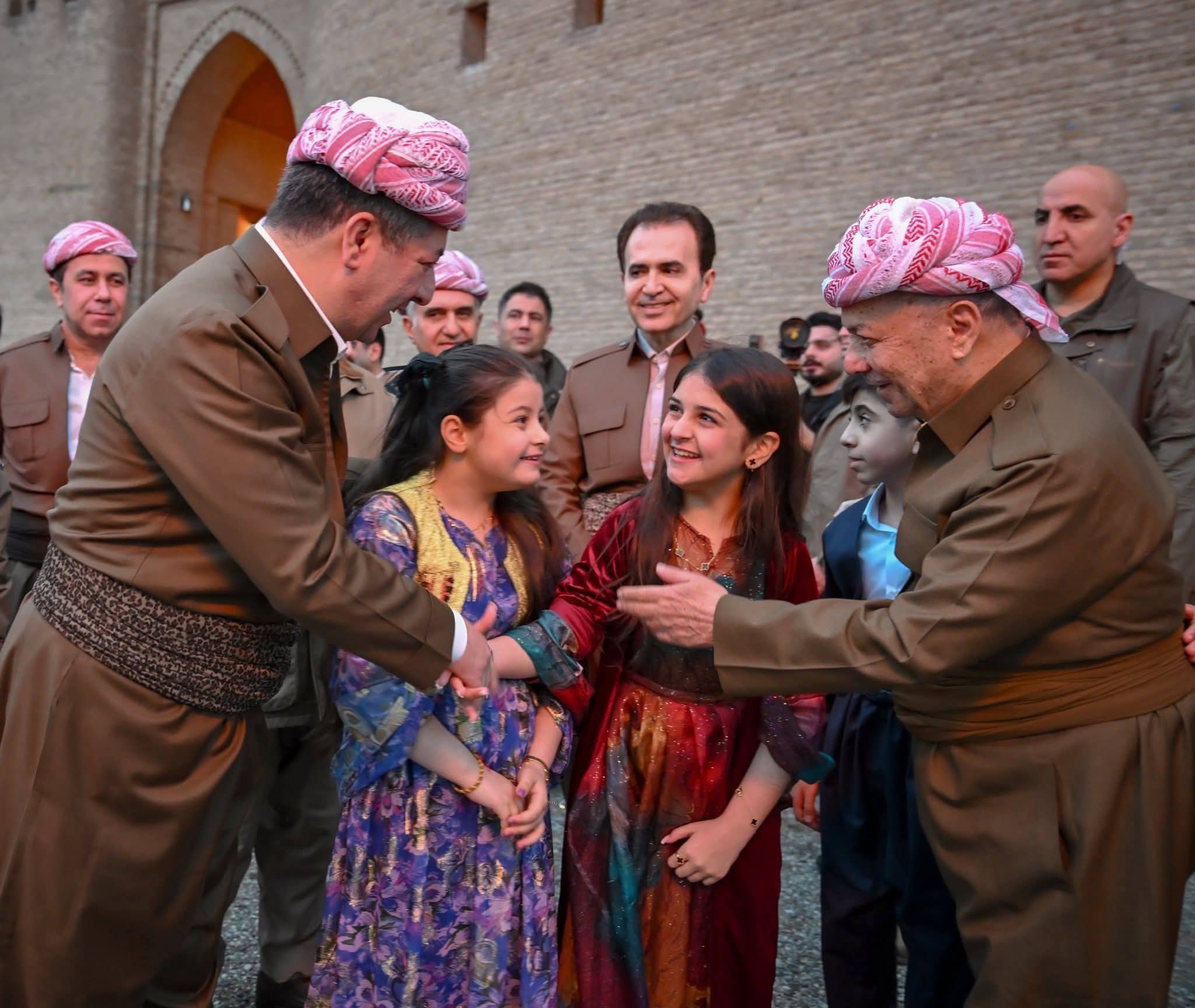
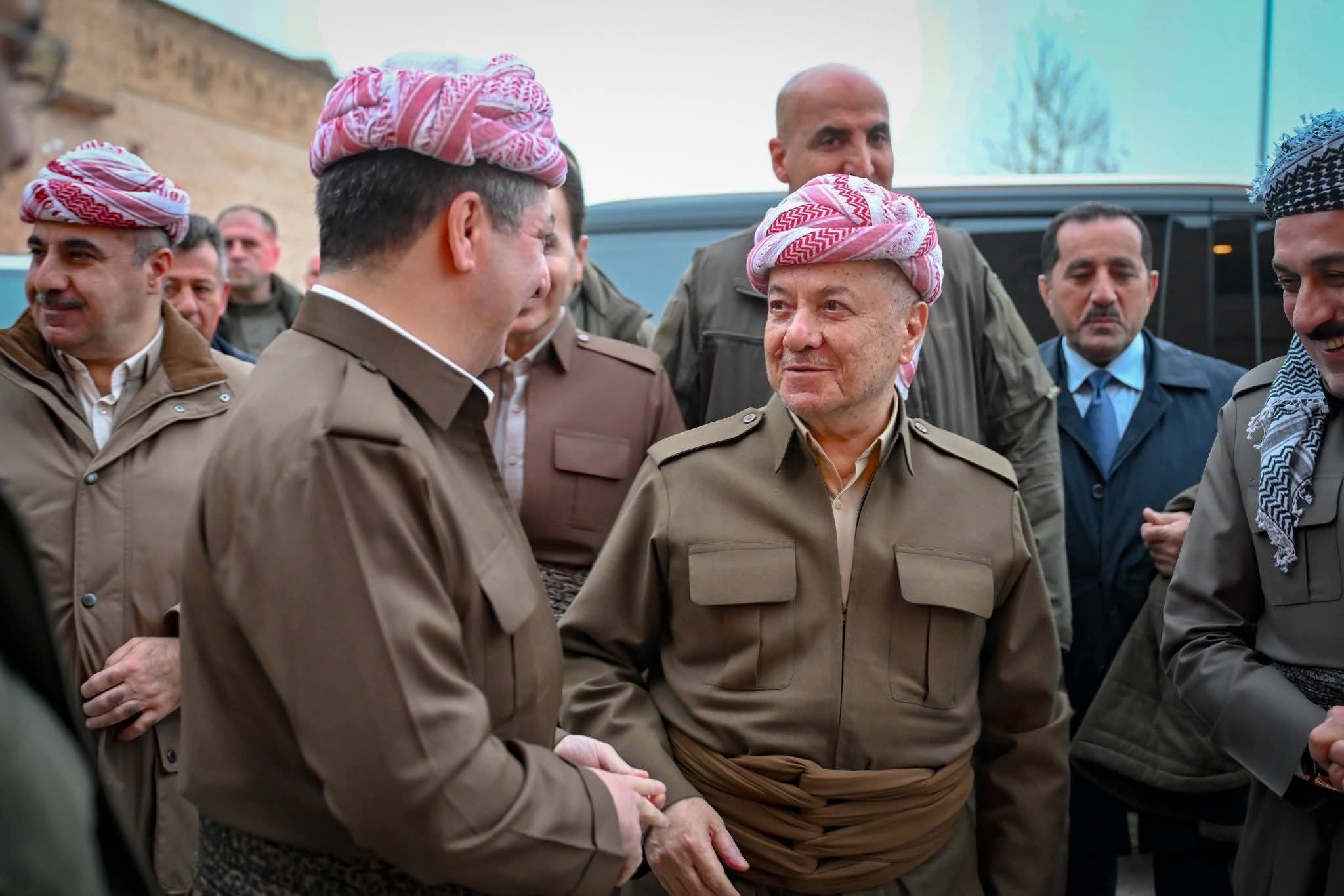
Every year, with the arrival of the Newroz holiday, the scene is not limited to mere festive rituals or the lighting of fires atop mountain peaks. Instead, a deeper question is renewed: Why does this flame remain so alive in the Kurdish conscience despite centuries of setbacks? And why, each time, does it transform into a par excellence political act that transcends symbolism toward a redefinition of identity?
When Masoud Barzani ignites the Newroz flame, the scene is not read as a traditional ritual, but rather as a complex message: the continuity of the cause, the steadfastness of identity, and the reproduction of hope in an era of proliferating crises. Today, the Region—specifically the Kurdistan Region—stands at a sensitive intersection of security challenges, economic pressures, and political tensions with Baghdad, in addition to regional shifts that show no mercy to fragile entities.
The choice of the Erbil Citadel to light the Newroz flame was no fleeting event; it carries profound significance. This citadel, one of the oldest continuously inhabited sites in the world, encapsulates a long history of resilience and continuity. It is not merely an archaeological landmark, but a symbol of the memory of a city that resisted time and wars, remaining a witness to the region’s transformations.
Erbil is not only a historical city but a living model of coexistence. Over the decades, it has embraced displaced persons and refugees from various parts of Iraq and the region, especially during wars and crises, becoming a safe haven for all those for whom the earth had grown narrow. This humanitarian role was not accidental, but an extension of the identity of a city known for tolerance and openness.
In Erbil, all components coexist without exception: Kurds, Arabs, Turkmen, and Christians of various denominations. This composition did not turn into a source of conflict, but rather into a point of strength, where coexistence became part of the city’s political and social identity. Therefore, when the Newroz flame is lit here, it does not express a single nationalism only, but rather a broader idea: the possibility of communal living in a region burdened by divisions.
This presence did not come from a vacuum; it was reinforced through the role of Masoud Barzani, who, along with the Peshmerga forces, formed a fundamental pillar in protecting the Region. In the most difficult moments, the Peshmerga stood as the first line of defense and made immense sacrifices, turning the bodies of their fighters into true shields to protect Kurdistan from collapse, especially in the face of existential threats.
Parallel to this security role, a new phase of construction and reconstruction has emerged, led by Masrour Barzani. Erbil and the Region have witnessed remarkable development projects, from paving modern roads to building bridges, constructing dams, and expanding infrastructure. These achievements are not read merely as service improvements, but as part of a project to consolidate stability and transform the Region into a viable and sustainable model.
Newroz, in its essence, is not just a holiday. It is an ancient narrative of breaking tyranny, evoking the legend of Kawa the Blacksmith, who lit the fire to announce the end of injustice. This narrative, which dates back to the depths of Kurdish history, has not lost its meaning; rather, it has reproduced itself at every stage. Just as the fire was anciently a signal for liberation, it has become today an expression of political resilience in the face of attempts at marginalization or erasure.
In recent years, the Region has faced harsh tests: from the repercussions of the 2017 Kurdistan Region referendum to the recurring financial crises linked to the oil and budget files, reaching the security threats taking new forms, such as drone attacks. These realities did not weaken the Newroz symbolism; instead, they increased its intensity, because peoples, in moments of pressure, return to their roots in search of meaning.
In this context, the Newroz discourse becomes an explicit call to rearrange the “internal house.” The challenge is no longer only external but internal as well, where political divisions intersect with economic pressures to create a fragile environment. Here emerges the need for what can be called “Newroz Rationality”—inspiring the idea of a new beginning, not as a slogan, but as a program of action.
Today, in light of regional and international shifts, it is no longer enough to cling to symbolism without translating it into policies. The flame lit on the mountains must be reflected in strong institutions, a stable economy, and a unified political discourse. Because the most dangerous thing any cause can face is not external hostility, but internal erosion.
Newroz this year, in the Kurdish year 2726, comes at a true moment of testing. It will either transform into a station for rebuilding trust between political forces, or it will remain a mere ritual repeated without impact. Between these two options stands the future of the Region.