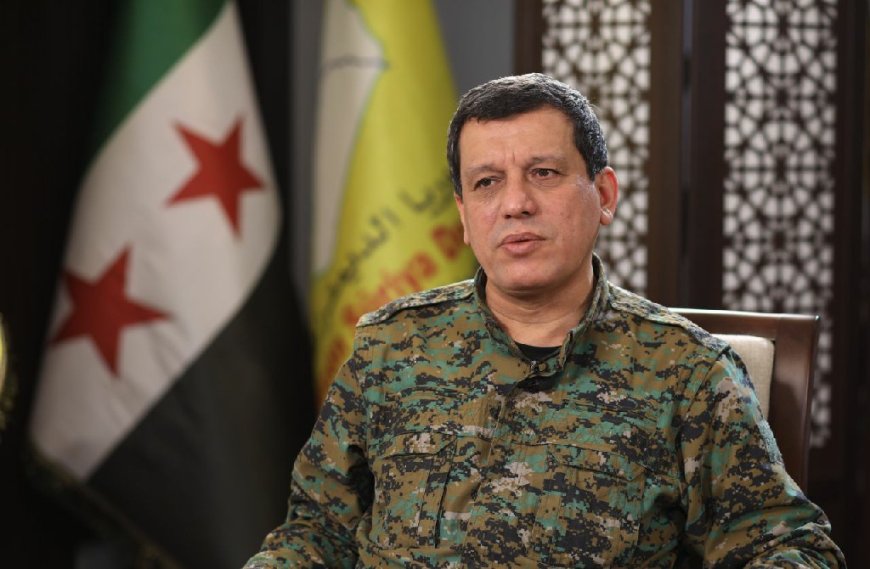
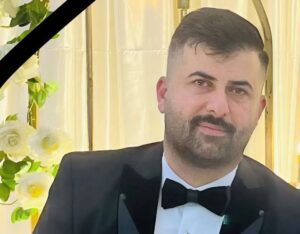
The Commander of the Syrian Democratic Forces, General Mazloum Abdi, stated that the targeting of the condolence tent for the young man Alaa Al-Amin in the city of Qamishlo constitutes “an act of sabotage,” affirming that the competent authorities will pursue those responsible for the incident and bring them to justice.
Abdi explained in a post published on the platform “X” that “the attack targeting the condolence tent of the young man Alaa Al-Amin in Qamishlo constitutes an act of sabotage, and we affirm that the competent authorities will relentlessly pursue the perpetrators and they will be brought to accountability in accordance with the law.”
He added that Alaa had previously been detained by a security body affiliated with the Autonomous Administration and had died during that period, noting that “an impartial investigation committee has been formed to determine the circumstances of the crime.”
Abdi further confirmed that the results of the investigation will be disclosed after its completion and shared with the public “transparently in the coming days.”
The Commander of the Syrian Democratic Forces stressed the “full commitment to holding accountable and bringing to justice all those involved and responsible for this crime, regardless of the entity they belong to, their connections, or their positions, without any leniency or exception.”
Abdi also extended his deepest condolences to the young man’s family, stating: “We extend our deepest condolences and sincere sympathies to his family and relatives, and we assure them that justice will be achieved.”
Earlier, the human rights platform “Rights Monitor” reported that unidentified individuals set fire on the evening of Tuesday, 10 March 2026, to the condolence tent of the Kurdish young man Alaa Al-Din Adnan Al-Amin in the city of Qamishli in northern Syria, in an incident that sparked widespread discontent among residents.
According to local sources, unidentified persons set the condolence tent on fire on Tuesday evening. A circulating video from the scene included the voice of a person accusing what he described as “Apoists” of being behind the burning of the tent.
The burning of the condolence tent triggered a wave of anger and resentment among the city’s residents, who considered the incident an affront to the feelings of the victim’s family and an additional escalation of tensions following the young man’s death under controversial circumstances.
The young man, Alaa Al-Din Adnan Al-Amin, a Syrian-Swedish citizen and a native of the city of Qamishli, had died after months of enforced disappearance following his arrest by the Asayish forces affiliated with the Autonomous Administration in northeastern Syria.
According to information obtained by local sources, Al-Amin had returned to his hometown of Qamishli several months prior to the incident after years of living abroad, with the aim of completing his wedding ceremonies and celebrating the occasion with his family and friends.
However, this return turned into a tragedy, as information indicates that he was arrested by Asayish forces approximately one month after his marriage, without any announcement of the reasons for the arrest or the filing of any formal charges against him.
From the moment of his arrest, all news of him ceased completely, as he was subjected to approximately six months of enforced disappearance. During that period, his family received no official information regarding his place of detention or his health or legal status, despite their repeated attempts to learn his fate.
On the morning of 8 March 2026, the young man’s family received a phone call requesting that they come to collect his body, without any official explanation regarding the circumstances of his death.
The family reported that when they received the body, it was in an advanced state of decomposition. Clear signs of torture were also observed on the body, including bruises in various parts of the body, a broken nose, and injuries to the head.
According to preliminary assessments, these indications suggest the possibility that the victim was subjected to torture prior to his death. It is also believed that he may have died approximately two months before the date on which the body was handed over.
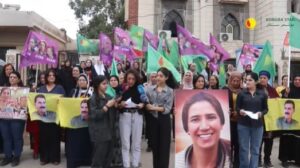
The incident sparked a broad wave of anger and resentment among residents of Qamishli, where activists and local community leaders called for full disclosure of the circumstances of the death and the opening of a transparent and independent investigation to identify those responsible for Al-Amin’s arrest, his enforced disappearance, and what he was subjected to during his detention.
For its part, the General Command of the Internal Security Forces “Asayish” issued a statement regarding the death of Alaa Al-Amin, stating that “immediately after the incident occurred, a high-level investigation committee was formed comprising a group of specialists, legal experts, and observers, to examine all details of the incident and determine the precise circumstances of the death.”
The statement added that the leadership would commit to “publishing the results of the investigation with full transparency and clarity once it is completed, while emphasizing that anyone proven to be involved in any negligence or violation of the applicable laws and regulations will be held accountable.”