The President of the Kurdistan Region affirms support for Yazidi rights and identity, emphasizing the necessity of implementing the Yazidi Female Survivors Law, creating conditions for the return of displaced persons, and reconstructing Sinjar.
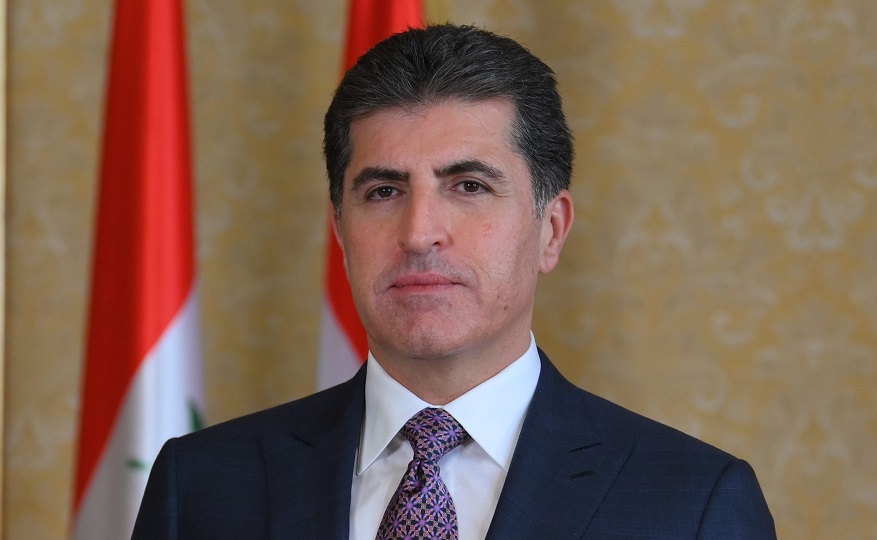
President of the Kurdistan Region, Nechirvan Barzani, reaffirmed the continuation of efforts to liberate kidnapped Yazidis, reveal the fate of the disappeared, and achieve justice for the survivors of ISIS crimes, reiterating the Region’s commitment to supporting the Yazidis and protecting their legitimate rights and identity.
This came in a speech delivered on Barzani’s behalf by Dilshad Shahab, Senior Advisor to the President of the Kurdistan Region, on Wednesday morning during the launch ceremony of the “Survivors’ Advancement Network” for Yazidis, held in Erbil in the presence of officials and prominent figures from within and outside the Kurdistan Region.
Barzani clarified in his speech, that the ceremony was not limited to commemorating the genocide and crimes committed by ISIS against Yazidi citizens, but represented a new beginning for the survivors, embodying their will and determination to build a better life and a more secure future.
He pointed out that through their resilience and courage, the Yazidis proved that terrorism—despite the crimes and brutality it committed—failed to break their will or eradicate their hope for life, emphasizing their adherence to restoring their rights and building a better future for themselves and their children.
Regarding the importance of the new network, Barzani stated that the launch of the “Survivors’ Advancement Network” represents an important step toward a phase where the survivors themselves become the initiators and an influential voice in issues and decisions related to their rights and future. He expressed his support for the network’s goals, considering it an opportunity to enhance cooperation and solidarity among survivors from the various components targeted by ISIS crimes.
The President of the Kurdistan Region renewed his assertion that the Region will remain a supporter of the Yazidis and a protector of their legitimate rights and identity in Kurdistan, Iraq, and everywhere else they reside, stressing that efforts will continue as long as a single kidnapped person remains, with the aim of liberating the abducted, returning them, and uncovering their fate.
Barzani noted that achieving justice, ensuring survivors’ rights, revealing the fate of the disappeared, and implementing the Yazidi Female Survivors Law, along with creating appropriate conditions for the return of displaced persons and the reconstruction of Sinjar and other Yazidi areas, represent primary tasks for which efforts will continue to be realized.
He emphasized that survivors have the right to obtain justice and that their lives should not remain captive to the tragedies of genocide; rather, they must be given the opportunity to actively participate in building their community and shaping their future. He also stressed that listening to their voices and involving them in decisions concerning their rights and lives constitute an essential part of justice and respect for human dignity.
Barzani concluded by affirming that the success of the network will represent a success for efforts aimed at achieving justice, recovery, and fostering peace and coexistence, congratulating the survivors on this initiative and praising their courage, resilience, and determination to move forward.
The roots of the Yazidi survivors’ issue date back to the ISIS attack on the Sinjar region on August 3, 2014, and the accompanying killings, kidnappings, sexual enslavement, and forced displacement. In June 2016, the UN Independent International Commission of Inquiry on the Syrian Arab Republic concluded that the group had committed genocide, crimes against humanity, and war crimes against the Yazidis.
On the legal level, the Iraqi Parliament passed the Yazidi Female Survivors Law No. 8 of 2021 on March 1, 2021, providing a framework for reparations and redress for survivors of crimes committed against Yazidis, Turkmen, Christians, and Shabaks. However, the files of missing persons, justice, the reconstruction of Sinjar, and the creation of safe conditions for the return of displaced persons remain among the most prominent challenges facing survivors and the Yazidi community.
The “Survivors’ Advancement Network” initiative comes within this context, regarding the enhancement of the survivors’ role in expressing their needs and participating in decisions related to their rights and future—goals that intersect with UN calls to ensure reparations, hold those responsible for crimes accountable, and support recovery and stabilization in Sinjar.
Note: This text is translated from the original Arabic version… Read the Arabic version:Click here