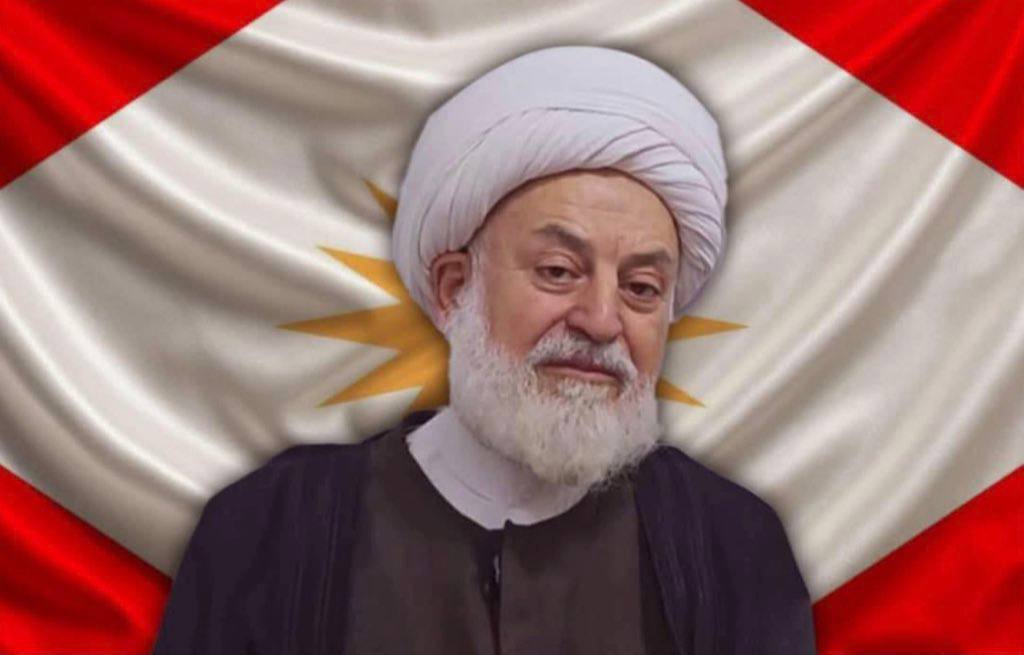
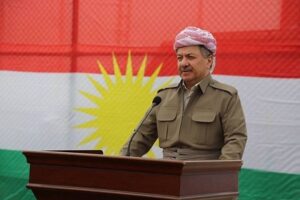
Ghazal Ghazal, President of the Supreme Alawite Islamic Council in Syria and the Diaspora, has issued a statement regarding the case of young Batoul Suleiman Alloush. He asserted that the challenges facing the Alawite community are part of a “systematic targeting” rooted in “terrorism and calculated sectarian rhetoric.”
Ghazal stated, “The authorities of terrorism in Syria have darkened their hearts toward us with their hatred; the demons of malice have taken hold of them, and they have persisted in the brutality of targeting us through terrorism and calculated sectarian discourse.” He added that they have employed “various systematic methods intended to exhaust us, break our will, and sow fear and division.”
He pointed out that “the most vile and despicable of these methods is fighting us through ourselves, striking us with our own hands, and planting doubt in the hearts of our children.” He considered the declarations made by Batoul’s father to be “the truth that fear attempted to bridle for a long time,” describing his statements as a “cry that has unveiled the hidden pain in many homes.”
Ghazal emphasized that Batoul’s father “triumphed for himself and for us when he chose to take a stand rather than remain silent, and steadfastness over brokenness.” He stressed that “Batoul is not the daughter of an individual, but the daughter and the honor of the entire community,” calling for support and solidarity with her family.
He further noted that “the enemy only infiltrates through the cracks of division and only gains strength when they witness a brother abandoning his brother,” adding that “the violation of the blood of one of our men or the disappearance of a girl from her home is a wound to the dignity of the entire community.”
Ghazal underscored that “the return of our daughter Batoul and all our missing daughters to their families is a matter that accepts no compromise, nor does it tolerate procrastination or delay.” He warned that “any delay is a provocation to the resolve of a people known for the firmness of their stance and the unity of their word.”
Rights Monitor Syria Reports Concerns of Abduction
In a related context, Rights Monitor Syria stated that the mother of Batoul Suleiman Alloush continues her appeals to relevant authorities and human rights organizations to provide protection for her and her family following her daughter’s disappearance in Latakia Governorate, amid escalating fears that she has been subjected to kidnapping and enforced disappearance.
According to the platform, Batoul’s mother confirmed in circulating recordings and appeals that the family has become “known and targeted” due to their continued demands to reveal her daughter’s fate. She stated, “The whole world now knows our issue; it is a matter of captivity (Sabiy),” demanding protection for her family members and stressing that she will not give up the search for her missing daughter.
The platform clarified that Batoul Suleiman Alloush, a student at the Technical Medical Institute at Tishreen University in Latakia, lost contact on Wednesday, April 29, 2026, while returning from the university.
It added that a message attributed to Batoul was circulated on May 6, 2026, accompanied by a photo of her personal ID. The message contained claims that she left her home of her own free will “for the sake of her religion,” and that she had “converted to Islam” and migrated “for the sake of God,” according to the circulated text.
The message sparked widespread controversy on social media, as family members and human rights activists questioned the circumstances of its writing. They argued that its content carries a militant ideological and promotional character that is inconsistent with her style or her social and sectarian background.
Religious Fatwa Sparks Further Controversy
The controversy intensified following the publication of a fatwa by cleric Abdul Razzaq al-Mahdi regarding Batoul Alloush’s case. He asserted that returning her to her family is “religiously impermissible” if she left her home after “converting to Islam,” calling for her protection and for her not to be returned to her relatives.
The young woman’s family indicated that such rhetoric contributes to incitement and justifies the detention or disappearance of their daughter under a religious cover, exposing the family to further threats and social targeting.
According to the monitoring by Rights Monitor Syria, Batoul’s case falls within an increasing context of reports involving kidnapping, enforced disappearance, and arbitrary detention targeting civilians in Syria—particularly women and girls belonging to religious or sectarian minorities—amid deteriorating security conditions and weak protection and legal accountability mechanisms.
The platform emphasized that these incidents reflect a “disturbing pattern of gross human rights violations,” including kidnapping, enforced disappearance, threats, and sectarian incitement. This constitutes a direct violation of the right to liberty and personal security and compounds the vulnerability of women, children, and the elderly, especially in environments affected by conflict and sectarian divisions.
Note: This text is translated from the original Arabic version… Read the Arabic version:Click here