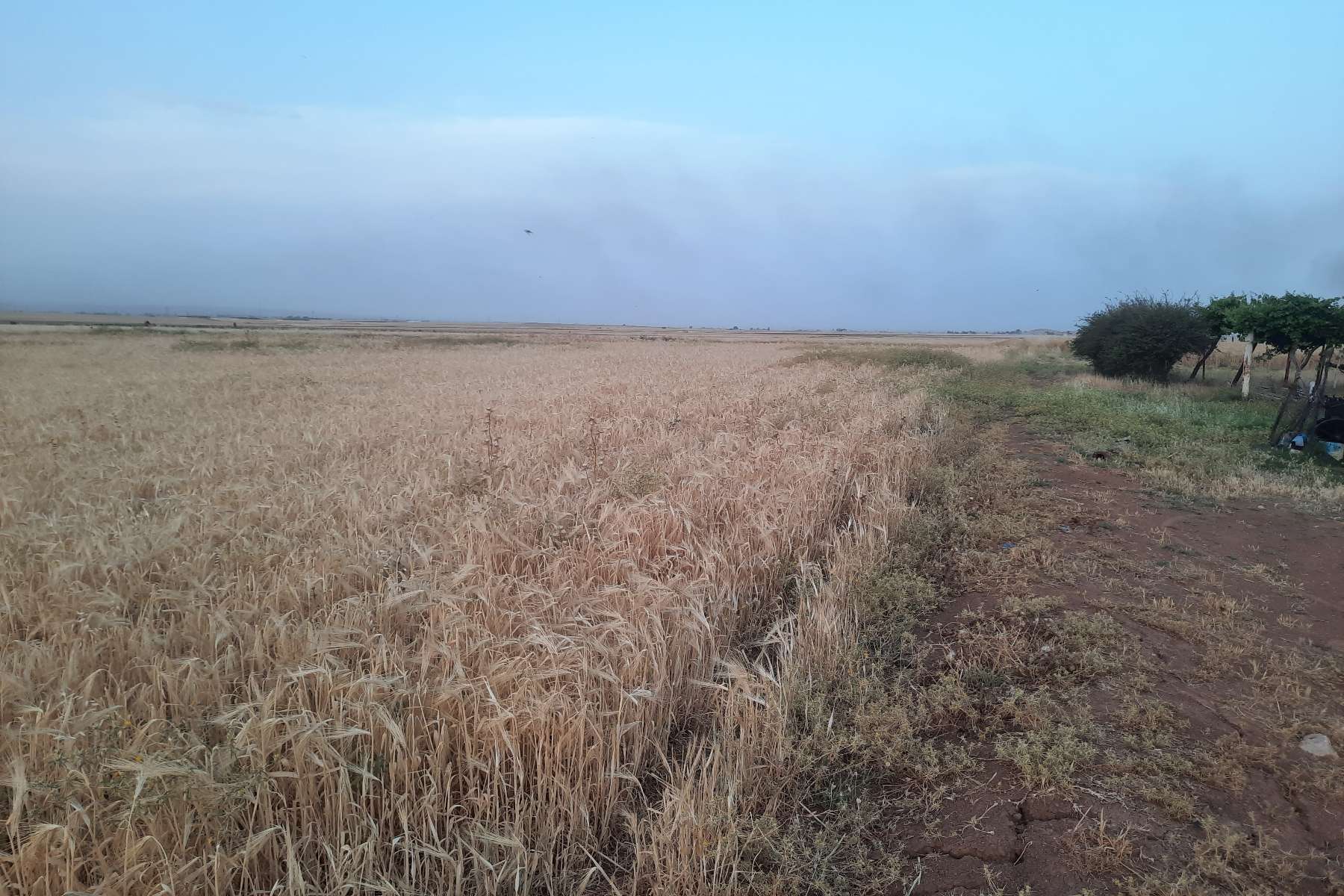
Warnings are escalating in the northern countryside of northeastern Syria regarding the repercussions of the sale of lands belonging to those known as the “Arab Al-Ghamr” (the submerged Arabs). There are growing fears that this phenomenon could transform into a complex social and legal crisis that may explode at any moment, given the absence of clear solutions to restore rights to original owners or regulate current ownership processes.
According to monitoring by activists from the Syrian Observatory for Human Rights (SOHR), the primary ownership of these lands belongs to local Kurdish inhabitants. These lands were seized over previous decades as part of government policies later associated with the project known as the “Arab Belt,” where they were redistributed to Arab families displaced from other regions, particularly following the construction of the Euphrates Dam in the 1970s.
The term “Arab Belt” refers to the process of demographic change and Arabization implemented by the previous Syrian government in Hasakah Governorate in 1974. This involved the seizure of agricultural lands owned by Kurdish tribes, notables (Aghas), and farmers along the Syrian-Turkish border—within Kurdish-majority areas—and granting them to Arab farmers brought from Raqqa and Aleppo governorates after their own lands were submerged by the waters of Lake Assad (the Euphrates Dam reservoir). These farmers subsequently became known as the “Maghmurin” (those affected by the flooding).
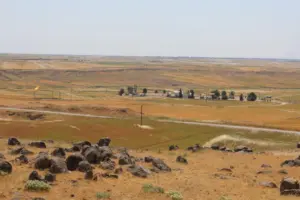
This belt extends approximately 275 kilometers in length and reaches a maximum depth of about 15 kilometers, stretching from the city of Al-Malikiyah in the east to Ras al-Ain in the west. These areas are locally referred to as the “Line 10 Lands” and are considered among the most fertile agricultural regions. They were originally inhabited by Kurdish tribes with deep social and familial ties to their counterparts across the Turkish border.
The roots of these policies date back to the period following the Ba’ath Party’s rise to power in Syria. A series of legal and administrative measures were implemented, most notably the Agrarian Reform laws, coinciding with the results of the 1962 Hasakah census. That census led to the stripping of Syrian nationality from a wide segment of Kurds, making it easier to designate their lands as “state property” and redistribute them within resettlement projects.
These policies were also based on security and political visions proposed in the 1960s, most notably a 1965 project by security officer “Muhammad Talab Hilal,” who suggested establishing an Arab population strip along the Syrian-Turkish border. This was later translated into the creation of dozens of model villages for the “Al-Ghamr” Arabs in Kurdish-majority areas.
According to information, these lands were initially granted under “usufruct” arrangements or long-term lease contracts. Later, subsequent decisions allowed for the formalization of ownership after specific periods, leading to some beneficiaries receiving official title deeds—known as the “Green Tabo”—which allow them to legally buy and sell the land.
Conversely, another portion of these lands is still being traded through informal sales contracts facilitated by lawyers and witnesses without firmly established legal title deeds, further complicating the real estate landscape in the region.
Activists quoted original landowners in the Al-Darbasiyah countryside stating that the problem is poised to worsen in the future should any decisions be issued to cancel or reconsider previous distribution policies. Such a scenario could place original owners in direct confrontation with new buyers who purchased these lands in good faith.
They pointed out that a single plot of land may have undergone a series of cumulative sales—some legal and others undocumented—potentially leading to multiple claimants of ownership over the same property.
In this context, a resident from the “Al-Ghamr” community reported that many lands are offered for sale, but the current instability in the region is hindering the completion of deals. He suggested that this will likely lead to widespread disputes in the future between the various parties connected to these properties.
Kurdish activists in the region warn against the continuation of buying and selling operations in the absence of a clear legal framework or comprehensive solutions for the ownership file. They consider that this could lead to a “social conflict explosion” between the original owners, current residents, and new buyers.
The Syrian Observatory for Human Rights (SOHR) emphasizes that addressing this file requires fair legal solutions that guarantee the rights of all parties and prevent the region from sliding into new internal conflicts, given the fragility of the security and living conditions across northeastern Syria.
Source: Syrian Observatory for Human Rights (SOHR)