In a statement issued on July 11, 2026, the parties of the Kurdish Consultative Meeting in Syria called for ending the effects of Arabization policies that targeted Kurdish regions, and for restoring the original Kurdish names of cities, towns, villages, and geographical and historical sites, and adopting them officially. The statement pointed out that the Ba’ath regime’s policies included changing historical names as part of what it described as an attempt to obliterate the national and cultural identity of the Kurdish people. It demanded that the new Syrian state repeal the decrees that legitimized Arabization, establish an independent national committee to document and re-adopt original names, and consider addressing the effects of Arabization as part of the transitional justice process. Furthermore, it called for including the protection of linguistic and cultural diversity within constitutional principles, abolishing the Arab Belt project, restoring rights to their owners, and compensating those affected. The statement emphasized that restoring historical names represents a “national entitlement and a historical right” and a fundamental step toward consolidating equality and national reconciliation, asserting that building the future Syria requires a break from the policies of exclusion and discrimination, and the adoption of an approach based on justice and the recognition of national and cultural pluralism.
Full Text of the Statement:
Statement Issued by the Kurdish Consultative Meeting Parties in Syria
Regarding the Necessity of Ending the Effects of Arabization Policies and Restoring Original Kurdish Names to Regions and Geographical Sites in Syria
Over decades of the authoritarian Ba’ath regime’s rule, the Kurdish people in Syria have been subjected to a series of racist policies and practices targeting their national existence and legitimate rights. Foremost among these was the systematic policy of Arabization, which was not limited to the Arab Belt project, the exceptional census, and deprivation of basic rights, but also included changing the historical names of Kurdish cities, towns, villages, mountains, rivers, hills, and archaeological and geographical sites, in an attempt to obliterate the national and cultural identity of the Kurdish people and falsify facts related to the geography of Syrian Kurdistan.
These policies were part of a political project aimed at erasing the collective memory of the Kurds, denying their historical existence, and imposing an artificial identity on the geography, in clear violation of the most basic principles of human rights, and the cultural and national rights recognized by international covenants and conventions.
The fall of the Ba’ath regime imposes a historical responsibility on the new Syrian state to remove all legal, political, and cultural consequences left behind by that regime, and to work on correcting the injustices inflicted upon the various national components, foremost among them the Kurdish people.
Based on this, the parties of the Kurdish Consultative Meeting in Syria demand the following:
1. Restoring all original Kurdish names to cities, towns, villages, shrines, and archaeological, historical, and geographical sites that were subjected to Arabization, and officially adopting them in all documents, registers, maps, and public institutions.
2. Repealing all decisions and decrees that legitimized Arabization policies and the changing of names of Kurdish regions.
3. Forming an independent national committee including specialists in history, geography, languages, and archaeology, alongside representatives from the concerned regions, to document the original names and re-adopt them according to historical and scientific standards.
4. Considering the resolution of the effects of Arabization as an essential part of the transitional justice process, and redressing the moral and cultural harm inflicted upon the Kurdish people as a result of the policies of denial and exclusion.
5. Including the protection of linguistic and cultural diversity, and respect for national specificities, within the constitutional principles regulating the new Syrian state.
6. Abolishing the racist Arab Belt project, which is considered one of the tools of demographic change in Kurdish regions, restoring rights to their owners, compensating those affected, and normalizing conditions to what they were previously.
The restoration of historical names to their owners is not a symbolic or superficial demand; rather, it is a national entitlement and a historical right, and a fundamental step in the path of national reconciliation, consolidating the principle of equality among all Syrians, and building a democratic, pluralistic state based on mutual recognition and respect for the national and cultural rights of all its components.
The parties of the Kurdish Consultative Meeting in Syria reaffirm that building the future Syria requires a complete break with the policies of exclusion, discrimination, and the forced alteration of identity, and the adoption of a new approach based on justice and the recognition of national and cultural pluralism, viewing it as a source of wealth and unity for the Syrian state, rather than a cause for conflict and division.
July 11, 2026
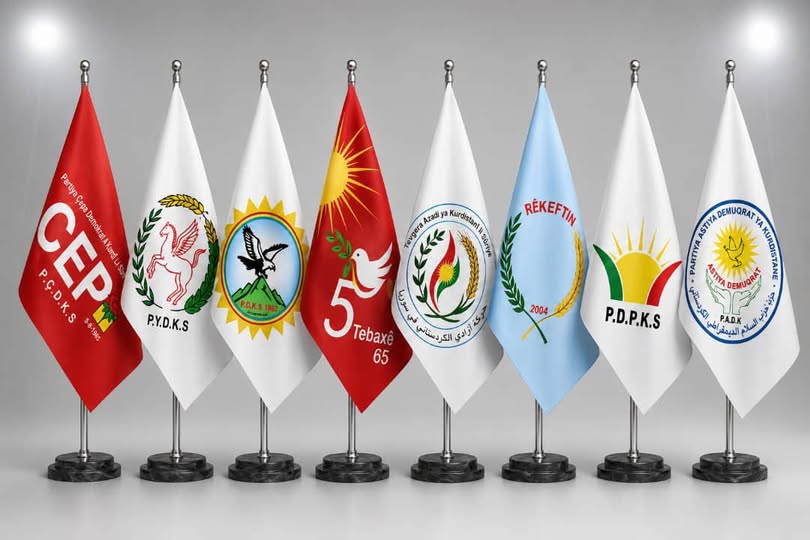
Consultative Meeting Parties:
Kurdish Democratic Unity Party in Syria (Yekîtî).
Kurdish Democratic Party in Syria (al-Parti).
Kurdish Democratic Left Party in Syria.
Kurdistan Azadi Movement in Syria.
Syrian Kurdish Democratic Accord Party (Wifaq).
Kurdistan Democratic Peace Party.
Kurdish Left Party in Syria.
Kurdish Democratic Progressive Party in Syria.
Note: This text is translated from the original Arabic version… Read the Arabic version:Click here