The “Jerusalem of Kurdistan”.. Kirkuk’s Joining of the Union of Turkish World Municipalities Reignites Debate Over the City’s Identity and Constitutional Status
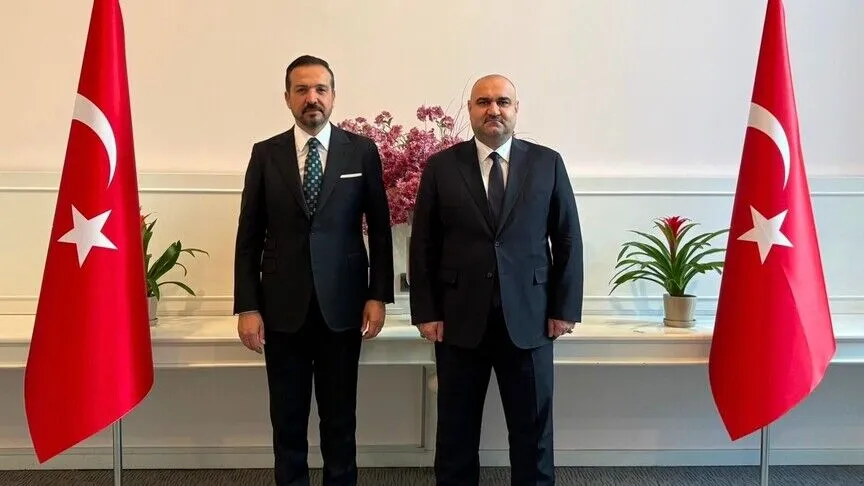
Kürşad Zorlu, Vice President of Türkiye’s ruling Justice and Development Party (AKP), announced that the Kirkuk Governorate has officially joined the Union of Turkish World Municipalities (TDBB), following the ratification of its membership during a meeting held in the Turkish city of Karaman. He considered the step as one that will open new horizons for service and economic cooperation between Kirkuk and the municipalities of Turkic states.
Zorlu stated that Kirkuk’s membership was definitively approved during the meeting held on Friday, July 31, 2026, noting that the decision represents a message confirming the Union’s continued activities despite the withdrawal of several Turkish municipalities for political reasons. Describing Kirkuk as a “home to Turkmen,” he emphasized that its accession would expand areas of cooperation between the governorate and the municipalities of Turkic nations.
The Turkish official linked this move to strategic cooperation projects between Baghdad and Ankara, foremost among them the “Development Road” project extending through the Ovaköy border crossing toward Türkiye and Europe. This is alongside the participation of the Turkish Petroleum Corporation (TPAO) in developing oil production fields in Kirkuk, which he noted would contribute to strengthening economic relations between Iraq and Türkiye in the coming phase.
The Union of Turkish World Municipalities is an organization that includes municipalities and local administrations from Türkiye and several countries and regions with Turkic ties, focusing on exchanging expertise and implementing joint developmental and service projects among its members.
Kirkuk’s accession to the Union comes amidst an ongoing political debate over its constitutional status, as it is considered one of Iraq’s most politically and ethnically sensitive and diverse cities, encompassing Kurdish, Turkmen, and Arab components, alongside Chaldeans, Assyrians, and other groups.
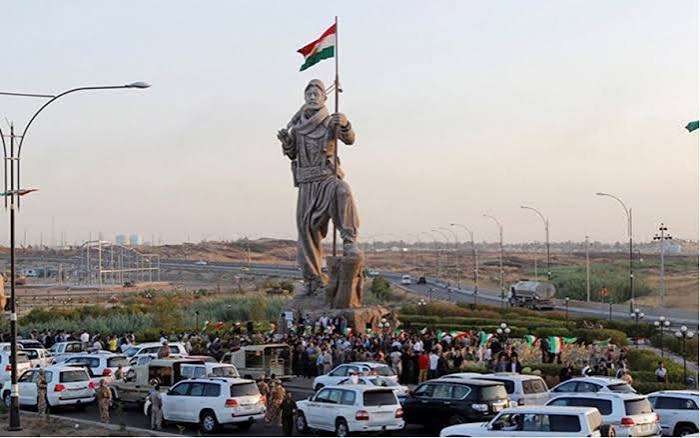
Kurds view Kirkuk as a historical part of Kurdistan, with many of their leaders describing it as the “heart of Kurdistan” or the “Jerusalem of Kurdistan.” The late President Jalal Talabani referred to it as the “Jerusalem of Kurdistan,” while President Masoud Barzani described it as the “heart of Kurdistan,” with Kurds demanding the resolution of its status under Article 140 of the Iraqi Constitution. Conversely, Turkmen consider the city their main historical center in Iraq, while Arab political forces emphasize Kirkuk’s Iraqi identity and oppose its annexation to the Kurdistan Region.
Kirkuk has been subjected, particularly since the 1970s, to Arabization policies pursued by the Ba’ath Party regime aimed at altering its demographic composition and reinforcing central government control over the oil-rich governorate. These policies involved displacing large numbers of Kurds and confiscating their property, in exchange for settling Arab families brought in from central and southern Iraqi governorates.
Following the fall of the former regime in 2003, Kirkuk became at the forefront of what is constitutionally known as the “disputed territories” between the federal government and the Kurdistan Regional Government. Article 140 of the Iraqi Constitution stipulates the completion of normalization procedures, followed by a census, and subsequently a referendum to determine the will of the residents of Kirkuk and other disputed areas. While these stages were supposed to be completed by the end of 2007, the article has not been implemented to date, leaving the Kirkuk issue as one of the most complex political files in Iraq.
Note: This text is translated from the original Arabic version… Read the Arabic version:Click here