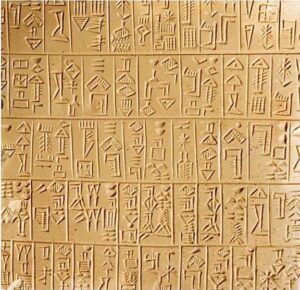
First of all, the Kurdish language possesses a long age and linguistic history rooted in the depth of the classical and ancient history of our Middle Eastern region[1], no less than three thousand years or even much more. The same applies to the age of its speakers and utterers, and the age of its people and folk as an independent nation and ethnicity by itself and with its culture, crowned with its distinctive language with all its beautiful and diverse dialects. This language relies and is based on its strong, basic linguistic components of rich, vital, and smooth vocabulary that is continuously capable of etymologization, grafting, and development, along with its qualified, easy, and smooth potentiality to be used in all types of human sciences, from natural to intellectual.
Here we must shed a little light on the condition and status of the Kurdish language used among Kurds today.
In general, its condition is unbalanced, shrouded in ambiguity, displacement, and isolation. From a scientific and technical linguistic perspective, it appears feeble, fragile, and weak in terms of usage and applied utilization, looking in a primitive form as if it is wearing worn-out clothes, afflicted with many structural diseases. Nevertheless, this feebleness is not uniform; it weakens in some regions and territories and grows stronger at varying rates in other regions and territories, as it acquires strength and immunity wherever there is an independent entity protected and sponsored by a political authority with semi-independent administrative powers. This situation applies completely to its Kurdish speakers and utterers who are weak and deprived in many areas of learning their mother tongue systematically and using it in their public, practical, and professional lives. In other words:
The language of the Kurds grows stronger, flourishes, and develops wherever their flag flutters!
It is understandable to a certain extent in a given environment, and more ambiguous in other environments, which places it in a real crisis and a state of weakness. However, despite its illness and need for treatment, it is not in the throes of agony or death. In short, it is the mirror that accurately reflects the reality of the Kurds and their society in general, with all its ripples affecting the lives of individuals and society.
This linguistic morbid condition is not a Kurdish exception, but rather a phenomenon it shares with other peoples in the region that resemble it in their lived civilizational reality, such as contemporary Arabic, which also suffers from feebleness, weakness, and stagnation as a logical consequence of the reality of its speakers and utterers, and the decline and backwardness of the political administrations in the Arab countries that manage and direct their educational, cultural, scientific, and productive plans. The linguistic phenomenon — first and foremost — accurately and strongly reflects the political and existential structure framing its self-productivity and national culture, which determines the personal linguistic identity of the individual and society as a whole.
Political fragmentation and tribal structure and their linguistic impact on Kurdish society:
This structural disparity in the general Kurdish language is due to two structural factors, which are:
Geopolitical fragmentation: The regulating political and administrative situation in natural Kurdistan today is fragmented and divided among four state institutions — Iran, Iraq, Turkey, and Syria. Each of these countries differs in terms of the official language circulated within its sphere (Syrian Arabic, Iraqi Arabic, Ataturkist Turkish, Modern Persian), which imposes its language and terminology on the local Kurdish tongue.
Tribal and clan structure: The social, familial, and traditional structure of the Kurds, even to this day and in most of their regions of residence, is still divided and governed by tribal and clan ties, each of which possesses its own isolated dialectal and linguistic characteristics.
Alongside the Kurds residing in their motherland who live under the guardianship of those four states, there are large Kurdish demographic groups that settled outside their historical homeland since distant periods, and their mother tongue did not die. On the contrary, over time they formed and created a modern, developed, contemporary Kurdish language with their own special features (as in Khorasan/Iran, and Armenia), as well as in the huge Kurdish neighborhoods inside capitals and major cities in the states established after the First World War in 1918 (Istanbul, Izmir, Damascus, Aleppo, Baghdad, Tehran, and so on). Added to this is the great interest given to it after the more recent Kurdish influx over several decades of the last century, especially in the first two decades of the third millennium, towards European migrations and dispersions (especially Germany) (the Diaspora), and the establishment of Kurdish institutes, associations, and schools therein[2], whose core and primary focus is the mother tongue.
Throughout the ages and long epochs, the history of the Kurdish people has been characterized by the absence of consensus, cohesion, and communication from a political standpoint, and their diaspora has never been historically gathered in a single state institution regulating their living, administrative, educational, and cultural affairs. This logically explains this deep disparity in the structure of its general language and rules. The main reason for the lack of cohesion and communication among Kurdish human groups with each other in a solid institutional or administrative manner throughout history may be attributed to the difficult climatic and geographical nature, the rugged high mountain topography, and the topography of their regions characterized by long winters, which distinguish their areas of residence and living; in addition to the slowness of ancient communication means and tools and their inability to break geographical isolation and overcome the conditions of their winter climate, which is covered with snow for a long period of the year, compared to the ultra-fast modern connectivity and communication tools in the present era[3].
Despite this historically torn, politically, geographically, topographically, and climatically besieged scene, the Kurdish language has not died in its basics and roots, and has not become extinct to this day. This is a remarkable phenomenon that is subsequently attributed to various factors and elements of resilience, susceptible to precise explanation and analysis through specialized scientific and objective research methodologies[4].
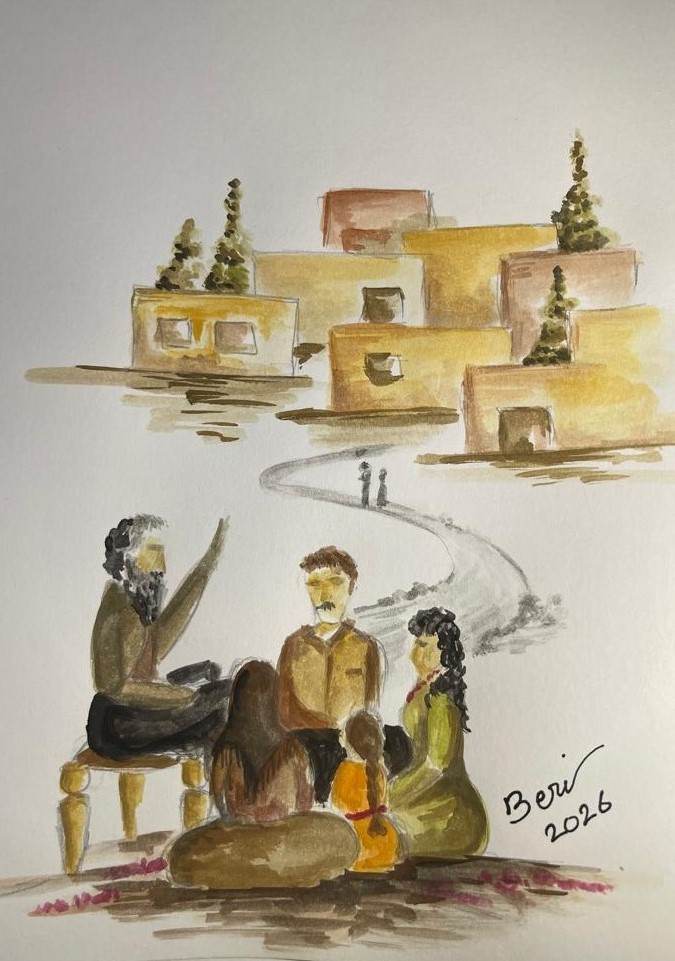
One of the secrets of its non-extinction and permanence to this day undoubtedly lies in the important and fundamental role of the Kurdish mother in passing on her language and the language of her people, and consequently in indirectly passing on the language of her ancestors and great-ancestors to her children, her grandchildren, the grandchildren of her grandchildren, and so on.
TRIALS TO DEVELOP THE KURDISH LANGUAGE AND THE CRISIS OF STANDARDIZATION,
The Middle East region witnessed a radical shift in its geopolitical and demographic map shortly after the end of the First World War (in 1918), where the Kurds were distributed and divided among newly formed composite administrative regions that were subjected to varying linguistic policies ruled by completely different and heterogeneous systems and foundations. That era was characterized, for all the peoples of the region, as a phase of searching for self and identity, whether among the Turks (through Ataturk’s experiment in engineering a nation and inventing a modern hybrid Turkish language with European specifications and flavor), among the Arabs, or among the Kurds through the establishment of nationalist-oriented liberation parties and movements.
– The foundational attempts: Latin alphabet and grammatical etymologization,
The pioneering attempt to invent a general, modern, and somewhat understandable communicative Kurdish language, based on an alphabet taken from the Latin script and partially influenced by Ataturkist linguistic engineering, emerged during the thirties and forties of the last century at the hands of the educated Kurdish prince Celadet Bedirxan[5] in Damascus and Beirut, and later through the modest efforts of his brother Kamuran Bedirxan in Paris. The launch of this project was represented in formulating new grammar, syntax, and morphology for the language[6], and creating an alphabet branched from the Latin script.
These linguistic development efforts were repeated in various ways at the hands of educated and learned Kurds in “Yerevan” in the former Soviet Republic of Armenia, to be followed by a proliferation of efforts throughout Kurdish settlement areas and diasporas[7].
– Academic institutionalization and militant political tongue,
The attempts took on a more serious character with the establishment of institutes for Kurdish studies in the seventies, eighties, and nineties of the 20th century and the beginnings of the third millennium, whether in the universities of the autonomous regions in the Kurdistan Region of Iraq — especially in the cities of Sulaymaniyah and Hawler (Erbil) — or in Europe, such as the “Kurdish Institute of Paris,” and later the “Berlin Institute,” which presented a distinguished experience under the administration of the esteemed Professor Ismet Sheriff Vanly, despite the institute’s short life[8].
On the other hand, political movements and organizations of a militant liberation nature that emerged in the last century contributed to formulating a “unified and understandable conversational language” for a brief period, through their various literatures, activities, and organizations, which left an effective impact on the general Kurdish psyche[9].
Satellite media: oral approximation or structural dwarfing?
Currently, visual Kurdish media — unintentionally, driven by its desire to gain the largest possible base of followers via the wide satellite TV network — seeks to create a common conversational language. This attempt goes through two phases:
Phase first: Introducing the public of Kurds to the diverse dialects and presenting them consecutively.
Phase second: An attempt to approximate these dialects to produce a mass, circulating language understood by the majority.
Despite the positivity this simplified auditory-oral experience carries in breaking dialectal isolation, it entails clear negatives. Through its superficial mechanism, it leads to downsizing and dwarfing the classical Kurdish language, emptying it of its antiquity and long historical roots by reducing it to a consumerist circulating pattern.
– Obstacles to standardization and the proposed solution,
The opportunities and constraints imposed on reforming and standardizing the Kurdish language in its various forms are closely related to the educational standards and policies of the countries to which the Kurds are politically and culturally subjected. The Kurdish linguistic scene today lacks a single standard criterion that can be adopted in speeches, writing, or institutional transactions, as the functions of the Kurdish language remain confined within the orbit of media, poetry, and smooth literature, incapable of venturing into the horizons of deepened intellectual and natural scientific production.
This is because the cultural background of each writer or practitioner is directly related to the educational and linguistic system of the state in which he grew up and was raised. Kurdish geography is divided among four completely different and distinct educational and cultural systems. Moreover, the experience of the Kurdistan Region and the experience of the three cantons (Jazira, Kobani, Afrin 2014–2018), and thereafter the Autonomous Administration in northeastern Syria (Rojava), which effectively ended in the early days of 2026, have not yet borne fruit in this regard, due to the absence of a single official linguistic reference that unifies standards for all.
An inevitable proposal: The Board of Linguistic Standards and Norms,
It has become necessary and urgent to work on establishing an independent and comprehensive specialized board of standards and norms (Norm)[10], concerned with language affairs and tasked with controlling, determining, and unifying the writing of Kurdish vocabulary and terms, continuously updating them, and establishing solid foundations for the rules of grammar, morphology, and philology, so that its decisions become binding and a reference for all educational, media, and research institutions, alongside a Kurdish-Kurdish dictionary that interprets and explains vocabulary, identifies its source, and dates its linguistic age.
As for the popular level, the acceptance of the circulated linguistic image remains fragile and weak as a result of its mixing with terms born of dominant official languages (such as Syrian Arabic, Iraqi Arabic, Modern Persian, or Ataturkist Turkish). The acceptance of the language in its sober grammatical mold (classical) is confined to the circles of the educated and culturally active elite, especially in diaspora countries.
The prosperity and development of the language and the growth of its literature and the creativity of its thinkers are conditional upon the existence of political freedom first, which consequently leads to unrestricted intellectual and cultural management, and along with it the creation of a productive Kurdish society at all levels, supported by specialized schools, periodicals, and periodic publications, and most importantly of all: the creation of a reading or following audience!
I was deeply saddened by a recent statement made by a Syrian Kurdish politician regarding the weak capabilities of the Kurdish language, and confining it only to certain fields. My article here is not to refute him, nor to defend anyone. It is merely to clarify and understand things from their scientific aspect. By fortunate coincidence, this article, with some changes and additions, is a chapter from several chapters comprising my new updated book entitled “Language is a Living Organism,” which will be published very soon.
[1] Scientifically, it is commonly known that the history of the Middle East region (or what is known as the Ancient Near East) is divided into basic phases: Ancient history, which ends with the “Battle of Issus” north of the city of Alexandretta today in 333 BC between Alexander the Great and Darius III of the Achaemenid Persian Empire, for Classical history (Hellenistic-Roman-Byzantine) to begin thereafter, followed by Islamic history.
[2] Mentioning the Paris Institute, it is still limited in its activity, while the Berlin Institute closed at the end of the nineties of the century. However, it must be remembered here that the situation changed totally and radically in the third millennium and especially after 2010, with the establishment of associations, institutes, and schools to teach the Kurdish language, such as the pioneering Adar School in Berlin (Adar Schule), as well as allowing it to be taught in many public schools in some German provinces. The matter may not differ much in many diaspora countries.
[3] The scarcity of paths, roads, and bridges linking settlement areas that facilitate the movement of caravans and transport carts driven by pack animals in the past.
[4] The Kurds, as a mountain people — and like all peoples inhabiting environments with specific terrain and harsh nature (such as deserts, badlands, and mountains) — have formed a special civilizational material structure subject to criteria and standards that structurally differ from settled rural civilizational materiality or urban civilizational materiality. This living pattern necessarily imposes on them a specific social behavior and a natural tendency to preserve oral and linguistic heritage as a tool for resistance and survival.
[5] Despite the great positive impact of Prince Celadet Bedirxan in inventing the modern Kurdish Latin alphabet, this step carried a negative side represented in isolating a wide segment of Kurdish elites and intellectuals who had mastered the Arabic alphabet used for centuries and until then — especially elders and religious scholars (Mullahs) — which caused an epistemological rift between the old generation and the new generation with Western orientation (information taken from the lecture of Mamousta Salah Hanan/Jayi Kirmanc, through his lecture in the German city of Bonn at the activities of the cultural days of the Jayi Kirmanc Association in Germany, Autumn 2022, Afrin Gemeinde Deutschland e.V., AGD).
[6] The scholar and linguistic jurist Elî Teremuxî is considered the first to write a compendium on Kurdish grammar and morphology entitled “The Path to the Kurdish and Arabic Languages” in the year 1591 AD. Source: Dr. Farouq Ismail, The Arab Encyclopedia.
[7] In this context, also see: The experience of the prominent Kurdish intellectual and militant Osman Sabri in Damascus and his contributions to developing and spreading the Latin alphabet.
[8] Footnote number 3.
[9] This primarily refers to the movement of Mulla Mustafa Barzani and his Kurdistan Democratic Party, and later the movement of Abdullah Ocalan (Apo) and his Workers’ Party. It should be noted here that the “Apo” movement was characterized by an inclusive nature that was able, through its organizational and media institutions, to melt individuals belonging to various regions of Kurdistan and unite them despite the divergence of their dialects, which created a common and relatively understandable conversational language among all Kurds, and this linguistic convergence was crowned by the launch of the first visual Kurdish satellite station, which is (MED-TV) in the summer of 1995.
[10] As a proposal: It might be established by the government of the Kurdistan Region of Iraq!
Source: Madarat Kurd
Note: This text is translated from the original Arabic version… Read the Arabic version:Click here