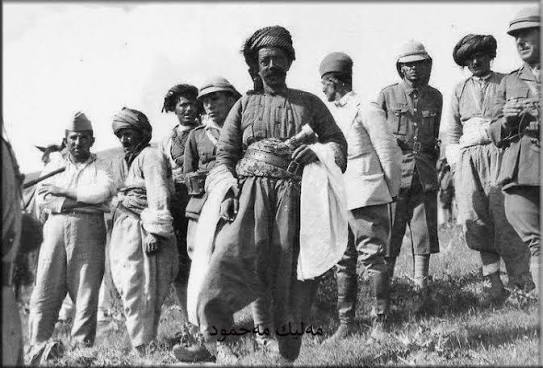
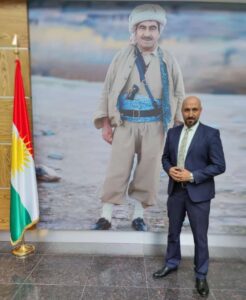
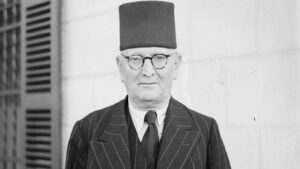
In his book Road Through Kurdistan (pages 150–155), A. M. Hamilton presents direct field testimony about a turbulent period in the history of Kurdistan in the early twentieth century, where political transformations intersected with the rise of local leaderships under the British Mandate. In this context, the figure of Sheikh Mahmud al-Hafid emerges as one of the most important actors in that era, and a leader who combined religious influence with political ambition, becoming the focal point of several uprisings against the ruling authority of the time.
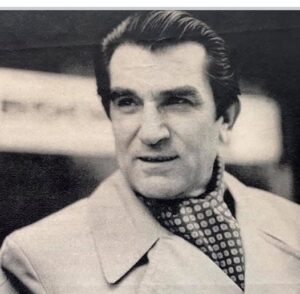
A. M. Hamilton was a New Zealand engineer who worked in Iraq during the British Mandate period in the 1920s, serving as a civil engineer and land surveyor within the technical staff of the British administration. His period of service in Iraq and Kurdistan extended to nearly four years, during which he traveled through several regions of Kurdistan and witnessed closely the political events and local unrest, particularly the rebellions of Sheikh Mahmud al-Hafid. He later recorded his observations and field experience in his famous book “Road Through Kurdistan,” which was first published in 1937 in London.
In this book, Hamilton depicts Sheikh Mahmud as a remarkable leader who enjoyed the loyalty of his people and possessed personal qualities that compelled even his adversaries to respect him, as the Sheikh combined religious sanctity with political leadership. He was “a religious leader of great sanctity, with a reputation as a fearless warrior,” and he survived so many battles that he was viewed with almost religious awe, to the point that his followers believed bullets could not harm him, saying: “I have seen bullets pass through his body and kill the man behind him, yet the Sheikh remained unharmed.” This aura of sanctity made him more than just a political leader, but rather a spiritual symbol for the Kurdish people, which reveals the extent of the stature he held in popular Kurdish consciousness, more than it proves the truth of those beliefs.
Hamilton points out that Sheikh Mahmud al-Hafid was not originally an enemy of the British. When the British army entered Kurdistan in 1918, the Sheikh received them with a friendly relationship, hoping that the fall of the Ottoman Empire would lead to the realization of the Kurds’ aspirations to govern themselves. However, when it became clear that Britain would annex Kurdistan to Arab rule, he felt that resistance was inevitable. He told his followers that he and his people “could not hope for prosperity under the administration of Baghdad” and declared a revolution against the British. The revolution ended with the arrest of Sheikh Mahmud and his exile to India following a brief campaign led by Brigadier General Fraser in 1919. But the irony was that the British authorities themselves could not subsequently find a figure who could administer Sulaymaniyah better than him, so they released him and restored him to power, recognizing that his influence among the Kurds was unrivaled. He was also known as “a man of his word,” and it was expected that he would not break his promise if released on bail under a purely British administration. The Kurds viewed Sheikh Mahmud as a national hero and a symbol of resistance and resilience, as his motives were not personal so much as they were related to Kurdish political aspirations.
In another place, Hamilton confirms, quoting the British political officer Clark who was working within the British administration in Sulaymaniyah, that Sheikh Mahmud always repeated that he was not against the British presence, but rather against subjecting Kurdistan to the Arab government in Baghdad. He believed that his rule was no less efficient than any other administration in the East, and that the Kurds had the right to manage their own affairs. Thus, the essence of the conflict, according to Hamilton, was not between Sheikh Mahmud and Britain so much as it was between a Kurdish national project and the project of the new Iraqi state.
The book provides important details regarding the nature of the personal relationship between Sheikh Mahmud and Clark. When Britain decided to establish Iraqi authority in Sulaymaniyah, Clark tried to convince the Sheikh to accept the status quo and abandon the Kurdish self-determination project, but the Sheikh refused to comply with Baghdad’s instructions. When Clark informed him that he would leave Sulaymaniyah, and that adhering to his position would place him among the rebels, Sheikh Mahmud detained Clark for a short period, telling him that he was his friend and honored guest. Clark believes that the Sheikh sometimes wavered between political solutions and the pressures of tribal leaders who pushed him toward rigidity.
Among the most prominent things Hamilton relates about Sheikh Mahmud was his ethics in war, which contrasted with the severity of the British aerial bombardment to which Sulaymaniyah was subjected. He kept his promise to protect Clark’s house, keeping its key and returning it to him himself. Upon Clark’s return to the city after the bombing, he found that his house had survived destruction and had not been looted. When returning the key, the Sheikh said: “I trust you will find that nothing has been touched, and that nothing is missing.” He also demonstrated similar conduct in treating prisoners; when two British officers were captured, he sent for a doctor to examine them and later released them. In another incident, he sent an apology letter to the commander of the Assyrian Levies, Colonel MacDonald, expressing regret over the death of a British officer in an engagement and emphasizing that “it was impossible to distinguish” during the fight.
The impression of the British was not limited to these incidents alone. Hamilton quotes Colonel MacDonald as saying that the war against the Kurds was different from others; it sometimes paused during mealtimes, and commanders from both sides exchanged speech with respect. He also describes the Kurds as fierce fighters whose mountain tactics posed a great challenge to troops unaccustomed to this type of warfare.
As for the reasons behind the continuation of Sheikh Mahmud’s rebellions, Hamilton links them to his persistence in refusing Kurdistan’s subjection to Baghdad. Therefore, his movement did not end after the first or second revolution; rather, he quotes Clark as saying that anyone who thinks the Sheikh’s influence has ended is mistaken, because he can return whenever circumstances allow, adding his famous phrase: “He will enter history as a hero of the Kurdish people.”
Hamilton mentions that he recalled this phrase two years later, when the events of 1930 broke out following accusations of election fraud and the deprivation of Kurds from representation, whereupon Sheikh Mahmud returned to taking up arms once again.
One of the most important points Hamilton brings up is that the Iraqi government forces were incapable of achieving decisive victories against the Kurdish revolutions, and that the military resolution came primarily through British superiority. The British Royal Air Force played a pivotal role in ending Sheikh Mahmud’s uprisings through air raids, which Hamilton himself described with painful detail regarding the panic and destruction that befell civilians. The Assyrian Levies also contributed, with their experience in mountain combat, to pursuing fighters in rugged areas. Hamilton thus concludes that the Sheikh’s defeat in his third revolution was not the result of the superiority of Iraqi forces alone, but the direct fruit of British aerial military superiority and the support of its auxiliary local forces.
After the end of the last revolution in 1930, Hamilton mentions that Sheikh Mahmud was handed over to the Iraqi administration that he had resisted for years. He comments that Eastern governments do not release their prisoners as the British used to do, and then concludes his narrative by pointing out that the Sheikh, like many Kurds whose dream of independence was shattered, ended up an elderly man in the grip of his enemies. This conclusion reflects Hamilton’s personal sympathetic view, even if it differs in some of its details from other historical accounts.
Source: medaratkurd.com
Note: This text is translated from the original Arabic version… Read the Arabic version:Click here